A bedroom makeover sounds simple until you are standing in the paint aisle holding twelve beige swatches and wondering why one of them looks suspiciously green. That is exactly why a mood board is not just a cute design activity. It is the calm, visual decision-maker that keeps your bedroom makeover from becoming a late-night online shopping mystery.
Why A Mood Board Is The Secret Weapon Of A Better Bedroom Makeover
A mood board is a collected visual plan for a room. It usually includes colors, textures, furniture shapes, lighting ideas, bedding inspiration, artwork, flooring, hardware, and a few emotional clues about how the room should feel. In other words, it is the bedroom’s personality test before the makeover begins.
For a bedroom, this matters more than almost anywhere else in the home. A kitchen can be energetic. A living room can be loud and social. A bedroom has a quieter job: it should help you rest, reset, and feel like you are not sleeping inside a storage unit with pillows.
A mood board turns scattered ideas into one clear direction. Instead of buying a velvet headboard, a coastal rug, industrial lamps, farmhouse nightstands, and neon wall art because each item looked good alone, the board shows whether they actually belong in the same room. It is basically a group chat for your design choices, minus the drama.
Start With The Feeling, Not The Furniture
The best bedroom makeover begins with a mood, not a shopping list. Before choosing a paint color or ordering a bed frame, decide what the room should feel like when you walk in. Calm and airy? Warm and cocoon-like? Organic modern? Soft coastal? Moody hotel suite? Minimal and uncluttered?
This emotional direction becomes the filter for every decision. A restful bedroom may call for soft greens, warm whites, muted blues, natural wood, woven textures, and gentle lighting. A dramatic bedroom might use charcoal walls, brass accents, crisp white bedding, and sculptural lamps. A romantic cottage-style room could lean into floral textiles, creamy paint, curved furniture, and vintage-style art.
Here is a simple test: describe the room in three words. For example, “calm, warm, polished” gives you a very different makeover than “bold, eclectic, playful.” Those three words should sit at the top of your mood board like tiny design referees. When an item does not match them, it goes back on the bench.
Build The Bedroom Mood Board Step By Step
1. Collect Inspiration Images
Gather 15 to 30 images from design websites, brand lookbooks, magazines, hotel rooms, real homes, and even product pages. Do not judge too quickly. Save anything that makes you pause: a wall color, a headboard shape, a rug pattern, a lamp silhouette, a curtain style, or a cozy bedding combination.
After collecting, look for patterns. Maybe you saved five rooms with linen bedding, warm wood, and black metal lighting. Maybe every image has floor-to-ceiling curtains. Maybe you thought you loved bright color, but your board is mostly oatmeal, sage, and clay. Congratulations, your subconscious has been decorating while you were pretending to be practical.
2. Choose A Color Palette
A strong bedroom mood board usually has one main color, one or two supporting neutrals, and one accent color. For example, a soft organic bedroom might use warm white as the base, light oak as the natural tone, sage green as the main color, and matte black as the accent. A cozy modern bedroom might use taupe, ivory, walnut, and muted navy.
Bedroom colors do not have to be boring, but they should support the way you want to feel. Softer blues, greens, warm whites, greige, clay, mushroom, and muted lavender can create a soothing foundation. If you love bold shades, use toned-down versions or keep them to accents such as pillows, art, a bench, or a painted nightstand.
3. Add Texture Samples
Texture is what keeps a bedroom from looking flat. Add images or samples of linen, cotton, bouclé, rattan, cane, wool, jute, velvet, plaster, woven baskets, brushed brass, black metal, and natural wood. Even a neutral bedroom can feel rich when the surfaces vary.
A bed with white sheets, a chunky knit throw, a cane bench, warm oak nightstands, and a wool rug has more depth than a room where everything is smooth, shiny, and shouting “new apartment starter pack.” Texture gives the eye something to enjoy without making the room visually noisy.
4. Map The Big Pieces First
On your mood board, place the largest elements first: bed frame, headboard, rug, dresser, nightstands, curtains, and wall color. These pieces carry most of the visual weight. If they work together, the room is already halfway home.
The bed is usually the focal point, so give it special attention. A simple platform bed supports a modern look. An upholstered bed softens the room. A spindle bed feels classic. A canopy bed adds architecture. A curved headboard brings a gentle, contemporary touch. Choose a bed that fits the room’s scale, not just your fantasy of living inside a boutique hotel suite with unlimited square footage.
Designing The Makeover Around Real Life
A beautiful bedroom is only successful if it works on a Tuesday morning when laundry exists, the phone charger is missing, and someone has placed a water glass dangerously close to a paperback novel. The mood board should include practical choices, not just pretty ones.
Furniture Scale And Layout
Measure the room before falling in love with furniture. A king bed may be luxurious, but if it leaves six inches of walking space, the room will feel like a maze designed by a mattress company. Leave comfortable pathways around the bed when possible, and choose nightstands that match the available width.
In a small bedroom, consider floating nightstands, wall sconces, storage beds, narrow dressers, or one larger shared nightstand instead of two tiny ones. In a larger bedroom, avoid pushing every piece against the wall. A bench, accent chair, or reading corner can make the space feel intentionally designed rather than simply filled.
Storage That Does Not Ruin The Mood
Storage should be part of the design plan from the beginning. Under-bed drawers, lidded baskets, closed dressers, storage benches, and wall-mounted shelves can control clutter while supporting the room’s style. Open shelves look lovely when curated, but if they become a museum of receipts, tangled cords, and half-used lip balm, the mood board has been betrayed.
A good rule is to hide the practical items and display the meaningful ones. Keep extra bedding in storage bins. Place books, a ceramic dish, framed art, or a small plant on a nightstand. The bedroom should not pretend real life does not exist; it should simply give real life a better filing system.
Lighting: The Makeover Detail People Always Underestimate
Lighting can make or break a bedroom makeover. One harsh overhead light can turn even the prettiest room into a fitting room at a discount store, which is not the restful energy anyone requested.
A mood board should include at least three lighting layers: ambient lighting for general brightness, task lighting for reading or dressing, and accent lighting for atmosphere. Table lamps, wall sconces, pendant lights, dimmers, picture lights, and warm bulbs can all help create a softer room.
For a cozy bedroom, warm light usually feels more relaxing than cool, blue-toned light. Lampshades can diffuse glare, while dimmers let the room shift from “I am folding laundry responsibly” to “I am reading one chapter and definitely not scrolling for an hour.”
Bedding: The Fastest Way To Make The Room Feel Finished
Bedding is the outfit your bed wears every day, so it deserves more thought than grabbing the nearest comforter and hoping for emotional support. On the mood board, include sheets, duvet covers, quilts, throws, pillows, and shams that match the room’s palette and texture story.
A simple formula works well: start with quality sheets, add a duvet or quilt, layer one throw blanket at the foot of the bed, and finish with a restrained number of pillows. Too many pillows may look luxurious in photos, but in real life they often become a nightly relocation project. The bed should feel inviting, not like it requires a backstage crew.
For a calm bedroom makeover, try white or ivory sheets, a textured neutral duvet, two sleeping pillows, two shams, and one long lumbar pillow in an accent fabric. For a moodier space, pair crisp bedding with a charcoal throw, deep green pillow, or patterned rug that brings in color without overwhelming the room.
Walls, Art, And The Personality Layer
Once the main pieces are chosen, the mood board can move into personality: art, mirrors, wallpaper, books, plants, trays, candles, framed photos, and objects collected over time. These details make the room feel like yours instead of a showroom where nobody has ever misplaced socks.
Art above the bed should be sized generously enough to feel connected to the furniture below it. A tiny frame floating above a large headboard can look lonely. Try one oversized piece, a pair of framed prints, a textile wall hanging, or a low gallery arrangement. If the room already has bold wallpaper or a patterned headboard, keep the art quieter.
Mirrors can brighten a bedroom and make it feel larger, but placement matters. A mirror opposite a window can bounce light beautifully. A mirror facing the bed may feel too active for some people. The mood board helps test these choices before holes appear in the wall and regret enters the chat.
A Practical Bedroom Mood Board Example
Imagine a dated bedroom with gray walls, mismatched nightstands, heavy curtains, a dark dresser, and bedding that has survived one too many laundry experiments. The goal is a warm, calm, modern bedroom that feels finished but not fancy in a fragile way.
The Mood Words
The three mood words are “soft, grounded, natural.” These words guide the makeover and prevent impulse purchases that belong in a different room.
The Palette
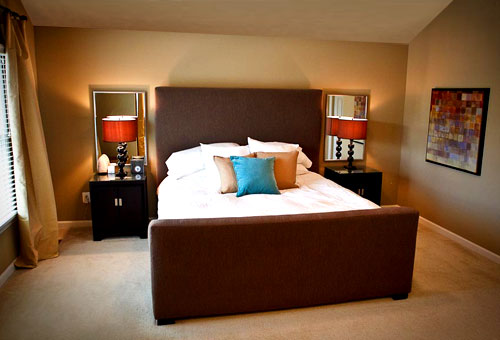
The palette includes warm white walls, light oak furniture, oatmeal bedding, muted olive accents, and small touches of matte black. This combination feels calm without becoming plain. The black accents give the soft palette a little structure, like eyeliner for the room.
The Main Pieces
The bed gets a simple upholstered headboard in a warm beige fabric. Matching nightstands are replaced with similar wood tones rather than identical pieces, creating a collected look. A large wool-blend rug anchors the bed and softens the floor. Curtains are hung high and wide to make the window feel larger and the ceiling taller.
The Finishing Touches
Wall sconces free up nightstand space. A large abstract print above the bed repeats the olive, cream, and black palette. A woven bench at the foot of the bed adds texture. A small ceramic tray holds jewelry and lip balm. A leafy plant brings life to the corner. The final room feels thoughtful, layered, and restful without requiring a trust fund or a professional pillow fluffer.
Budget-Friendly Ways To Use A Mood Board
A mood board is especially helpful when the bedroom makeover budget is modest. It keeps spending focused. Instead of replacing everything, you can identify the changes with the highest visual impact.
Paint is often one of the most powerful updates. New bedding can instantly shift the mood. Swapping lamps or lampshades changes the lighting and style. Replacing hardware on a dresser can make an old piece feel intentional. Hanging curtains higher can improve the room’s proportions. Adding a rug can define the bed area and introduce color or texture.
The mood board also helps you mix price points. Spend more on the bed, mattress, or rug if those matter most. Save on vintage art, thrifted nightstands, budget-friendly curtains, or DIY painted furniture. A beautiful bedroom does not require every item to be expensive. It requires every item to have a reason for being there.
Common Bedroom Mood Board Mistakes To Avoid
Choosing Too Many Styles
A little contrast is interesting. Too much contrast feels confused. If your board includes coastal stripes, glam mirrors, rustic barn wood, neon signs, and ultra-minimal furniture, pause and edit. Pick one main style and one supporting style. For example, organic modern with a hint of coastal works. Industrial farmhouse glam beach cottage probably needs a nap.
Ignoring The Actual Room
A mood board should inspire the makeover, not deny reality. Consider ceiling height, natural light, window placement, flooring, closet doors, outlets, and room size. A dark paint color may look stunning in a large sunlit room but heavy in a small north-facing bedroom. A giant dresser may be gorgeous online and completely unreasonable once it blocks the closet.
Forgetting Comfort
Bedrooms are not just visual projects. They are physical spaces. Choose bedding that feels good, lighting that works, curtains that support privacy, and furniture that fits your routine. A room can photograph beautifully and still fail if the nightstand cannot hold a book and a glass of water.
Experience Notes: What A Mood Board Teaches During A Real Bedroom Makeover
The most useful thing about creating a bedroom mood board is that it slows the makeover down in the best possible way. Without one, it is easy to decorate in random bursts. You buy a lamp because it is on sale. Then you buy bedding because the lamp suddenly makes the old bedding look tired. Then the rug looks wrong. Then you are eating cereal at midnight while researching curtain rods. This is how innocent people end up with seven return labels and a room that still feels unfinished.
With a mood board, the makeover becomes more intentional. One helpful experience is to live with the board for a few days before buying anything. Leave it open on your phone or print it out. If you still like the palette after seeing it morning and night, it is probably not a passing mood. If one item keeps bothering you, remove it. The board should feel calm and clear, not like a design argument.
Another lesson is that the “almost right” item is usually not worth it. If your board is warm, natural, and soft, a cold gray dresser may be affordable but still wrong. If your room needs a quiet linen shade, a shiny chrome lamp may look great in another home and awkward in yours. The mood board gives you permission to say no, even to beautiful things. This is surprisingly freeing. Not every attractive chair deserves a place in your bedroom. Some chairs must continue their journey elsewhere.
It also helps to compare every purchase against the largest pieces already chosen. A rug, bed, dresser, and curtains create the backbone of the room. Once those are settled, smaller items should support them. During a real makeover, this prevents the common problem of accessories taking over. A bedroom does not need eight themes. It needs a few repeated ideas: maybe curved lines, warm wood, soft green, woven texture, and black accents. Repeat them gently and the room starts to look designed.
The final experience is emotional. A mood board makes the bedroom feel personal before the makeover is complete. It helps you imagine the first morning in the finished room: soft light through curtains, a bed that looks inviting, a nightstand that is not fighting for its life, and colors that make your shoulders drop a little. That is the real goal. A bedroom makeover done with a mood board is not about creating a perfect room. It is about creating a room that knows what it is trying to beand kindly reminds you to stop buying random throw pillows at 11:47 p.m.
Conclusion
A bedroom makeover done with a mood board is smarter, calmer, and far less likely to end in design chaos. The board helps you define the feeling, choose a cohesive color palette, balance furniture and texture, plan lighting, and make practical decisions before spending money. It also keeps the makeover personal. Instead of copying a room exactly, you build a bedroom that reflects your taste, your routine, and your need for rest.
Whether the goal is a small bedroom refresh or a full transformation, the mood board acts like a visual roadmap. It shows what belongs, what clashes, and what will make the space feel finished. In the end, the best bedroom is not the one with the most expensive furniture. It is the one where every choice supports comfort, beauty, and a good night’s sleep.