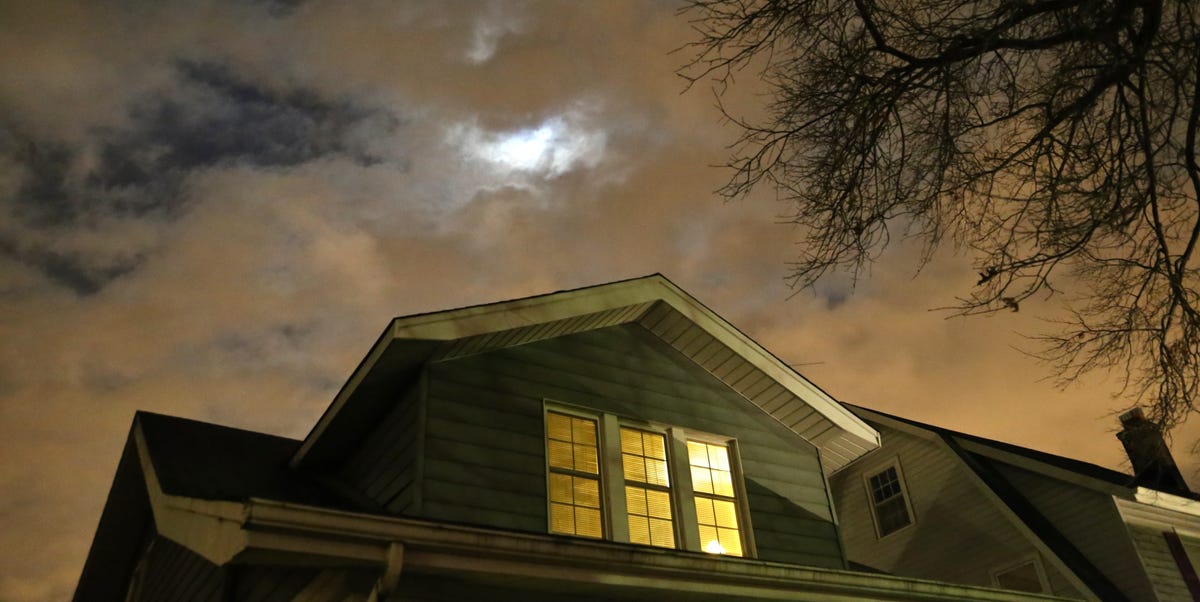
Would you live in a haunted house if the price was right? Be honest. Before you say “absolutely not,” imagine the listing: charming Victorian, wraparound porch, original hardwood floors, updated kitchen, great school district, and one small issuethe upstairs hallway may or may not be occupied by a ghost named Mildred who dislikes open cabinet doors.
Suddenly, the question gets complicated.
A new Realtor.com survey has revealed something surprising: Americans are not nearly as terrified of haunted houses as horror movies would have us believe. In fact, a large majority of respondents believe haunted homes are at least possible, and a significant share would consider buying one if the deal made sense. Apparently, when mortgage rates are scary and home prices are scarier, a few mysterious footsteps in the attic start to feel less like a deal-breaker and more like a quirky roommate situation.
But the findings also show an important distinction. Many people are open to spooky stories, strange noises, and even the idea of a ghostly presence. What they are much less comfortable with is a home connected to violent crime, murder, or traumatic history. In other words, America may be willing to negotiate with ghostsbut not with a seriously dark past.
The Haunted House Survey: What Americans Really Think
According to the 2025 Realtor.com survey, 86% of American adults surveyed believe it is possible for houses to be haunted. That number is striking because it does not simply reflect Halloween excitement or late-night ghost-story confidence. It suggests that the idea of haunted homes has moved from fringe folklore into mainstream curiosity.
The same survey found that 12% of respondents said they had personally lived in a haunted home, while another 7% said they knew someone who had. Only 14% said they did not believe in hauntings at all. That means most people are not necessarily saying, “Yes, I saw a transparent woman floating through the dining room.” But they are saying, “I would not rule it out.”
For anyone who has ever blamed an old house for making weird noises at 2:13 a.m., this probably feels familiar. A creaky floorboard can be old wood expanding. A cold spot can be poor insulation. A flickering light can be faulty wiring. But at night, when the house is silent and your imagination is doing push-ups, practical explanations often arrive about five seconds after panic.
What Makes People Think a House Is Haunted?
The survey asked people who believed they had lived in a haunted home what they experienced. The most common answer was unexplained sounds, including footsteps, music, banging, and other noises that did not seem to have an obvious source. Anyone who has lived in an older home knows this category well. Houses settle, pipes knock, vents hum, and squirrels occasionally conduct full military exercises in the attic.
Still, some experiences feel harder for people to dismiss. Respondents reported seeing shadowy figures or apparitions, objects moving on their own, disembodied voices, feelings of touch or pressure, and lights or appliances turning on and off unexpectedly. Whether these events were paranormal, environmental, electrical, psychological, or simply misunderstood, they clearly left a strong impression.
This is one reason haunted house stories are so durable. They are not always dramatic. A true haunted house story usually does not begin with a chandelier spinning like a carnival ride. It begins with something ordinary being slightly wrong: the same door opening every night, a smell that appears for no reason, a room that feels colder than the rest of the house, or the sound of someone walking upstairs when everyone is downstairs.
Would Americans Actually Buy a Haunted House?
Here is where the survey gets especially interesting. One in three Americans said they would buy a home rumored to be haunted if the price was right. Another 14% said a haunted reputation would not affect their decision at all. Only 15% said they would never move into a home with a haunted history.
That is a major shift from the traditional haunted-house stereotype. In old movies, the haunted mansion sits abandoned on a hill while villagers whisper warnings. In the modern housing market, the same mansion might get twelve showings, two cash offers, and one buyer asking whether the ghost is included in the homeowners association fee.
The reason is not hard to understand. Homebuyers are balancing affordability, location, size, condition, commute, school districts, insurance costs, and interest rates. If a home checks enough boxes, a haunted rumor may not outweigh the practical benefits. A ghost is unsettling, yes, but so is paying rent forever while refreshing listing apps like it is a part-time job.
Why Price Changes Everything
The phrase “if the price is right” is doing a lot of work here. Most buyers are not saying they would happily pay full market value for a house with a reputation for late-night whispering. They are saying they might consider it if the home came with a discount, better features, a desirable neighborhood, or some other advantage.
Zillow has found similar attitudes in past buyer surveys. A large share of prospective buyers said they could be convinced to purchase a haunted house if it had the right features, a better location, or a lower price. Rocket Mortgage also reported that nearly two-thirds of Americans surveyed would consider buying a haunted house, with many respondents saying the decision would depend on the type of haunting, the discount, and the resale risk.
This reveals something bigger than Halloween curiosity. Buyers are making trade-offs. In a competitive or expensive housing market, people may become more flexible about things that once seemed unacceptable. A dated kitchen can be renovated. A weird basement can be improved. A haunted reputation? Well, that depends. Does the ghost pay utilities?
Haunted Homes vs. Homes With a Violent Past
The survey also shows a clear moral and emotional boundary. Many Americans may be open to a rumored haunting, but they are far less willing to buy a home associated with murder or violent crime. Realtor.com found that 79% of respondents would never or probably never buy a house famous for a violent crime or murder, and 70% would avoid a home where such a crime occurred.
This difference matters. A haunted rumor can feel playful, mysterious, or even charming. A violent history feels heavy. It is not just about fear; it is about grief, trauma, privacy, reputation, and respect for real people who may have suffered. Buyers can laugh about a friendly ghost in the pantry. It is much harder to laugh about a tragedy that left a permanent mark on a property.
That is why the phrase “haunted house” can mean very different things. Some homes are haunted by legend. Others are haunted by public memory. One may become a Halloween conversation starter. The other may carry emotional weight that no discount can erase.
What Is a Stigmatized Property?
In real estate, a haunted house often falls under the broader idea of a stigmatized property. A stigmatized property is a home that may be viewed negatively for reasons unrelated to its physical condition. The roof may be solid, the foundation may be fine, and the plumbing may work beautifullybut the home’s reputation can still affect buyer interest.
Common stigmas include rumors of paranormal activity, deaths in the home, violent crimes, notorious former owners, or highly publicized events. The challenge is that stigma is subjective. One buyer may refuse to step inside. Another may see a bargain. A third may start a TikTok account before the inspection period ends.
Disclosure rules vary by state, and buyers should never assume every uncomfortable detail will automatically appear in a listing. In many areas, sellers may not be required to disclose paranormal rumors. In some cases, however, agents and sellers may need to answer direct questions honestly or disclose known facts that materially affect the property. Because laws vary, buyers concerned about a home’s past should ask direct questions, research local rules, and consult a real estate professional or attorney.
Why Haunted Houses Fascinate Us
Haunted houses fascinate Americans because they sit at the crossroads of fear, history, and home. A home is supposed to be the safest place in our lives. It is where we sleep, eat cereal in questionable pajamas, argue over thermostat settings, and keep the good snacks hidden from family members. The idea that a home might contain an invisible presence disrupts that comfort.
At the same time, haunted homes are strangely appealing. They suggest that a house has a story. In a world of cookie-cutter subdivisions and neutral paint colors named things like “Agreeable Mist,” a haunted house has personality. Maybe too much personality, but personality nonetheless.
There is also a cultural reason. From “The Amityville Horror” to “The Conjuring,” from ghost tours in Savannah to haunted hotels in New Orleans, Americans have turned spooky real estate into entertainment. Haunted homes are no longer just warnings; they are attractions, documentaries, podcasts, books, and social media content. A ghost story can reduce buyer interest, but it can also make a property famous.
The Practical Checklist Before Buying a “Haunted” House
If you are seriously considering buying a home with a haunted reputation, start with the boring stuff. Boring is your friend. Boring keeps you from blaming a ghost for what is actually a $14,000 electrical problem.
1. Get a thorough home inspection
Before you worry about spirits, check the structure. Strange noises can come from plumbing, HVAC systems, pests, loose ductwork, old windows, or foundation movement. Flickering lights may point to electrical issues. Cold spots may signal insulation problems. A good inspector will not bring holy water, but they can save you from very earthly expenses.
2. Research the property history
Look into public records, local news archives, neighborhood stories, and previous sales. You are not being nosy; you are being responsible. A home’s history may affect your comfort level, resale value, insurance questions, or even your ability to use the property for rentals or events.
3. Ask direct questions
If a home’s past matters to you, ask clear questions in writing. Has the home been publicly described as haunted? Has there been a death in the home? Has the property been connected to a crime? Are there known issues that could explain unusual activity? Direct questions are more useful than hoping the listing description will voluntarily mention “occasional hallway ghost.”
4. Think about resale
You may be comfortable living with a haunted reputation, but future buyers may not be. Consider how the story could affect your ability to sell later. A mild local legend may not matter much. A widely known crime or viral haunted-house reputation may narrow your buyer pool.
5. Know your own limits
Some people can laugh off creaks, shadows, and creepy basements. Others will hear one unexplained thump and spend the night fully dressed with the lights on. Neither reaction is wrong. Buying a house is emotional as well as financial. If you will never feel comfortable there, the discount is not worth it.
So, Would You Live in One?
The honest answer for many people is: maybe. A haunted house is not automatically a bad investment, and a spooky reputation does not mean the property is unsafe. Sometimes the “ghost” is old wiring, bad insulation, noisy pipes, or a neighbor with a flair for drama. Sometimes the legend is part of the home’s charm.
But buyers should separate fun from facts. A rumored haunting can be entertaining; hidden defects are not. A ghost story may make a home memorable; a violent history may make it emotionally complicated. The key is to understand what you are buying, how it makes you feel, and whether the price reflects the property’s reputation.
Experiences: What It Feels Like to Imagine Living in a Haunted House
Picture this: you finally move into the house. The closing papers are signed, the moving truck is gone, and the living room is full of boxes labeled “kitchen,” even though half of them contain shoes, cables, and one mysterious mug you do not remember owning. The house is quiet. Too quiet, obviously, because this is the part where your brain becomes a horror movie director with unlimited funding.
On the first night, every sound feels meaningful. The refrigerator clicks, and you pause. The stairs creak, and you stop breathing like that will help. Somewhere in the walls, a pipe knocks once, and suddenly you are mentally reviewing every ghost documentary you have ever watched at 1 a.m. This is the strange power of a haunted-house reputation: it changes how you interpret normal things. A regular house makes noises. A “haunted” house makes clues.
By the second week, daily life begins to fight back. You still have laundry to fold. You still need to find the Wi-Fi password. The trash still has to go out on Tuesday. The ghost, if there is one, does not help with any of this. Slowly, the house becomes less of a legend and more of a place where you burn toast, lose your keys, and wonder why the previous owner painted the bathroom that specific shade of green.
Then comes the first truly weird moment. Maybe a door you know you closed is open. Maybe a light turns on by itself. Maybe you hear what sounds like footsteps overhead, even though no one is upstairs. Your reaction depends on your personality. A skeptic grabs a flashlight and checks the windows. A believer whispers, “Hello?” A content creator starts recording immediately. A tired homeowner says, “Not tonight, Mildred,” and goes back to bed.
Living in a supposedly haunted house would likely be less like constant terror and more like a long negotiation with uncertainty. Most days would be ordinary. Some nights would be uncomfortable. You might learn which sounds are normal, which rooms feel odd, and which stories are neighborhood exaggerations. Friends would ask to visit. Relatives would ask if they could sleep somewhere else. Someone would definitely bring a Ouija board, and you would definitely have to become the responsible adult who says, “Please do not summon anything on my new hardwood floors.”
The biggest experience may not be fear at all. It may be storytelling. A haunted house gives people something to talk about. It turns dinner parties into investigations and minor household quirks into legends. If the history is harmless and the home feels safe, that story can become part of the charm. If the history is painful, however, the experience becomes different. Then the responsibility is not to sensationalize the past, but to live with awareness, respect, and care.
Would everyone enjoy that? Absolutely not. Some people want a home that feels peaceful from the first step inside. Others can handle a little mystery, especially if the mortgage payment is lower and the kitchen has good counter space. The best answer is personal: live where your nervous system can rest. A house can be old, strange, dramatic, and full of storiesbut it should still feel like home.
Conclusion
The new haunted house survey reveals a surprisingly practical side of American fear. Many people believe haunted homes are possible, and many would consider buying one if the price, location, and features were attractive enough. That does not mean buyers have become fearless. It means they are weighing fear against affordability, opportunity, and personal comfort.
A haunted reputation may lower interest for some buyers, but it can also create curiosity for others. The real deal-breaker is often not the ghost story itself, but the nature of the home’s history. Friendly folklore is one thing. Violent tragedy is another.
So, would you live in a haunted house? If the inspection is clean, the price is fair, the story is not rooted in real harm, and the ghost respects quiet hours, the answer might be more complicated than you expected.
Note: This article is for informational and entertainment purposes. Buyers should verify property history, inspection results, and local disclosure laws before making any real estate decision.