Eye tracking used to sound like something from a sci-fi lab where everyone wore white coats and spoke in acronyms. Today, it is used in UX testing, psychology research, advertising, gaming, virtual reality, automotive safety, accessibility, sports science, and even communication devices for people who cannot use their hands or voice. In other words, eye tracking has escaped the laboratory and started showing up everywhere from shopping studies to flight simulators.
At its simplest, an eye tracking system measures where a person is looking, how long they look there, when their eyes move, and sometimes how their pupils change. That data can reveal attention, confusion, interest, fatigue, workload, or navigation behavior. It does not read minds, despite what dramatic marketing copy sometimes implies. It reads gaze patterns. The human interpretation comes afterward.
The tricky part is that “eye tracking system” can mean anything from a free webcam demo to a research-grade system that costs more than a small car. So, before buying one, renting one, or building a study around one, it helps to understand the four major types: webcam-based eye tracking, screen-based infrared eye trackers, wearable eye tracking glasses, and embedded eye tracking systems used in VR, vehicles, and assistive technology.
What Is an Eye Tracking System?
An eye tracking system is a combination of hardware, software, cameras, illuminators, and algorithms that estimate gaze position. The system usually starts with calibration. During calibration, the participant looks at known points on a screen or in a field of view. The software then builds a model that connects eye features, such as pupil position and corneal reflection, with gaze direction.
Most professional systems use infrared light because it creates clearer reflections from the eye without distracting the participant. Webcam systems typically rely more heavily on image-processing and machine-learning models. Wearable systems add a scene camera so researchers can see what the person saw in the real world. Embedded systems place eye tracking inside another device, such as a VR headset, car dashboard, or speech-generating communication device.
Common metrics include fixations, saccades, gaze paths, heatmaps, pupil diameter, blink rate, time to first fixation, dwell time, and areas of interest. For a UX team, that might mean discovering that users never notice the “Start Free Trial” button. For a driving researcher, it might mean measuring how often a driver checks mirrors. For accessibility, it may mean letting someone select letters, apps, or commands using only their eyes.
Quick Comparison: 4 Eye Tracking Systems
| System Type | How It Works | Best For | Typical Cost Range |
|---|---|---|---|
| Webcam-Based Eye Tracking | Uses a standard webcam and software algorithms to estimate gaze. | Remote UX tests, ad testing, education, large online studies. | Free tools to custom SaaS plans; paid panelists or project fees may apply. |
| Screen-Based Infrared Eye Trackers | Uses infrared light and cameras mounted near a monitor. | UX labs, neuroscience, psychology, reading research, controlled studies. | About $1,000 for entry hardware to tens of thousands for advanced lab systems. |
| Wearable Eye Tracking Glasses | Uses eye cameras plus a scene camera to capture gaze in real environments. | Retail, sports, healthcare, training, field research, human behavior studies. | Several thousand dollars to premium quote-based systems. |
| Embedded Eye Tracking Systems | Built into devices such as VR headsets, vehicles, or AAC communication tools. | VR/XR, driver monitoring, accessibility, simulation, hands-free control. | Varies widely: consumer devices, enterprise headsets, and medical-grade systems differ greatly. |
1. Webcam-Based Eye Tracking Systems
How They Work
Webcam-based eye tracking uses the camera already built into a laptop or attached to a desktop. Instead of requiring dedicated infrared hardware, the software analyzes face position, head movement, pupil location, and eye appearance. A calibration process maps the participant’s gaze to the screen. After that, the platform estimates where the person is looking during a website test, video test, product image review, or survey.
This system is popular because it removes a major headache: logistics. You do not need to ship hardware, book a lab, or ask participants to sit in a special chair. A participant can join from home, complete a study, and generate gaze data through their webcam. That makes webcam eye tracking attractive for UX teams, market researchers, educators, and startups that need directional insights without building a full research lab.
What They Cost
Costs vary. Some lightweight tools offer free demos or low-cost versions. Professional platforms usually price by subscription, project, study size, participant volume, or custom license. If the platform provides recruited participants, expect participant fees on top of software access. A webcam system can be the lowest-cost entry point, but it is not automatically “cheap” once you add recruitment, analysis, and repeated studies.
Pros and Cons
The biggest advantage is scale. You can collect data from many participants in different locations without buying hardware for each one. The downside is data quality. Lighting, webcam quality, screen size, glasses, participant movement, and internet setup can all affect results. Webcam eye tracking is excellent for attention trends, heatmaps, and remote usability feedback, but it may not be ideal for studies requiring high temporal precision, tiny eye movement measurements, or medical-grade accuracy.
2. Screen-Based Infrared Eye Trackers
How They Work
Screen-based infrared eye trackers are the classic research and usability-lab setup. A compact tracking bar or camera unit sits below or near a monitor. It sends infrared light toward the eyes and captures reflections from the pupil and cornea. The software then calculates gaze position on the screen.
This type of eye tracking is used heavily in psychology, neuroscience, reading research, interface testing, consumer behavior, and clinical studies. Because the hardware is controlled and the lighting is more predictable, screen-based infrared systems typically deliver better precision and reliability than webcam-only tools.
Sampling rate matters here. A 60 Hz eye tracker captures 60 gaze samples per second. A 150 Hz tracker captures 150 samples per second. High-end systems can go much higher, which helps researchers measure fast movements such as saccades. For basic UX heatmaps, 60 Hz may be enough. For advanced eye-movement research, higher sampling rates can be worth the investment.
What They Cost
Entry-level research-grade systems can start around the $1,000 mark. For example, a basic screen-based eye tracker such as the Gazepoint GP3 has been listed under $1,000 for hardware-only purchase. Mid-range systems, accessories, software licenses, warranties, and analysis suites can move the total into several thousand dollars. Advanced lab systems from premium research vendors are often quote-based and may reach tens of thousands of dollars depending on configuration.
Pros and Cons
The strengths are accuracy, repeatability, and better data quality. The trade-off is that participants usually need to be tested in a controlled environment. You also need to budget for a computer, monitor, mounts, software, calibration time, staff training, and data analysis. Think of it like buying a camera: the lens is only part of the photography budget. The tripod, lighting, storage, and editing software still show up at the party.
3. Wearable Eye Tracking Glasses
How They Work
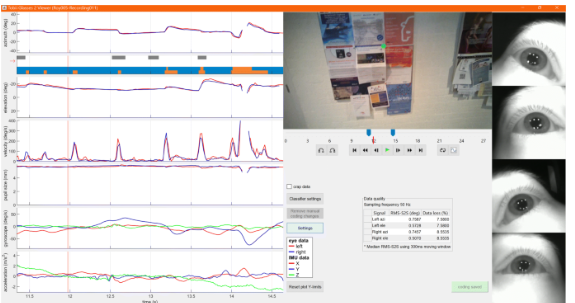
Wearable eye tracking glasses are designed for real-world behavior. They usually include inward-facing eye cameras and an outward-facing scene camera. The eye cameras record eye position, while the scene camera records what the participant is looking at. Software overlays gaze data onto the real-world video so researchers can see visual attention in context.
This is extremely useful when the research question cannot be answered by looking at a monitor. Retailers can study how shoppers scan shelves. Sports scientists can examine where athletes look before a pass or swing. Medical educators can analyze how trainees inspect equipment or perform procedures. Industrial teams can study how workers interact with machines, signs, tools, or safety controls.
What They Cost
Wearable systems are usually more expensive than basic screen-based trackers because they include more cameras, mobile recording, scene mapping, batteries, storage, and specialized software. Some open or modular systems cost several thousand dollars. More polished research-grade glasses may cost much more and are often sold by quote. Software licenses, cloud storage, support, and training may add to the final price.
As a rough expectation, wearable glasses commonly start in the several-thousand-dollar range and climb depending on accuracy, form factor, field-of-view mapping, live streaming, synchronization, and analytics. A lower-cost headset may be enough for prototyping. A hospital, university lab, or enterprise research team may need a system with better validation, support, and data export features.
Pros and Cons
The huge advantage is ecological validity, which is a fancy way of saying, “People can act like people instead of lab statues.” Participants can walk, shop, cook, train, assemble, inspect, or perform tasks in natural settings. The downsides are cost, privacy management, field setup, battery life, participant comfort, and more complex analysis. Real-world video is rich, but it can also be messy. Sometimes the cereal aisle teaches you more about lighting problems than breakfast behavior.
4. Embedded Eye Tracking Systems
How They Work
Embedded eye tracking is built into another product. Instead of buying a separate tracker for research, the eye tracking system becomes part of a VR headset, AR device, driver-monitoring system, medical device, gaming accessory, or assistive communication platform.
In VR and XR headsets, eye tracking can support foveated rendering, which prioritizes image quality where the user is looking. It can also measure attention, workload, training performance, and user interaction. In vehicles, eye tracking can monitor driver attention, drowsiness, distraction, and gaze direction. In assistive technology, eye tracking can allow people with limited movement to type, speak through a communication device, browse the web, control smart home devices, or use Windows through gaze.
What They Cost
Embedded systems vary more than any other category. A gaming accessory may cost a few hundred dollars. A professional XR headset with integrated eye tracking can cost several thousand dollars before controllers, workstation requirements, software, or support. Medical-grade and assistive communication systems are often funded through insurance, healthcare programs, schools, or accessibility grants, and the total package can include hardware, software, mounting, support, and training.
Enterprise-grade embedded systems are usually not priced like consumer gadgets because the buyer is paying for reliability, integration, support, data quality, and compliance requirements. A VR training company, automotive lab, or assistive technology provider may care less about the device price alone and more about whether the entire system works consistently in real conditions.
Pros and Cons
The main benefit is convenience. The user does not need a separate eye tracking bar or wearable glasses because the tracker is already part of the experience. The weakness is flexibility. Embedded systems are often tied to one ecosystem, software stack, headset, vehicle platform, or communication device. If your research needs change, you may not be able to reuse the tracker outside that environment.
How to Choose the Right Eye Tracking System
Start With the Research Question
The biggest mistake is choosing an eye tracker because it sounds impressive. A 2,000 Hz lab system is amazing, but it may be overkill if your real goal is to learn whether users notice a checkout button. On the other hand, a webcam tool may be too limited if you need precise saccade timing in a cognitive science experiment.
Ask what you actually need to measure. Are you studying a screen, a website, a shelf, a cockpit, a classroom, a headset experience, or hands-free communication? Are you looking for general attention patterns or highly precise eye movement data? Will participants be remote or in a controlled lab? Do you need pupil data, blink data, live monitoring, gaze replay, heatmaps, raw exports, or API access?
Match Cost to Data Quality
Eye tracking cost is not just the sticker price. A realistic budget should include hardware, software, licenses, accessories, participant recruitment, staff training, calibration time, analysis time, data cleaning, support, and future upgrades. A $1,000 device can become a $5,000 project if the software, mounts, and labor are ignored. A quote-based enterprise system may be expensive upfront but cheaper over time if it saves staff hours and produces cleaner data.
Think About Comfort and Natural Behavior
If your participants need to behave naturally, do not force them into an unnatural setup. For example, wearable glasses are better for grocery shopping research than a fixed monitor tracker. A screen-based tracker is better for reading studies than glasses that may shift on the face. A webcam platform is better for remote website testing than asking 200 people to visit a lab. The right system is the one that interferes least with the behavior you are trying to understand.
Real-World Examples of Eye Tracking Use
UX and Website Testing
A software company might use webcam eye tracking to test a landing page with 100 remote users. The heatmap shows that users spend time on the hero image but miss the pricing link. The fix may be as simple as moving the call-to-action button or making the navigation clearer.
Retail and Packaging
A consumer brand might use wearable glasses to see how shoppers scan a shelf. The study could reveal that a package looks beautiful in isolation but disappears when placed next to brighter competitors. That is not a design failure; it is shelf reality delivering a polite slap.
Academic Research
A university lab may use a high-speed screen-based system to study reading, visual attention, autism research, or cognitive load. In this setting, accuracy, sampling rate, data export, and experimental control matter more than convenience.
VR Training and Simulation
An aviation or medical training team might use an XR headset with built-in eye tracking to measure whether trainees inspect critical instruments, warnings, or patient cues. This can turn training from “Did they finish the scenario?” into “What did they actually notice while completing it?”
Common Pricing Mistakes to Avoid
First, do not compare hardware-only prices with complete solution prices. One vendor may list only the tracker, while another includes software, support, calibration tools, and analysis features. That is like comparing the price of flour with the price of a finished wedding cake.
Second, do not ignore software licensing. Eye tracking software can be essential for study design, stimulus presentation, recording, AOI analysis, heatmaps, export, and synchronization with other biometric tools. In many professional workflows, the software is where the project becomes usable.
Third, do not forget participant recruitment. Webcam studies may seem inexpensive until you need a large sample, demographic targeting, quality checks, and replacement participants. Lab studies may require fewer participants but more staff time.
Fourth, do not buy more precision than the question requires. If you need to know whether shoppers notice a logo, you may not need a premium neuroscience setup. If you need millisecond-level eye movement timing, do not rely on a casual webcam test and hope enthusiasm will improve physics.
Experience Notes: What It Feels Like to Use Eye Tracking Systems in Practice
In real projects, eye tracking is both fascinating and humbling. The first exciting moment usually comes when you see a gaze replay for the first time. A dot moves across the screen or real-world video, and suddenly user attention becomes visible. You may think, “Aha, now we finally know what people saw.” Then the second lesson arrives: seeing gaze is not the same as understanding intent.
For example, a participant may stare at a button because it is interesting, confusing, badly labeled, or simply located near something else they are reading. Eye tracking tells you where attention went. It does not automatically tell you why. That is why the best studies combine eye tracking with interviews, task success rates, click data, think-aloud notes, surveys, or behavioral outcomes.
Webcam eye tracking feels easy at first because setup is light. Participants can join from home, and the researcher avoids hardware shipping. But remote testing introduces surprises. Someone joins from a dark room. Someone uses a tiny laptop screen. Someone’s webcam points at the ceiling like it is searching for weather patterns. Quality checks matter. Good instructions matter even more. Tell participants to sit still, improve lighting, close distractions, and use a stable screen position.
Screen-based infrared systems feel more serious and controlled. Calibration is usually cleaner, and the data often looks more stable. However, the lab environment can influence behavior. Participants may become hyper-aware of being studied. Some sit too stiffly. Others ask whether they are “doing it wrong,” which is a very human reaction to being watched by a small blinking device under a monitor. A calm introduction helps. Tell them the system measures eye movement, not intelligence, personality, or secret snack preferences.
Wearable glasses create the richest “wow” moments because they show gaze in real environments. Watching a shopper, athlete, doctor, mechanic, or trainee move through a task can reveal details that surveys miss. But field research is messy. Reflections, lighting changes, movement, privacy concerns, and mapping gaze onto real objects require planning. Bring extra batteries, check recordings early, and never assume “we’ll fix it later in analysis.” Later is where messy data goes to become expensive.
Embedded systems can feel seamless when they work well. In VR, gaze-based interaction can make training more natural. In assistive technology, eye control can be life-changing because it turns gaze into communication and independence. But embedded systems also remind us that eye tracking is not just a measurement tool. Sometimes it is an interface, a safety feature, or a voice. That makes usability, comfort, support, and reliability just as important as specs.
The practical lesson is simple: run a pilot test before committing. Test the lighting, calibration, task flow, recording quality, exports, and analysis process. A one-hour pilot can save weeks of confusion. Eye tracking rewards preparation. It punishes assumptions with tiny dots that refuse to land where you expected.
Conclusion
Eye tracking systems come in four major flavors: webcam-based platforms, screen-based infrared trackers, wearable glasses, and embedded systems. Each one solves a different problem. Webcam tools are flexible and scalable. Screen-based infrared systems are strong for controlled research. Wearable glasses capture natural behavior in the real world. Embedded systems power VR, driver monitoring, accessibility, and hands-free interaction.
The right choice depends on your question, environment, accuracy needs, participant setup, and budget. Do not buy the most expensive system just because it sounds impressive. Do not choose the cheapest tool if poor data will ruin the study. Match the system to the behavior you need to observe, then budget for the full workflow: software, support, recruitment, analysis, and training.
Eye tracking is powerful because it turns attention into data. Used wisely, it can reveal what users notice, what they ignore, and where design, safety, training, or communication can improve. Used carelessly, it becomes a very expensive way to generate colorful heatmaps. Choose carefully, test early, and remember: the eyes may be the window to attention, but good research is still the key that opens it.