Some bathroom sinks quietly wash hands. Others politely hold toothpaste. Then there is the Pool Sink by Marti Guixe for Azzurro, a bathroom fixture that walks in wearing architectural sunglasses and says, “Let’s rethink the entire ritual.” It is not simply a basin. It is a compact landscape, a storage idea, a visual joke, and a serious design object all at once.
Designed in 2010 for Azzurra Ceramica, often referenced in older design coverage as Azzurro, the Pool Sink turns the ordinary washbasin into something closer to a mini architectural platform. Instead of a soft porcelain bowl, it uses a square, metallic form. Instead of pretending bathroom clutter does not exist, it gives soap and towels a place to live. And instead of hiding its personality, it clips a towel with an oversized peg like a pop-art wink from across the room.
For homeowners, designers, and design-curious readers, the Pool Sink matters because it asks a deceptively useful question: what if the bathroom sink were not just a plumbing fixture, but the organizing center of the bath?
What Is the Pool Sink?
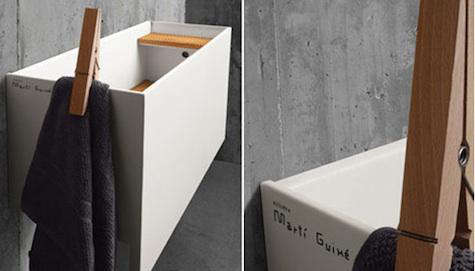
The Pool Sink is a square bathroom washbasin designed by Spanish designer Martí Guixé for Azzurra Ceramica. Its most recognizable features include a geometric metal basin, integrated teak shelves for soap or small objects, and a dramatic oversized clothespin-style towel holder. The surface has been described as stainless steel coated in white or light gray epoxy, giving it a clean, industrial-meets-domestic finish.
The word “pool” is clever here. This sink does not imitate a traditional oval bowl. It resembles a small contained body of water, like a reflective square pool placed inside the bathroom. That simple shift changes the mood. Suddenly, washing your hands becomes less like using a fixture and more like interacting with a designed surface.
In practical terms, the Pool Sink combines three bathroom needs: washing, storing, and hanging. Most sinks solve only the first. A few vanities solve the second. Towel bars solve the third, usually somewhere else on the wall. Guixé brings them together into one compact object, which is why the design still feels fresh years after its debut.
Who Is Martí Guixé?
Martí Guixé is known for approaching design with humor, critique, and conceptual precision. He has often been associated with the term “ex-designer,” a playful label that reflects his interest in moving beyond traditional product styling. Rather than making objects merely prettier, Guixé tends to ask what an object does socially, emotionally, and behaviorally.
That mindset explains why the Pool Sink does not look like a typical luxury bathroom basin. It is not trying to be a marble sculpture, a spa bowl, or a delicate porcelain flower. It is more like a diagram of bathroom behavior: water goes here, soap rests here, towel clips here, person smiles here. Very efficient. Slightly cheeky. Very Guixé.
His broader work has included food design, commercial interiors, conceptual objects, and collaborations with international brands. The Pool Sink fits comfortably into that universe because it treats a daily habit as a design opportunity. It does not shout for attention, but it definitely clears its throat.
Azzurra Ceramica and the “Azzurro” Name
The product is commonly connected to Azzurra Ceramica, an Italian bathroom manufacturer established in Civita Castellana in 1985. The title “Azzurro” appears in some older design references, but the company’s current brand identity is Azzurra Ceramica. For SEO and reader clarity, both names are worth recognizing: people may search for “Pool Sink by Marti Guixe for Azzurro,” while product documentation points to Azzurra.
Azzurra’s reputation centers on ceramic sanitaryware, bathroom furnishings, and contemporary bath innovation. That makes the Pool Sink especially interesting because it steps outside the expected ceramic basin formula. It shows how a bathroom brand can use collaboration with a conceptual designer to test new forms, materials, and habits.
Why the Pool Sink Still Feels Modern
1. It Treats Storage as Part of the Design
Modern bathrooms are expected to be calm, spa-like, and low-maintenance. Unfortunately, real bathrooms contain toothpaste tubes, damp towels, hand soap, skincare bottles, stray hair ties, and the occasional mystery cap that belongs to nothing. The Pool Sink acknowledges that reality without surrendering to clutter.
The built-in teak shelves are small but important. They give everyday items a designed landing zone. A bar of soap, a small dish, a hand brush, or a beautiful bottle can sit there intentionally rather than wobbling on the edge of the basin like a nervous penguin.
2. It Makes the Towel Holder a Feature
Most towel holders are background actors. Guixé makes the towel holder part of the story. The oversized clothespin adds humor and function, turning a routine object into a graphic accent. In a minimalist bathroom, that one detail can provide enough visual personality to keep the space from feeling sterile.
It also solves a common layout problem. Small bathrooms do not always have ideal wall space for towel bars. By integrating the towel holder with the sink, the design keeps the towel near the hand-washing zone, exactly where common sense wanted it all along.
3. It Uses Industrial Material in a Domestic Way
Bathroom sinks are often porcelain, vitreous china, stone, glass, or solid surface. The Pool Sink’s metal body gives it a sharper, more utilitarian personality. Stainless steel is associated with durability, hygiene, kitchens, laboratories, and professional settings. In the bathroom, it creates a crisp contrast against softer elements like wood, towels, plaster, or tile.
The epoxy coating softens the industrial mood and helps the sink appear clean and architectural rather than cold. White or light gray finishes work especially well because they preserve the bathroom’s brightness while still allowing the square form to stand out.
Design Analysis: A Sink That Refuses to Be a Bowl
The most radical thing about the Pool Sink is not the towel peg. It is the geometry. The traditional basin usually slopes inward and visually disappears into the countertop or vanity. The Pool Sink presents itself as a flat, square object with edges, planes, and a strong outline.
This gives the sink architectural weight. It behaves less like a container and more like a small table with water at its center. That shift affects how a bathroom feels. A room with the Pool Sink is not just “decorated”; it is composed.
The square form also creates visual order. Bathrooms are full of circles and soft shapes: faucets, drains, mirrors, knobs, bottles, rolled towels. A crisp square basin can calm that visual noise. It gives the eye a frame. In a small bath or powder room, that kind of clarity is valuable.
Where the Pool Sink Works Best
Powder Rooms
A powder room is the perfect stage for a statement sink. Guests are not storing a month’s worth of shampoo there, and the room can tolerate a stronger design personality. The Pool Sink would work beautifully with matte wall tile, a frameless mirror, and a slim wall-mounted faucet.
Modern Apartments
In compact urban bathrooms, multifunctional fixtures are gold. The Pool Sink’s built-in shelf and towel clip make it a smart fit for apartments where every inch must earn rent. Pair it with wall hooks, recessed medicine storage, and simple lighting for a clean, efficient setup.
Design Hotels and Creative Studios
Hospitality spaces love memorable details, and the Pool Sink is memorable without being ridiculous. It gives visitors something to notice, photograph, and talk about. That matters in boutique hotels, gallery bathrooms, creative offices, and restaurants where the restroom is part of the brand experience.
Minimalist Homes That Need One Playful Moment
Minimalism can be serene. It can also accidentally become a waiting room for a very expensive dentist. The Pool Sink prevents that by adding one witty, functional gesture. The oversized peg says, “Yes, this home has discipline, but it also knows how to enjoy a towel.”
How to Style a Bathroom Around the Pool Sink
Because the Pool Sink is visually strong, the best styling strategy is restraint. Let it be the hero. Use neutral tile, quiet walls, and simple hardware. Large-format porcelain tile, microcement, pale stone, or smooth plaster would all support the design without competing with it.
For faucets, choose something linear and unfussy. A wall-mounted faucet can preserve the sink’s flat geometry and keep the deck from feeling crowded. A single-lever fixture in chrome, brushed nickel, matte white, or stainless steel would make sense. Avoid ornate traditional faucets unless your goal is “Victorian robot tea party,” which is a bold concept but perhaps not for everyone.
Lighting should be clean and flattering. A slim horizontal sconce above the mirror or a pair of vertical sconces can add warmth without clutter. Since the basin has a metallic and graphic quality, soft lighting will keep the room from feeling too hard.
Accessories should be limited. A beautiful soap, a folded hand towel, and maybe a small natural sponge are enough. The teak shelf is not asking to become a parking lot for seven skincare bottles and a travel-size mouthwash from 2018.
Practical Considerations Before Choosing a Statement Sink
Cleaning and Maintenance
Metal bathroom sinks can be durable and easy to clean, but they do need care. Mild soap, warm water, and a soft cloth are better friends than abrasive pads. Standing water can leave mineral marks, especially in hard-water areas, so wiping the surface dry helps preserve the finish.
The teak shelf adds warmth, but wood in a wet zone should be treated respectfully. Keep it ventilated, wipe away puddles, and avoid letting wet soap sit directly on the wood for long periods. A draining soap dish can help.
Faucet Compatibility
A conceptual sink still has to work with real plumbing. Before specifying a sink like this, check faucet reach, splash behavior, drain placement, and mounting requirements. A faucet that is too short may make washing awkward. One that is too tall or forceful may create splash drama. Your bathroom should not become a tiny water park unless you charge admission.
Storage Needs
The Pool Sink offers smart micro-storage, not full vanity storage. It is ideal for hand soap, a towel, and small essentials, but it will not hide bulk toilet paper, cleaning bottles, or a hair dryer. If the bathroom needs serious storage, pair the sink with a recessed cabinet, a tall linen tower, or nearby built-in shelves.
Visual Commitment
This is not a shy fixture. It has a point of view. That is wonderful if you want the bathroom to feel curated and memorable. It may be less ideal if you prefer invisible fixtures or plan to sell a home to buyers who think “designer sink” means “expensive thing I must understand.”
Pool Sink vs. Traditional Bathroom Sinks
Compared with a pedestal sink, the Pool Sink feels more contemporary and functional because it adds shelving and towel storage. Compared with a vessel sink, it is less decorative and more architectural. Compared with an undermount sink, it is far more expressive. Compared with a vanity sink, it is lighter and more sculptural but offers less concealed storage.
That makes it best for projects where visual identity matters as much as utility. It is not trying to be the universal answer for every bathroom. It is trying to be the smart, strange, unforgettable answer for the right bathroom.
Why Designers Still Talk About Pieces Like This
The design world has no shortage of pretty sinks. What makes the Pool Sink worth revisiting is that it proposes a different behavior. It suggests that the sink can organize objects, frame water, create humor, and define the room’s personality.
Good design does not always need more decoration. Sometimes it needs a sharper idea. The Pool Sink’s idea is easy to understand: combine the basin, soap shelf, and towel holder into one deliberate object. Once you see it, the usual bathroom arrangement suddenly feels a little scattered.
That is the mark of a successful concept. It does not just look different. It makes the ordinary version look less inevitable.
Experience Notes: Living With the Idea of the Pool Sink
Imagine walking into a guest bathroom where the Pool Sink is installed. The first reaction would probably be a pause. Not confusion exactly, but recognition that something is different. The sink looks flatter, squarer, and more intentional than expected. You notice the towel peg almost immediately because it is funny in the best way: oversized, useful, and just cartoonish enough to make the room feel human.
Using it would likely feel more deliberate than using a standard basin. You would place your hands over a defined square pool rather than a rounded bowl. The soap would be right where it should be, not sliding around on a wet counter. The towel would hang within reach, clipped like it belongs to the object instead of being an afterthought. That tiny sequencesoap, water, towelwould feel choreographed.
In daily life, this is where the design becomes interesting. A beautiful sink that is annoying after two weeks is not a triumph; it is a very expensive complaint. The Pool Sink’s success depends on how well the owner respects its limits. It wants a tidy user. It wants someone who enjoys editing surfaces. It does not want to become the family dumping zone for electric toothbrushes, sunscreen, cough drops, and a comb that everyone denies owning.
For a single-person apartment, a creative studio, or a guest bath, the experience could be excellent. The sink gives enough space for essentials while keeping the room visually open. In a busy family bathroom, however, it would need backup storage. Children may love the giant peg, which is charming until the towel becomes a cape, the soap becomes a boat, and the square basin becomes “the harbor.” Design history has not yet fully addressed pirates under age seven.
The strongest emotional experience is probably delight. Many bathrooms are designed around resale neutrality, which often means beige tile, safe fixtures, and mirrors that look like they are waiting for instructions. The Pool Sink has personality. It makes a functional room feel considered. It encourages small habits: hang the towel properly, keep the shelf clear, choose a nice soap, wipe the surface dry. These habits sound minor, but they affect how a space feels every morning.
There is also a lesson for anyone remodeling a bathroom. You do not always need more square footage to make a room better. Sometimes you need one object that solves several problems elegantly. The Pool Sink shows how integrated design can reduce clutter, create identity, and make a routine more enjoyable. That is a pretty impressive resume for something that spends most of its life catching water.
Final Thoughts
The Pool Sink by Marti Guixe for Azzurro remains compelling because it combines utility, humor, and design intelligence. It challenges the expected bathroom sink shape, uses material in an unexpected way, and turns ordinary accessories into part of the composition. It is not the right sink for every home, and that is exactly why it is interesting.
For homeowners who want a bathroom with character, the Pool Sink offers a useful reminder: the best fixtures do more than function. They shape habits. They organize space. They create a small moment of pleasure in the middle of the day. And if they can hold a towel with a giant clothespin while doing it, honestly, even better.