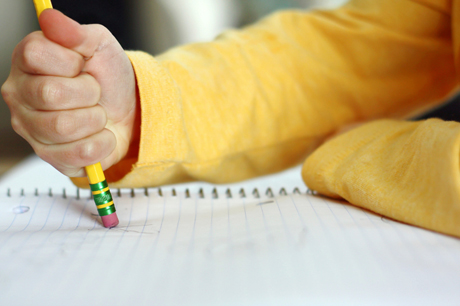
Every classroom has a soundtrack. Pencils tap. Chairs squeak. Someone whispers, “What page are we on?” And, sooner or later, a student says the sentence that can shut down learning faster than a dead Wi-Fi signal: “I got it wrong.”
For many students, mistakes feel like proof that they are not smart, not talented, or not “math people,” “writing people,” or “please-don’t-call-on-me people.” But in a healthy learning environment, mistakes are not academic crime scenes. They are clues. They show teachers what students understand, where misconceptions are hiding, and which skills need another round of practice. More importantly, they help students see learning as a process rather than a performance.
Teaching students to embrace mistakes is not about pretending every wrong answer is secretly brilliant. Sometimes a comma really is in the wrong place. Sometimes the science hypothesis has collapsed like a cardboard bridge in a rainstorm. The goal is to help students respond to errors with curiosity, strategy, and resilience instead of shame. When mistakes become normal, visible, and useful, students become braver thinkers.
Why Mistakes Matter in Learning
Learning is not a straight staircase. It is more like a hiking trail with roots, rocks, wrong turns, and one suspicious squirrel judging everyone’s pace. Students build understanding by trying, receiving feedback, revising, and trying again. Mistakes are part of that cycle because they reveal the gap between current understanding and the next level of mastery.
When a student makes an error, the brain is not announcing failure; it is receiving information. A wrong answer in math may reveal a missing concept. A weak thesis statement may show that the student has ideas but needs help organizing them. A misread primary source may open a discussion about context, evidence, and interpretation. In other words, mistakes are instructional goldless shiny than actual gold, but much more useful during third period.
The challenge is emotional as much as academic. Students often attach identity to achievement. “I made a mistake” becomes “I am bad at this.” That tiny language shift can drain motivation. Teachers can reverse it by building a classroom culture where errors are treated as temporary, specific, and fixable.
From Fixed Mindset to Growth Mindset
A fixed mindset tells students that ability is something they either have or do not have. A growth mindset teaches that ability can develop through effort, effective strategies, feedback, and support. This difference matters because students who believe they can improve are more likely to attempt challenging work, revise after feedback, and recover from setbacks.
However, growth mindset is not magic glitter sprinkled over a worksheet. Telling students “just try harder” is not enough. Effort matters, but effort without strategy can feel like running on a treadmill while holding a backpack full of bricks. Students need specific guidance: What should they try next? Which part of their thinking needs adjustment? What resource, example, peer conversation, or practice routine can help?
Better Language for Mistakes
Teachers can change the classroom atmosphere by changing the language around errors. Instead of saying, “No, that’s wrong,” try “Let’s examine that step.” Instead of “You should know this,” try “This is a common place where learners get stuck.” Instead of “Be careful,” try “Check which evidence supports your answer.” These phrases do not lower expectations. They raise the quality of thinking.
Students also benefit from sentence frames that help them talk about mistakes productively:
- “My first strategy did not work because…”
- “The part I understand is…”
- “The part I need to revisit is…”
- “Next time, I will try…”
- “This mistake taught me…”
These small phrases help students move from embarrassment to analysis. That is a big leap, especially for students who have spent years trying to look perfect at all costs.
Create a Classroom Where Mistakes Are Safe
Students will not embrace mistakes in a classroom where mistakes are mocked, punished, or displayed like warning signs. Emotional safety is the foundation. This does not mean every moment must feel cozy. Learning can be challenging, and productive struggle is often uncomfortable. But students should believe that their teacher and classmates will treat their thinking with respect.
Normalize Error Early
Start the year by explaining that mistakes will be part of the classroom routine. Say it directly: “In this class, mistakes are not interruptions to learning. They are part of learning.” Then prove it through daily practice. Share anonymous examples of common errors. Model your own mistakes. Laugh gently when the projector refuses to cooperate for the seventh time. Students notice when adults handle imperfection without panic.
Separate the Student From the Error
A mistake is something a student made, not who the student is. Teachers can reinforce this by being precise. Instead of “You are confused,” say “This step is confusing.” Instead of “Your paragraph is weak,” say “The evidence needs a stronger explanation.” The difference may sound small, but it protects student dignity while still giving honest feedback.
Use Feedback That Leads Somewhere
Feedback should be a map, not a stamp. If students receive only a grade, they may know how they performed but not how to improve. Strong feedback tells students what is working, what needs attention, and what action to take next.
For example, instead of writing “unclear” on an essay, a teacher might write, “Your claim is interesting, but the reader needs one sentence explaining why this evidence proves it.” Instead of marking a math problem wrong and moving on, the teacher might ask, “Where did the operation change? Circle the step where your thinking shifted.” These prompts guide revision and build metacognition, the student’s ability to think about their own thinking.
Make Revision Normal, Not Exceptional
Revision should not be treated like academic punishment. It should be part of the learning routine. Writers revise. Scientists revise hypotheses. Engineers revise designs. Athletes revise technique. Even chefs revise recipes, which is comforting to remember when dinner tastes like salted cardboard.
Teachers can build revision into assignments by allowing test corrections, essay conferences, draft cycles, peer feedback, and reflection sheets. The key is to require students to explain what changed and why. A corrected answer is helpful; a corrected answer with a reason is powerful.
Teach Mistake Analysis as a Skill
Students often know they made a mistake but do not know how to study it. Mistake analysis gives them a structure. Instead of hiding errors, students learn to investigate them.
A Simple Mistake Analysis Routine
- Identify the mistake: What exactly went wrong?
- Name the type: Was it a calculation error, misunderstanding, missing evidence, rushed reading, unclear direction, or weak strategy?
- Find the cause: Why did it happen?
- Correct it: What is the accurate response?
- Plan forward: What will you do differently next time?
This routine works across subjects. In math, students might identify a sign error. In history, they might realize they used evidence without explaining its relevance. In science, they might discover that their data table was incomplete. In reading, they might notice that they ignored context clues. The point is not to make students stare at failure; it is to turn failure into usable information.
Use Low-Stakes Practice Before High-Stakes Assessment
If every mistake affects a grade, students will naturally avoid risks. Low-stakes practice gives students room to experiment before performance counts heavily. Think exit tickets, quick writes, whiteboard responses, practice quizzes, peer discussions, rough drafts, and ungraded problem-solving sessions.
Low-stakes learning helps teachers, too. It reveals misconceptions before they become cement. A five-minute check-in can show whether the class is ready to move forward or needs another example. In this way, mistakes become classroom GPS: “Recalculating route. Please make a U-turn at the distributive property.”
Model Mistake-Friendly Thinking
Students learn from what teachers do, not only from what teachers say. If a teacher reacts to every classroom hiccup with panic, students learn that mistakes are dangerous. If a teacher calmly says, “That explanation did not land. Let me try it another way,” students learn that revision is normal.
Teachers can model mistake-friendly thinking by solving a problem aloud and intentionally checking their work. They can say, “I almost skipped this step, but I know that usually causes errors.” They can revise a sentence in front of students and explain why the second version is clearer. They can share a time they struggled to learn something new, whether it was a teaching strategy, a software tool, or assembling furniture with instructions apparently written by a mysterious wizard.
Encourage Peer Learning Without Public Shame
Peer discussion can help students see mistakes from multiple angles, but it must be structured carefully. Publicly calling out a student’s wrong answer can create embarrassment. Instead, use anonymous work samples, group problem-solving, or “favorite mistake” discussions where the class analyzes an error that teaches an important lesson.
A favorite mistake is not chosen because it is funny. It is chosen because it reveals useful thinking. The teacher might say, “This answer is close, and it helps us see an important misconception.” Students then discuss what works, where the thinking changed direction, and how to improve it. This builds a classroom habit: errors are not gossip; they are evidence.
Balance Encouragement With High Expectations
Embracing mistakes does not mean celebrating sloppy work. Students still need accuracy, effort, focus, and accountability. The difference is that mistakes are treated as starting points for improvement, not final judgments.
High expectations and mistake tolerance belong together. A teacher might say, “This is not finished yet, and I know you can improve it.” That sentence communicates belief and responsibility. It avoids both extremes: harsh criticism that shuts students down and empty praise that does not help them grow.
Practical Strategies for Teaching Students to Embrace Mistakes
1. Use “Yet” Carefully
“I can’t solve equations” becomes “I can’t solve equations yet.” But the word “yet” must be paired with a plan. Ask, “What strategy will help you move forward?”
2. Create Error Journals
Students keep a weekly record of one mistake, what caused it, how they corrected it, and what they learned. Over time, the journal becomes proof of growth.
3. Grade the Revision Process
Give credit for thoughtful correction, reflection, and improvement. This shows students that learning after feedback matters.
4. Teach Students to Ask Better Questions
Replace “Is this right?” with “Which part should I check?” or “Does my evidence support my claim?” Better questions lead to better learning.
5. Use Think-Alouds
Model how an expert notices confusion, checks assumptions, and adjusts strategy. Students need to see that strong learners do not avoid mistakes; they manage them.
6. Praise Strategy, Not Just Effort
Instead of “You worked hard,” say, “Your new diagram helped you organize the problem.” This helps students connect improvement to effective actions.
7. Build Reflection Into the Routine
After a quiz, project, or discussion, ask students what they learned, what surprised them, and what they will try next. Reflection turns activity into understanding.
Experiences Related to Teaching Students to Embrace Mistakes
In real classrooms, teaching students to embrace mistakes often begins with one uncomfortable silence. A teacher asks a question. A student offers an answer. The answer is not correct. Suddenly, the room freezes as if someone unplugged the sun. Everyone waits to see what happens next.
That moment matters. If the teacher rushes past the error, students may decide mistakes are too awkward to discuss. If the teacher responds with sarcasm, even mild sarcasm, students may decide participation is a dangerous sport. But if the teacher says, “I’m glad you said that because it helps us look at a common misunderstanding,” the room changes. The student is not rescued from the mistake; the student is guided through it.
One powerful classroom experience involves using anonymous exit tickets. At the end of a lesson, students answer one problem or explain one idea on a small slip of paper. The teacher sorts the responses into groups: solid understanding, partial understanding, and common misconceptions. The next day, instead of announcing who got what wrong, the teacher displays a few anonymous examples and asks, “What can we learn from these?” Students begin to see that many classmates share similar struggles. The mistake becomes less personal and more useful.
Another experience comes from writing instruction. Students often believe strong writers produce clean first drafts, as if essays arrive wearing tiny tuxedos. In reality, strong writing is rewriting. A teacher can show students an early draft full of crossed-out phrases, awkward transitions, and half-formed ideas. Then the teacher shows the revised version and explains the choices. Students are often surprised to learn that messy drafts are not signs of weakness. They are signs that thinking is happening.
In math, mistake-friendly teaching can be especially transformative. Many students carry old labels: “slow,” “bad at math,” “not logical.” A teacher might introduce a weekly “my favorite wrong answer” routine. The class studies an incorrect solution that contains a smart beginning but a faulty step. Students discuss what the person understood, where the reasoning shifted, and how to repair it. Over time, students become more willing to show their work because the class values reasoning, not just final answers.
Group work also provides opportunities to practice mistake tolerance. In a science lab, a group may design an experiment that produces unexpected results. Instead of treating the outcome as a disaster, the teacher asks students to examine variables, procedures, and assumptions. “What did the result teach us?” becomes more important than “Did we get the expected result?” This mirrors authentic scientific thinking, where unexpected findings often lead to better questions.
Teachers also learn from mistakes while teaching. A lesson may flop. A discussion may wander into the academic wilderness. A project rubric may turn out to be as clear as fog. When teachers openly revise their own practice, students see humility and problem-solving in action. Saying “I noticed yesterday’s directions were confusing, so I rewrote them” is not a loss of authority. It is a model of responsible learning.
Parents and caregivers can support this culture, too. Instead of asking only “What grade did you get?” they can ask “What did you learn from the feedback?” or “What is one thing you will try differently next time?” These questions shift attention from performance to growth. Students still care about grades, of course. They are students, not tiny philosophers living on a mountain. But they also begin to understand that a grade is information, not identity.
The most meaningful experience is watching a student change their self-talk. A child who once said “I’m terrible at this” starts saying “I need another strategy.” A teen who once hid rough drafts begins asking for feedback earlier. A quiet student risks an answer during discussion because the classroom has proven that imperfect thinking is welcome. These changes may look small, but they are the roots of lifelong learning.
Conclusion: Mistakes Are Invitations to Learn
Teaching students to embrace mistakes is one of the most practical ways to build confidence, resilience, and deeper understanding. It helps students stop treating errors as evidence of failure and start treating them as information. That shift can change how students approach difficult problems, feedback, revision, and even their own potential.
The best classrooms are not places where everyone is right all the time. That would be suspicious, and frankly, a little boring. The best classrooms are places where students feel safe enough to think, brave enough to try, and supported enough to improve. Mistakes will still happen. The difference is that students will know what to do with them.