Volleyball looks simple from the bleachers: keep the ball off the floor, send it over the net, celebrate like you just won a national title, repeat. Then you step onto the court and discover the ball has a personal vendetta against your forearms, the net is taller than it looked, and your feet suddenly forget they belong to the same person.
The good news? You do not need to be born with superhero hops or arms made of spring-loaded spaghetti to become a strong volleyball player. You need smart practice, clean fundamentals, better court awareness, and the patience to improve one touch at a time. Volleyball rewards players who can control the ball, move before they panic, communicate early, and recover after mistakes instead of emotionally moving into the parking lot.
This guide breaks down 5 ways to be good at volleyball using practical, coach-friendly advice for beginners, school players, recreational athletes, and anyone who wants to stop looking surprised every time the ball comes their way. We will cover passing, serving, footwork, attacking, blocking, setting, defense, teamwork, and the kind of game experience that turns practice into real improvement.
1. Master Ball Control Before Chasing Power
Every volleyball player loves a big spike. It is loud, dramatic, and makes everyone briefly believe they are in a sports movie. But the secret to being good at volleyball starts long before the highlight swing. It starts with ball control: passing, serve receive, digging, and keeping your platform steady when the ball comes at you like it has somewhere important to be.
Passing is the first skill that gives your team a chance to run offense. A clean pass allows the setter to choose the best hitter. A wild pass forces everyone into emergency mode, which usually ends with someone shouting “mine” after the ball has already landed. To improve your volleyball passing, focus on three basics: move your feet early, keep your platform simple, and angle the ball toward your target.
Build a Reliable Passing Platform
Your forearms are not paddles to swing wildly at the ball. They are a platform. Lock your elbows, keep your shoulders relaxed, and let your legs do more work than your arms. When the ball arrives, try to contact it in front of your body, not beside your hip where all good intentions go to retire.
A helpful beginner cue is: beat the ball to the spot. Instead of waiting and reaching, move your feet so your body is behind the ball. This makes your pass calmer, cleaner, and easier for your setter to handle. Even advanced players spend countless reps improving serve receive because volleyball is often won by the team that can turn tough serves into playable passes.
Use Simple Drills That Actually Transfer to Games
Wall passing is useful, especially when you are training alone. Pass the ball to the wall, let it rebound, and control it back to the wall again. But do not stop there. Add targets. Pass to a marked square, change angles, or alternate between forearm passes and overhead passes. The goal is not just “keep the ball alive.” The goal is “send the ball where I mean to send it.” Big difference. One is survival. The other is volleyball.
Partner pepper is another classic volleyball drill because it combines passing, setting, controlled hitting, and defense in a small space. Start slowly. Pass, set, hit softly, dig, repeat. As you improve, increase the pace. Pepper teaches touch, reaction, and rhythm, which are essential for becoming a better volleyball player.
2. Serve With Purpose, Not Hope
The serve is the only skill in volleyball where you control the entire beginning of the play. No one is blocking you. No one is passing to you. No teammate is accidentally standing in your way with the confidence of a traffic cone. It is just you, the ball, the end line, and your ability to repeat a motion under pressure.
Many beginners think serving is only about getting the ball over the net. That is step one, and yes, it is important. A serve into the net is not a strategy; it is a donation. But once you can serve consistently, your next goal is to serve with purpose. Aim for zones, seams between passers, deep corners, short spaces, or players who seem uncomfortable receiving.
Develop a Consistent Toss
A good serve usually begins with a good toss. If your toss floats behind your head, drifts sideways, or climbs into orbit, your serve becomes a rescue mission. Keep the toss repeatable. For an overhand serve, toss slightly in front of your hitting shoulder. For a float serve, contact the center-back of the ball with a firm hand and avoid wrist snap that creates spin. A floating serve can move unpredictably, which makes it harder to pass.
When practicing, do not simply serve 30 balls and call it a day. Serve 10 balls to zone one, 10 to zone five, 10 short, and 10 deep. Track your makes. Add pressure by giving yourself a challenge: “I need seven out of ten in the court,” or “I need three serves in a row to the deep corner.” Pressure in practice helps match pressure feel less like a surprise quiz.
Know When to Be Aggressive
Good servers understand risk. If your team is down by one late in a set, you may not need your most heroic jump serve. You may need a tough, reliable serve that forces the other team to make a play. If your team has a big lead, you might take a little more risk and attack a weaker passer. Volleyball IQ means knowing the difference between brave and reckless. Brave has a plan. Reckless just closes its eyes and swings.
3. Improve Footwork, Positioning, and Court Awareness
Volleyball is not just a hand sport. It is a footwork sport disguised as a hand sport. The players who look smooth are usually the players who arrive early. They do not have magical arms; they have better movement, better reading, and fewer moments where their feet file a complaint.
To be good at volleyball, train your feet to move before the ball reaches you. Passing, setting, blocking, digging, and hitting all improve when your body is balanced. Late feet create emergency arms. Early feet create control.
Learn Ready Position
A strong ready position means knees bent, weight slightly forward, arms relaxed, and eyes reading the server, setter, or hitter. You should feel athletic, not frozen. Imagine you are about to move in any direction. Because in volleyball, you probably are.
For defense, your base position depends on your team system, the block, and the opponent’s hitter. Still, the idea remains the same: read early, move efficiently, and keep your platform available. Watch the hitter’s approach, shoulder angle, and contact point. Over time, you will begin to see clues before the ball is hit. That is when defense gets fun. You stop reacting late and start feeling like you intercepted a secret message.
Train Transition Footwork
One underrated way to become a better volleyball player is learning transition. After you pass, do you stand and admire your work like a museum exhibit? Or do you move into your next role? After a blocker lands, does she get ready to hit? After a setter defends, does someone else step in to set? Volleyball moves quickly, and good players are always preparing for the next contact.
Practice simple transition patterns. Pass, then approach to hit. Block, land, then move off the net. Dig, then cover the hitter. These small habits help you become more useful on every point. Coaches love players who do not need a personal invitation to keep playing after their first touch.
4. Train the Big Skills: Setting, Hitting, Blocking, and Defense
Once your ball control, serving, and footwork improve, start building the skills that make volleyball exciting: setting, attacking, blocking, and digging. You do not need to specialize immediately, especially if you are a beginner. In fact, learning multiple skills makes you smarter and more valuable. Even if you become a setter, you still need defense. Even if you become a hitter, you still need passing. Volleyball has a funny way of finding your weakest skill and putting a spotlight on it.
Setting: Make Your Hitters Look Good
A good set is not just pretty. It is hittable. The setter’s job is to deliver a ball the attacker can approach, time, and swing at without needing a ladder, a prayer, or a legal waiver. Focus on getting your feet to the ball, squaring your body to the target, and using both hands evenly. Push through the ball with your legs and hands together.
For outside sets, keep the ball off the net enough for the hitter to take a full swing. A set that is too tight may look tempting, but it often traps the hitter near the block and increases the chance of net errors. For middle sets, slightly higher is usually safer than too low, especially while you are learning timing. A low set gives your hitter almost no options except panic with enthusiasm.
Hitting: Timing Beats Muscle
Power matters, but timing matters more. A strong volleyball attack starts with a controlled approach. For many right-handed hitters, a common approach pattern is left-right-left; for left-handed hitters, it may be right-left-right. The exact rhythm can vary by coaching style, but the principle is the same: slow to fast, balanced to explosive.
Watch the set, start your approach at the right time, jump with both feet, and contact the ball high in front of your hitting shoulder. Do not only practice crushing the ball straight down. Learn roll shots, tips, deep corner swings, and line shots. A smart hitter who can place the ball is often more frustrating than a powerful hitter who only has one setting: thunder.
Blocking: Take Away Space
Blocking is not just jumping with your hands up and hoping the ball bumps into you. Good blocking is about positioning, timing, and taking away part of the court. Keep your eyes open, line up with the hitter, and press your hands over the net without touching it. Your goal may be to block the ball straight down, but even a touch can slow the attack and help your defense.
One of the biggest blocking mistakes is drifting sideways in the air. Jump where you plan to land. When blockers float around like confused weather balloons, defenders behind them cannot read what area is covered. A steady block gives the back row a clear plan.
Defense: Read, React, and Stay Brave
Digging is the art of keeping the ball alive when the other team thinks the point is over. It requires courage, balance, and quick reading. Stay low, keep your platform ready, and watch the hitter’s body. If the hitter is off-balance, expect a roll shot or tip. If the set is tight, prepare for a block touch or a sharp angle. If the hitter has a perfect approach, well, congratulationsyou are about to make a memory.
Great defenders are not fearless. They are prepared. They know where their blockers are, they understand court zones, and they move with purpose. Defense improves when you stop guessing randomly and start reading patterns.
5. Communicate, Compete, Recover, and Keep Learning
Volleyball is a team sport, which means silence is rarely helpful. You do not need to give a speech before every ball, but you do need clear, early communication. Call “mine,” “help,” “short,” “deep,” “free,” “tip,” and “out” loudly enough that your teammates can actually use the information. Whispering “mine” into your own soul does not count.
Talk Before, During, and After the Play
Good communication begins before the serve. Who has short balls? Who takes seam? Where is the setter? Who is blocking line? During the rally, call the ball early. After the rally, reset quickly. Celebrate good plays, correct simple mistakes, and move on. Volleyball has too many points for emotional camping. You cannot live forever inside the last error.
Positive communication also builds trust. A teammate who knows you will call the ball clearly and encourage them after mistakes will play more confidently. Teams with strong communication often look faster because they spend less time hesitating.
Use Practice Like a Scientist
To become good at volleyball, practice with feedback. Do not only count reps. Count quality reps. Ask: Did my pass reach the target? Did my serve hit the zone? Did I approach too early? Did I call the ball? Did I recover after landing? This turns practice into information instead of just exercise with sweating.
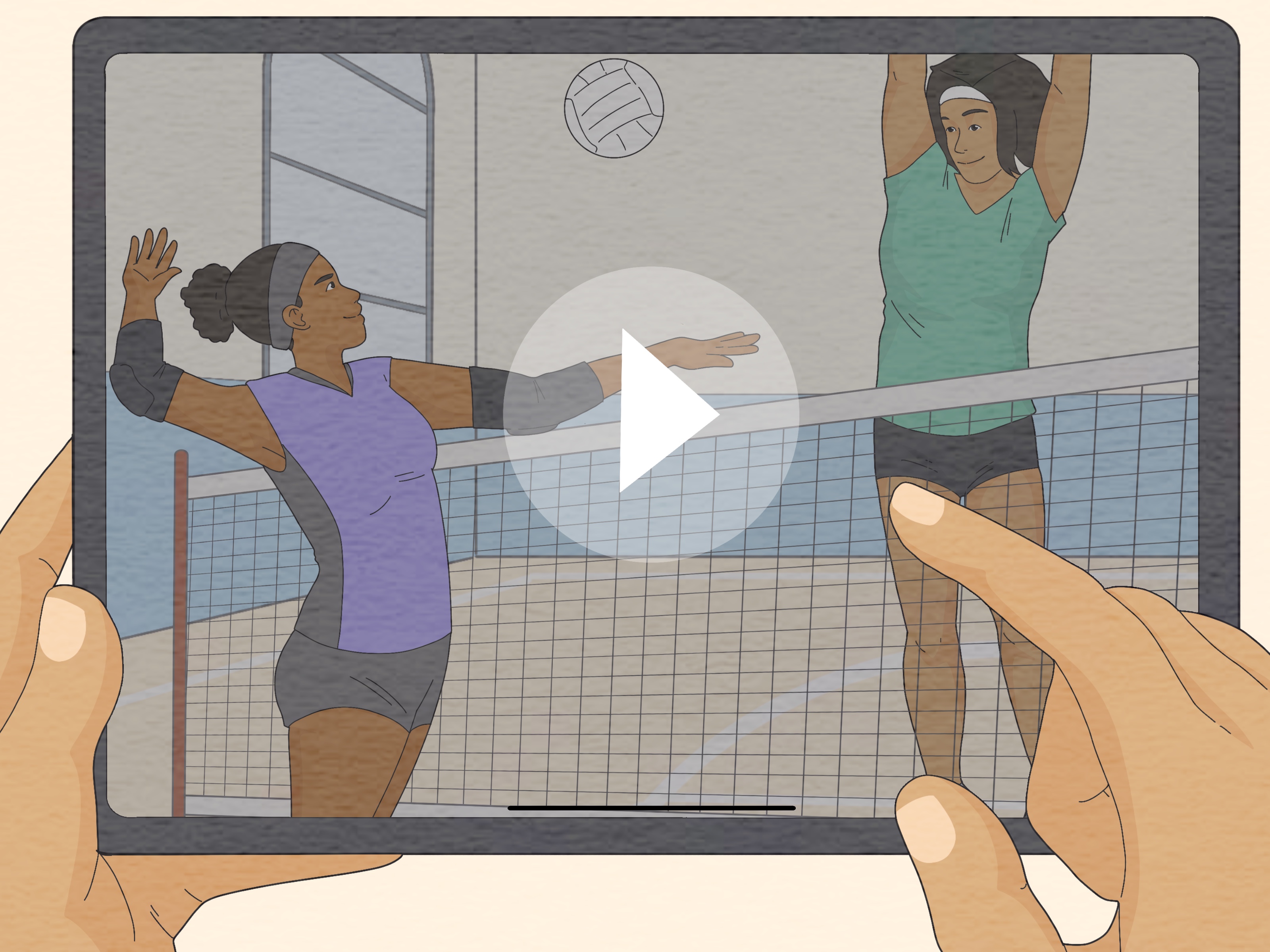
Video can help too. You do not need fancy equipment. A phone on a safe stand can show whether your serving toss is drifting, your passing platform is swinging, or your approach timing is late. Watching yourself can be humbling. The camera is honest, and sometimes rude, but extremely useful.
Stay Healthy Enough to Improve
Consistency beats dramatic overtraining. Warm up before practice, strengthen your legs and core, work on shoulder stability, and listen when something hurts in a way that feels wrong. Volleyball involves jumping, landing, quick direction changes, and repeated overhead motions, so recovery matters. Sleep, hydration, mobility, and rest days are not laziness. They are how your body files the paperwork for improvement.
If you are a young athlete, avoid the trap of doing too much too soon. Build gradually. Improving at volleyball should make you stronger, more confident, and more skillednot permanently exhausted. The best players are available, coachable, and healthy enough to train again tomorrow.
Common Mistakes That Slow Volleyball Improvement
Even motivated players can get stuck because they practice the wrong way. One common mistake is focusing only on hitting. Hitting is fun, but if you cannot pass or serve, you may spend most of the match waiting for a perfect situation that never arrives. Another mistake is practicing without targets. Volleyball is a target sport: pass to a setter zone, serve to a court zone, set to a hittable window, attack to open space.
A third mistake is refusing to talk. Beginners often stay quiet because they are nervous, but silence creates confusion. Calling the ball early is one of the easiest ways to look more confident immediately. Another mistake is letting one bad play become five bad plays. Everyone shanks passes. Everyone misses serves. Everyone has a moment where the ball hits the ceiling of their dignity. Good players recover faster.
A Simple Weekly Plan to Get Better at Volleyball
Here is a practical training structure for players who want steady improvement without turning their life into a dramatic training montage. Two or three times a week, spend 15 to 20 minutes on ball control: wall passing, partner pepper, serve receive, or target passing. Add 15 minutes of serving with zones and pressure goals. Spend another 15 minutes on footwork, approach timing, defensive movement, or blocking steps.
During team practice, focus on one theme each day. For example, Monday might be “early feet,” Wednesday might be “serve to zones,” and Friday might be “call every ball.” Small themes help your brain organize improvement. Trying to fix everything at once usually leads to fixing nothing while looking very busy.
Finally, play as much game-like volleyball as possible. Drills matter, but the game teaches timing, spacing, pressure, and decision-making. The more you play, the more you learn what actually works when the ball, teammates, opponents, and scoreboard are all involved.
Extra Experience: What Learning Volleyball Really Feels Like
Learning volleyball is a strange and wonderful process because progress rarely arrives politely. One day your serve feels smooth and reliable; the next day the ball behaves like it has joined a different team. That is normal. Volleyball improvement is not a straight line. It is more like a rally: messy, fast, occasionally confusing, but still moving forward if you keep the ball alive.
One of the most useful experiences for beginners is realizing that “good” does not mean “perfect.” A good player does not pass every ball perfectly. A good player makes the next touch easier. A good player does not hit every ball straight down. A good player sees the block, finds open space, and keeps pressure on the opponent. A good player does not avoid mistakes. A good player learns faster from them.
For example, imagine you are playing left back and the server targets you three times in a row. The first pass flies too tight to the net. The second pass goes too far inside. At this point, many players start thinking, “Please do not serve me again,” which is basically an invitation for the universe to serve you again. A better response is to adjust one thing: start a step deeper, angle your platform earlier, or call the ball louder. Improvement often comes from one small correction, not a complete personality change.
Another real volleyball experience is learning how much communication changes the game. At first, calling “mine” may feel awkward, especially if you are not naturally loud. But once you start talking, the court becomes less chaotic. Teammates know what you are doing. You know what they are doing. The ball stops landing between two players who both had “good intentions,” which is volleyball language for “nobody moved.”
Playing different positions also teaches valuable lessons. When you try setting, you understand why pass accuracy matters. When you try hitting, you understand why set location matters. When you play defense, you understand why blockers need to take away a clear area. When you serve receive, you understand why a tough serve can control the entire rally. The more roles you experience, the smarter your volleyball IQ becomes.
There is also a mental side that every player meets eventually. Maybe you miss a serve at set point. Maybe you get blocked by someone who celebrates with the energy of a fireworks finale. Maybe your perfect pass gets wasted, or your not-so-perfect pass becomes a miracle kill. Volleyball teaches emotional reset because the next point arrives quickly. You do not have time to write a novel about the last mistake. You breathe, learn, and get ready.
The most satisfying experience is when practice finally shows up in a game. You serve to the seam and force a bad pass. You read a tip before it happens. You keep a rally alive with a controlled dig. You set a hittable ball even while scrambling. These moments feel small from the outside, but they are huge for a developing player. They prove that your reps are working.
If you want to be good at volleyball, keep collecting those moments. Be curious. Ask better players what they saw. Watch matches and notice movement away from the ball. Practice skills that are not glamorous. Celebrate improvement that nobody else sees yet. Volleyball rewards players who stay engaged, stay coachable, and keep showing up with energy. The ball may still betray you sometimes, but eventually, you will betray it right backwith a clean pass, a smart serve, and maybe even a spike that makes your teammates lose their minds.
Conclusion
Becoming good at volleyball is not about one magic drill or one perfect piece of advice. It is about stacking smart habits: control the ball, serve with intention, move your feet, train every major skill, communicate clearly, and recover well enough to keep improving. The best volleyball players are not just athletic; they are aware, adaptable, and reliable under pressure.
Start with the basics and make them sharp. Passing creates offense. Serving creates pressure. Footwork creates balance. Setting, hitting, blocking, and digging create options. Communication turns six separate players into one team. Put those pieces together, and you will not just look better on the courtyou will actually help your team win more points.