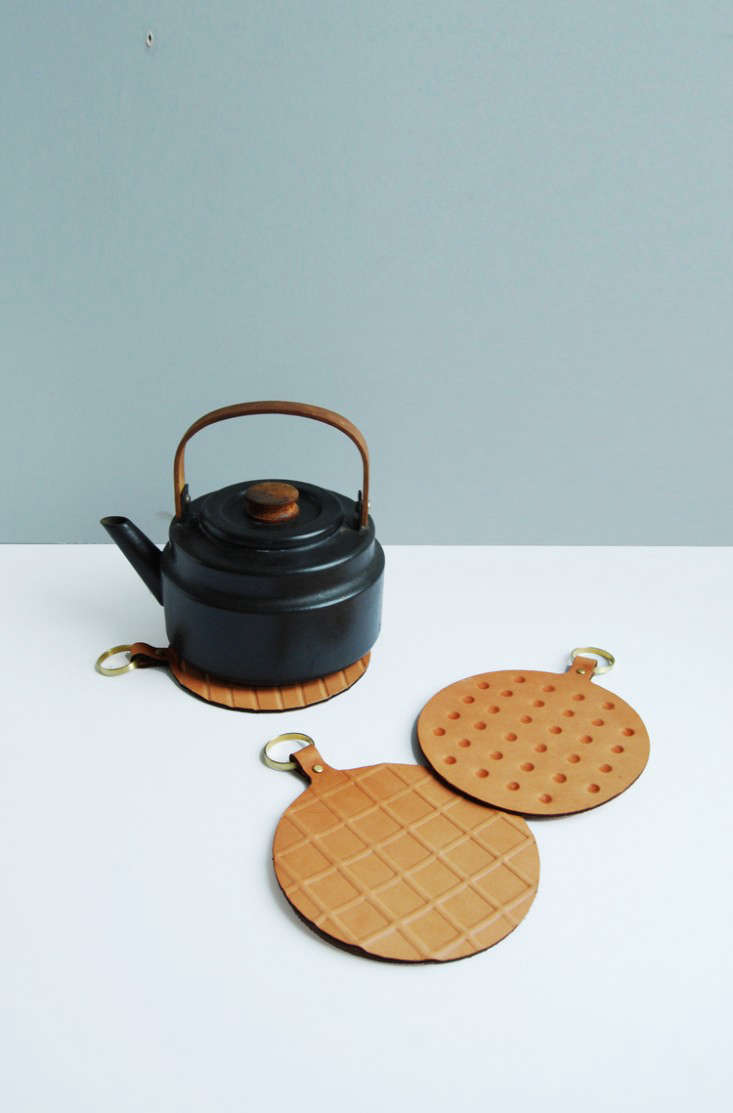
Some kitchen tools shout for attention. Others quietly save your table from becoming a modern art project titled Oops, the Dutch Oven Was Hot. Appétit Leather Trivets belong to that second, smarter category. They are small, handsome, tactile pieces designed to sit between hot cookware and the surfaces you actually care about: dining tables, countertops, sideboards, kitchen islands, and that one beautiful wooden table everyone in the house has been warned about at least twice.
At first glance, a leather trivet sounds almost too stylish to be practical. Leather? Near hot pans? Is this kitchenware or a fashion accessory that wandered into the dining room? But that is exactly what makes the Appétit Leather Trivets interesting. They combine the usefulness of a heat-protective table pad with the warm, natural character of vegetable-tanned leather. Instead of looking like a kitchen afterthought, they feel like part of the table setting.
Originally designed for L&G Studio, the Appétit Leather Trivets were a special limited-edition series made with thick vegetable-tanned leather and brass details. Each piece was hand-pressed with a textured pattern inspired by edible treats, giving the simple square form a playful, food-loving personality. In other words, they protect the table while politely reminding everyone why they came to dinner in the first place.
What Are Appétit Leather Trivets?
Appétit Leather Trivets are designer leather trivets created to protect dining and kitchen surfaces from hot dishes, pans, casseroles, kettles, and serving pieces. A trivet’s job is straightforward: it creates a barrier between heat and the surface underneath. The best trivets do that job without ruining the look of the table. These leather trivets lean heavily into that second part.
The original Appétit design used vegetable-tanned leather, a material known for developing a natural patina over time. That means the trivet does not stay frozen in showroom perfection forever. It darkens, softens visually, and collects subtle signs of use. For people who like objects that tell a story, this is a feature, not a flaw. A well-used leather trivet can become a small archive of dinners, holidays, weeknight soups, and the occasional “I made this pasta from scratch, please clap” moment.
The standard size was approximately 7 inches by 7 inches with a slim profile, making it large enough for many small-to-medium serving dishes while still easy to store. The brass accent added a refined detail and helped separate the product from ordinary hot pads. Instead of hiding in a drawer, the trivet could hang, stack, or sit openly on a shelf as part of the kitchen’s visual personality.
Why Leather Makes Sense for a Trivet
Leather has a long history in functional objects because it is strong, flexible, and naturally beautiful. In the kitchen, leather is often seen in pot handle covers, coasters, drawer pulls, aprons, and serving accessories. A leather trivet fits comfortably into that family. It feels warmer than metal, more refined than silicone, and less fragile than ceramic.
Vegetable-tanned leather is especially appealing because it has character. Unlike synthetic materials that may look nearly identical year after year, vegetable-tanned leather responds to air, light, touch, oils, and regular handling. Over time, the surface develops depth. The color may become richer. Edges may soften. Marks may settle into the surface like little design footnotes.
For a trivet, that aging process feels appropriate. A kitchen is not a museum. It is a place where things simmer, spill, steam, splash, and occasionally boil over with dramatic enthusiasm. A leather trivet that improves with use fits the rhythm of real cooking better than an object that must remain flawless to remain attractive.
Design Appeal: A Trivet That Looks Like It Belongs
Many trivets are purely practical. They do the job, but they look like emergency equipment for dinner. The Appétit Leather Trivets take a different approach. Their textured patterns, food-inspired theme, and simple square shape make them feel considered. They can work with modern, rustic, Scandinavian, farmhouse, industrial, or minimalist dining setups.
On a white marble counter, a tan leather trivet adds warmth. On a dark walnut dining table, it creates a tonal, layered look. On open shelving, it can sit beside ceramic bowls, linen napkins, wooden spoons, and glassware without looking out of place. It is the kind of kitchen accessory that quietly says, “Yes, I know what a tablescape is, but I promise not to be annoying about it.”
Modern Kitchens
In a modern kitchen with clean lines, stainless appliances, and neutral finishes, leather creates a welcome contrast. The Appétit Leather Trivet softens hard surfaces and adds a handcrafted element. It prevents the room from looking too sterile, which is important unless your dinner guests are robots with excellent posture.
Rustic and Farmhouse Tables
Leather also feels natural in rustic and farmhouse settings. It pairs well with cast iron, stoneware, wood boards, enamel cookware, linen runners, and handmade ceramics. A leather trivet under a bubbling casserole or hot skillet looks intentional, not improvised.
Small-Space Dining
For apartments and compact kitchens, a beautiful trivet can pull double duty. It protects surfaces during meals and acts as decor when not in use. Because the Appétit style is slim and compact, it does not demand much storage space. It can slide into a drawer, rest against a backsplash, or hang from a hook.
How Appétit Leather Trivets Compare With Other Materials
Trivets come in many materials: silicone, wood, cork, ceramic, cast iron, stone, metal, wool felt, and leather. Each has strengths. Silicone is flexible and easy to rinse. Cast iron is nearly indestructible. Wood feels classic. Ceramic can be decorative. Cork is lightweight and affordable. Leather sits in a special middle ground: functional, tactile, and stylish without feeling flashy.
Compared with silicone, leather looks more elevated on the table. Compared with cast iron, it is lighter and easier to move. Compared with ceramic, it is less likely to chip. Compared with cork, it feels more luxurious. The trade-off is care. Leather should not be soaked, scrubbed aggressively, placed in a dishwasher, or treated like a disposable hot pad. It asks for a little respect. Not muchjust enough to avoid chaos.
Best Uses for Appétit Leather Trivets
A leather trivet is ideal for serving moments where presentation matters. Think Sunday roast, weeknight curry, a small Dutch oven of soup, baked pasta, tea service, roasted vegetables, a skillet cookie, or a breakfast pan of shakshuka. It helps bring hot food directly to the table while making the table look more pulled together.
These trivets are also useful for coffee and tea stations. A hot teapot, French press, moka pot, or small kettle can rest on leather without making the counter look cluttered. In a home bar, a leather trivet can support warm cocktail tools, a small carafe, or a decorative candleholder when used carefully.
Another clever use is layering. Place a leather trivet under a ceramic serving bowl on a buffet table, even when the dish is only warm. It adds height, texture, and visual framing. If your table setting looks flat, a trivet can act like punctuation. Suddenly, the casserole has a stage. And honestly, after spending ninety minutes in the oven, it deserves one.
Heat Protection: What to Know Before Use
A trivet is designed to reduce heat transfer, but no material should be treated as magic. The safest habit is to use leather trivets with hot serving dishes, warm pots, and pans that have cooled slightly after leaving direct heat. Avoid placing cookware straight from a blazing burner, broiler, grill, or extremely hot oven onto leather for long periods.
If you regularly cook with heavy cast iron or very high oven temperatures, consider stacking protection: use the leather trivet for presentation and add a second heat-safe layer when needed. This is especially important on delicate surfaces such as waxed wood, antique furniture, stone with sealant, painted tables, or countertops vulnerable to heat shock.
The rule is simple: when in doubt, give the pan a minute. Food will survive. Your table will thank you. Your future self, who does not want to Google “how to fix white heat mark on wood table,” will also thank you.
How to Clean and Care for Leather Trivets
Leather care is not complicated, but it is specific. Start with prevention. Keep leather trivets away from standing water, greasy puddles, harsh cleaners, bleach, rubbing alcohol, and excessive direct sunlight. Leather can dry out if exposed repeatedly to heat or strong chemicals, so gentle care is always the best approach.
Daily Cleaning
For crumbs or dust, wipe the trivet with a soft, dry cloth. If needed, use a barely damp cloth to lift light residue, then dry the leather immediately. Do not soak it. Do not rinse it under the sink. Do not toss it into the dishwasher unless you are conducting a science experiment titled Sad Leather.
Dealing With Spills
Blot spills quickly with a clean cloth. Avoid rubbing aggressively, which can push liquid deeper into the leather. For oil spots, understand that some darkening may become part of the patina. That is not always a disaster. On vegetable-tanned leather, everyday marks often blend into a richer surface over time.
Conditioning
If the leather begins to look dry, apply a small amount of leather conditioner suitable for vegetable-tanned leather. Test it on a hidden corner first, because conditioners can darken the color. Use very little product, spread it evenly, allow it to absorb, and buff gently with a soft cloth. The goal is nourishment, not a glossy salad dressing finish.
Buying Tips: What to Look for in a Leather Trivet
If you are shopping for a leather trivet inspired by the Appétit style, pay attention to material, thickness, stitching or hardware, size, and finish. Full-grain or vegetable-tanned leather is usually more desirable than thin bonded leather. A good trivet should feel substantial in the hand and lie flat on the table.
Look for thoughtful details. Brass rivets, clean edges, hand-pressed textures, or hanging holes can make a simple square of leather feel special. Size matters too. A 7-inch square works well for many bowls, small pots, and serving dishes, but larger cookware may need a bigger trivet or a pair used together.
Also consider color. Natural tan leather will show patina faster and more dramatically. Dark brown or black leather may hide stains better and blend into moodier table settings. If you love visible aging, choose lighter leather. If you prefer a more controlled look, go darker.
Styling Ideas for Appétit Leather Trivets
The beauty of Appétit Leather Trivets is that they can be styled beyond their practical role. Hang one on a small brass hook near the stove. Stack two beside a cutting board. Use one under a fruit bowl when it is not protecting the table from hot food. Pair it with linen napkins and matte ceramic plates for a relaxed dinner party look.
For a holiday table, leather adds warmth without competing with flowers, candles, or serving dishes. At Thanksgiving, a leather trivet under a gravy boat or vegetable dish feels seasonal without screaming “pumpkin parade.” For casual brunch, it can sit under a skillet of cinnamon rolls, baked eggs, or a pot of coffee.
If your kitchen leans minimalist, use the trivet as one of the few visible accessories. If your kitchen leans maximalist, let it join the party with colorful ceramics, patterned linens, and copper cookware. Leather is unusually cooperative. It plays well with nearly everyone.
Are Appétit Leather Trivets Worth It?
Appétit Leather Trivets are worth attention because they turn a humble kitchen object into something memorable. They are not just about heat protection. They are about touch, aging, craft, and the pleasure of using beautiful everyday tools. A cheap trivet can protect a table. A good leather trivet can protect a table and improve the mood of the meal.
The original Appétit pieces are no longer widely available for purchase, which gives them a collectible quality. However, the idea behind them remains useful: a trivet can be practical and beautiful at the same time. If you find an original, it is a charming piece of design history. If you find a similar handmade vegetable-tanned leather trivet, it can deliver much of the same appeal.
Experience Notes: Living With Appétit Leather Trivets
The first thing you notice when using an Appétit-style leather trivet is the texture. It does not feel cold or slippery like metal. It does not bend like thin silicone. It has a grounded, natural feel that makes setting down a hot dish seem a little more ceremonial. Even a basic weeknight pot of soup feels more intentional when it lands on a handsome leather square instead of a folded kitchen towel that may or may not be clean. We have all used that towel. We do not need to discuss it in public.
In everyday use, the best part is how easily a leather trivet moves from kitchen to table. You can keep it near the stove while cooking, then place it at the center of the dining table before serving. It looks like part of the meal rather than a piece of equipment. Guests may not immediately say, “What a beautiful trivet,” because people do not always lead with trivet compliments. But they notice the table feels warmer, more finished, and more personal.
Over time, the leather begins to change. A pale tan trivet may darken at the center where dishes often sit. Edges may pick up a deeper tone from handling. Tiny marks may appear from plates, pans, crumbs, or the enthusiastic placement of a serving spoon. At first, you may feel protective. Then the object starts to relax, and you relax with it. The marks stop feeling like damage and start feeling like evidence. This is the quiet charm of vegetable-tanned leather: it makes use visible in an attractive way.
One practical lesson is to use the trivet thoughtfully with very hot cookware. For a warm ceramic bowl, a teapot, a casserole dish, or a pot that has rested briefly, it performs beautifully. For a screaming-hot cast iron skillet straight from a burner, it is smarter to add extra protection or let the pan cool slightly. Leather is durable, but it is not a superhero cape. Treat it as a refined table protector, not an industrial heat shield.
Cleaning also becomes part of the routine. A quick wipe after dinner is usually enough. If sauce splashes near it, blot quickly. If oil leaves a faint mark, do not panic. Many small spots mellow over time. The trivet becomes less precious and more loved. That is when it starts to feel like a real kitchen object, not just a beautiful thing you bought and were afraid to touch.
As a gift, an Appétit-style leather trivet is especially strong. It is useful, design-forward, easy to wrap, and appropriate for hosts, newlyweds, apartment dwellers, home cooks, and people who already own too many mugs. Unlike trendy gadgets, it does not require charging, updating, pairing, syncing, or reading a manual written in seven languages. It simply sits there, looks good, and saves the table from heat. Frankly, more household objects should be this emotionally stable.
Conclusion
Appétit Leather Trivets prove that small kitchen accessories can carry real design value. With vegetable-tanned leather, brass details, food-inspired texture, and a compact square form, they transform a practical heat barrier into a warm, tactile, table-ready object. They are stylish enough to display, useful enough to reach for daily, and personal enough to age with the meals they serve.
Whether you are collecting the original L&G Studio design or shopping for a similar handmade leather trivet, the appeal is clear. This is kitchenware with personality. It protects surfaces, elevates presentation, and gains character over time. In a world full of disposable tools and forgettable accessories, Appétit Leather Trivets offer something better: function with flavor.