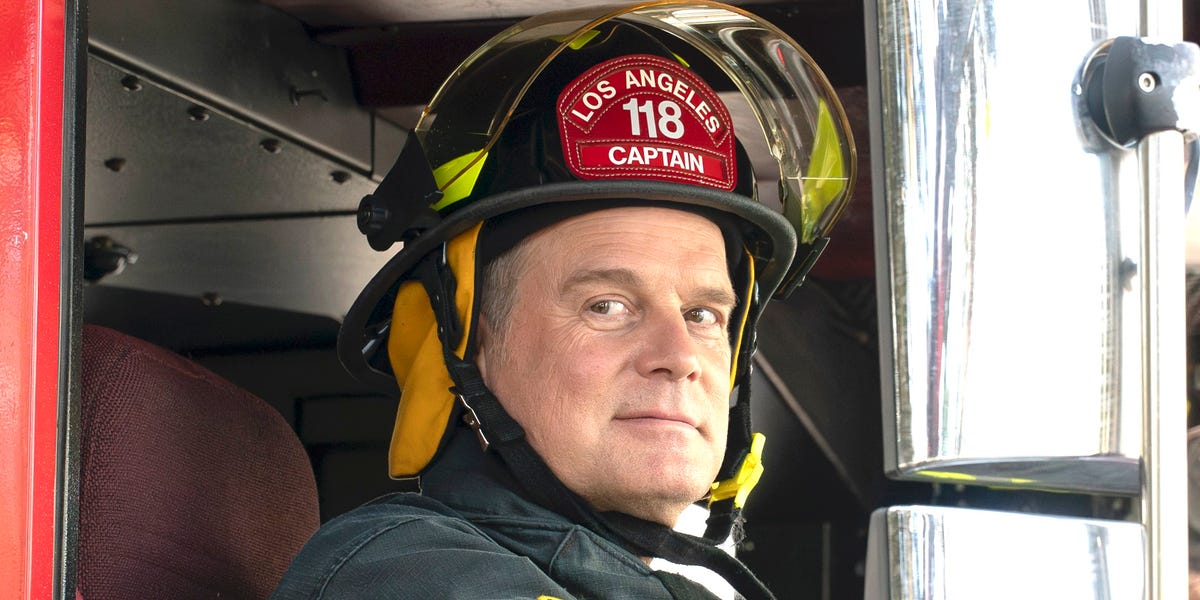
Spoiler warning: This article discusses major events from 9-1-1 Season 8, Episode 18, “Seismic Shifts,” including Bobby Nash’s death, the finale ending, and the emotional final scene.
Few network dramas understand emotional whiplash quite like 9-1-1. One minute, a building is collapsing like it forgot to read the safety manual. The next, fans are sitting on their couches, clutching throw pillows, whispering, “No, I’m fine,” while clearly not being fine at all. The 9-1-1 Season 8 finale delivered exactly that kind of television: high-stakes rescue, grief-soaked character drama, and a final scene that turned viewers into puddles.
The episode, titled “Seismic Shifts,” aired on ABC on May 15, 2025, and closed one of the show’s most painful chapters. After the shocking death of Captain Bobby Nash, played by Peter Krause, the 118 was not simply responding to emergencies. They were surviving one. Bobby’s absence hung over the finale like smoke after a fire: visible, heavy, and impossible to ignore.
But the scene that truly broke fans came near the end, when Maddie Buckley and Howard “Chimney” Han introduced their newborn son to Athena Grant Nash. His name? Robert Nash Han. Then Athena, still grieving her husband, looked at the baby and softly greeted him as “Bobby.” Cue the sound of millions of viewers emotionally collapsing into their snacks.
Why the ‘9-1-1’ Season 8 Finale Hit So Hard
The power of the finale came from how carefully it tied grief to legacy. The audience had already been through the brutal loss of Bobby Nash, the longtime leader of Station 118 and one of the emotional anchors of the series. Bobby was not just the boss with a radio and a heroic jawline. He was the person who held the team together, guided them through trauma, and made the firehouse feel like family.
His death in Season 8 changed the temperature of the show. The 118 suddenly felt colder, more uncertain, and more fragile. Buck considered leaving. Chimney carried survivor’s guilt. Athena struggled with anger, heartbreak, and the impossible task of living in a world where Bobby was no longer waiting for her at home. For a series famous for bee-nadoes, plane disasters, earthquakes, and “only on this show” emergencies, this was the kind of disaster no rescue rig could fix.
That is why the finale’s closing scene landed with such force. The baby’s name did not erase Bobby’s death. It did not magically patch the team back together. Instead, it offered something more honest: a reminder that love can continue after loss, even if it arrives wearing a tiny hospital blanket.
The Final Scene: Athena Meets Baby Robert Nash Han
In the finale’s tender closing moments, Maddie and Chimney welcome their second child, a son. When Athena visits, the couple reveals that they have named him Robert Nash Han in honor of Bobby. It is a simple moment, but simplicity is exactly what makes it devastating.
No explosion. No villain. No dramatic rescue countdown. Just a grieving widow, a newborn baby, and the name of the man everyone still misses.
Athena’s reaction carries the emotional weight of the entire season. Angela Bassett, as always, does not need a monologue to communicate heartbreak. A look, a breath, a slight tremble in her voice: that is enough. When Athena acknowledges the baby as “Bobby,” the scene becomes less about naming a child and more about handing a piece of Bobby’s legacy into the future.
For Maddie and Chimney, the name is also deeply meaningful. Bobby died after sacrificing himself to save Chimney, and that act left Chim with an enormous emotional burden. Naming his son after Bobby is not just a tribute. It is a promise: Bobby’s sacrifice will not be reduced to a tragic memory. It will live in the family he helped protect.
How Bobby Nash’s Death Changed Station 118
Bobby Nash was the moral center of 9-1-1. He had lived through addiction, guilt, loss, and redemption. He understood what it meant to be broken and still show up for other people. That made him more than a captain. He was the emotional architecture of the 118.
After his death, the finale shows the team struggling to function without him. That grief is not always loud. Sometimes it appears as distance. Sometimes it shows up as frustration, guilt, or the urge to run away. Buck’s uncertainty, Chimney’s pain, Athena’s anger, and Hen’s quiet steadiness all reflect different versions of mourning.
The finale’s major rescue a high-rise apartment collapse works as both action sequence and metaphor. The building comes down just as the team’s sense of stability has already crumbled. The 118 must find survivors in the rubble while also trying to find themselves without the man who used to lead them.
Chimney’s Survivor’s Guilt
Chimney has survived plenty on 9-1-1. The poor man has been through enough physical trauma to make a hospital loyalty card seem reasonable. But Bobby’s death hits him differently because Bobby sacrificed himself so Chim could live.
That kind of survival is complicated. It is gratitude mixed with guilt, love mixed with pain. Chimney’s arc in the finale is about learning that surviving Bobby’s sacrifice does not mean being trapped by it. It means living in a way that honors it.
His leadership during the collapse and his emotional conversations with Athena help position him as one of the people who may carry Bobby’s spirit forward. Whether or not he officially becomes captain, the finale makes one thing clear: Chimney has grown into someone capable of holding the team together when it matters most.
Athena’s Grief and the Long Road Forward
Athena’s grief is the soul of the finale. She loved Bobby not as an icon, but as a husband. To the team, he was captain. To fans, he was a beloved character. To Athena, he was home.
That is what makes her scenes so painful. She is not just mourning a hero. She is mourning morning coffee, quiet conversations, shared plans, and the future they were still building. The show wisely allows her grief to be messy. She is not instantly graceful about it. She is angry. She struggles to look at Chimney. She has to process what Bobby chose and what that choice cost her.
By the time Athena meets baby Robert Nash Han, the scene feels like a small step toward healing. Not closure in the neat, greeting-card sense. More like the first deep breath after crying so hard your face forgets what normal feels like.
Why Fans Were in Tears
The finale scene worked because it connected three emotional threads at once: Bobby’s sacrifice, Chimney’s guilt, and Athena’s grief. Fans were not crying simply because a baby was named after a beloved character. They were crying because the name represented everything Bobby meant to the show.
Robert Nash Han is not a replacement for Bobby. That distinction matters. The show is not saying, “Here, have a baby and stop being sad.” It is saying that love leaves fingerprints. Bobby’s life changed Chimney, Maddie, Athena, Buck, Hen, Eddie, and everyone connected to the 118. His name living on through a child is a symbolic way to show that his influence did not end with his death.
That is classic 9-1-1: emotional, slightly theatrical, occasionally outrageous, but sincere enough to make even the most sarcastic viewer blink suspiciously at the ceiling.
The Finale’s Rescue Mission Was More Than Action
“Seismic Shifts” also gives fans a large-scale emergency, because this is still 9-1-1, and apparently no one in Los Angeles is allowed to have a normal Thursday. The 118 responds after a high-rise apartment building collapses, creating a mass casualty situation filled with trapped residents, dangerous rubble, blocked exits, and near-impossible rescue conditions.
The emergency forces the team back into motion. In grief, people often isolate. The finale pushes the 118 into the opposite position: they must work together or people will die. It is a smart storytelling choice because the rescue becomes a test of whether the team can still be the 118 without Bobby physically standing beside them.
The answer is painful but hopeful. They are not the same. They may never be the same. But they are still a family. Bobby built something strong enough to survive his absence, even if every beam of that emotional structure is creaking.
Eddie, Buck, Hen, and the Future of the 118
The finale also sets up several important changes for Season 9. Eddie’s return to Los Angeles reassures fans who feared the team might fracture permanently. Buck’s search for a new living situation hints at fresh personal transitions. Hen’s family storyline offers a much-needed note of joy, especially with the adoption of Mara becoming official.
Meanwhile, the question of leadership remains open. Bobby’s captain chair cannot be filled casually. The show seems to understand that replacing him too quickly would feel false. Chimney may be emotionally positioned as a future leader, but the larger issue is not just who gets the title. It is whether anyone can carry the emotional responsibility Bobby once held.
That question gives the finale its bittersweet power. The 118 is moving forward, but forward does not mean easy. It means limping, crying, joking at inappropriate times, saving strangers, and trying again tomorrow. In other words, very much on brand.
Why Naming the Baby Robert Nash Han Was the Perfect Tribute
TV memorials can sometimes feel heavy-handed. A portrait on the wall. A dramatic speech. A swelling soundtrack so aggressive it practically hands you tissues. But naming Maddie and Chimney’s son Robert Nash Han works because it feels personal.
Bobby was not connected to Chimney only as a captain. Their relationship stretched back through years of danger, growth, loyalty, and trust. Bobby’s final sacrifice for Chimney made that bond even more profound. For Chim and Maddie to give their child Bobby’s name is an act of love, gratitude, and remembrance.
The name also connects Bobby to the future of the series. Every time fans hear about little Bobby Han, they will remember the man whose courage made that child’s family possible. It is a beautiful narrative bridge between loss and renewal.
What the Finale Says About Grief
One reason the 9-1-1 Season 8 finale resonated is that it understands grief is not a straight line. Athena does not simply forgive, heal, and move on. Chimney does not magically stop feeling guilty. The team does not become instantly fine because a baby arrives. Real grief is more stubborn than that. It sits in the room, eats your snacks, and refuses to leave when guests come over.
But the episode also suggests that grief can become part of love’s ongoing story. Bobby’s death hurts because his life mattered. The final scene does not soften the loss; it gives it meaning. That is why fans responded so strongly. They were not just watching a sad scene. They were watching characters try to carry love forward without pretending the pain had disappeared.
Fan Reaction: Tears, Tributes, and Emotional Damage
Online reactions to the finale were full of viewers calling the baby-name reveal beautiful, heartbreaking, and a fitting tribute to Bobby. Many fans admitted they expected the name but still cried when it happened. That is the funny thing about emotional television: knowing the punch is coming does not stop it from landing directly in your feelings.
The scene also gave fans a shared moment of mourning. After weeks of debate over Bobby’s death, the finale offered a point of unity. Whether viewers loved or hated the creative decision to kill Bobby, many agreed that the final tribute was moving.
And let’s be honest: 9-1-1 fans are professionals at emotional endurance. They have survived disasters, relationship chaos, near-deaths, actual deaths, and enough cliffhangers to qualify for hazard pay. But “Hello, Bobby” still managed to sneak past everyone’s defenses.
Experiences Related to the ‘9-1-1’ Season 8 Finale Scene
One of the most relatable experiences connected to the 9-1-1 Season 8 finale is how a fictional scene can unexpectedly unlock real emotions. Many viewers sit down expecting entertainment: action, sirens, banter, maybe Buck making a face that launches three thousand social media posts. Then, out of nowhere, a quiet scene about grief and remembrance hits something personal.
For anyone who has lost someone important, Athena holding baby Robert Nash Han may feel familiar in a way that is difficult to explain. Families often keep loved ones alive through names, stories, recipes, habits, and tiny rituals. A grandfather’s name becomes a child’s middle name. A parent’s favorite song plays at a wedding. Someone makes the holiday dish “the way she used to,” even if nobody can find the exact recipe and the stuffing is doing its best.
That is why the baby-name reveal works beyond the plot. It mirrors how people actually carry grief. We do not preserve loved ones only through monuments or dramatic speeches. We preserve them through ordinary life. A name on a birth certificate. A framed photo on a shelf. A phrase repeated at the right moment. A laugh that sounds like someone who is gone.
The scene also captures the strange emotional mix of new life after loss. A baby arriving after a death can bring joy and sadness into the same room. People smile and cry at the same time. Someone says, “He would have loved this,” and suddenly everyone needs a minute. That emotional contradiction is not weakness. It is human. The finale understands that joy after grief does not betray the person who died. Sometimes it honors them.
Another experience fans may recognize is the feeling of a found family trying to rebuild after losing its center. Workplaces, friend groups, and families often have one person who quietly keeps everyone connected. They organize the plans, remember the birthdays, calm the arguments, and somehow know when to bring food. When that person is gone, the group can feel unmoored. People still love each other, but the rhythm changes.
That is exactly what happens to the 118. Bobby’s death leaves everyone unsure where to stand. The finale’s emotional journey is not about replacing him. It is about learning how to keep showing up for one another with his lessons still guiding them. Chimney’s growth, Athena’s softening, Eddie’s return, Hen’s family milestone, and Maddie’s tribute all become different ways of saying: we are still here, and he still matters.
For longtime viewers, the scene may also remind them why they became attached to 9-1-1 in the first place. Yes, the show is famous for outrageous emergencies. A casual viewer might come for the chaos. But fans stay for the emotional bonds: Athena and Bobby’s marriage, Maddie and Chimney’s resilience, Buck and Eddie’s loyalty, Hen’s strength, and the firehouse family that somehow makes disaster feel intimate.
Watching Athena greet baby Bobby is the kind of television experience that lingers after the episode ends. You turn off the TV, but the feeling stays. Maybe you text a friend. Maybe you rewatch the scene and pretend you are “checking a detail.” Maybe you sit quietly for a moment because a network procedural just reminded you of someone you miss. That is not just good drama. That is storytelling doing its job.
Conclusion: Bobby’s Legacy Lives On
The 9-1-1 Season 8 finale scene has fans in tears because it turns loss into legacy without pretending grief is easy. Robert Nash Han’s name is more than a tribute. It is a symbol of Bobby’s lasting impact on the people he loved, protected, and inspired.
“Seismic Shifts” closes a painful season by reminding viewers that the 118 is still standing. Damaged, yes. Changed forever, absolutely. Emotionally stable? Let’s not get carried away. But still standing.
Bobby Nash may be gone, but the finale makes one thing clear: his story is not over. It lives in Athena’s grief, Chimney’s courage, Maddie’s love, the 118’s future, and one tiny baby with a very big name.
Note: This original article is based on verified public episode details and entertainment reporting about 9-1-1 Season 8, Episode 18, “Seismic Shifts.”