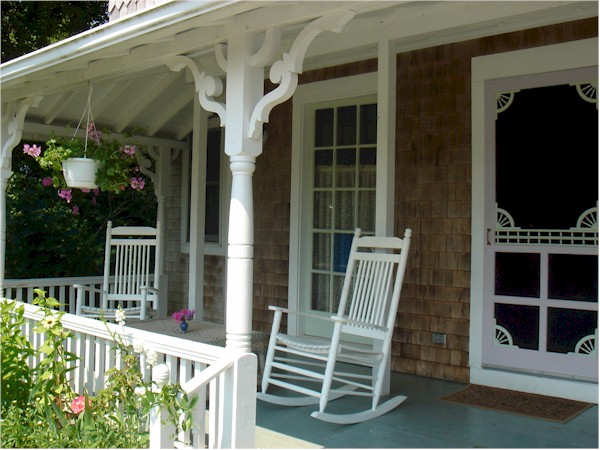
Some moments in life do not arrive with fireworks, marching bands, or a dramatic movie soundtrack. Sometimes the best part of your day is a tiny wave from an older neighbor sitting on the porch, watching the world go by like the unofficial mayor of the sidewalk. You are just walking past with your coffee, your dog, your backpack, your grocery bag, or your “I am definitely getting my steps in today” optimism, and there they are: calm, smiling, and ready with a hand in the air.
That little porch wave may seem simple, but it carries surprising power. It says, “I see you.” It says, “You belong on this street.” It says, “The neighborhood is still alive, and yes, I noticed your dog is wearing a sweater.” In a world where many people rush past each other with earbuds in, eyes down, and thumbs doing Olympic-level scrolling, an old-fashioned neighborly wave feels like a warm biscuit for the soul.
This is why old folks who sit on their porch and wave at you when you walk by deserve a permanent place on the list of awesome things. They turn an ordinary sidewalk into a small community. They transform a random street into a place with memory, personality, and a little bit of human magic. They are not just sitting outside. They are holding the front line of friendliness.
Why the Porch Wave Still Matters
A wave is one of the lowest-effort, highest-return social gestures humans have ever invented. It requires no appointment, no password, no group chat, and no awkward “we should hang out sometime” commitment. You lift your hand, smile, and suddenly the street feels less anonymous.
For older adults, the porch has long been more than a piece of architecture. It is a lookout post, a resting place, a weather station, a conversation starter, and sometimes a front-row seat to the neighborhood’s greatest live performances: dogs refusing to walk, kids learning to ride bikes, delivery drivers hunting for house numbers, and joggers pretending they meant to stop after half a block.
For walkers, that wave can become a tiny ritual. The first time, you may wave back politely. The second time, you recognize the person. By the fifth time, you start wondering where they are if the chair is empty. Congratulations: you have been enrolled in the invisible neighborhood friendship program. There are no dues. The uniform is comfortable shoes.
The Science Behind a Simple Hello
Research on social connection has made one thing clear: small relationships matter. Strong ties with family and close friends are important, of course, but casual connections also help people feel rooted in their community. Saying hello to a neighbor, chatting with someone at the corner store, or exchanging a wave across a porch can all add up to a greater sense of belonging.
Health organizations have warned that loneliness and social isolation can affect mental and physical well-being, especially for older adults. Staying connected with neighbors, community programs, and everyday social activities can help reduce isolation. In plain English: humans are not houseplants. We need sunshine, water, and at least occasional evidence that someone knows we exist.
The beauty of the porch wave is that it is accessible. It does not require a long conversation. It does not demand emotional speeches or neighborhood committee meetings with folding chairs and bad cookies. It is a quick spark of recognition. For some people, especially those who live alone, that small spark may be one of many moments that keeps the day feeling connected.
Porches Are the Original Social Network
Before apps, status updates, and comment sections, there was the porch. The porch was where people learned who got a new car, whose tomatoes were doing well, which kid had grown three inches over the summer, and whose cat had decided to become everybody’s cat. It was Facebook with rocking chairs and fewer arguments about fonts.
Front porches create a gentle bridge between private life and public life. You are still at home, but you are also present in the neighborhood. You can wave, nod, chat, or simply watch. That half-inside, half-outside quality makes the porch special. It invites connection without forcing it.
Modern life often pushes people indoors. Air conditioning, garages, back patios, streaming services, and busy schedules have changed how neighborhoods feel. But when someone sits out front and greets passersby, the street immediately becomes warmer. It is a reminder that community does not always require a grand plan. Sometimes it starts with a chair, a cup of coffee, and the willingness to acknowledge whoever walks past.
Why Older Neighbors Are Often the Best Wavers
Older folks have usually mastered the art of the wave because they understand something younger people sometimes forget: not every interaction needs to be efficient. Some things are valuable precisely because they are not productive. A porch wave will not clear your inbox, improve your credit score, or fold the laundry currently forming a mountain on your chair. But it can make the day feel kinder.
Many older adults have spent decades watching neighborhoods change. They remember when trees were smaller, when certain houses had different paint colors, when kids played outside until someone yelled them in for dinner, and when a casual hello was not considered an interruption. Their wave carries that history. It says, “I have seen this street through seasons, storms, moving trucks, Halloween decorations, and suspiciously ambitious garage sales.”
And let us be honest: older porch wavers often have style. Some offer the classic full-hand wave. Some prefer the two-finger salute. Some lift a coffee mug. Some nod like a wise cowboy in a suburban Western. Some wave with the authority of someone who knows every squirrel on the block by reputation. Whatever the method, it works.
The Emotional Power of Being Recognized
Being recognized in your own neighborhood is deeply comforting. You do not need to be famous. You do not need a blue checkmark, a bestselling memoir, or a dramatic entrance. You just need someone to look up and say, without words, “There you are.”
That feeling can be especially meaningful in cities and suburbs where people often live close together but remain strangers. Apartment doors close. Garage doors open and shut like mechanical eyelids. Cars pull in, people disappear indoors, and entire families can live twenty feet apart without learning one another’s names. A porch wave gently interrupts that pattern.
It reminds walkers that they are part of a shared place. It gives older neighbors a role as visible members of the community. It creates a tiny thread between people who may never sit down for dinner together but still share the same weather, the same sidewalks, the same trash pickup schedule, and the same neighborhood mystery of who keeps leaving one shoe near the curb.
Small Gestures Build Safer, Friendlier Streets
Friendly streets do not happen by accident. They are built through repeated, ordinary gestures. A wave today becomes recognition tomorrow. Recognition becomes trust. Trust becomes the comfort of knowing someone might notice if something seems wrong.
This does not mean older porch sitters are running a secret neighborhood security agency, although some of them absolutely have the observational skills of retired detectives. It means their presence matters. A person sitting outside, greeting others, and paying attention can make a street feel watched in the best way: not suspicious, not nosy, just cared for.
When people feel seen, they are more likely to feel responsible for a place. They pick up litter. They slow down while driving. They learn names. They notice when an older neighbor’s porch light has not come on. They return runaway dogs. They share extra lemons. Suddenly, the neighborhood is not just a collection of properties. It is a living network of people.
How to Respond When Someone Waves From the Porch
The correct response is simple: wave back. You do not need to overthink it. This is not a job interview. No one is grading your elbow angle. A smile and a hand lift will do.
Start With the Basic Wave
If you are shy, try the small hand raise. It is dignified, safe, and unlikely to knock your iced coffee onto your shirt. If you are feeling bold, add a smile. If you walk by often, you can upgrade to “Good morning” or “Beautiful day.” Weather comments are the universal password of neighborly civilization.
Respect Boundaries
A porch wave is friendly, but it is not always an invitation to stop for a long conversation. Some people enjoy chatting. Others simply enjoy acknowledging passersby. Let the moment stay easy. If the older neighbor wants to talk, you will know. They may ask about your dog, your garden, your route, or whether the mail has already come. This is how civilization begins.
Be Consistent
The magic grows with repetition. When you wave back regularly, the exchange becomes part of the rhythm of the street. It may seem tiny, but tiny rituals are often what make a place feel like home.
What the Porch Wave Teaches Us About Community
The porch wave teaches that community does not always begin with big events. It does not require a festival, a fundraiser, a matching T-shirt, or a committee called “Neighbors United for Sidewalk Energy.” Those things can be wonderful, but community often begins much smaller.
It starts when someone looks up. It starts when someone makes eye contact. It starts when a person who has seen many years decides to spend part of the day outside, available to the world. It starts when a passerby waves back instead of pretending to be fascinated by a shrub.
In that sense, old folks on porches are quiet teachers. They remind us to slow down. They show us that friendliness can be simple. They prove that attention is a gift. And they demonstrate that sometimes the most memorable part of a walk is not the destination, the step count, or the playlist. It is the human being who noticed you passing by and made the street feel a little less lonely.
Specific Examples of Porch-Wave Awesomeness
Imagine walking your dog every morning past a small blue house with a white railing. An older woman sits there with a cup of tea and waves every time. After a few weeks, she knows your dog’s name before she knows yours. This is normal. Dogs have excellent public relations teams.
Or picture an older man in a baseball cap who sits outside around sunset. He waves at kids on bikes, joggers, delivery workers, parents pushing strollers, and anyone brave enough to carry two grocery bags in each hand. He may not say much, but his wave becomes a landmark. Turn left at the maple tree, pass the house with the porch waver, and you are almost home.
Maybe there is a retired couple who sits together after dinner. One waves enthusiastically. The other gives a royal nod. Together, they create a neighborhood checkpoint of goodwill. You pass them after a stressful day, and suddenly the world feels less like a spreadsheet with shoes.
These examples are ordinary, and that is the point. The awesomeness is not in drama. It is in reliability. It is in the comfort of familiar faces. It is in the way small kindnesses quietly stack up until a street feels like a place where people belong.
How Younger Generations Can Keep the Tradition Alive
You do not have to be retired, own a rocking chair, or have strong opinions about lawn care to practice porch-wave energy. Anyone can do it. You can say hello in the hallway. You can nod to the crossing guard. You can wave to the neighbor watering plants. You can smile at the older person sitting on the bench outside the apartment building.
The key is to notice people without demanding anything from them. Not every act of connection needs to become a deep friendship. Sometimes the best social glue is light, respectful, and steady. A wave says, “We share this place, and I wish you well.” That is enough.
In a time when many people feel busy, distracted, or disconnected, bringing back small neighborly habits is not old-fashioned in a dusty way. It is old-fashioned in the best way, like handwritten notes, homemade pie, and knowing how to fix something with a screwdriver instead of immediately buying a new one.
Extra Experience: The Day a Porch Wave Changed the Whole Walk
There is a particular kind of walk that begins badly. Your shoes feel weird. The weather cannot decide if it wants to be sunny or dramatic. A car splashes through a puddle with suspicious timing. Your mind is busy replaying every small problem in high definition. You are walking, technically, but your thoughts are running a chaotic meeting with no agenda.
Then you pass a porch.
On that porch sits an older man in a faded cap, leaning back in a chair that looks like it has heard every neighborhood story since 1987. He is not doing anything spectacular. He is simply there, watching the street with the calm of someone who knows the difference between an actual emergency and a squirrel being theatrical. As you approach, he raises his hand.
It is not a huge wave. It is not a parade wave. It is just enough. You wave back, and something shifts. The walk becomes less heavy. The street stops feeling like a route and starts feeling like a place. You notice the flowers near the mailbox. You notice the sound of leaves moving. You notice that the dog behind the fence has once again chosen emotional volume over logic. Life is still life, but now it has a little porch-light glow around the edges.
Over time, that wave becomes part of the routine. You do not know the man’s full story. Maybe he worked at the post office. Maybe he coached Little League. Maybe he has three grandchildren, a secret cookie recipe, and a firm belief that nobody knows how to park anymore. You may never learn all of that. Still, the connection is real in its own small category.
One day, the porch is empty. You glance over and feel a tiny disappointment. Not panic, not sadness exactly, just the odd sensation of a missing note in a familiar song. The next day, he is back, and you are surprisingly relieved. This is how small rituals reveal their size. You thought it was just a wave. It was actually a thread.
Another experience might happen with an older woman who sits on her porch surrounded by potted plants. The first time you pass, she waves. The second time, she says, “Morning.” The third time, she compliments your jacket. By week four, she has unofficially joined your weather advisory board. “Rain later,” she says, and she is correct with the confidence of a local legend.
Eventually, you start choosing that side of the street. Not because you need anything. Not because you expect a conversation. You choose it because the world feels better when someone is glad to see people passing by. Her porch becomes a small checkpoint of kindness. You arrive at it carrying the day’s invisible clutter, and you leave with one piece of it set down.
That is the experience at the heart of this awesome thing. The porch wave is not about nostalgia for a perfect past. The past was never perfect, and mosquitoes have always been terrible. It is about preserving a human habit that still works. Notice people. Greet them. Make the shared spaces feel shared. Let the sidewalk become more than concrete. Let the neighborhood have a face.
Old folks who wave from porches remind us that friendliness does not need to be complicated. They show that community can be built in seconds, repeated over weeks, and remembered for years. Their waves are small, but they travel far. They follow us down the block, into our mood, and sometimes into the way we treat the next person we meet.
Conclusion
Old folks who sit on their porch and wave at you when you walk by are awesome because they make everyday life feel warmer, safer, and more human. They prove that connection does not always need a long conversation. Sometimes it only needs eye contact, a raised hand, and a moment of shared recognition.
The next time an older neighbor waves from the porch, wave back. Smile if you can. Say hello if the moment feels right. That tiny exchange may become the best part of your walk, and who knows? One day, you may be the porch person making someone else’s day better with a simple wave.