If you came here for the fast answer before the moon starts doing anything dramatic, here it is: as of April 2026, the next lunar eclipse is the deep partial lunar eclipse on the night of August 27–28, 2026. In plain English, Earth will take a very big bite out of the moon, but not the whole cookie. It will be an impressive event for much of the Americas, with decent views in parts of Europe and Africa too.
That timing matters, because many articles still talk about the total lunar eclipse of March 3, 2026 as “the next one.” It was the next one for a while. Then time did what time does and kept moving. So if you are reading this in April 2026, summer 2026 is now the lunar eclipse worth circling on your calendar, tapping into your phone, or writing on a sticky note that will somehow end up attached to your fridge.
This guide breaks down exactly when the next lunar eclipse happens, what kind of eclipse it is, where it will be visible, whether it will look red, and how to watch it without overcomplicating a sky event that is, thankfully, much easier than assembling patio furniture.
The Short Answer: When Is the Next Lunar Eclipse?
The next lunar eclipse is on August 27–28, 2026, and it will be a partial lunar eclipse. That means only part of the moon moves through Earth’s darkest shadow, called the umbra. But this is not a tiny, blink-and-you-miss-it nibble. It is expected to be a very deep partial eclipse, so the moon should look dramatically shadowed for a big portion of the event.
For readers in the United States, the show happens late on August 27 and into early August 28, depending on your time zone. On the East Coast, the dark partial phase begins at about 10:33 p.m. EDT, reaches its peak just after midnight, and wraps up around 1:51 a.m. EDT. On the West Coast, the same event fits neatly into the evening, beginning around 7:33 p.m. PDT and peaking around 9:13 p.m. PDT. That is excellent news for anyone who enjoys astronomy but also values a functional sleep schedule.
If you miss the August 2026 eclipse, the one after that arrives on February 20–21, 2027. However, that one is a penumbral lunar eclipse, which is the astronomy equivalent of the moon quietly changing outfits in another room. It can be interesting, but it is much subtler than a deep partial or total eclipse.
Why This Date Matters More Than You Might Think
The phrase “next lunar eclipse” sounds simple, but it ages faster than a banana left on the dashboard. Eclipse articles often become outdated because astronomy calendars are fixed while search results linger around like old party decorations. That is why current timing matters so much for this topic.
Right now, the August 27–28, 2026 event is the lunar eclipse people should plan around. It follows the March 2026 total lunar eclipse by almost six months, which makes sense because eclipses tend to cluster into eclipse seasons. These seasons happen when the sun, Earth, and moon line up close enough near the lunar nodes for an eclipse to occur. So no, the moon is not just randomly showing off. There is geometry involved, and it is annoyingly precise.
What Kind of Lunar Eclipse Is Next?
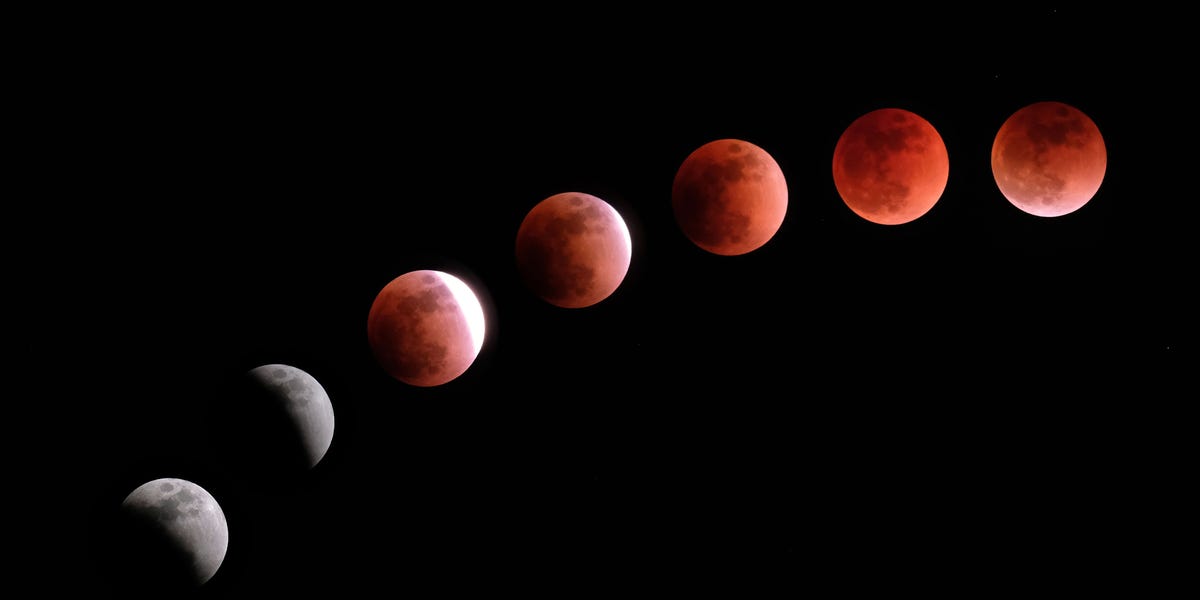
The next lunar eclipse is a partial lunar eclipse, but it is not an ordinary, faint one. Astronomers describe it as a deep partial eclipse because more than 90% of the moon will move into Earth’s umbral shadow. So while it will not become fully engulfed the way it does during a total lunar eclipse, it should still look striking.
Think of lunar eclipses in three main categories:
- Total lunar eclipse: the whole moon passes through Earth’s umbra and can turn coppery red.
- Partial lunar eclipse: only part of the moon enters the umbra, creating a dark curved shadow across its face.
- Penumbral lunar eclipse: the moon passes through the faint outer part of Earth’s shadow, causing only subtle shading.
The August 2026 eclipse lands squarely in the “partial, but still very photogenic” category. That makes it a sweet spot for casual skywatchers. You do not need to wait for totality to see a dramatic change, and you do not need an advanced telescope setup that looks like it should have its own insurance policy.
Where Will the Next Lunar Eclipse Be Visible?
The August 27–28, 2026 partial lunar eclipse will be best for viewers in North and South America. Parts of Europe, Africa, and western Asia should also catch at least part of the event, though local visibility depends on moonrise, moonset, weather, and whether your neighborhood streetlight is determined to ruin your astrophotography dreams.
For much of the Americas, the eclipse will be visible from start to finish. That is one reason this event is getting so much attention. It is both accessible and dramatic, which is a rare combo. Some celestial events are exciting but happen at 4:17 a.m. behind clouds while the moon hangs two inches above the horizon. This one is friendlier.
Still, visibility is always local. Hills, buildings, trees, haze, and storm systems can all get in the way. So the best advice is simple: check a location-specific sky chart closer to the date, confirm your local moonrise time, and scout a place with a clear eastern or southeastern view, depending on where you live.
Why Lunar Eclipses Happen
A lunar eclipse happens when Earth moves directly between the sun and the full moon, casting its shadow across the moon’s surface. Because the moon’s orbit is tilted compared with Earth’s orbit around the sun, this does not happen every full moon. If it did, astronomy clubs would be even more insufferably smug than they already are.
Most months, the full moon passes a little above or below Earth’s shadow. But during eclipse season, the alignment is close enough for the moon to move through the shadow zone. If the moon cuts through the umbra completely, you get a total lunar eclipse. If it only clips part of it, you get a partial eclipse. If it brushes the outer penumbra, you get a penumbral eclipse that makes people squint and say, “Wait, is it dimmer, or am I just tired?”
Will the Next Lunar Eclipse Be a Blood Moon?
Not in the full, headline-grabbing way people usually mean it. A classic “blood moon” happens during a total lunar eclipse, when the moon is entirely inside Earth’s umbra and glows reddish or coppery. That red color comes from sunlight filtering through Earth’s atmosphere. Blue light gets scattered out more strongly, while red and orange wavelengths bend through and reach the moon. In other words, the moon gets lit by the combined glow of all the world’s sunrises and sunsets. Which is objectively cooler than most marketing campaigns.
Because the August 2026 event is a deep partial eclipse, part of the moon may still take on rusty, reddish, or maroon tones, especially near peak eclipse. But it will not look exactly like a fully eclipsed blood moon. Expect a dramatic dark shadow, some color variation, and a very noticeable “something weird is happening up there” effect.
How to Watch the Next Lunar Eclipse
The beauty of a lunar eclipse is that it is wonderfully low-maintenance. You do not need eclipse glasses. You do not need special filters. And you absolutely do not need to stare at an instruction manual like you are preparing to launch a small satellite.
Here is how to get the best view:
- Pick a spot with a clear view of the sky and minimal light pollution.
- Check the weather forecast the day before and the day of the eclipse.
- Arrive early so your eyes adjust to the dark.
- Use binoculars if you want a closer view of the shadow edge and surface details.
- Bring a lawn chair, a blanket, and patience, because lunar eclipses unfold slowly.
If you plan to photograph it, a tripod helps a lot. Smartphones can capture the mood of the event, but a camera with manual settings or a telescope adapter will do better if you want detail. The trick is to adjust exposure as the moon darkens. A bright full moon and a shadowed eclipsed moon do not behave the same way in photos, so your settings will need to change throughout the night.
Do You Need Eye Protection?
No. Lunar eclipses are safe to watch with the naked eye. That is one of the biggest differences between a lunar eclipse and a solar eclipse. During a solar eclipse, eye safety is a serious issue because you are dealing with direct sunlight. During a lunar eclipse, you are just looking at the moon, which is no more dangerous than looking at any ordinary full moon.
So go ahead and use your eyes, binoculars, a telescope, or a camera. The moon will not file a complaint.
Best Places to Watch in the U.S.
Because the August 2026 eclipse favors the Americas, viewers across much of the United States should have a good shot, weather permitting. Western and central areas may especially enjoy comfortable timing because much of the event happens in the evening before midnight local time. That means less coffee, less regret, and fewer heroic acts involving 3 a.m. alarm clocks.
Some great viewing options include:
- State parks and dark-sky areas
- Beaches, fields, and open rural spaces
- Observatory public events and university skywatch nights
- Your own backyard, if it has a decent horizon and fewer porch lights than a shopping mall
Many observatories and astronomy clubs will likely host livestreams or in-person events. Those are excellent if you want expert commentary, telescope access, or the comforting presence of someone who can identify Jupiter without using an app.
FAQ: When Is the Next Lunar Eclipse?
Is the next lunar eclipse total or partial?
The next lunar eclipse is a partial lunar eclipse, not a total one. But it is deep enough to be much more dramatic than a faint partial event.
When is the next total lunar eclipse after that?
If you are specifically waiting for a total lunar eclipse rather than any lunar eclipse, you will need to look beyond the August 2026 event. The next eclipse after it in early 2027 is only penumbral, which is much subtler.
Will the next lunar eclipse be visible everywhere?
No. Lunar eclipse visibility depends on where Earth is turned toward the moon during the event. The August 2026 eclipse strongly favors the Americas, with partial visibility extending into parts of Europe, Africa, and western Asia.
What time should I start watching?
Start about 30 to 45 minutes before the partial phase begins in your time zone. That gives you time to get settled and notice the gradual shading change instead of walking outside halfway through and pretending you totally meant to do that.
Can kids watch it?
Yes. Lunar eclipses are safe and make a great family skywatching event. They are slow, visible without equipment, and far easier to explain than quantum mechanics at bedtime.
Why This Eclipse Is Worth the Hype
The August 2026 lunar eclipse is worth attention because it combines three things skywatchers love: it is easy to see, it is dramatic enough to be memorable, and it is visible across a large portion of the Western Hemisphere. Even though it is not total, it gets close enough to deliver real visual drama.
That matters for casual observers. You do not need to be an astronomy obsessive to enjoy an event like this. A deep partial lunar eclipse gives you a clear, obvious transformation in the moon’s appearance. It feels like the sky is doing something on purpose. For many people, that is the gateway moment that turns “I should look up more often” into actually doing it.
The Experience of Watching a Lunar Eclipse
Watching a lunar eclipse in person feels very different from reading about one. On paper, it sounds simple: Earth’s shadow moves across the moon. In real life, it feels a little uncanny, like the sky has decided to perform a slow magic trick. Nothing happens all at once. Instead, the moon changes gradually enough that you keep doubting yourself at first. Is that a shadow? Is the moon dimmer? Am I imagining it? Then ten minutes later, the answer becomes obvious. No, you were not imagining it. The universe really did start taking a bite out of the moon.
One of the best parts of a lunar eclipse is the pace. Unlike a meteor, which flashes and vanishes, or a rocket launch, which is loud and over before you have processed your feelings, a lunar eclipse takes its time. You can step outside, look up, go back in for a cup of coffee, return with a blanket, and the moon is still mid-performance. It makes the night feel bigger. Ordinary time slows down a little.
There is also something deeply social about it. Even if you are watching alone, you know thousands or millions of other people are glancing at the same moon. Neighbors come outside. Someone points. Someone else insists their phone camera can totally handle it. Children ask why the moon looks broken. Adults suddenly become philosophers. For a little while, everybody shares the same overhead event, and that feels surprisingly grounding.
The color changes are what most people remember. During a total lunar eclipse, the moon can turn coppery, red, or rusty orange. During a deep partial eclipse like the one in August 2026, the contrast between the bright part and the shadowed part can be even more striking than people expect. The shadow edge looks curved and precise, a visible reminder that Earth is round and currently very busy making that point across 238,000 miles of space.
There is also the mood of the sky around the moon. As the moon darkens, the surrounding stars can seem more noticeable. The night feels richer. If you are in a quiet place away from city glare, the eclipse can feel almost theatrical, with the moon as the lead actor and the rest of the sky finally getting its supporting role.
And then there is the memory factor. People tend to remember where they were for unusual sky events. In a backyard. On a college campus lawn. Wrapped in a blanket on a deck. Standing in a driveway with friends, all pretending they are not a little awestruck. A lunar eclipse is one of those experiences that turns an ordinary night into a timestamp in your personal history. Not bad for something that costs exactly zero dollars to watch.
Final Thoughts
So, when is the next lunar eclipse? As of April 2026, the answer is August 27–28, 2026, and it should be a beautiful deep partial event for much of the Americas. It may not be a full blood moon spectacle, but it will still be one of the most watchable sky events of the year.
If you enjoy easy astronomy wins, this is your moment. Mark the date, check your local forecast, find a dark-ish spot, and give yourself time to watch the moon slowly slip into Earth’s shadow. The sky is about to put on a very good show, and unlike most good shows, parking is free.