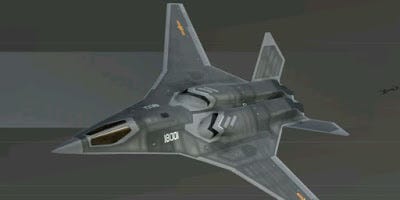
Every few months, the internet does what the internet does best: it finds a blurry aircraft image, zooms in until the pixels start asking for mercy, and declares, “That’s it. That’s China’s stealth bomber.” The latest questionIs this China’s stealth bomber?is not just clickbait with wings. It sits at the intersection of military technology, Indo-Pacific strategy, nuclear deterrence, and a global guessing game powered by satellite photos, social media clips, and defense analysts with very strong coffee.
The aircraft at the center of this mystery is usually called the Xi’an H-20 stealth bomber, a long-rumored strategic bomber being developed for the People’s Liberation Army Air Force, or PLAAF. If it enters service as expected, the H-20 could become China’s first true long-range stealth bomber and a major step toward giving Beijing a more complete nuclear triad. But here is the important part: as of public reporting, China has not officially unveiled an operational H-20, and many recent images said to show it remain unverified.
So, is that shadowy flying machine in the grainy photo really China’s stealth bomber? The honest answer is: maybe, but probably not enough to bet your favorite aviation mug on it. Let’s unpack what is known, what is rumored, and why this mysterious aircraft matters far beyond aviation fan forums.
What Is the H-20 Supposed to Be?
The H-20 bomber is widely understood to be China’s next-generation strategic bomber, likely produced by Xi’an Aircraft Industrial Corporation under China’s state-owned aviation giant AVIC. Chinese officials publicly acknowledged work on a new long-range bomber in 2016, and since then the H-20 has become one of the most closely watched programs in modern military aviation.
Most public assessments describe the H-20 as a stealthy, subsonic, long-range bomber designed to carry both conventional and nuclear weapons. In plain English, that means it would be built not for dogfighting, not for flashy airshow barrel rolls, and definitely not for looking pretty on a runway. Its job would be to travel far, avoid detection, penetrate defended airspace, and deliver weapons against high-value targets.
Why a Stealth Bomber Matters
A stealth bomber gives a country options. It can threaten targets that older bombers cannot reach safely. It can complicate an enemy’s air defense planning. It can carry cruise missiles, precision-guided bombs, or nuclear weapons. Most importantly, it creates uncertainty. If an adversary cannot easily detect, track, or predict where the bomber will appear, that bomber becomes a strategic headache with wings.
The United States has understood this for decades through aircraft such as the B-2 Spirit and the newer B-21 Raider. China appears to want a similar capability, but adapted to its own strategic geography. For Beijing, the H-20 would not simply be a “Chinese B-2.” It would be a tool for projecting power deeper into the Pacific and strengthening China’s long-range strike options.
What Do We Actually Know?
The public picture of the H-20 is a puzzle with several pieces missing, a few pieces upside down, and at least one piece that might belong to a completely different puzzle. Still, there are some consistent themes across U.S. defense assessments and reputable military analysis.
Expected Range and Mission
Public U.S. defense assessments have suggested that China’s future H-20 could have a range of more than 10,000 kilometers, allowing the PLAAF to reach beyond the First Island Chain and cover the Second Island Chain, including areas around Guam and the western Pacific. With aerial refueling, its reach could theoretically expand even further.
That is strategically significant. The First Island Chain includes Japan, Taiwan, the Philippines, and nearby maritime approaches. The Second Island Chain reaches farther east, including Guam, a crucial U.S. military hub. A stealth bomber capable of operating across those distances would give China a much more flexible way to hold regional targets at risk.
Conventional and Nuclear Roles
The H-20 is expected to be dual-capable, meaning it could carry conventional or nuclear weapons. That matters because China’s air-delivered nuclear capability has historically lagged behind its land-based missile force. The H-6N bomber, a modernized derivative of the older H-6 family, has already been associated with China’s developing airborne nuclear role. But the H-6 design traces its roots to the Soviet-era Tu-16, which is not exactly fresh out of the futuristic aircraft bakery.
The H-20 would represent a major leap. A stealthy bomber with long range and nuclear capability would strengthen China’s strategic deterrent by adding a more survivable and flexible air leg to its nuclear force.
Is the Aircraft in Recent Images Really the H-20?
Now we arrive at the fun part: the sightings. In late 2024 and early 2025, images and video clips circulated online showing unusual Chinese aircraft shapes. Some observers immediately asked whether the H-20 had finally appeared. Others urged caution, noting that the aircraft in some images did not match earlier expectations of a clean flying-wing bomber.
That caution is wise. A true strategic stealth bomber is usually expected to prioritize a low-observable shape, often resembling a flying wing with minimal vertical surfaces. If a photographed aircraft has large tail surfaces or a planform that looks more like a regional strike aircraft, it may be something else entirelyperhaps a medium-range stealth bomber, a test aircraft, a technology demonstrator, or another Chinese combat aviation project.
The Problem With Blurry Photos
Blurry aircraft photos are the defense world’s version of Bigfoot sightings. They are exciting, mysterious, and usually taken from just far enough away to preserve everyone’s arguments. A few pixels can launch a thousand theories. Is that a wingtip? A shadow? A tail? A compression artifact? Is the aircraft enormous, or is the camera angle playing tricks?
Without official confirmation, high-quality imagery, or reliable measurements, it is difficult to say whether a mystery aircraft is the H-20. China may also deliberately allow ambiguity. Secrecy can be useful. It keeps foreign analysts guessing, generates psychological effect, and gives Chinese state media room to build anticipation without revealing performance details.
Why China Wants a Stealth Bomber
China’s military modernization has been broad, fast, and deliberate. The People’s Liberation Army has invested in advanced fighters, ballistic missiles, hypersonic weapons, aircraft carriers, drones, cyber capabilities, and space systems. A stealth bomber fits into that larger strategy by adding long-range penetrating airpower.
Power Projection Beyond the Coastline
For decades, China’s airpower was mostly focused on defending the homeland and operating near its coast. That has changed. The PLAAF has been directed to become a more “strategic” air force capable of long-distance operations. New tankers, heavy transports, advanced fighters, electronic warfare aircraft, and long-range bombers all support that shift.
The H-20 would be a symbol and tool of that transformation. It would signal that China is no longer thinking only in terms of nearby airspace. It wants the ability to operate across the western Pacific and potentially beyond.
Pressure on Guam and Regional Bases
One of the most important potential missions for a Chinese stealth bomber would be threatening U.S. and allied bases in the Indo-Pacific. Guam, in particular, is central to U.S. military operations. A long-range stealth bomber carrying cruise missiles could add another layer to China’s existing missile threat against regional bases.
This does not mean the H-20 would make U.S. defenses useless. Modern air defense is not one radar dish and a guy squinting into the sky. It includes satellites, airborne sensors, ground-based radars, fighters, electronic warfare systems, and integrated command networks. But stealth bombers are designed to make that defensive job harder, more expensive, and less predictable.
How the H-20 Compares With the B-2 and B-21
The inevitable comparison is with America’s stealth bombers. The B-2 Spirit remains one of the most iconic stealth aircraft ever built, while the B-21 Raider is intended to become the backbone of the future U.S. bomber force. Both are flying-wing designs built around low observability, long range, and the ability to deliver conventional or nuclear weapons.
If the H-20 follows a similar design philosophy, it may also use a flying-wing shape to reduce radar signature. However, matching the appearance of a stealth bomber is not the same as matching its performance. Stealth is not just geometry. It involves materials, coatings, engine inlets, exhaust management, radar-absorbent structures, manufacturing precision, mission planning, electronic warfare, and maintenance discipline.
Stealth Is a System, Not a Costume
Calling an aircraft “stealthy” because it has a bat-like shape is like calling a cardboard box a luxury apartment because it has walls. True low observability requires a full ecosystem. The aircraft must be designed, built, maintained, and operated in ways that preserve its radar, infrared, acoustic, and electromagnetic advantages.
This is one reason analysts remain cautious about the H-20. China has made impressive progress in stealth fighters such as the J-20, but a strategic bomber is a different challenge. It is larger, more complex, and expected to carry heavier payloads over much longer distances. The engineering problems multiply quickly.
The Technical Challenges China Faces
Developing a stealth bomber is one of the hardest things an aerospace industry can attempt. Only a few countries have even tried, and only the United States has fielded operational stealth bombers at scale. China has enormous industrial capacity, but the H-20 still faces serious technical hurdles.
Engines and Range
Long-range bombers need efficient, reliable engines. China has spent years working to reduce reliance on foreign engine technology. Progress has been real, especially in military aviation, but high-performance turbofan development remains difficult. For a stealth bomber, engines must also be integrated in a way that limits radar and infrared signatures.
Weapons Integration
A bomber is only as useful as the weapons it can carry. The H-20 may be designed for long-range cruise missiles, precision-guided munitions, and possibly nuclear gravity bombs or air-launched missiles. Internal weapons bays would help preserve stealth, but they also create design constraints involving size, weight, thermal management, and release mechanisms.
Command, Control, and Training
Even a world-class aircraft needs trained crews, reliable communications, secure mission planning, and doctrine. Strategic bombers are not casual tools. They require complex decision-making, especially if nuclear weapons are involved. The PLAAF would need to develop procedures, training pipelines, maintenance systems, and command structures to operate the H-20 safely and effectively.
What Would the H-20 Mean for Taiwan?
Any discussion of Chinese long-range strike capability inevitably touches Taiwan. A stealth bomber would not be the only tool China might use in a Taiwan scenario. The PLA already has a massive missile force, advanced fighters, naval assets, cyber capabilities, and electronic warfare systems. Still, the H-20 could complicate the picture.
In a crisis, a stealth bomber could threaten air bases, ports, command centers, logistics hubs, or reinforcements. It could also serve a signaling role. Simply flying or revealing such aircraft during a tense period could be intended to send a message to Washington, Taipei, Tokyo, or Manila.
However, the H-20 would not magically solve the enormous operational challenges of a Taiwan conflict. Amphibious operations, air superiority, logistics, escalation control, and international response would remain difficult. The bomber would be one instrument in a very large orchestraand not necessarily the conductor.
Why the Mystery Itself Is Useful
The H-20’s secrecy is part of its power. A confirmed aircraft can be studied. Its size can be estimated. Its design can be compared. Its bases can be watched. Its test flights can be tracked. But a rumored aircraft lives in the imagination, where it can be bigger, faster, stealthier, and scarier than reality.
China may benefit from this uncertainty. The H-20 can influence foreign planning even before it enters service. U.S. and allied militaries must consider the possibility that China will eventually field a stealth bomber capable of reaching key bases. That means more investment in air defense, dispersal, hardening, deception, and long-range counterstrike capabilities.
So, Is This China’s Stealth Bomber?
The best answer is cautious: not necessarily. Some images may show test aircraft related to China’s broader stealth aviation programs. Some may show a different bomber concept. Some may show prototypes or demonstrators. Some may be misidentified entirely. Until China officially reveals the H-20, or until multiple reliable sources confirm its design and flight status, every dramatic claim should be treated with care.
What is clear is that China is pursuing long-range stealth strike capability. Whether the aircraft in a specific image is the H-20 matters less than the broader trend: Beijing wants a more capable strategic air force, and the H-20 is expected to be a key part of that ambition.
Experience Section: Watching the H-20 Mystery Unfold
Following the H-20 story feels a lot like watching a detective movie where every clue arrives as a blurry screenshot. One week, someone posts an aircraft silhouette on social media. The next week, an aviation analyst compares it with runway markings, hangar sizes, and known Chinese test facilities. Then a defense blog publishes a cautious breakdown, and within hours the internet has divided into three camps: “definitely the H-20,” “definitely not the H-20,” and “I need more coffee before deciding.”
That experience is part of what makes the topic so fascinating. Unlike a commercial aircraft launch, where manufacturers roll out shiny prototypes under stage lights and corporate slogans, stealth bomber development lives behind fences, censors, and strategic silence. The H-20 is not being marketed to airline executives. It is being developed as a national military asset. That means secrecy is not a side effect; it is part of the product.
For defense watchers, the H-20 also shows how modern military analysis has changed. Decades ago, only governments had access to meaningful intelligence on secret aircraft. Today, open-source intelligence communities can study satellite imagery, flight tracking gaps, local photography, construction patterns, runway extensions, and even official propaganda videos. A curious civilian with patience and good judgment can contribute to the conversation. Of course, a curious civilian with bad judgment can also turn a weather balloon into a hypersonic stealth mothership by lunchtime.
The most useful experience is learning to separate excitement from evidence. A new aircraft shape is exciting. A confirmed operational stealth bomber is evidence. A shadow on a taxiway is interesting. A pattern of test flights, official references, and credible imagery is stronger. This discipline matters because military technology stories can easily become inflated. Every rumored aircraft becomes “game-changing.” Every prototype becomes “combat-ready.” Every unknown object becomes “a nightmare for America.” Reality is usually more complicated and, frankly, more interesting.
Another lesson from following the H-20 is that timelines in advanced aviation are rarely smooth. Stealth bombers take years to design, test, refine, produce, and integrate. Even after a first flight, a platform may need long evaluation before operational service. Flight controls, coatings, weapons bays, avionics, engines, mission software, and maintenance systems all have to work together. The aircraft is not finished when it looks cool. It is finished when it can reliably perform missions under real operational conditions.
There is also a strategic experience here: watching the H-20 story unfold makes the Indo-Pacific feel less abstract. Terms like “Second Island Chain,” “nuclear triad,” and “power projection” can sound like textbook phrases until you connect them to actual aircraft, bases, runways, and deterrence choices. A stealth bomber is not just a machine. It is a message about reach, ambition, and national priorities.
In the end, the H-20 mystery reminds us that not every important military development arrives with a press conference. Sometimes it appears first as a rumor, then a silhouette, then a line in a report, then a suspected test flight, and finally a real aircraft. The challenge is not to ignore the cluesbut not to worship the pixels either.
Conclusion
The question “Is this China’s stealth bomber?” has no simple yes-or-no answer yet. The H-20 is real as a publicly acknowledged development effort, but its final design, flight status, production timeline, and operational readiness remain uncertain. Recent mystery aircraft images may be related to China’s stealth aviation ambitions, but they should not be treated as confirmed proof of the H-20 without stronger evidence.
What matters most is the direction of travel. China is working to extend the reach of the PLAAF, strengthen its long-range strike capability, and build a more credible air-delivered nuclear option. If the H-20 eventually enters service as expected, it could reshape military planning across the Indo-Pacific and force the United States and its allies to adapt. Until then, the bomber remains one of the most intriguing unanswered questions in modern airpower: part aircraft, part strategy, part shadow.
Note: This article is based on publicly available defense assessments, aviation analysis, and open-source reporting. It avoids claiming confirmation where official evidence remains unavailable.