Because your linen closet deserves better than a cotton tumbleweed.
Why Folding a Fitted Sheet Feels Like Wrestling a Cloud
Folding a fitted sheet properly is one of those tiny household skills that sounds simple until you are standing in the laundry room holding four elastic corners and questioning every life choice that led you there. Unlike a flat sheet, which behaves politely, a fitted sheet has rounded corners, stretchy elastic, and a deep pocket designed to hug your mattressnot your folding technique.
The good news is that a fitted sheet is not impossible to fold. It simply needs a method. Once you understand the secretnesting the corners together before turning the sheet into a rectanglethe whole process becomes much less mysterious. Think of it as sheet origami, but without the pressure of making a swan.
This guide explains how to fold a fitted sheet step by step, how to avoid wrinkles, how to store sheet sets neatly, and how to keep your linen closet from becoming a soft, fabric-based avalanche. Whether you have twin sheets, queen sheets, king sheets, deep-pocket sheets, cotton percale, linen, microfiber, or bamboo-blend bedding, the basic technique stays the same.
What You Need Before You Start
You do not need fancy tools to fold a fitted sheet. You only need a clean, dry fitted sheet, a flat surface, and a few minutes of patience. A bed, dining table, clean floor, or large laundry counter works well. If your sheet is still warm from the dryer, even better. Warm fabric is easier to smooth, and folding it right away helps reduce creases.
Before folding, check these three things:
- The sheet is fully dry. Damp bedding can trap odor and may encourage mildew.
- The elastic is not twisted. Give the sheet a shake so the corners are easier to find.
- You know the short and long sides. This helps you line up the corners correctly.
If you are folding a king-size fitted sheet, give yourself extra room. King sheets behave like they have a dramatic personality, mostly because there is simply more fabric to manage. A bed is usually the best folding surface for larger sizes.
How to Fold a Fitted Sheet Properly: Step-by-Step
Step 1: Hold the Sheet Inside Out
Start by turning the fitted sheet inside out. Place one hand inside each of two adjacent corners along one long side of the sheet. The elastic edge should face toward you, and the wrong side of the fabric should be visible. This position makes it easier to tuck one corner into another.
Step 2: Bring the First Two Corners Together
Bring your hands together, matching one corner over the other. Flip the corner from your right hand over the corner on your left hand, so one pocket sits neatly inside the other. Smooth the seam with your fingers. At this point, two corners should be nested together like tiny fabric bowls.
Step 3: Find the Third Corner
Keep holding the nested corners with one hand. With your free hand, reach down and find the next loose corner. Tuck that third corner over the first two. Do not worry if the sheet looks awkward here. This is the stage where most people panic, but it is also the stage right before everything starts making sense.
Step 4: Add the Fourth Corner
Locate the final corner and tuck it over the others. Now all four fitted corners should be stacked together on one side. The elastic should form a curved edge, and the rest of the sheet should hang down in a somewhat rectangular shape. Give it a gentle shake to align the fabric.
Step 5: Lay the Sheet on a Flat Surface
Place the sheet on your bed or table with the tucked corners facing upward. The sheet may look like a rectangle with one rounded, elastic side. Smooth it with your hands. Fold the elastic edges inward so they are hidden inside the rectangle. This is the key move. Once the elastic disappears, the fitted sheet behaves more like a flat sheet.
Step 6: Fold Lengthwise Into Thirds
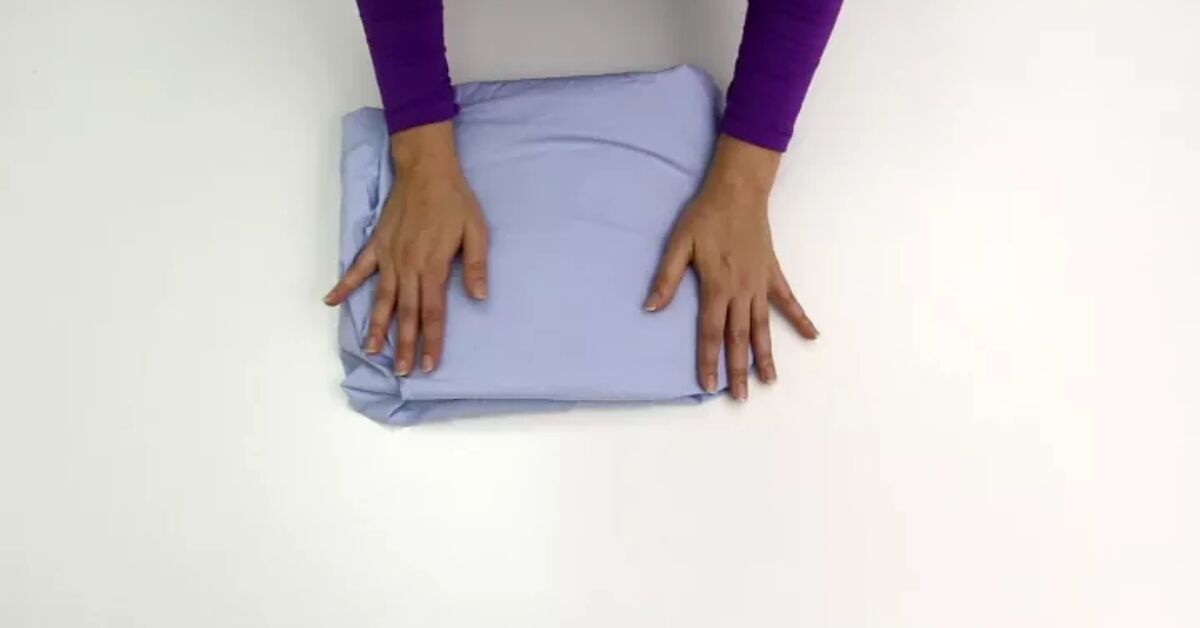
Fold one long side toward the center. Then fold the opposite long side over it, creating a long, narrow rectangle. Smooth as you go. If the sheet is bulky, press out trapped air with your palms.
Step 7: Fold Widthwise Into Thirds
Fold one short end toward the center, then fold the other end over it. You should now have a compact square or rectangle that can stack neatly with your flat sheet and pillowcases. Congratulations: you have defeated the fitted sheet without stuffing it into a closet and pretending it never happened.
The Fast Bed Method for Beginners
If holding all four corners in the air feels too tricky, use the bed method. Lay the fitted sheet flat on the bed with the elastic facing up. Tuck the bottom corners into the top corners, smooth the sheet into a rectangle, fold in the elastic sides, and then fold into thirds.
This technique is especially helpful for deep-pocket sheets, oversized mattresses, and anyone who does not want to perform a laundry-room magic trick. It may not look perfect the first time, but it will look far better than a rolled-up sheet bundle.
Best for:
- King-size fitted sheets
- Deep-pocket fitted sheets
- Beginners
- People folding alone
- Anyone who wants less fabric chaos
Common Mistakes When Folding a Fitted Sheet
Mistake 1: Starting With a Damp Sheet
A damp fitted sheet may fold, but it will not store well. Moisture can create musty smells, and the sheet may come out of the closet wrinkled or stale. Always dry sheets completely before folding.
Mistake 2: Ignoring the Corners
The corners are the whole game. If you fold the sheet without nesting the corners, the elastic will fight you from every direction. Match the corners first, then turn the sheet into a rectangle.
Mistake 3: Trying to Make It Perfect Too Soon
Your first attempt may not look like a professional linen closet photo. That is fine. The goal is not perfection; the goal is a neat, stackable shape. After a few tries, your hands will remember the process.
Mistake 4: Overstuffing the Closet
Even a perfectly folded fitted sheet will look messy if it is shoved between towels, spare blankets, and mystery pillowcases from 2014. Give bedding enough shelf space to stay folded.
How to Store Fitted Sheets Neatly
Once you know how to fold a fitted sheet, the next step is smart storage. A neatly folded sheet can still disappear in a crowded linen closet, so organize by size, room, or set.
Use the Pillowcase Bundle Trick
One of the best ways to store sheet sets is to place the folded fitted sheet, flat sheet, and one pillowcase inside the remaining pillowcase. Fold the open end under, and you have a tidy bedding bundle. This method keeps every piece together, which means no more hunting for the matching pillowcase while your mattress sits half-dressed and judging you.
Label Shelves or Bins
If your home has multiple bed sizes, label shelves or storage bins: Twin, Full, Queen, King, Guest Room, Kids’ Room, Primary Bedroom. Labels prevent the classic mistake of trying to stretch a queen fitted sheet over a king mattress, a workout nobody asked for.
Store Everyday Sheets at Eye Level
Keep the sheets you use most often on easy-to-reach shelves. Seasonal bedding, extra blankets, and guest-room linens can go higher or lower. Your linen closet should work with your daily routine, not require a treasure map.
How to Reduce Wrinkles Before Folding
Folding a fitted sheet properly helps with wrinkles, but your laundry routine matters too. Remove sheets from the dryer promptly, shake them out, and fold them while they are still slightly warm. If sheets sit in the dryer for hours, they will wrinkle like they have been through a personal crisis.
Try these wrinkle-reducing tips:
- Do not overload the washer or dryer.
- Shake sheets before drying to prevent twisting.
- Use the bedding or sheets cycle if your machine has one.
- Fold sheets immediately after drying.
- Store stacks loosely instead of crushing them.
For linen sheets, expect some natural wrinkles. Linen has a relaxed texture, and that slightly rumpled look is part of its charm. For crisp cotton sheets, prompt folding and smooth storage make a bigger difference.
How Often Should You Wash Sheets?
Most households should wash sheets about once a week. You may want to wash them more often if you sweat at night, sleep with pets, have allergies, are recovering from illness, or use heavy lotions or hair products. Always follow the care label, especially for specialty fabrics like silk, bamboo blends, linen, or performance bedding.
Clean sheets are easier to fold because they feel fresh, dry, and smooth. They also make the bedroom feel instantly more put together. Few things in life are as underrated as sliding into a clean bed after a long day. It is basically a spa treatment that does not require cucumber water.
Fitted Sheet Folding Tips by Sheet Type
Cotton Sheets
Cotton fitted sheets are usually the easiest to fold because the fabric has enough structure to hold a crease. Smooth each fold firmly with your hands for a crisp finish.
Linen Sheets
Linen is breathable and beautiful, but it loves wrinkles. Fold linen sheets gently and avoid pressing too hard. A relaxed rectangle is better than forcing a sharp, stiff fold.
Microfiber Sheets
Microfiber sheets can be slippery, so use a flat surface. Fold slowly and smooth often. The fabric may slide around if you try to rush.
Deep-Pocket Sheets
Deep-pocket fitted sheets have extra fabric, so they can look bulky when folded. Take extra time to tuck the elastic edges inward before folding into thirds. The cleaner your rectangle, the neater your final fold.
Quick Troubleshooting: Why Your Fold Looks Messy
The Corners Look Lumpy
The corners may not be fully nested. Reopen the fold, stack all four corners together, and smooth the seams before laying the sheet down.
The Rectangle Is Crooked
The elastic edges may still be sticking out. Fold them inward until the sheet has straight sides.
The Sheet Is Too Bulky
Try folding into thirds instead of halves. Thirds distribute the fabric more evenly and create a flatter package.
You Still Hate Folding It
Fair. Use the pillowcase bundle method, store fitted sheets in bins, or put the clean sheet directly back on the bed. A practical system you actually use is better than a perfect system you avoid.
Extra Experience: What Actually Works in Real Life
After folding many fitted sheets in real homesnot just in perfectly lit laundry videosthe biggest lesson is this: the first fold matters more than the final fold. If the corners are matched neatly, the rest of the process becomes surprisingly easy. If the corners are mismatched, no amount of smoothing will save the sheet from becoming a fabric burrito.
A helpful habit is to fold sheets on the bed they belong to. For example, if you just washed the queen sheets, bring them to the queen bed, spread the fitted sheet across the mattress, and fold it there. The bed gives you a clean, wide surface, and you can immediately see whether the sheet size matches the room. This simple habit also stops sheet sets from migrating into the wrong closet, which is how guest bedrooms end up with three pillowcases and no fitted sheet.
Another real-life trick is to lower your standards slightly at the beginning. Aim for “flat enough to stack,” not “department-store display.” A fitted sheet folded into a tidy rectangle is already a win. After a few laundry days, your folds will naturally get sharper. Muscle memory is real, even when the muscle is mostly patience.
If you have kids helping with laundry, let them start with pillowcases and flat sheets, then teach fitted sheets using the bed method. The corner-tucking method can feel confusing when explained in the air, but it makes sense when the sheet is laid out flat. You can even call the corners “pockets” and show how one pocket hides inside another. It turns a boring chore into a small puzzle.
For small apartments or homes with limited storage, the pillowcase bundle method is the most useful. Fold the fitted sheet as neatly as possible, stack it with the flat sheet and one pillowcase, then slide everything into the second pillowcase. The result looks clean even if the fitted sheet inside is not perfect. This is the linen closet equivalent of wearing a blazer over a wrinkled shirt: suddenly, everything seems intentional.
For deep-pocket sheets, do not fight the extra fabric. After nesting the corners, lay the sheet down and make a generous inward fold along the elastic edges. You are basically hiding the curved parts before creating straight lines. Once the sheet becomes a rectangle, it stops acting like a fitted sheet and starts behaving like regular laundry.
Finally, remember that folding is only one part of bedding care. Wash sheets regularly, dry them completely, avoid leaving them in a heap, and store them where air can circulate. A beautifully folded sheet that smells musty is not a success story. A clean, dry, reasonably neat sheet that is easy to find on laundry day? That is the real household victory.
Conclusion: The Fitted Sheet Is Not the Boss of You
Learning how to fold a fitted sheet properly is less about perfection and more about having a repeatable system. Start inside out, tuck the corners together, hide the elastic, smooth the sheet into a rectangle, and fold into thirds. Once you master those steps, your linen closet becomes calmer, your bedding stays easier to find, and laundry day feels a little less dramatic.
The fitted sheet may have elastic corners, deep pockets, and a reputation for chaos, but now you have a method. And that means the next time a warm sheet comes out of the dryer, you can fold it confidently instead of rolling it into a ball and calling it “modern storage.”