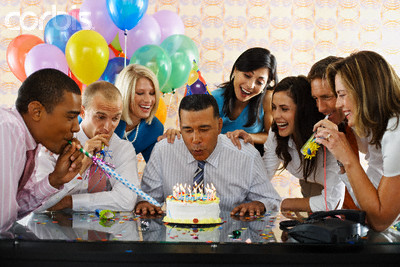
Some workplace perks are expensive, strategic, and loudly announced in all-hands meetings. Then there is leftover cake in the office kitchen: silent, slightly lopsided, mysteriously unclaimed, and somehow capable of improving an otherwise average Tuesday at 3:17 p.m. It is not a promotion. It is not a wellness stipend. It is not even a fresh dessert. And yet, in the grand tradition of 1000 Awesome Things, it feels absurdly wonderful.
That is exactly why the idea still lands. The magic of leftover cake is not really about sugar. It is about surprise, timing, and the tiny thrill of discovering that the day has decided to be nicer than expected. In a world of packed calendars, blinking notifications, and one more “quick question” that is never quick, a bonus slice of cake feels like the universe slipping you a handwritten note that says, “You know what? Here. Have this.”
The brilliance of #915 When there’s leftover cake in the office kitchen is that it celebrates a small office moment many people know instantly. You do not need a corporate retreat, an ergonomic throne disguised as a chair, or a startup-style cereal wall to understand it. You only need a break room, a paper plate, and the kind of curiosity that makes people peek under plastic wrap like amateur archaeologists discovering frosting-based civilization.
The Original Genius of #915
Neil Pasricha built 1000 Awesome Things around a deceptively simple idea: ordinary pleasures deserve their own spotlight. His project became popular because it took common experiences people usually brushed past and treated them like worthy little victories. In the long parade of awesome things, leftover office cake fits perfectly. It is humble, low-stakes, and instantly recognizable. It does not ask for deep analysis, but it rewards it anyway.
What makes the original #915 entry so memorable is its playful seriousness. It treats office cake like a tiny workplace sport, the kind with unwritten rules, strategic timing, and one or two colleagues who always seem to know the dessert situation before anyone else. Every office has them. They have a sixth sense for break-room developments. You are still opening your laptop, and somehow they already know there is chocolate sheet cake near the microwave and that the corner piece is still available.
That is the larger charm of the 1000 Awesome Things universe. It teaches readers to see delight where routine tries to hide it. A leftover slice is not just leftover food. It is a reminder that joy does not always arrive in a dramatic package. Sometimes joy is free, slightly dry around the edges, and served with a plastic fork that bends under pressure. Still counts.
Why Leftover Cake Feels So Ridiculously Good
1. It interrupts the monotony
Workdays often flatten into sameness. Meetings blur together. Email multiplies like it has a private gym membership. Lunch disappears too fast. Then suddenly, there is cake in the kitchen. Not a scheduled event. Not a calendar invite. Just a sweet interruption. Humans love positive surprises because they break the script. The office kitchen transforms from a place where someone reheats fish into a place where good news lives.
2. It feels earned, even when it absolutely is not
There is something comically satisfying about accepting leftover cake as though it were the natural reward for surviving a spreadsheet. You answered seven emails, sat through a meandering meeting, and located the attachment nobody could find. Frankly, you have been through enough. Cake seems fair. Completely unscientific? Sure. Emotionally persuasive? Absolutely.
3. It creates a shared office ritual
Small rituals matter more than companies sometimes realize. The leftover-cake moment is a tiny social event. Someone spots it. Someone announces it. Someone asks whose birthday it was. Someone says, “I shouldn’t,” while already reaching for a napkin. In that five-minute window, people step away from their individual tasks and participate in something communal and gloriously low pressure. Nobody has to brainstorm, perform, or network. They just have to appreciate buttercream like adults with very specific priorities.
4. It gives people permission to pause
One reason office cake lands so well is that it creates a socially acceptable break. A surprising number of workers are better at completing tasks than receiving small joys. Leftover cake helps because it comes with a built-in excuse. You are not slacking off. You are simply responding to cake-related circumstances. It is basically civic duty.
The Psychology Behind the Slice
If this all sounds melodramatic for a dessert plate, good. That means we are taking the subject with the correct amount of seriousness. Still, there is real psychology underneath the joke. Researchers and workplace experts have long emphasized that small positive moments, social connection, and the ability to savor good experiences all contribute to well-being. In plain English: little things matter, especially when life feels loud.
That is where leftover cake earns its place as more than a silly office anecdote. It combines three powerful ingredients at once: pleasure, surprise, and connection. The pleasure is obvious. The surprise is what makes it feel special rather than routine. The connection comes from the fact that office cake is rarely a solo event. Even if you eat your slice quietly at your desk, you are participating in a shared story: there was a birthday, an occasion, a gathering, or at minimum, a box someone was generous enough not to take home.
There is also the concept of savoring, which is just a fancy way of saying that people can stretch the emotional value of positive moments by paying attention to them. That is why leftover cake often feels better than the polished dessert you ordered for yourself on a random Saturday. The office version arrives with atmosphere. It has context. It has witnesses. It has the little whisper in your brain saying, “Well, this day took a turn for the better.”
And perhaps most importantly, it makes the workplace feel human. Not “we are a family” human, because that slogan has caused enough trouble already. More like: there are other people here, they celebrate things, they leave traces of joy behind, and every so often you get to benefit from them. That is a healthier and more believable kind of workplace warmth.
Office Cake Culture: Delight With a Side of Debate
Of course, office cake is not universally adored. Every break room contains multitudes. Some people see leftover cake and hear a choir of angels. Others see it and think about sugar crashes, food pressure, dietary restrictions, or the awkward social expectation to join in. That tension is real, and it is worth acknowledging. The best office culture does not demand participation in every treat-based tradition.
That is part of what makes leftover cake such an interesting symbol. At its best, it represents casual generosity and a shared moment of levity. At its worst, office food culture can drift into obligation, exclusion, or the weird moral theater of pretending nobody wants dessert while everybody stares at it. The goal is not to turn the office kitchen into a shrine of frosting. The goal is to preserve the spontaneity without making anyone feel cornered.
Good workplaces understand this balance. They let treats be available without making them mandatory. They celebrate people without assuming everyone celebrates the same way. They remember that camaraderie is built less by the food itself than by the feeling around it. The cake is only the prop. The real story is belonging.
What Leftover Cake Says About Workplace Culture
A surprising amount, actually.
When people are comfortable wandering into a shared kitchen, chatting for a minute, and splitting the last pieces of cake without incident, it usually signals something healthy about the environment. Maybe not perfection. Maybe not utopia. But at least a baseline level of ease. Small workplace rituals often reveal more about culture than the glossy values statement framed in the lobby.
Leftover cake suggests the office still has unscripted moments. That matters. It means not every interaction has been optimized into lifeless efficiency. It means there is room for informal connection, humor, and those tiny pockets of humanity that keep work from feeling like a giant password reset process.
And for managers, there is a lesson here. You do not build morale only through major initiatives. You build it through everyday tone. Through respect. Through breaks people can actually take. Through a kitchen people do not avoid in fear of passive-aggressive yogurt labeling. Through small rituals that help people feel seen, relaxed, and connected. Leftover cake works because it is unpretentious. It does not try too hard. That may be its greatest management insight.
The Etiquette of Scoring a Slice
Now let us address the frosting-covered elephant in the room: office cake has rules. Unwritten, inconsistent, occasionally savage rules.
Do not take the final giant piece unless the office vibe truly supports boldness
Read the room. Or, more accurately, read the tray.
Do not ask, “Is anyone going to eat this?” in the tone of a hostile takeover
There is a difference between polite inquiry and private equity behavior.
Do not shame others for eating cake or for not eating cake
Let the slice live its life. Let the coworkers live theirs.
Do announce it helpfully if you spot it first
Heroes do not always wear capes. Sometimes they send, “FYI: cake in kitchen” to the team chat and then quietly become legends.
Do appreciate the person who brought it in
Even accidental joy often has a host.
Why #915 Still Works in the Hybrid Era
In an era of remote work, hybrid schedules, and offices trying very hard to prove they still have a personality, the leftover cake moment carries even more nostalgia. It belongs to the category of workplace experiences that cannot be fully replicated by a digital gift card or a reaction emoji shaped like a cupcake. You can send “celebration energy” over Slack, but you cannot really recreate the sight of a half-covered grocery-store cake waiting by the coffee machine like a delicious secret.
That does not mean the idea is outdated. If anything, it makes the point sharper. What people miss about offices is not fluorescent lighting or mystery printers. It is the spontaneous human moments: hallway jokes, unexpected conversations, and yes, finding leftover cake in the kitchen. These little scenes remind us that work is not just output. It is atmosphere.
A Longer Reflection on the Experience of Finding Leftover Cake
There is a very specific emotional arc to discovering leftover cake in the office kitchen, and it deserves proper documentation. First comes suspicion. You are not expecting joy, so when your eyes land on the white bakery box or plastic-covered tray, your brain does a quick systems check. Is that for today? Is it abandoned? Is it ceremonial? Is there a card nearby explaining whose retirement, promotion, baby shower, farewell, return, or random Tuesday it commemorates?
Then comes approach. Nobody sprints toward break-room dessert unless they are wildly confident or very new. Most people drift closer with what they believe is subtlety. They pour coffee they do not really want. They inspect the fridge as if conducting independent dairy research. They read the room. If one coworker is already cutting a piece, that is the green light. Society has held.
Next comes internal negotiation. This is the phase where people perform tiny courtroom dramas inside their own heads. I do not need cake. But also, life is short. But also, I had one yesterday. But also, this is not technically my cake, which weirdly makes it more exciting. The final decision is often made by smell alone. Frosting is a powerful closer.
Once the slice is secured, the whole mood changes. Even if the cake is supermarket vanilla with aggressively cheerful icing, it becomes elevated by context. You are not simply eating dessert. You are having a break with narrative. There was a discovery, a choice, a tiny bit of suspense, and a social atmosphere around the moment. This is why office cake so often tastes better than it objectively should. Flavor matters, of course, but story matters too.
Then there is the social layer. Someone always says the cake is dangerous because it is “too good,” which is office language for “I am definitely having another piece later.” Someone else remembers whose birthday it was. Another person claims they only came in for water, which would be more believable if they were not holding a plate. For five minutes, the office feels less like a machine and more like a collection of personalities. That shift is not trivial. It is one of the ways ordinary workplaces become pleasant places to spend a large chunk of life.
And perhaps the best part is that leftover cake asks so little of us. It does not require perfect timing, a big budget, or a carefully designed morale initiative. It just shows up and offers a tiny reset. A reminder that the day can contain more than deadlines. A reminder that joy can be communal without being complicated. A reminder that sometimes the nicest moments at work are not the ones crafted for maximum impact but the ones that sneak up on us between tasks, wearing frosting and minding their own business.
That is why #915 sticks. It captures a feeling bigger than dessert. It captures the happiness of stumbling into a small, unnecessary good thing and letting it count. In a culture that often tells people to chase massive achievements, there is something refreshing about celebrating a paper plate in the break room. Maybe that is not silly at all. Maybe it is wise. Or maybe it is both, which is honestly the best kind of wisdom.
Conclusion
#915 When there’s leftover cake in the office kitchen endures because it understands something many people forget: the texture of a good life is made from small pleasures. In the workplace, those pleasures matter even more. They soften stress, encourage connection, and turn ordinary spaces into memorable ones. Leftover cake is funny, yes, but it is also symbolic. It represents surprise, generosity, ritual, and the brief but meaningful permission to enjoy something for no reason other than it is there and it is good.
So the next time you spot a half-finished cake beside the coffee maker, do not dismiss it as a minor office detail. It is a cultural artifact. A morale booster. A frosting-based case study in human happiness. Take a slice if you want one. Tell a coworker if they would smile at the news. Stand there for two minutes longer than strictly necessary. Savor it. That, in its own wonderfully ridiculous way, is the whole point.