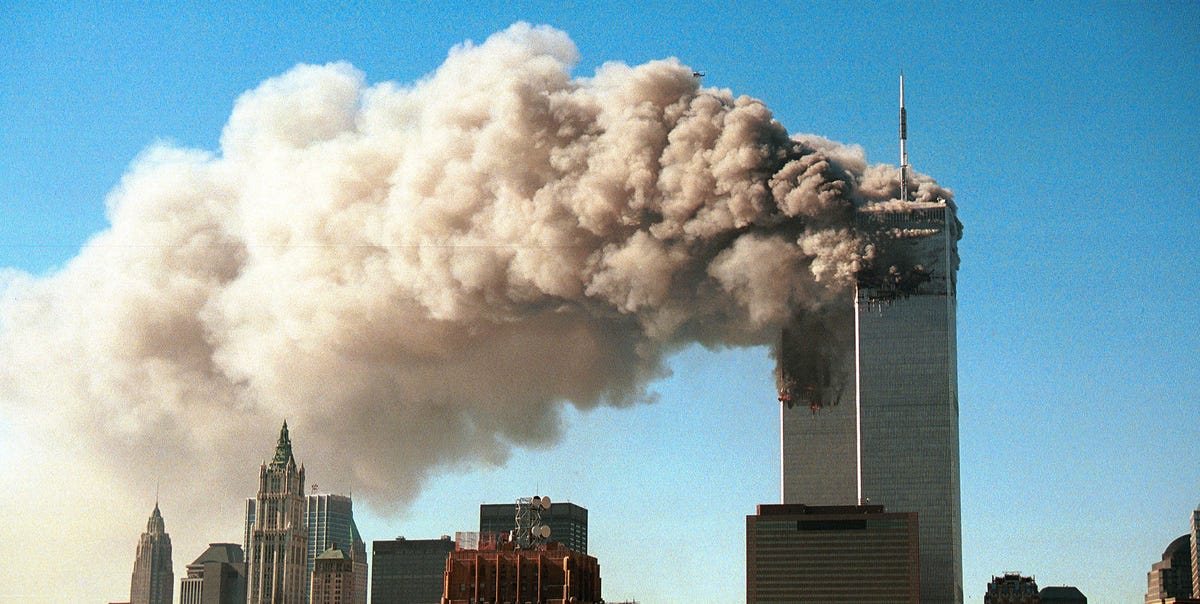
Few modern events have produced as much grief, documentation, public debate, and online speculation as the September 11, 2001 attacks. Nearly everyone has seen the images, heard the phrase “Where were you when it happened?” and encountered at least one claim suggesting that the official account is incomplete, suspicious, or secretly false. That is where 9/11 conspiracy theories enter the roomusually wearing a trench coat, carrying a stack of “just asking questions” printouts, and refusing to leave quietly.
The attacks were carried out by 19 al-Qaeda hijackers who seized four commercial airplanes. Two planes struck the World Trade Center towers in New York City, one struck the Pentagon in Arlington, Virginia, and one crashed in Pennsylvania after passengers and crew resisted the hijackers. The official investigations, including the 9/11 Commission Report, FBI records, and NIST’s World Trade Center investigation, have produced a large public record explaining the planning, execution, structural failures, emergency response, and intelligence breakdowns surrounding the attacks.
Still, conspiracy theories remain part of the cultural afterlife of 9/11. Some people question the collapse of the towers. Others focus on the Pentagon, Flight 93, intelligence warnings, foreign government connections, or alleged media inconsistencies. This article examines the most common 9/11 conspiracy theories, why they spread, what credible investigations have found, and how readers can separate sincere questions from claims that collapse faster than a lawn chair at a barbecue.
What Are 9/11 Conspiracy Theories?
A conspiracy theory is not simply a theory about a conspiracy. Real conspiracies do happen: criminal plots, cover-ups, secret agreements, and intelligence failures are part of history. A conspiracy theory, in the popular sense, usually means a claim that explains a major event as the result of a hidden plot, often while dismissing contradictory evidence as part of the cover-up.
9/11 conspiracy theories generally argue that the attacks were not only carried out by al-Qaeda, or that the U.S. government, foreign governments, intelligence agencies, or other powerful groups either planned the attacks, allowed them to happen, or concealed the “real” cause. These claims vary widely. Some are vague suspicions. Others are elaborate narratives involving controlled demolition, missiles, forged videos, insider trading, or secret warnings.
The most important distinction is this: asking questions about intelligence failures, security weaknesses, or government transparency is reasonable. Claiming that thousands of engineers, investigators, journalists, firefighters, aviation experts, airline employees, emergency workers, and families were all unknowingly or knowingly part of a giant staged operation requires extraordinary evidence. So far, that level of evidence has not appeared.
Why 9/11 Became a Magnet for Conspiracy Thinking
Major tragedies create emotional shock. When something feels too large, too sudden, or too painful, the human brain naturally searches for a larger explanation. “A small group of extremists exploited weaknesses in aviation security and intelligence systems” can feel psychologically unsatisfying compared with “a powerful hidden group controlled everything.” One answer is messy and human. The other is dramatic, organized, and weirdly tidy.
9/11 also happened at a turning point in media history. Cable news was dominant, but the internet was becoming a public forum for amateur research, forums, early video sharing, blogs, and searchable archives. People could replay footage, zoom in on details, compare timelines, and circulate theories faster than traditional experts could respond. The result was a perfect storm: public trauma, distrust, partial information, political anger, and new digital tools.
Another reason these theories spread is that real institutions made real mistakes. The 9/11 Commission documented intelligence and coordination failures before the attacks. Government statements after major events are often incomplete at first because investigations take time. Conspiracy theories feed on those gaps. A delayed answer becomes “proof.” A corrected report becomes “suspicious.” A complex engineering explanation becomes “too convenient.” The internet, being the internet, then adds dramatic music and a thumbnail with red arrows.
Common 9/11 Conspiracy Theories and What Evidence Shows
1. The Controlled Demolition Theory
One of the most persistent 9/11 conspiracy theories claims that the World Trade Center towers were brought down by explosives planted in advance. Supporters often point to the speed of collapse, dust clouds, sounds reported by witnesses, and the visual appearance of the buildings falling downward.
NIST’s investigation found that the aircraft impacts damaged structural columns, dislodged fireproofing, and ignited fires across multiple floors. The fires weakened floor systems and columns, leading to progressive collapse. In simple terms, the buildings did not fall because steel “melted,” a phrase often tossed around online like a bad trivia answer. Steel does not need to melt to lose strength. Under extreme heat, it can weaken significantly, especially when fireproofing has been damaged and load-bearing systems are already compromised.
Controlled demolition also requires planning, access, wiring, timing, and visible preparatory work. The towers were busy office buildings. No credible evidence has shown that explosives were secretly installed throughout them. The collapse was catastrophic, but catastrophe is not the same thing as choreography.
2. The World Trade Center 7 Theory
World Trade Center 7, a 47-story building near the Twin Towers, collapsed later in the day. Because it was not hit by an airplane, it became a favorite subject for conspiracy claims. Some people argue that its collapse proves explosives were used.
NIST concluded that fires, triggered after debris from the nearby towers damaged the building, caused thermal expansion in floor beams and led to a progressive structural failure. WTC 7 is important because it showed how fire-induced failure could bring down a tall building under unusual conditions. That does not mean the explanation is simple; it means the explanation is technical. And technical explanations often lose the popularity contest to “someone pressed a secret button.”
3. The Pentagon Missile Theory
Another claim argues that American Airlines Flight 77 did not hit the Pentagon and that a missile or smaller aircraft was used instead. This theory often relies on misunderstandings about crash debris, security footage, and the appearance of the impact site.
The evidence supports that Flight 77 struck the Pentagon. Investigators recovered aircraft debris, flight data, human remains identified from the flight, and witness accounts from people who saw a large passenger aircraft approaching the building. The Pentagon’s structure also affected the visible damage pattern. A crash into a reinforced military building does not look like a Hollywood explosion, mostly because real life has an annoying habit of ignoring movie physics.
4. The Flight 93 Shootdown Theory
United Airlines Flight 93 crashed in Pennsylvania after passengers and crew attempted to regain control from the hijackers. Some conspiracy theories claim the plane was shot down by the military and that the passenger revolt story was invented.
Official investigations, cockpit voice recordings, phone calls from passengers, air traffic records, and crash evidence support the conclusion that Flight 93 went down during the struggle onboard. Military aircraft were not in position to intercept the flight before it crashed. Confusion on that day was real, and the military response timeline was complicated, but confusion is not proof of a hidden shootdown.
5. “They Knew and Let It Happen” Claims
This category is more complicated because it mixes legitimate concerns with unsupported accusations. The U.S. government did receive warnings that al-Qaeda wanted to attack. Intelligence agencies had pieces of information about individuals, threats, and possible methods. The 9/11 Commission found serious failures in communication, imagination, and coordination.
However, failure to connect the dots is not the same as deliberately allowing the attacks. Bureaucracies can be slow, agencies can guard information, and leaders can underestimate threats. Those explanations are frustrating but historically common. The available public evidence supports a picture of missed warnings and institutional failure, not a proven inside plot.
6. Insider Trading Claims
Some theories claim that suspicious stock trades before 9/11 prove foreknowledge. It is true that investigators examined unusual market activity involving airlines and other affected companies. However, official reviews did not find evidence that the trades were connected to advance knowledge of the attacks.
Financial markets produce strange patterns all the time. A suspicious-looking trade can have ordinary explanations, especially when viewed after a disaster. Hindsight can make random activity look meaningful. It is the same reason your playlist seems psychic after a breakup. Pattern detection is powerful, but it is not always accurate.
Why People Still Believe 9/11 Conspiracy Theories
Psychological research suggests that conspiracy beliefs often grow from uncertainty, fear, distrust, and the desire for control. After traumatic events, people want explanations that feel proportional to the pain. A huge tragedy seems to demand a huge villain. The idea that a relatively small group could cause such enormous harm can feel unbearable.
Conspiracy theories also provide community. Believers may feel they are part of a brave minority who “see through the lies.” Online groups reward participation, certainty, and suspicion. Once someone’s identity becomes attached to a theory, changing their mind can feel like losing friends, status, or a sense of purpose.
Distrust of government also plays a major role. American history includes real examples of secrecy, surveillance, flawed intelligence, and official deception. Because of that history, some skepticism is healthy. The problem starts when skepticism becomes unfalsifiable. If every piece of contrary evidence is dismissed as fake, planted, or controlled, the theory stops being an investigation and becomes a locked room with no windows.
The Difference Between Healthy Skepticism and Conspiracy Thinking
Healthy skepticism asks, “What evidence would change my mind?” Conspiracy thinking often says, “Any evidence against my belief proves the cover-up is bigger.” That difference matters.
A careful reader can ask strong questions about 9/11 without embracing unsupported claims. For example, it is reasonable to study why agencies failed to share information, how emergency communication broke down, why building codes changed after the disaster, and how foreign policy shifted afterward. These are serious topics with real evidence and real consequences.
It is less reasonable to claim that every engineer, investigator, journalist, witness, firefighter, airline employee, medical examiner, family member, and public official involved in documenting the attacks was part of a coordinated deception. The larger a conspiracy claim becomes, the more evidence it needs. A claim involving thousands of people across agencies, countries, newsrooms, laboratories, and families needs more than a slow-motion video clip and dramatic background music.
How 9/11 Conspiracy Theories Spread Online
Online platforms reward emotion. A careful engineering report is not exactly built for viral fame. It does not usually arrive with suspenseful music, neon captions, or a narrator whispering, “What they do not want you to know.” Conspiracy content, by contrast, is designed to be sticky. It offers mystery, villains, urgency, and the thrill of secret knowledge.
Short videos are especially effective because they can isolate one detail from a complex event. A clip may show a collapse, a witness statement, or a news error without context. The viewer is invited to draw a dramatic conclusion before seeing the full record. That is not research; that is intellectual speed dating.
Algorithms can also deepen belief. Once someone watches one conspiracy video, platforms may recommend similar content. The viewer then sees repetition and mistakes it for confirmation. Ten videos making the same claim do not equal ten independent pieces of evidence. Sometimes it is just one weak claim wearing ten different hats.
The Real Lessons of 9/11 Are Serious Enough
One reason 9/11 conspiracy theories are frustrating is that the real story already contains enormous failures, unanswered emotional wounds, and lasting consequences. The attacks changed airport security, foreign policy, surveillance law, immigration enforcement, military strategy, emergency management, and public life in the United States.
The 9/11 Commission identified problems in intelligence sharing and national preparedness. NIST’s investigations influenced building safety discussions. Health studies and compensation programs have continued because many first responders, survivors, and nearby workers experienced long-term health effects from exposure at Ground Zero. Families of victims have spent decades seeking accountability, transparency, and remembrance.
These realities do not need fictional additions to matter. In fact, conspiracy theories can distract from the human and policy questions that deserve attention. They can turn grief into argument, history into entertainment, and victims into props in someone else’s online performance.
How to Evaluate Claims About 9/11
Check the Source
Is the claim coming from an official investigation, a peer-reviewed study, a reputable news organization, or a random account with a username like “TruthEagle1776”? Source quality does not decide everything, but it is a good place to start.
Look for the Full Context
Many conspiracy claims rely on isolated clips or quotes. Search for the full report, complete interview, original timeline, or technical explanation. Context is the enemy of many viral claims, which is why they avoid it like a cat avoids bathwater.
Ask What Evidence Would Disprove the Claim
If nothing could ever disprove the theory, it is not a serious investigation. A good explanation must be testable. It must risk being wrong.
Separate Possibility From Probability
Many things are technically possible. That does not make them likely. A claim should be judged by evidence, not by how exciting it sounds at 2 a.m. after six recommended videos.
Experience Section: Living With 9/11 Conspiracy Theories in Real Conversations
Talking about 9/11 conspiracy theories is not like debating pineapple on pizza. People bring emotion, identity, politics, grief, and distrust into the conversation. Some people remember the day vividly. Others learned about it later through school, documentaries, family stories, or the internet. The experience of discussing the topic often depends on whether the conversation begins with curiosity or accusation.
A common experience is the family gathering debate. Someone mentions airport security, foreign policy, or a documentary they watched, and suddenly the mashed potatoes are sharing table space with controlled demolition claims. In that moment, the best response is usually not mockery. People rarely abandon a belief because someone laughed at them in front of relatives. A calmer approach works better: ask what evidence they find most convincing, whether they have read the official investigations, and what evidence would change their mind.
Another experience happens online, where conspiracy claims arrive as short clips. A person may watch a 60-second video that seems persuasive because it asks questions faster than anyone can answer them. The clip may show building collapse footage, a witness reaction, or an old news broadcast mistake. The viewer feels a little shock, then curiosity, then suspicion. That emotional sequence is powerful. It feels like discovery. But responsible research is slower. It compares sources, checks timelines, reads expert findings, and resists the urge to turn confusion into certainty.
Students often encounter 9/11 theories while researching history projects. This can be useful if handled carefully. A good classroom discussion can teach media literacy, source evaluation, engineering basics, and the difference between skepticism and denial. Teachers and parents do not need to pretend conspiracy theories do not exist. They can use them as examples of how misinformation works: selective evidence, emotional framing, false experts, impossible standards of proof, and claims that become stronger whenever they are challenged.
For people personally affected by 9/11, conspiracy theories can feel painful. Families who lost loved ones, survivors, first responders, and witnesses may experience these theories as disrespectful because they turn a real tragedy into a puzzle game. That does not mean every question is offensive. It means tone matters. The topic deserves care. Behind every timeline and technical report are human beings whose lives changed permanently.
The healthiest experience with this topic is one that leads to better thinking. Instead of asking, “Which secret plot is true?” a stronger question is, “How do we know what we know?” That question opens the door to official records, engineering studies, aviation evidence, intelligence reviews, journalism, survivor testimony, and historical analysis. It also protects readers from becoming trapped in endless suspicion.
Ultimately, discussing 9/11 conspiracy theories can be uncomfortable, but it can also sharpen critical thinking. The goal is not to memorize a comeback for every claim. The goal is to build habits: slow down, check sources, compare evidence, recognize emotion, and respect the real people at the center of the history. That approach is less flashy than a viral conspiracy video, but it has one major advantage: it is much more likely to be true.
Conclusion
9/11 conspiracy theories continue because the attacks were traumatic, complex, politically consequential, and heavily documented in ways that can be misunderstood or selectively edited. The official record is not a claim that every institution performed perfectly. In fact, major investigations found serious failures before and during the attacks. But those failures do not prove an inside job, controlled demolition, missile strike, or staged crash.
The strongest way to honor history is to treat evidence seriously. That means reading credible investigations, understanding technical explanations, listening respectfully to those affected, and refusing to confuse suspicion with proof. The real story of 9/11 is already tragic, consequential, and important. It does not need fictional machinery added to make it matter.