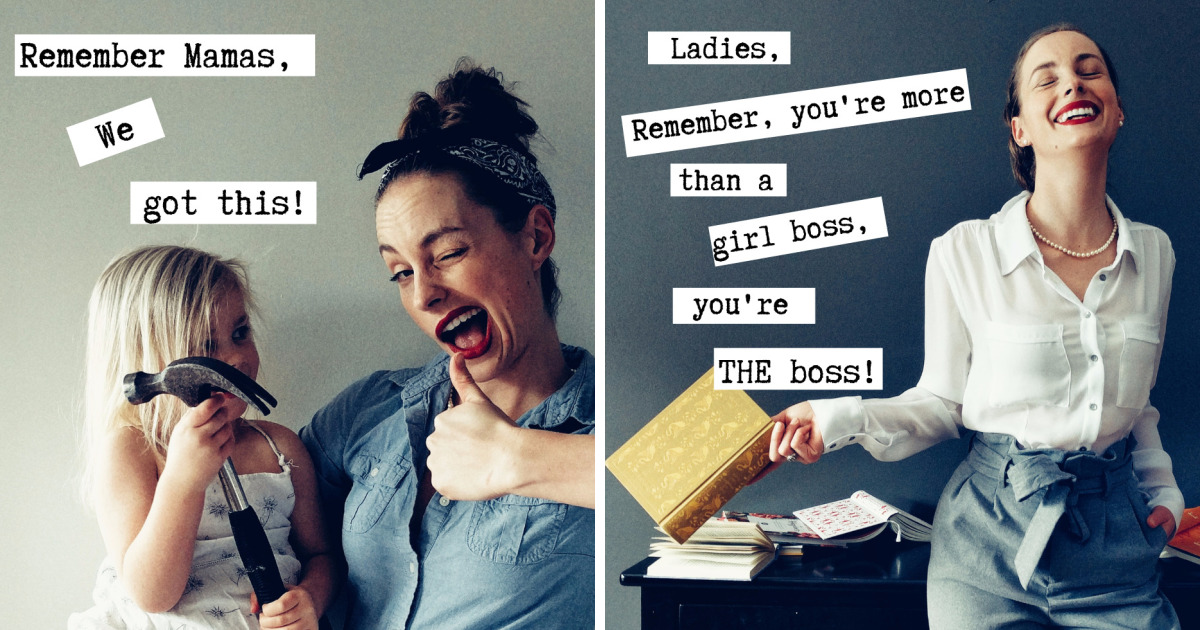
Some days, becoming your best badass self requires courage, discipline, and a carefully organized five-year plan. Other days, it requires red lipstick, an aggressively cheerful smile, and a photograph of you holding a cake as though you are considering throwing it through a conference-room window.
That second approach inspired my latest creative project: a collection of original, Anne Taintor inspired photos combining polished retro imagery with captions that say what modern women are actually thinking. The pictures look sweet enough to appear in a mid-century appliance advertisement. The words, however, have already resigned from the neighborhood etiquette committee.
This series is not about pretending the past was simpler. It is about borrowing its visual polish, exposing its impossible expectations, and replacing quiet obedience with sharp humor. Every photograph is designed to celebrate confidence, boundaries, ambition, friendship, glorious imperfection, and the right to occasionally solve a problem by staring at it while drinking coffee.
Why Anne Taintor Inspired Photos Still Feel So Satisfying
Anne Taintor became known for pairing idealized women from vintage advertisements with irreverent captions that revealed far less obedient inner lives. Her collage work began with found images and hand-cut words, eventually growing into a recognizable visual language of immaculate hairstyles, domestic perfection, and beautifully delivered rebellion.
Research basis for Anne Taintor’s collage practice, career, visual style, and caption-writing process:
The comedy works because the image and the sentence appear to belong to completely different universes. A perfectly groomed woman presents a casserole with the confidence of a television hostess, while the caption reveals that she has forgotten the recipe, rejected social expectations, and may be planning a long weekend without forwarding her itinerary to anyone.
The Picture Is Polite, but the Message Has Had Enough
Mid-century American advertising frequently presented women as happy homemakers, decorative companions, or tireless household managers. These images were not neutral snapshots of everyday life. They helped sell a narrow ideal in which successful womanhood supposedly involved a clean kitchen, a calm husband, attractive children, and absolutely no visible evidence of exhaustion.
Historical context on women, domesticity, and stereotypes in American advertising:
Placing an honest contemporary caption beneath that polished fantasy changes its meaning. Suddenly, the woman in pearls is not selling floor wax. She is considering a management buyout. The smiling dinner-party hostess is not seeking approval. She has simply remembered that she owns the house.
Humor Creates Room to Tell the Truth
Direct advice can sometimes feel like another obligation. “Believe in yourself” is lovely, but it can sound suspiciously like homework. A funny image slips past that resistance. It lets us laugh at perfectionism, people-pleasing, workplace nonsense, beauty standards, and the expectation that women must remain pleasant while carrying seventeen invisible responsibilities.
That is what I wanted from my own collection of vintage photo captions: not empty sass, but useful sass. Each photograph should make someone laugh and then think, “Actually, I am allowed to say no.”
How I Built My Own Retro Feminist Photo Series
I did not want to copy an existing Anne Taintor composition or recycle one of her famous lines. The goal was to create an affectionate, clearly original homage to the broader collision of retro glamour and modern candor.
I started by listing situations in which people often make themselves smaller: uncomfortable meetings, family obligations, dating disappointments, unpaid emotional labor, endless household chores, and the strange pressure to describe complete exhaustion as “being busy.” Then I imagined what an impeccably styled woman in a fictional 1950s advertisement might secretly say about each situation.
Wardrobe: Polished With a Hint of Trouble
The wardrobe included fitted dresses, cardigans, pearls, gloves, scarves, aprons, cat-eye glasses, and structured handbags. Nothing needed to be historically perfect. A thrift-store dress and a borrowed brooch can suggest the period without requiring a museum curator to supervise the shoot.
The real objective was contrast. The more composed the subject looked, the more deliciously rebellious the caption could become. A wrinkled T-shirt saying “I reject society” is honest, but a woman in satin gloves saying it while serving gelatin salad has dramatic range.
Props That Help Tell the Joke
Props became supporting actors. I used mixing bowls, typewriters, coffee cups, feather dusters, grocery bags, paperwork, rotary-style phones, and one deeply judgmental vacuum cleaner. Familiar household objects immediately established the retro setting, while unusual poses transformed them into comic symbols.
A rolling pin became an executive pointer. A laundry basket became evidence in an ongoing criminal investigation. A coffee pot became a respected medical consultant.
Composition, Expressions, and Negative Space
I left open space around each subject so the caption would not compete with a patterned dress or crowded background. A simple wall, kitchen counter, or office desk provided enough context without turning the photograph into a yard sale.
Basic techniques such as the rule of thirds can create balance and reserve space for text, although a centered pose can work beautifully when you want the image to feel like a formal advertisement. The most important detail was the expression: a bright smile, raised eyebrow, sideways glance, or suspiciously calm stare.
Photography guidance on composition, negative space, subject placement, and practicing multiple framings:
My Favorite Anne Taintor Inspired Photo Concepts
1. The Domestic Goddess Has Updated Her Contract
In this photograph, I am wearing an apron and holding a spotless baking dish. The kitchen looks calm. My hair looks suspiciously competent. The caption reads:
“She enjoyed domestic bliss after redefining both words.”
The joke is not that cooking or homemaking is unimportant. The joke is the assumption that care work must be performed silently, perfectly, and without negotiation. A badass can bake a pie. She can also establish that the person who eats the last slice is washing the pan.
2. The Meeting That Could Have Been an Email
For this image, I sit behind a typewriter with a notepad, pearls, and an expression of professional concern. The caption says:
“Her enthusiasm was unavailable during business hours.”
This one belongs to everyone who has watched a simple decision become a forty-five-minute meeting featuring twelve slides, three buzzwords, and a man repeating a woman’s idea at a slightly higher volume.
3. Coffee Joins the Leadership Team
I hold a coffee pot with the solemnity of a royal artifact. The caption reads:
“She trusted the process, but she trusted caffeine more.”
There is nothing historically accurate about treating coffee as an executive coach, but there is something emotionally accurate about it. The photograph celebrates those mornings when confidence arrives five minutes after the first cup.
4. Laundry Day Becomes a Labor Movement
The next photo features a mountain of folded towels, a bright smile, and the caption:
“Today she separated the lights, the darks, and herself from unreasonable expectations.”
It may be my favorite because the visual is so wholesome while the message is essentially a personal declaration of independence.
5. Girls’ Night Is Actually a Strategy Session
Several friends pose around a table with mocktails, snacks, and expressions suggesting that somebody has just brought excellent gossip with supporting documentation. The caption says:
“They called it ladies’ night because ‘informal board meeting’ sounded expensive.”
Female friendship is often treated as a decorative subplot. In reality, it can be an emergency hotline, career council, comedy club, transportation service, and investigative agency operating under one group-chat name.
6. Wellness Without the Performance Review
In this scene, I recline in a robe while holding cucumber slices that have clearly abandoned their assigned position on my eyes. The caption reads:
“She practiced self-care by canceling something.”
Modern wellness culture can turn rest into another achievement category. Suddenly, relaxing requires a schedule, special equipment, eight products, and flattering natural light. This image argues for a simpler method: stop doing one unnecessary thing.
7. Grocery Shopping With Main-Character Energy
I stand beside paper grocery bags as though I have just returned from negotiating an international treaty. The caption says:
“She came for the milk and stayed because no one was asking her a question.”
Ordinary errands sometimes provide a tiny, beautiful pocket of privacy. There is freedom in slowly examining pasta sauces while your phone remains unanswered in your purse.
8. Celebrating Without Requesting Permission
The final concept shows a woman opening a bottle of sparkling cider beside a cake. There is no birthday banner, promotion announcement, or ceremonial reason. The caption reads:
“She stopped waiting for an occasion and became one.”
This photograph captures the heart of the project. Confidence is not always a dramatic transformation. Sometimes it is deciding that joy does not require authorization.
How These Photos Can Help You Be Your Best Badass Self
They Make Boundaries Feel Less Frightening
A boundary can sound severe when written in corporate language. Put the same idea beneath a smiling woman holding a Bundt cake, and it becomes easier to absorb. Humor does not weaken the message. It can make the message easier to remember.
They Turn Imperfection Into Material
Badass confidence is not the belief that you will never make a mistake. It is the knowledge that a mistake can become a lesson, a story, or at minimum an extremely specific caption.
During this project, crooked wigs, fallen props, blinking models, and unexplained shadows became part of the fun. Perfection stopped being the entry fee for creativity.
They Encourage You to Rewrite Old Narratives
Vintage advertisements often treated femininity as a performance designed for approval. Reworking that visual language creates a symbolic reversal. The same polished figure can now speak about independence, ambition, anger, money, pleasure, friendship, or rest.
You are allowed to revise the captions you inherited, too. “Do not be difficult” can become “Ask the necessary question.” “Keep everyone happy” can become “Let adults manage their own emotions.” “Wait your turn” can become “Apply anyway.”
They Prove Serious Ideas Can Wear Lipstick
Empowerment does not have one approved aesthetic. It can wear combat boots, a business suit, gardening gloves, or a pink cocktail dress. Strength does not become less authentic because it is funny, glamorous, soft, or theatrical.
Tips for Creating Your Own Vintage Photo Captions
Begin with a situation you genuinely understand. The best captions usually grow from recognizable frustration rather than random sarcasm. Think about a moment when you wanted to speak honestly but chose politeness instead.
Next, create tension between the photograph and the words. A chaotic image paired with a chaotic caption leaves little room for surprise. A serene photograph paired with a mildly unhinged sentence creates the stronger joke.
Keep the caption short enough to land immediately. Remove explanations, unnecessary adjectives, and every word that behaves like it was invited merely to fill a chair. Read the line aloud. Good comic timing is visible on the page but audible in the ear.
Finally, write several alternatives. One polished caption may require dozens of clumsy attempts. The first draft often states the idea; later drafts discover the personality.
Inspiration Is Better When It Remains Original
There is a meaningful difference between learning from a recognizable artistic approach and reproducing a living artist’s specific work. My photographs use original models, settings, compositions, and captions. They celebrate the broader technique of combining retro visual expectations with modern humor without copying existing Anne Taintor products or presenting the series as official merchandise.
Creators using archival materials should verify whether an image is public domain, properly licensed, or otherwise legally available. The age of a magazine does not automatically make every photograph and illustration inside it free to reuse. Creating your own photographs is often the simplest way to control the result and build an unmistakably personal collection.
Copyright background for visual artists, photographs, collages, ownership, and registration:
My Experience Making These Photos: What the Camera Taught Me
I began this project expecting a costume shoot. I ended it with a collection of small personal manifestos.
The first session was awkward. I had arranged a tidy kitchen set, borrowed a dress that required engineering assistance to zip, and spent far too long attempting to make my hair resemble a controlled architectural feature. When the camera came out, every pose looked stiff. I was trying so hard to imitate a vintage advertisement that I forgot the most important part: the woman in the image needed an inner life.
Everything changed when I stopped asking, “Does this look authentic?” and started asking, “What has just happened to her?” Perhaps she had been smiling through an exhausting dinner party. Perhaps someone had volunteered her for a committee. Perhaps she had discovered that the household’s mysterious inability to replace an empty toilet-paper roll was not, in fact, a medical condition.
Once each scene had a story, the expressions became natural. A raised eyebrow meant something. A frozen smile became a warning. The props stopped being decorations and started participating in the joke.
I also learned that other people immediately recognize themselves in specific frustrations. A caption about meetings received passionate approval from friends who work in offices. A photograph about laundry inspired messages from parents, roommates, and one man who claimed his fitted sheets had “entered an adversarial phase.” The details differed, but the feeling was shared.
That recognition made the project feel more generous than sarcastic. The point was never to mock people for struggling. It was to mock the absurd standards that convince capable people they are failing. Nobody maintains a perfect home, career, appearance, social life, emotional state, and sourdough starter at all times. Anyone who claims otherwise is either selling something or has hidden an alarming room behind a locked door.
The shoot also changed how I thought about confidence. I used to imagine confidence as a permanent personality feature: some people woke up possessing it, while the rest of us searched the house for it like a missing phone charger. In front of the camera, confidence became an action. I could choose a posture, make eye contact, lift my chin, and occupy the frame before I fully believed the attitude.
Strangely, pretending to be a fearless fictional character made real courage feel more accessible. After posing as a woman who had supposedly canceled an obligation without guilt, I canceled one. After writing about speaking up in a meeting, I noticed the next time I remained quiet. The captions became rehearsals for behavior.
My favorite experience occurred during the group photograph. Everyone arrived slightly self-conscious, worried about costumes, poses, and whether they knew how to look “vintage.” Within twenty minutes, we were laughing so hard that most of the technically perfect images were unusable. Mascara moved. Hair collapsed. Somebody spilled a drink near a handbag that was old enough to have survived several previous national crises.
Those imperfect photographs were the best ones. They showed friendship instead of performance. They reminded me that being your best badass self does not mean becoming untouchable, endlessly productive, or permanently composed. It means knowing yourself well enough to reject roles that no longer fit. It means treating mistakes with humor, protecting your time, supporting your people, and occasionally wearing pearls while saying something magnificently inconvenient.
Conclusion: Your Inner Badass Deserves Better Advertising
Creating my own Anne Taintor inspired photos gave me a playful way to challenge outdated expectations and celebrate modern confidence. Retro styling supplied the visual sweetness; original captions supplied the bite. Together, they turned kitchens, offices, grocery bags, laundry baskets, and coffee pots into props for stories about independence.
You do not need professional equipment, historically perfect clothing, or a glamorous location to create empowering photography. You need a clear idea, an honest observation, and enough willingness to look slightly ridiculous before the picture begins to work.
Most importantly, you do not need to transform into somebody else to become your best badass self. She is probably already present. She may be tired. She may be answering emails. She may currently be hiding in the pantry with a cookie. Give her flattering light, a strong caption, and permission to take up the entire frame.