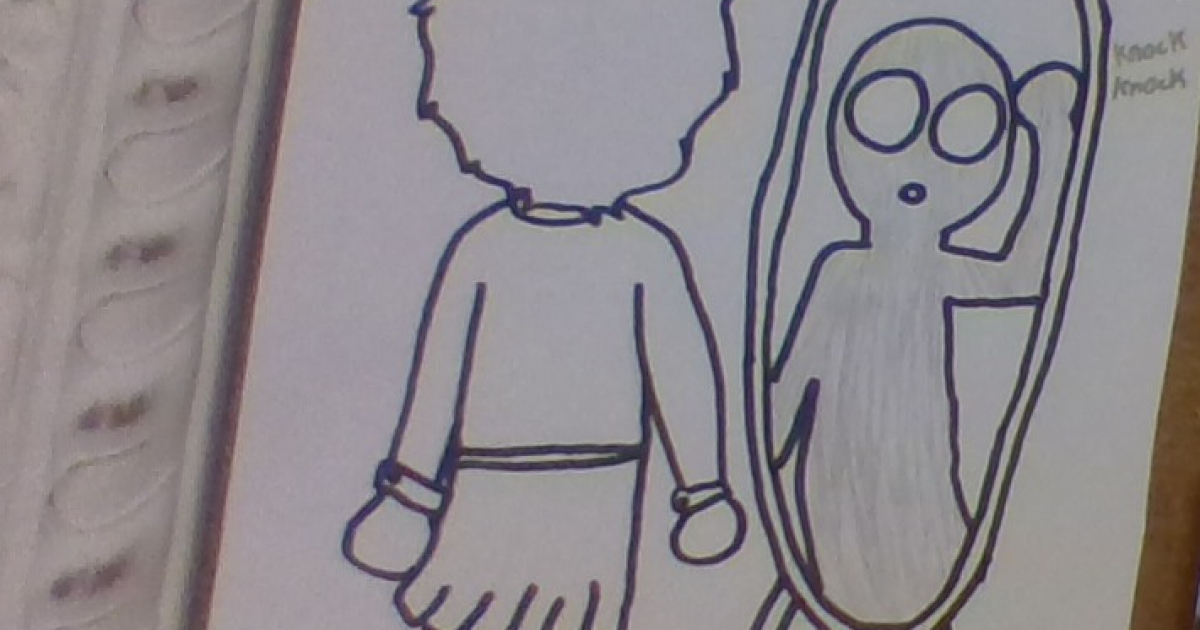
Some drawings brighten a room. Others quietly turn off the lights, lock the door, and whisper, “You may want to sit down for this.” Dark drawings can be eerie, emotional, gothic, surreal, macabre, or simply mysterious. They may feature shadowy figures, abandoned places, impossible creatures, unsettling smiles, or ordinary objects behaving in deeply suspicious ways.
The appeal of dark art is not limited to horror fans armed with black sketchbooks and alarming quantities of coffee. Artists often use unsettling imagery to explore loneliness, fear, grief, social pressure, identity, dreams, and the strange machinery of the human imagination. A dark drawing can frighten viewers, make them laugh nervously, or leave them staring at a tiny background detail for much longer than intended.
So, Pandas, consider this your invitation: post a dark drawing you made. It can be polished or rough, digital or traditional, deeply symbolic or delightfully weird. The important part is that it carries a mood, suggests a story, and gives viewers something to feel.
What Makes a Drawing “Dark”?
A dark drawing is not necessarily a picture covered in black ink. Darkness in art can come from subject matter, composition, symbolism, atmosphere, or emotional tension. A brightly colored playground with one empty swing may feel darker than a charcoal drawing of a friendly vampire ordering takeout.
Darkness Can Be Emotional
Artists frequently turn inward when exploring difficult themes. Edvard Munch, for example, used expressive imagery to examine loneliness, anxiety, sickness, jealousy, and death rather than merely recording the visible world. Symbolist artists similarly relied on expressive line, color, mythology, and fantasy to communicate ideas beneath the surface.
A figure sitting beneath an enormous empty sky may suggest isolation. A smiling face with cracked edges can represent hidden distress. Tangled roots wrapped around a person’s ankles might symbolize memories, responsibilities, or relationships that refuse to let go.
Darkness Can Be Visual
Strong contrasts between light and shadow create immediate drama. Chiaroscuro, a technique developed during the Renaissance and expanded by later artists, uses varying tones to give forms volume and build emotional energy across a composition. A single illuminated face surrounded by darkness naturally attracts attention while leaving the unseen parts of the scene open to speculation.
In other words, darkness is not empty. It is where the viewer’s imagination begins doing unpaid overtime.
Darkness Can Be Narrative
An effective dark drawing often feels like one frame from a larger story. Something happened before the moment shown, and something worseor unexpectedly funnymay happen afterward. A muddy handprint on a locked window tells a story. So does a child offering flowers to a creature that everyone else fears.
The artist does not need to explain every detail. In fact, overexplaining can drain the tension. Mystery gives viewers room to build their own interpretations.
Why Are We Drawn to Unsettling Art?
It Lets Us Approach Fear Safely
Dark art creates a controlled space for confronting uncomfortable ideas. The monster remains on the page. The haunted hallway cannot actually follow anyone home, despite its obvious enthusiasm. Artists can examine fear from a distance, alter it, exaggerate it, or transform it into something strangely beautiful.
This does not mean every spooky sketch contains a secret psychological confession. Some artists simply enjoy creature design, gothic architecture, horror movies, folklore, or the technical challenge of drawing dramatic shadows. A drawing of a skull may represent mortality, but it may also mean, “Skulls are interesting, and hands are still too difficult.”
Ambiguity Keeps Viewers Looking
People naturally search for recognizable patterns, intentions, and stories. When a drawing supplies only partial information, viewers try to complete it. Is the shadow protecting the character or threatening them? Is the empty chair waiting for someone? Why does the portrait appear to have one extra reflection?
Negative space can intensify this uncertainty. The Getty’s visual-analysis guidance notes that a large amount of empty space may emphasize vulnerability and isolation. In dark drawings, the unused area surrounding a figure can feel as active as the figure itself.
Darkness and Humor Make an Excellent Odd Couple
Not all dark artwork is solemn. Dark humor works by placing something absurd, ordinary, or cheerful beside something ominous. A skeleton waiting impatiently at the dentist has a different effect from a skeleton silently standing behind the dentist.
Even familiar entertainment figures can become unsettling when their expected friendliness is disrupted. The cultural history of frightening clowns, for instance, shows how comedy and anxiety can occupy the same oversized shoes.
How to Create a Powerful Dark Drawing
1. Begin With a Specific Emotion
Choose the feeling before choosing the monster. Are you trying to create dread, sorrow, anger, confusion, claustrophobia, or uneasy curiosity? A clear emotional target helps guide every later decision.
For loneliness, use distance and empty space. For panic, crowd the composition with sharp angles and overlapping forms. For grief, repeat an object connected to absence, such as an unoccupied coat, unfinished meal, or silent telephone.
2. Make Something Familiar Feel Wrong
Unsettling drawings often begin with ordinary subjects. Bedrooms, family portraits, mirrors, toys, staircases, and pets already carry emotional associations. Alter one carefully chosen detail: every clock shows a different time, the family portrait has one person crossed out, or the teddy bear’s shadow resembles something much larger.
Restraint matters. If every object is screaming, melting, floating, and growing teeth, viewers may stop feeling dread and start wondering whether the furniture has excellent dental coverage.
3. Design a Strong Silhouette
A readable silhouette gives dark characters immediate presence. Before drawing details, fill the figure with a solid tone. Can you still understand its pose and personality? Long arms, a tilted head, hunched shoulders, or an unusually rigid stance can communicate more than a page of decorative texture.
4. Control the Light Source
Decide exactly where the light comes from. A flashlight beneath a face creates a different mood from moonlight behind a figure. Side lighting reveals texture, while backlighting produces mystery by hiding facial features.
Do not shade randomly until the page resembles a weather map. Consistent lighting makes even imaginary creatures feel physically present.
5. Use Line Quality to Shape the Mood
Clean, controlled lines can make disturbing imagery feel cold and clinical. Jagged strokes create agitation. Soft, fading marks suggest memory, distance, or disappearance. Heavy repeated lines may communicate obsession or pressure.
Traditional materials such as charcoal, graphite, ink, chalk, and white gel pen each create different effects. White marks on black paper can be especially dramatic because the artist appears to pull the image out of darkness rather than adding shadows afterward. Artists working with black paper and white gel pens often use stippling and layered marks to build luminous detail.
6. Create Symbols With Personal Meaning
Common symbols can provide a useful starting point: doors suggest transition, masks suggest hidden identities, cages suggest restriction, and mirrors suggest self-examination. However, personal symbols are usually more memorable.
A broken umbrella might represent a moment when protection failed. A moth could represent attraction to something dangerous. Repeated red thread might connect people, memories, or consequences. Artists such as Matt Mullican have demonstrated how repeated visual signs can gradually develop into a system carrying psychological and collective meaning.
7. Leave Part of the Story Unresolved
Show the open basement door, but not what is inside. Show the character looking upward, but not what they see. Let viewers notice a second set of footprints only after studying the image.
The unknown is often more frightening than a fully explained creature posing politely beneath studio lighting.
8. Revise the Composition, Not Just the Details
Artists sometimes spend hours rendering eyelashes on a character whose head is accidentally touching the top border. Step back regularly. Flip a digital canvas, photograph a traditional drawing, or view it from across the room.
Check whether the focal point is clear, the values are balanced, and the important shapes remain readable. Technical polish cannot rescue a composition that sends the viewer’s eyes directly toward an irrelevant lamp.
Dark Drawing Ideas for Pandas Who Need Inspiration
A blank page can be intimidating, particularly when it sits there looking innocent despite clearly knowing what it has done. Online artists often use small formats, quick challenges, and community prompts to overcome creative paralysis and begin working without demanding a masterpiece.
Try One of These Prompts
- Draw a guardian angel that frightens the person it protects.
- Illustrate a childhood memory with one impossible detail.
- Create a portrait whose shadow reveals a secret.
- Draw an abandoned carnival after the lights go out.
- Design a creature made from forgotten household objects.
- Illustrate loneliness without drawing a human face.
- Turn a common fear into a friendly but suspicious character.
- Draw a beautiful garden in which every plant is watching.
- Create a visual metaphor for procrastination.
- Illustrate the final page of a story that does not exist.
Traditional Dark Art Materials
Graphite is ideal for controlled values and subtle texture. Charcoal produces deep blacks, expressive marks, and satisfyingly dramatic fingerprints on every nearby surface. Ink encourages decisive lines and bold silhouettes. White chalk or gel pen on toned paper reverses the usual process by making highlights the main event.
Scratchboard, collage, watercolor, and mixed media can introduce unpredictable textures. Torn paper may resemble damaged memories, while diluted ink creates stains, fog, and dreamlike forms.
Digital Dark Drawing Techniques
Digital artists can use textured brushes, gradient maps, layer masks, and limited palettes to create atmosphere. Begin in grayscale to organize values before adding color. This prevents beautiful hues from distracting you from a composition that is quietly falling apart.
A small amount of saturated color can become a powerful focal point. One red balloon in a gray hallway will attract more attention than seventeen competing neon effects and a lens flare having an identity crisis.
How to Share Dark Art Responsibly
Add Context Without Explaining Everything
A brief caption can help viewers enter the work. Mention the medium, inspiration, or challenge you faced. You might write, “Charcoal study inspired by recurring dreams about empty train stations,” or, “I wanted to make an ordinary family dinner feel increasingly wrong.”
You do not need to provide a complete autobiography. Protect private experiences, especially when a drawing involves real people or painful events.
Use Content Warnings When Appropriate
If an image includes graphic injury, suicide-related imagery, abuse, or intense violence, add a clear content warning. This does not weaken the artwork. It allows viewers to decide whether they are ready to engage with it.
Crop or blur preview images when a platform offers those tools. Check the community’s rules before posting, because acceptable content and labeling requirements vary.
Ask for the Feedback You Need
“What do you think?” may produce comments ranging from thoughtful analysis to “cool.” More focused questions lead to more useful responses:
- Does the lighting guide your eye toward the face?
- Which emotion did you feel first?
- Is the creature readable against the background?
- Does the symbolism feel intriguing or too obvious?
- Which area needs more contrast?
How to Comment on Someone Else’s Dark Drawing
Respond to the artwork rather than diagnosing the artist. A disturbing image is not proof that its creator is dangerous, depressed, traumatized, or secretly living inside an abandoned lighthouse.
Start with a specific observation. Mention the heavy shadows, repeated symbol, unusual perspective, or contrast between beauty and horror. Then describe your reaction without claiming it is the only correct interpretation.
For example: “The small figure beneath the doorway made me feel trapped, especially because the surrounding room is so empty.” That is more useful than, “This means you fear commitment and probably had an emotionally unavailable goldfish.”
Constructive criticism should address choices the artist can revise. Discuss anatomy, values, composition, texture, or readability. Avoid mocking someone’s skill level. Community art threads work best when beginners feel safe enough to participate and experienced artists feel inspired to exchange techniques.
Why Making Dark Art Can Feel Meaningful
Creative work can give shape to experiences that are difficult to put into ordinary language. Art therapy is a professional mental health discipline rather than simply “drawing until you feel better,” but research and clinical programs indicate that art-making can support self-expression, coping, relaxation, and stress reduction. Studies have also reported reductions in stress-related measures after short periods of visual art-making.
Artists do not need to make cheerful work for creativity to be valuable. A dark drawing may organize a confusing feeling, turn fear into a character, preserve a memory, or help its creator recognize that other people have experienced something similar.
At the same time, art does not need to perform emotional labor. It may exist because drawing ruined castles is fun. Sometimes the curtain is blue because the artist liked blue. Sometimes the curtain has eyes because plain curtains lacked ambition.
Experiences From the Dark Side of the Sketchbook
The following first-person account is an illustrative composite based on experiences commonly described by artists participating in drawing communities.
My first genuinely dark drawing began as an accident. I planned to sketch a quiet hallway as a perspective exercise. The assignment sounded harmless: one vanishing point, several doors, a ceiling light, and enough floorboards to make me regret choosing architecture.
Halfway through, I drew a figure at the far end of the hall to establish scale. It was supposed to be an ordinary person. Unfortunately, I made the arms slightly too long and erased the face so many times that the paper became gray and rough. The result looked less like a resident and more like something the building had grown.
Instead of correcting it, I leaned into the mistake. I darkened the nearest doorway, removed the ceiling lights, and placed a tiny paper crown beside the figure’s feet. I did not know what the crown meant, but it made the scene feel strangely sad rather than simply frightening.
That drawing taught me that unsettling images become more memorable when they contain vulnerability. A giant monster roaring at the viewer can be impressive, but a silent creature holding a child’s broken toy raises questions. Is it responsible for what happened? Is it mourning? Was the toy ever owned by a child, or does the creature collect objects from people who disappeared?
When I shared the hallway drawing online, I expected comments about anatomy and perspective. Instead, viewers created stories. One person thought the figure was waiting for someone who had moved away. Another believed the crown represented lost authority. Someone else suggested that the hallway was a dream and each door contained a forgotten memory.
None of those interpretations matched my original plan, because there had barely been a plan. Still, the responses did not feel wrong. They showed me that the drawing had become larger than the technical exercise that produced it.
I also received practical criticism. The foreground shadows were too similar in value, causing two doors to merge. The figure needed a stronger silhouette. The paper crown was so small that several viewers mistook it for an unfortunate banana peel.
I revised the piece by simplifying the background and adding a narrow strip of light beneath one door. That single highlight changed the entire story. Now it looked as though someoneor somethingwas awake inside the room. The long-armed figure no longer seemed like the only threat.
After that, I began keeping a separate sketchbook for dark drawing ideas. I filled it with fragments rather than complete illustrations: hands reaching through curtains, houses with no entrances, birds carrying keys, mirrors reflecting empty chairs, and people whose shadows faced the wrong direction.
Some sketches came from difficult emotions. Others came from overheard phrases, dreams, old photographs, or objects found in thrift stores. One page featured a cheerful porcelain rabbit surrounded by handwritten apologies. I still do not know what that one means, and frankly, the rabbit is not answering questions.
The sketchbook made experimentation easier because nothing had to be published. I could create a melodramatic failure, turn the page, and try again. Over time, I became better at separating “dark” from “randomly unpleasant.” Effective dark art needed contrast: tenderness beside danger, humor beside grief, beauty beside decay, or calm surroundings interrupted by one impossible detail.
Sharing selected pages also changed the way I viewed online art communities. The most valuable reactions did not merely praise the finished image. They identified the moment where curiosity began. A viewer might say, “I noticed the doorway first, but the reflection made me reconsider everything.” That comment revealed whether the visual storytelling worked.
I learned not to explain every symbol immediately. Allowing viewers to interpret the work made the discussion richer. I could later share my intention without declaring everyone else incorrect. Art is not a locked exam question with one answer hidden beneath the teacher’s desk.
Most importantly, the experience reminded me that imperfect work can connect people. My original hallway contained shaky lines, damaged paper, questionable perspective, and a crown that resembled discarded fruit. Yet it encouraged strangers to tell stories, exchange advice, and describe emotions they recognized in the scene.
That is why a community prompt such as “Post a dark drawing you made” can be more interesting than a gallery of flawless horror illustrations. It welcomes rough sketches, strange experiments, emotional pieces, and ideas that escaped before their creators fully understood them. Every drawing becomes a doorway, and the comments reveal who is braveor curiousenough to look inside.
Final Thoughts: Show Us What Lives in Your Shadows
Dark drawing is not one rigid genre. It can be gothic, surreal, emotional, humorous, symbolic, cinematic, or quietly unsettling. The strongest pieces usually combine intentional composition with unanswered questions. They do not merely show something frightening; they create a feeling that stays after the viewer scrolls away.
Your drawing does not need flawless anatomy, expensive materials, or a tragic ten-page explanation. It needs an idea worth exploring. Use light and shadow deliberately, build symbols that matter to you, and leave enough mystery for the audience to participate.
Now it is your turn, Pandas. Open the sketchbook containing the page you almost never show anyone. Find the eerie portrait, lonely creature, haunted landscape, strange dream, or darkly funny doodle hiding between grocery lists and unfinished hands. Post it, tell us what inspired it, and let the community discover the story within the shadows.
SEO Information