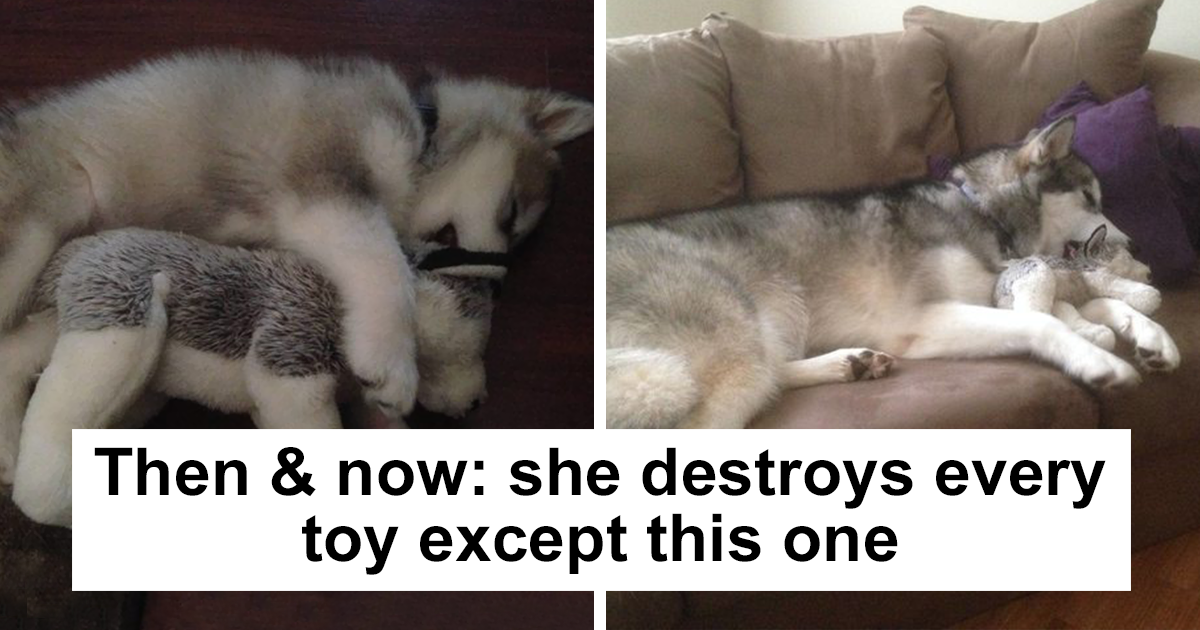
There are two kinds of people in the world: those who think they’re tough, and those who’ve seen a sleepy puppy
hugging a stuffed duck like it’s the last warm thing on Earth. If you’re in the first group, welcomethis article
is your very gentle, very fluffy initiation ceremony.
Because here’s the truth: a pet sleeping with a toy is peak “my heart can’t handle this” content. It’s the tiny
paw draped over a plush bunny. The cat face-planted into a catnip kicker like it owes them money. The dog who fell
asleep mid-chew and decided, “Yep, this squeaky hedgehog is my pillow now.” Multiply that by 201, and you’ve got a
cuteness situation that should probably come with a warning label.
What You’ll See In These 201 Toy-Hugging Snoozes
A gallery this big isn’t just “dog sleeps, end of story.” It’s a full-blown nap anthology. Here are the kinds of
moments you’ll keep running intoeach one a tiny masterpiece of comfort, trust, and comedic timing.
1) The “Stuffed Animal Is My Soulmate” Pose
The classic: pet sprawled out, toy tucked under chin, expression that says, “Please do not disturb. I am in love.”
Dogs do this with plushies constantlyespecially soft toys that feel like prey (but, you know, less scratchy and
more squeaky).
2) The “I Fell Asleep Mid-Play” Faceplant
You’ll find plenty of pets who clearly had big plansplans that were tragically interrupted by sleep.
Their toy is still in their mouth. Their legs are still in “zoomies” position. Their brain has simply clocked out.
3) The “Tiny Toy, Giant Dog” Comedy Set
A 70-pound dog cuddling a toy the size of a chicken nugget is always funny. It’s also weirdly sweetlike they’re
protecting the world’s smallest treasure.
4) The Catnip Kicker Cuddle Puddle
Cats tend to rotate toy favorites like they’re curating a museum exhibit. But when they pick a winner, they go all in:
hugging, bunny-kicking (awake), and then collapsing into a satisfied, twitchy nap (classic cat logic).
5) The “This Toy Is My Emotional Support Loaf”
Some pets treat a particular toy like a comfort object. It’s not always about playit’s about familiarity. A toy that
smells like home can be the difference between “new situation” and “I can relax now.”
6) The Multi-Toy “Dragon Hoard” Nap
One toy? Cute. Three toys? Iconic. Six toys? That’s not a napthat’s a strategic inventory meeting. Some pets gather
toys into a pile and fall asleep like they’re guarding their stash.
Why Pets Sleep With Toys (Beyond “Because It’s Adorable”)
Yes, it’s cute. But it’s also meaningful. When a pet sleeps with a toy, you’re often seeing a mix of instinct,
comfort, habit, and plain old preference. Think of it like a favorite hoodieexcept the hoodie squeaks and sometimes
loses an ear.
Dogs: Comfort, Instinct, and “This Feels Right”
Many dogs love plush toys because they’re soft, easy to carry, and satisfy natural “grab and hold” instincts. Squeaky
toys and plush toys can simulate prey movement/sound, which is part of why some dogs choose them again and again.
But sleeping with them often points to something gentler: security and familiarity.
Puppies, in particular, may gravitate toward soft toys as a soothing substitute when they’re adjusting to a new home.
For adult dogs, the favorite toy can become a reliable “good feelings” anchorsomething that smells like their people,
their bed, their safe place, their routine.
Cats: Natural Behaviors, Enrichment, and a Little Bit of Chaos
Cats don’t always “cuddle” objects the way dogs do, but they absolutely form preferences. Toys help cats express
natural behaviorsstalking, pouncing, problem-solvingand they can become part of the cat’s daily rhythm. After a
lively play session, many cats crash hard, sometimes right beside (or directly on top of) their latest conquest.
You might also see a cat carrying a toy to a quiet spot before dozing off. That can be normal behaviorcats often like
to feel in control of their environment, and having a toy nearby is like keeping your phone on the nightstand. Not
necessary, but comforting.
Other Pets: Rabbits, Ferrets, and the Surprise Toy Snugglers
Depending on the pet, toys can be comfort objects, enrichment tools, or simply something soft to lean against. Small
animals often enjoy safe chew items or plush-safe bedding companions designed for their species. The key is always
choosing age-appropriate, species-appropriate materials and sizes.
The “Security Blanket” Effect: When a Toy Means Calm
If your pet consistently naps with the same toy, you may be seeing a comfort patternespecially in moments of change:
a new house, a new schedule, a new family member, storms outside, or even just “the vacuum exists and I hate it.”
A familiar toy can help pets self-soothe. It’s a predictable object in a world where squirrels are unpredictable,
delivery trucks are suspicious, and someone keeps moving the couch two inches (rude).
Signs It’s Mostly Comfort
- They choose the same toy when they’re settling down to rest.
- They carry it to their bed or favorite nap spot.
- They seem calmer when it’s nearby (especially during transitions).
- They don’t react aggressively if you walk past (they’re just… snoring).
When to Pay Attention: Resource Guarding vs. Cuddling
Most toy snuggling is harmless. But if your pet stiffens, growls, snaps, or becomes intensely protective when someone
approaches their toyespecially around sleep or restit’s worth taking seriously. That may be resource guarding, and
it can be addressed safely with a veterinarian, a credentialed trainer, or a behavior professional.
Toy Safety Before You Let the Cuteness Run Overnight
The internet loves a plushy cuddle nap. Your vet loves it when that plushy cuddle nap doesn’t turn into an emergency.
Not every toy is a “sleep toy.” Some are strictly “supervised play only.” Here’s how to make the adorable safer.
Sleep-Safe Toy Checklist
- Size matters: Avoid anything small enough to fit fully in the mouth (choking risk).
- No loose parts: Skip toys with easy-to-chew-off eyes, ribbons, strings, or glued-on bits.
- Watch the material: If your pet shreds plush toys, don’t leave plush toys out during sleep.
- Inspect regularly: Toss toys that are tearing, cracking, or breaking into pieces.
- Be careful with squeakers: Some pets can remove and swallow squeakers.
- Avoid “too hard” chews: Very hard chews can risk dental injuries; choose safer textures.
Quick Reality Check for Multi-Pet Homes
If you have pets of different sizes, store toys accordingly. A toy that’s perfect for your big dog may be dangerous
for a small dog or a cat. A toy that’s fine for a gentle chewer may be a “shred and swallow” temptation for a power
chewer. When in doubt, separate toys by species and size and rotate them during supervised time.
How to Capture Your Own “Pet Sleeping With Toy” Photos (Without Being That Person)
Let’s keep it wholesome. The goal is: document the sweetness, don’t disturb the sweetness. Here are low-drama ways to
get the shot.
Use soft light, not surprise light
Natural window light is your best friend. Avoid flashnobody wants to wake up to a paparazzi moment, especially not a
creature who thinks a broom is a monster.
Get low, shoot wide, then crop
Getting closer can wake them. Take a wider shot from a respectful distance and crop later. Bonus: you’ll also capture
the full scenetiny paws, toy tucked under chin, and that one dramatic ear.
Let the toy be “the story”
Composition trick: put the toy and the pet’s face in the same focal area. A plush turtle under a sleepy nose is
basically an instant headline.
Don’t stage it if it stresses them
Some pets love having a toy nearby. Others want to sleep like a minimalist monk. If your pet walks away, let them.
Consent matters, even when the subject is covered in fur.
Want More Toy-Cuddle Naps? Try These Enrichment Ideas
Pets often sleep best after their needs are met: movement, mental stimulation, comfort, and routine. If your goal is
more contented snoozing (and yes, more photo ops), focus on the basics.
For dogs
- Rotate toys weekly: novelty keeps interest high without turning your living room into a toy landfill.
- Offer calming options: a durable rubber toy (if appropriate) or a safe comfort plush for gentle chewers.
- Match toys to the dog: chewers need tougher materials; snugglers may prefer soft, simple plush.
For cats
- Short play sessions: a few minutes of “hunt and pounce” can lead to a satisfying crash afterward.
- Safe solo toys: choose cat-safe items without strings or parts that can be swallowed.
- Put toys away sometimes: it keeps favorites feeling special (and reduces midnight toy stampedes).
Conclusion: 201 Tiny Proofs That Pets Feel Safe With Us
A pet sleeping with a toy is cute on the surfaceand kind of profound underneath. It can be instinct, play leftovers,
comfort, routine, or a simple “this is mine and I like it.” Either way, it’s a small window into how safe they feel
in their world.
So enjoy the 201-picture cuteness marathon. Save your favorites. Send them to the friend who claims they “don’t like
animals” (we’ll wait). And if your own pet is currently napping with a toy… congratulations. Your home has been
officially blessed by the Department of Excessive Adorableness.
Experiences: The Pet-Parent Moments That Feel Exactly Like These Photos
If you’ve ever lived with a pet, you know the internet didn’t invent this kind of cuteit just finally gave it a
highlight reel. The “pet sleeping with a toy” moment shows up in real life in a hundred small, ordinary ways, and
somehow it never gets old. It often starts quietly: you’re walking past the living room, you glance down, and there
they arecurled up with a plush dinosaur like it’s a priceless heirloom. You don’t move. You don’t breathe. You
consider canceling your entire day because this is obviously sacred.
One of the most relatable experiences is the “new favorite” phase. You bring home a toy that you’re pretty sure will
be ignored (because the last five were ignored), and suddenly it’s the chosen one. Your dog carries it from room to
room like a proud little parade float. Your cat drags it down the hallway at 2 a.m. like they’re delivering an
urgent message to the night shift. Then, without warning, that same toy becomes the nap-time accessory. It shows up
in the bed. It shows up on the couch. It shows up tucked under a chin in the sunniest patch of the floor. The toy
isn’t just a plaything anymoreit’s part of the routine.
Another common moment happens after a big day. Maybe your dog met new people, or your cat had an especially dramatic
play session, or your rabbit explored a new hideout. When they finally settle down, the toy becomes the “landing
gear.” They lie down close to it, or on it, or with one paw hooked over it like they’re anchoring themselves to the
planet. It’s one of those scenes that makes you realize how much their environment matters: a safe space, familiar
scents, and a few trusted objects can turn a busy brain into a sleepy one.
Pet parents also recognize the “emotional support toy” on tougher days. Thunder outside. Construction noise. A house
full of guests. Even a change in schedule. Some pets cope by seeking out something familiaroften a specific toy that
smells like home. You’ll see them carry it to a quiet corner or curl up with it on their bed. It’s not dramatic; it’s
just their version of reaching for comfort. And when they finally fall asleep with it nearby, it’s a small win: a
sign that they’ve found calm again.
Then there’s the funny side: the toys that make absolutely no sense. The dog who adores a flat, crinkly piece of
fabric that used to be a plush animal. The cat who insists a tiny mouse is the perfect pillow. The pet who gathers
three toys at once like they’re preparing for a long winter (inside a climate-controlled home, naturally). You start
to learn their preferences the way you learn a friend’s coffee order. Soft toys for snuggling. Bouncy toys for
zoomies. A specific “kicker” toy for cat wrestling. And, occasionally, the one toy that’s so beloved you quietly
order a backup because if it ever disappears, your household will enter a period of national mourning.
The sweetest experience is realizing what these photos really represent: trust. Sleep is vulnerable, and pets don’t
fully relax unless they feel secure. When you see them out cold with a toy tucked closeears loose, paws limp, body
heavyyou’re seeing a little piece of peace. That’s why these images hit so hard. They’re funny, yes. They’re cute,
absolutely. But they’re also tiny reminders that comfort is built from small things: a safe home, a familiar smell,
a soft toy, and the confidence that they can drift off and nothing bad will happen. Honestly? That’s the kind of
cuteness we could all use more of.