Calling any cover song “better than the original” is a fast way to start a friendly music debate that ends with someone dramatically unplugging the aux cable. Still, some metal bands do more than simply play an older song with louder guitars. They rebuild it, reshape its mood, sharpen its hooks, and sometimes make it so famous that new listeners assume the cover came first.
This list celebrates the best metal cover songs that feel like complete reinventions. Some turn folk ballads into arena-sized anthems. Others drag pop classics into a basement full of distortion pedals. A few take songs that were already heavy and push them into territory where the original suddenly seems like it forgot to bring a helmet.
What “Better” Means in This List
“Better” does not mean the original recording is unimportant. In most cases, the original is the blueprint, the spark, and the reason the cover exists at all. Here, “better” means the metal version creates a more memorable identity through heavier arrangements, stronger drama, greater intensity, or sheer cultural impact.
These better-than-the-original metal cover songs are the versions that make listeners stop mid-playlist and ask, “Wait, this was not written by them?” That is the gold standard. A great cover should honor the original while behaving badly enough to become its own legend.
The Top 10 Better-than-the-original Metal Cover Songs
10. Disturbed – “The Sound of Silence” (Originally by Simon & Garfunkel)
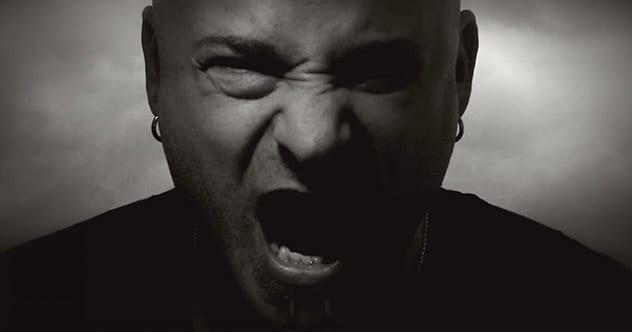
Disturbed’s version of “The Sound of Silence” should not work on paper. Simon & Garfunkel’s original is a delicate folk-rock classic built around restraint, reflection, and the sort of quiet that makes you stare at the ceiling at 2 a.m. Disturbed transformed it into a dark orchestral metal ballad led by David Draiman’s theatrical baritone.
The genius of the cover is that it does not rush to turn every verse into a guitar riot. Instead, it lets tension build slowly. The arrangement grows from near-whispers into a massive emotional surge, making the song feel less like a coffeehouse confession and more like the final scene of a post-apocalyptic movie. It is not traditional riff-first metal, but it is undeniably heavy in atmosphere.
9. Alien Ant Farm – “Smooth Criminal” (Originally by Michael Jackson)
Michael Jackson’s “Smooth Criminal” is already a perfectly engineered pop machine. Alien Ant Farm did not try to out-dance it. They gave it chunky guitars, nu-metal rhythm, nervous energy, and a strange-but-effective sense of fun. The result became one of the defining metal-adjacent cover songs of the early 2000s.
The band keeps the song recognizable while changing its posture completely. Jackson’s original moves with cool precision; Alien Ant Farm’s version charges forward like it drank three energy drinks and misplaced its skateboard. That contrast is exactly why it works. The cover introduced a generation of rock listeners to the song while proving that pop hooks can survive almost any amount of distortion.
8. Type O Negative – “Cinnamon Girl” (Originally by Neil Young)
Neil Young’s “Cinnamon Girl” has a ragged, warm, garage-rock charm. Type O Negative turned it into something colder, darker, and more seductive. Their version from October Rust wraps the song in gothic atmosphere, thick low-end guitar, and Peter Steele’s unmistakable voice.
Instead of trying to make the song faster or more aggressive, Type O Negative slows the emotional temperature until it feels like a midnight drive through a foggy cemetery. That may sound ridiculous, but this is Type O Negative. Ridiculous was often part of the package, right next to the massive riffs and dramatic melancholy. Their version does not erase Young’s loose charm; it gives the song a velvet cape and a suspicious amount of candlelight.
7. Anthrax – “Got the Time” (Originally by Joe Jackson)
Joe Jackson’s “Got the Time” was already tense, fast, and wired with anxious energy. Anthrax recognized that the song was practically begging to become a thrash metal sprint. Their cover turns the nervous new-wave pulse into a compact burst of guitar attack, rapid-fire drumming, and pure adrenaline.
What makes Anthrax’s version special is its discipline. The band does not bury the hook beneath unnecessary heaviness. Instead, it tightens every part of the arrangement until the song feels like it has been launched from a cannon. “Got the Time” becomes a perfect example of how metal covers of pop and new-wave songs can reveal the aggression hiding inside a clever melody.
6. Fear Factory – “Cars” (Originally by Gary Numan)
Gary Numan’s “Cars” was futuristic long before most metal bands had discovered the joys of industrial textures. Fear Factory saw the mechanical heartbeat inside the song and made it even more machine-like. Their version adds punishing guitars, precision drumming, electronic details, and a clean-metal vocal approach that fits the song almost too well.
Fear Factory’s “Cars” feels less like a cover and more like a logical next chapter. Numan’s original imagined alienation through synth-pop; Fear Factory imagined alienation inside a factory where the robots have started a union and are disappointed in management. The collaboration also benefited from Gary Numan’s involvement, helping the cover feel like a meeting between two generations of futuristic music rather than a simple genre experiment.
5. Slayer – “Dissident Aggressor” (Originally by Judas Priest)
Judas Priest’s original “Dissident Aggressor” is a proto-thrash masterpiece, full of speed, menace, double-kick drumming, and Rob Halford’s piercing vocals. Slayer had the confidence to cover it because they understood exactly what made it dangerous in the first place.
Slayer’s version from South of Heaven strips away some of the original’s classic-metal polish and replaces it with a more hostile, grimy attack. It sounds like the song has been dragged through a concrete tunnel and handed a sharper knife. Judas Priest created the blueprint; Slayer made it feel even more ruthless. That is one of the rarest forms of metal cover success.
4. Death – “Painkiller” (Originally by Judas Priest)
Covering “Painkiller” is an outrageous decision. Judas Priest’s original is already one of the most demanding heavy metal songs ever recorded, with impossible-sounding vocals, rapid riffing, and drums that seem to be trying to outrun an incoming meteor. Death looked at that mountain and decided to climb it while carrying extra amplifiers.
On their 1998 album The Sound of Perseverance, Death turned “Painkiller” into a technical death metal showcase. Chuck Schuldiner’s high, violent shrieks, Richard Christy’s explosive drumming, and the band’s razor-edged precision give the song a new identity. The original is heroic and theatrical; Death’s cover is heroic, theatrical, and slightly terrifying. It is the musical equivalent of watching someone juggle chainsaws during an earthquake.
3. Quiet Riot – “Cum On Feel the Noize” (Originally by Slade)
Quiet Riot’s “Cum On Feel the Noize” did not merely cover a Slade song. It helped open the floodgates for 1980s heavy metal in the United States. The band transformed Slade’s glam-rock stomper into a bigger, louder, more radio-ready arena anthem with a chorus built for raised fists and questionable hair decisions.
The song’s impact was enormous. Quiet Riot’s version became a Top Five hit, while Metal Health became the first metal album to reach No. 1 on the Billboard 200. Those statistics matter because they show how a cover can change more than a band’s career. It can change what labels, radio stations, and mainstream listeners believe a metal song can do. Slade gave the world a great song; Quiet Riot gave it shoulder pads, volume, and a permanent place in rock history.
2. Metallica – “Am I Evil?” (Originally by Diamond Head)
Diamond Head’s “Am I Evil?” is one of the essential songs of the New Wave of British Heavy Metal. Metallica loved it enough to record it as a B-side to “Creeping Death” in 1984, then keep it alive through later releases and countless live performances. For many listeners, Metallica’s version became the gateway to Diamond Head’s original.
Metallica does not radically rewrite the structure. Instead, the band attacks it with a more muscular production, tighter thrash-metal rhythm, and James Hetfield’s unmistakable vocal command. The result feels heavier, sharper, and more dangerous without losing the song’s epic build. It is a masterclass in respectful amplification: take something already excellent, turn every dial higher, and somehow avoid breaking the building.
1. Judas Priest – “Diamonds and Rust” (Originally by Joan Baez)
At No. 1 is one of the most unlikely and brilliant heavy metal cover songs ever recorded. Joan Baez wrote “Diamonds and Rust” as a reflective folk ballad filled with memory, romance, and emotional distance. Judas Priest heard all that vulnerability and decided it needed twin guitars, thunderous drums, and the voice of Rob Halford soaring above the wreckage.
The version on Sin After Sin keeps the song’s sadness intact, but it turns that sadness into something more dramatic and physical. The guitars do not merely add heaviness; they make the emotional tension feel larger. Halford’s vocal performance gives the lyrics a sense of wounded grandeur, while the band’s arrangement proves that metal can be elegant as well as aggressive.
Judas Priest’s “Diamonds and Rust” is the ultimate example of transformation through interpretation. It respects Baez’s songwriting while proving that a fragile folk memory can survive a full metal storm. If the original is a handwritten letter, the cover is that same letter carved into steel.
Why the Best Metal Covers Work So Well
The strongest metal cover songs do not depend on louder guitars alone. They identify the emotional core of the original and then magnify it. A pop song may contain anxiety, lust, grief, rebellion, or paranoia beneath a shiny surface. Metal gives those feelings weight, volume, and occasionally a double-bass drum pattern that sounds like a runaway train.
Great covers also understand restraint. Fear Factory did not remove the electronic soul of “Cars.” Disturbed did not turn every second of “The Sound of Silence” into a riff festival. Judas Priest did not forget the sadness at the center of “Diamonds and Rust.” The best metal bands know that transformation works best when the original song’s heartbeat remains audible beneath the distortion.
From the Listening Pit: Why These Metal Covers Create Lasting Experiences
Discovering a metal cover can be one of the most satisfying experiences in music because it creates a small moment of confusion before it creates excitement. You hear a familiar melody, but something is different. The tempo is meaner. The guitars are heavier. The singer sounds like they are delivering the chorus from the edge of a cliff during a thunderstorm. Then it clicks: this is a song you know, but it has been reborn in a completely different body.
For many listeners, that first discovery happens by accident. A shuffle playlist drops Fear Factory’s “Cars” between industrial metal tracks. A friend plays Alien Ant Farm’s “Smooth Criminal” at a party. A parent recognizes Joan Baez in the middle of a Judas Priest playlist and suddenly looks deeply concerned. Those moments are fun because they bridge generations. A teenager can discover Neil Young through Type O Negative. A veteran metal fan can revisit Simon & Garfunkel through Disturbed. Everybody leaves with homework, and it is the good kind.
Metal covers are also powerful in live settings. When a band launches into a recognizable riff or chorus, the audience reacts before the singer even reaches the first verse. There is a special kind of energy when thousands of people realize they all know the song, even if they know it from different decades and different genres. A classic pop melody becomes a mosh-pit chant. A folk song becomes a sea of raised hands. A glam-rock chorus becomes an excuse for people to spill beverages with tremendous enthusiasm.
Another memorable part of the experience is the debate that follows. Some listeners prefer the original because it has the first spark, the historical context, and the songwriter’s intended mood. Others prefer the metal cover because it adds scale, intensity, or technical skill. Usually, both sides are right. The best arguments about cover songs are not really arguments about winners. They are arguments about what people value in music: intimacy versus impact, melody versus aggression, nostalgia versus reinvention.
These covers also make listeners hear the original songs differently. After hearing Anthrax turn “Got the Time” into a thrash sprint, Joe Jackson’s version can sound even more frantic. After hearing Death attack “Painkiller,” Judas Priest’s original can feel even more heroic. A successful cover does not replace the source material; it sends listeners back to it with fresh ears. That is why these songs endure. They are not shortcuts to someone else’s catalog. They are conversations across decades, held at extremely high volume.
Ultimately, the experience of a great metal cover is about recognition and surprise happening at the same time. You know the song, but you do not know it like this. That moment is why listeners keep returning to these recordings, why bands keep taking risks on unexpected material, and why the aux cable remains one of the most powerful tools in modern diplomacy.
Conclusion
The top metal cover songs succeed because they do more than mimic familiar recordings. They find a hidden strength in the original and bring it to the surface with distortion, power, atmosphere, and personality. From Quiet Riot’s chart-changing glam-metal anthem to Judas Priest’s majestic transformation of a folk ballad, these tracks prove that metal can honor the past while making it louder, darker, and impossible to ignore.
Note: “Better than the original” is an editorial and subjective judgment. Every original song on this list remains essential listening, because without the original spark, there would be no metal lightning.