Jonathan Joss spent much of his career making uncomfortable situations funny. As John Redcorn on King of the Hill, his calm voice could turn an awkward suburban secret into comedy gold. As Chief Ken Hotate on Parks and Recreation, he delivered threats, negotiations, and historical corrections with the relaxed confidence of a man who knew everyone else had already lost the argument.
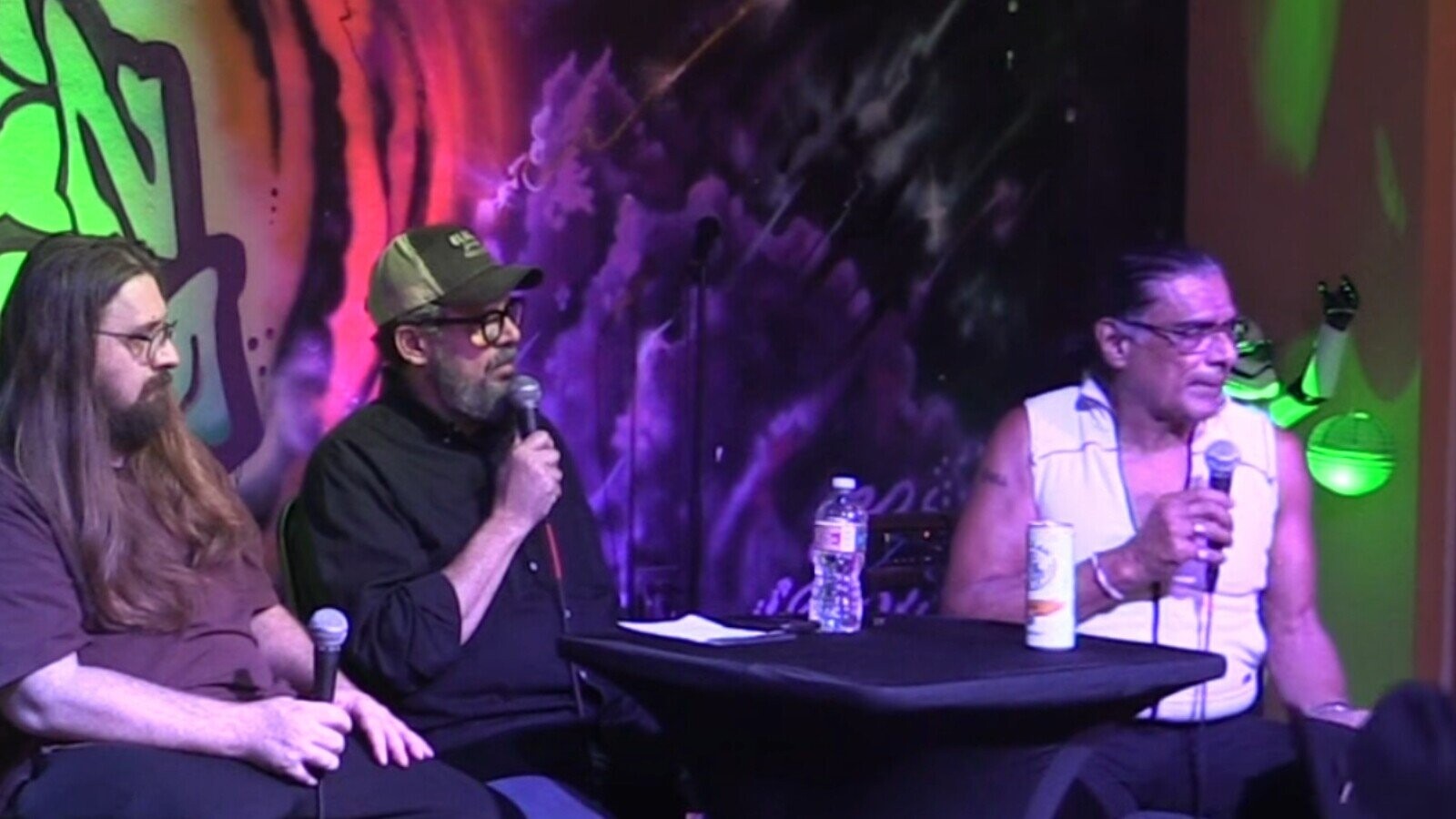
That talent for mixing humor with tension was still visible during what became his final recorded public appearance. On May 31, 2025, Joss participated in a live interview with Bwaaa! A King of the Hill Podcast in Austin, Texas. During a candid and sometimes troubling conversation about his career, substance use, destroyed home, deceased dogs, and conflicts with people around him, he reportedly joked, “My neighbors now are really scared.”
At the time, the remark sounded like another piece of Joss’ dark, impulsive humor. Less than 24 hours later, he was fatally shot during a confrontation near the site of his former San Antonio home. The joke suddenly seemed less like a throwaway line and more like an accidental preview of a tragedy nobody in the room knew was coming.
Timeline and final-interview reporting:
A Final Weekend Filled With Public Emotion
Joss’ final weekend unfolded against the backdrop of the ATX TV Festival, where cast members and creators had gathered to promote the Hulu revival of King of the Hill. The official panel was held at Austin’s Paramount Theatre on Friday, May 30, 2025.
Joss had not been included among the announced panelists. That exclusion clearly mattered to him. John Redcorn was not a one-episode guest character or a forgotten background voice. Joss had played him for most of the original series, succeeding actor Victor Aaron after Aaron’s death in 1996. The role became one of the show’s most recognizable performances and an important part of Joss’ professional identity.
During the festival event, Joss appeared in the audience and addressed the panel from near the front of the theater. He talked about his connection to the series, his Native American identity, his frustration over being overlooked, and his belief that the fire that destroyed his home was connected to anti-gay hostility. Reports and audience videos described the appearance as emotional, unscheduled, and increasingly difficult for organizers to manage.
He was eventually escorted from the event. Yet reducing the moment to a celebrity “meltdown” misses the deeper context. Joss appeared to be carrying grief, anger, addiction, professional disappointment, housing instability, neighborhood conflict, and a powerful fear that his work and identity were being erased. It was not a tidy public-relations appearance. Real life had apparently misplaced the tidy folder.
ATX panel and career context:
What Jonathan Joss Said in His Final Interview
The following evening, Joss sat down with the hosts of Bwaaa! A King of the Hill Podcast at The Green Room in Austin. The interview was recorded live on May 31 and released shortly after his death. It covered far more than pleasant memories from an animated sitcom.
Joss explained that he had not originally voiced John Redcorn and discussed taking over the character following Victor Aaron’s death. He questioned how Indigenous characters had been treated in television comedy and expressed frustration that John Redcorn was repeatedly used as the target of jokes. At the same time, he said he believed audiences would enjoy the revival.
That mixture of pride and resentment ran through much of the conversation. Joss loved the character, but he also appeared to feel that the entertainment industry had benefited from his voice and cultural background without always giving him the respect, access, or recognition he believed he deserved.
When asked whether he was sober, Joss answered that he was not. He spoke openly about drinking and drugs, describing them as companions after losing nearly everything. He also referred to previous stays in mental-health facilities and suggested that those experiences caused authorities and courts to dismiss him.
One of his most poignant observations was that everyone’s time is limited and that he had spent too much of his own time trying to be funny while complaining about his circumstances. Heard before his death, the statement might have sounded reflective. Heard afterward, it carries the weight of a final confession.
Podcast statements and reported quotations:
The House Fire Behind the Dark Joke
On January 23, 2025, Joss’ San Antonio house was destroyed by fire. He lost his belongings, and three of his dogs died. The property was later demolished. The disaster became a central subject in his final months and in the interview recorded the day before his death.
Early reporting indicated that Joss had been using a propane heating or cooking device and acknowledged that he might have accidentally left something burning. At other times, he and his husband, Tristan Kern de Gonzales, suggested that the fire could have been deliberately set after a period of harassment. Authorities continued reviewing the fire after Joss’ death, and no definitive public finding established that neighbors had committed arson.
In the podcast interview, Joss discussed accusations that he had caused the fire himself. He strongly rejected the idea that he would intentionally burn a house containing his dogs. He then made an extremely dark joke about what supposedly happened to the animals and followed the story with the remark that his neighbors were now frightened.
It is important not to treat an off-the-cuff joke as a literal confession. Joss was known for improvisation, blunt language, exaggeration, and humor that could become uncomfortable without warning. The available reporting does not establish that his statement was an admission of harming his dogs or setting the fire.
Nevertheless, the joke reveals something about the emotional temperature surrounding him. Fear was no longer an abstract concept. Joss felt targeted and ignored. Some neighbors said they felt threatened by him. Police had been repeatedly called to the street. The neighborhood was not merely experiencing a disagreement over lawn care or a mailbox positioned three inches too far to the left. It was living inside a prolonged cycle of accusations, disturbances, weapons reports, property disputes, and escalating distrust.
Fire details and neighborhood reporting:
Why the Neighbor Remark Became So Haunting
The line “My neighbors now are really scared” became disturbing because of what happened on June 1, 2025. Joss and his husband returned to the burned property to check their mail and reportedly found the remains of one of their dogs. A confrontation followed with longtime neighbor Sigfredo Ceja Alvarez.
Police responding to the shooting found Joss wounded near the roadway. Emergency efforts were unsuccessful, and he was pronounced dead at the scene. He was 59.
Ceja Alvarez was arrested and later indicted on a murder charge. He has not been convicted, and his defense has maintained his innocence despite police reports stating that he acknowledged shooting Joss. As of the latest publicly reported court update in June 2026, attorneys were still gathering evidence and interviewing numerous neighborhood witnesses. His next court appearance was scheduled for September 17, 2026.
Joss’ husband has alleged that the shooting was motivated partly by homophobia. Kern de Gonzales said the couple had experienced repeated harassment and claimed that homophobic slurs were used immediately before and after the shooting. He also said Joss pushed him away from the gunfire, saving his life.
San Antonio police initially issued a statement saying investigators had found no evidence connecting the killing to Joss’ sexual orientation. Police Chief William McManus later apologized and called that conclusion premature, explaining that a possible bias motive remained part of the investigation.
Under Texas law, a hate-crime finding generally affects sentencing rather than creating a separate criminal charge. Whether anti-gay bias legally contributed to the killing has not been resolved in court.
Shooting, hate-crime inquiry and current case status:
A Neighborhood Conflict With Competing Accounts
The tragedy cannot be responsibly explained through only one side of the neighborhood dispute. Kern de Gonzales described Joss and himself as victims of homophobic intimidation, threats, neglect by authorities, and possibly targeted destruction of their home. Supporters in San Antonio’s LGBTQ+ and Native American communities called for a full investigation and warned against dismissing those allegations.
Several neighbors presented a very different history. They described years of unpredictable confrontations and alleged that Joss shouted threats, damaged property, carried weapons, started fires, and frightened residents. Police records reviewed by local media documented more than 70 calls involving Joss, his property, or nearby disturbances over roughly two years. Sometimes Joss called the police; sometimes his neighbors did.
Those accounts do not justify his killing, nor do they automatically disprove allegations of homophobia. A person may behave erratically and still be targeted because of sexual orientation. A neighborhood feud may involve genuine fear on multiple sides. Mental illness, addiction, prejudice, personal hostility, and failures of intervention can exist at the same time, even though public conversations prefer one clean villain and one clean explanation.
The final podcast joke therefore should not be used as evidence that Joss deserved what happened. It is better understood as a grim fragment from an environment in which everyone believed someone else posed a danger.
Competing neighborhood accounts:
Jonathan Joss’ Career Was Larger Than His Final Days
Although the circumstances of his death attracted enormous attention, Joss should not be remembered only through police reports and one unsettling interview. He built a decades-long career in television, film, voice acting, and music.
He was born in San Antonio in 1965 and was of Comanche and White Mountain Apache heritage. His early screen work included appearances in Walker, Texas Ranger, and he later performed in projects such as ER, Charmed, True Grit, The Magnificent Seven, Ray Donovan, and Tulsa King.
His defining role was John Redcorn, the soft-spoken healer whose complicated relationship with Nancy Gribble formed one of King of the Hill’s longest-running jokes. Joss gave the character dignity, charm, frustration, and just enough self-importance to make him wonderfully human. John Redcorn could be spiritual, romantic, jealous, opportunistic, wounded, and ridiculousoften before the commercial break.
On Parks and Recreation, Joss transformed Chief Ken Hotate into a memorable recurring character despite appearing in only a handful of episodes. Hotate’s greatest weapon was not anger but composure. He could make Leslie Knope panic simply by pausing for half a second longer than expected. That is elite-level sitcom efficiency.
Joss also recorded material for the King of the Hill revival before his death. The show’s creators said his voice would be missed and offered condolences to his family and friends. His final work allowed audiences to hear John Redcorn again, giving the performance a bittersweet afterlife.
Career and legacy reporting:
How Final Public Appearances Change After a Tragedy
A final interview is rarely presented as a final interview. There is no dramatic title card informing the audience that every sentence must now be examined for clues. The participants expect another episode, another convention, another argument, another chance to explain themselves more clearly.
That is why listening to Joss’ last appearance can feel emotionally disorienting. His comments move between humor, anger, vulnerability, pride, pain, and provocation. One moment sounds like a performer entertaining a room. The next sounds like a person revealing that the structures holding his life together have collapsed.
After someone dies violently, audiences often replay their final words as though they contain a secret map. A joke about frightened neighbors becomes foreshadowing. A comment about limited time becomes prophecy. A complaint about being ignored becomes a final plea for recognition.
Those interpretations are understandable, but they can also become misleading. Joss did not know he was delivering his last interview. His statements were not written as a farewell. Treating every remark as a supernatural prediction may create a compelling story, but it can flatten the reality of a complicated person.
Experience-Based Reflections on Hearing Joss’ Final Interview
For longtime King of the Hill viewers, hearing the interview may produce an immediate contrast between voice and subject. Joss still sounds recognizably like the performer behind John Redcorn, yet he is discussing homelessness, addiction, grief, exclusion, and neighborhood fear rather than healing ceremonies or Arlen gossip.
The first common reaction is discomfort. Listeners may laugh at one of his improvisational lines and then feel guilty because the surrounding story is tragic. That emotional whiplash is not necessarily inappropriate. Dark humor often functions as a pressure valve for people who feel overwhelmed. The laugh does not erase the pain; sometimes it reveals how much pressure has accumulated behind it.
A second reaction is the urge to diagnose him from a recording. Joss openly discussed substance use and previous mental-health treatment, while other reporting described erratic behavior. However, a podcast episode is not a clinical evaluation. Listeners can recognize distress without pretending to know exactly what diagnosis, treatment, or intervention would have changed the outcome.
A third experience involves frustration with institutions. Joss believed the entertainment industry had overlooked him. His husband said law enforcement failed to protect them. Neighbors said police failed to protect the street from years of threatening behavior. Officers reportedly made numerous visits and attempted mediation or referrals, yet the conflict continued.
From the outside, it is tempting to identify one obvious moment when someone should have “done something.” In reality, long-running crises often become normalized. Each individual event appears insufficient for decisive intervention, while the collection of events grows increasingly dangerous. Everyone waits for a clearer emergency. Then the emergency arrives with terrible clarity.
The interview may also encourage viewers to reconsider how supporting actors experience fame. Fans can know a character’s voice for decades while knowing almost nothing about the performer’s life. An actor may be culturally recognizable without being financially secure, regularly employed, invited to promotional events, or treated as essential by a studio.
Joss appeared deeply hurt by not being included in the revival panel. From an organizer’s perspective, the guest list may have been an ordinary production decision. From his perspective, it represented exclusion from a home he had helped build. Both realities can exist, but only one person in that equation was experiencing the decision as an existential rejection.
Finally, the interview offers a lesson in responsible spectatorship. Audiences should resist turning Joss’ distress into entertainment separate from the human being experiencing it. Clips labeled “eerie,” “unhinged,” or “chilling” may generate clicks, but they can remove context and encourage viewers to treat suffering as a puzzle designed for online detectives.
The more useful response is to listen carefully, separate confirmed facts from allegations, acknowledge contradictions, and remember that humor does not always mean someone is okay. Sometimes the funniest person near the microphone is also the person trying hardest to prove that he still exists in the room.
Conclusion: A Joke That Now Carries a Heavy Echo
Jonathan Joss’ comment that his neighbors were frightened has endured because reality gave it an ending nobody expected. It emerged from a rambling, intimate conversation about a burned home, dead pets, addiction, cultural identity, professional disappointment, and years of neighborhood hostility. The following day, one of those conflicts ended his life.
The remark should neither be ignored nor treated as a complete explanation. It cannot determine who was legally responsible, establish a hate-crime motive, prove what caused the house fire, or resolve the competing stories told by Joss’ husband and former neighbors. Those questions belong to investigators, attorneys, witnesses, and the courts.
What the comment does reveal is that fear had become part of Joss’ everyday vocabulary. He feared being erased. His husband said they feared harassment. Neighbors said they feared Joss. A community with that much accumulated fear needed meaningful intervention long before June 1, 2025.
Joss leaves behind more than a haunting final appearance. He leaves John Redcorn’s unmistakable voice, Chief Ken Hotate’s perfectly controlled mischief, a body of work that expanded Native American visibility in mainstream comedy, and performances that remain funny without requiring audiences to forget the complicated man behind them.
Note: This article distinguishes confirmed events from allegations and contested accounts. The criminal case remained pending as of August 4, 2026, and the defendant is presumed innocent unless proven guilty.