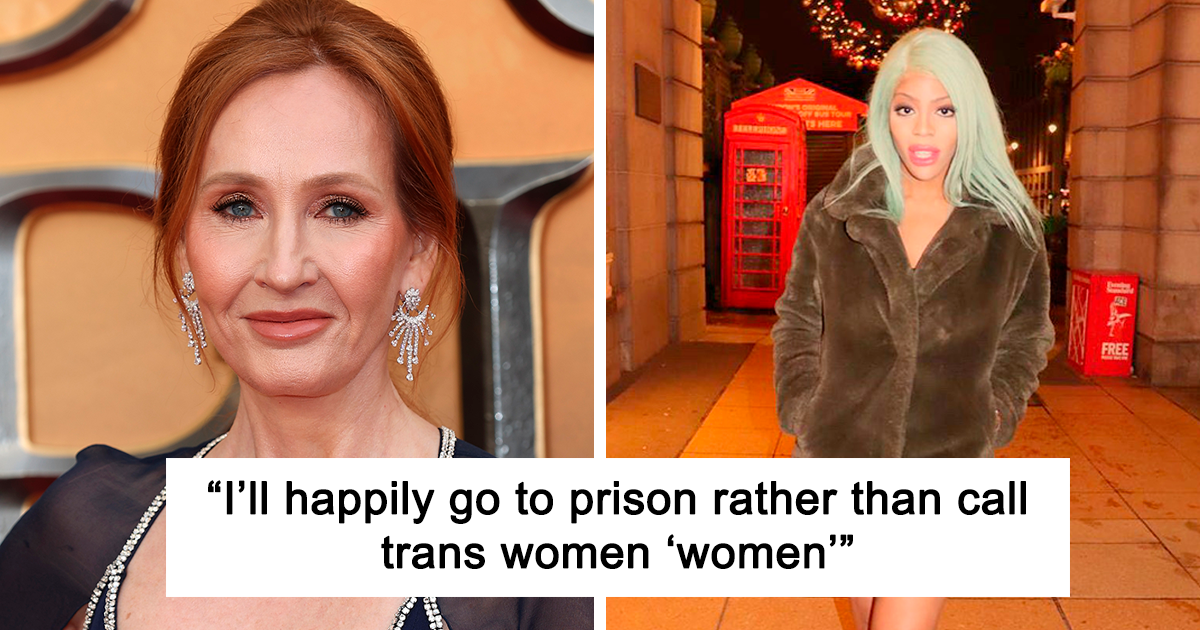
Few modern pop-culture debates have traveled as far, as loudly, and as awkwardly as the controversy surrounding J.K. Rowling’s comments about transgender people. Once widely celebrated as the author who gave the world Hogwarts, house scarves, and the deeply questionable idea that children should solve school security problems, Rowling has become a central figure in the global argument over transgender rights, free speech, feminism, and the responsibility that comes with having a giant public platform.
For many LGBTQ+ activists, the issue is not simply that Rowling has opinions. Everyone has opinions. The internet was practically built to prove that your uncle has 47 of them before breakfast. The deeper concern is that repeated public statements from a famous author can shape how millions of people talk about transgender women, transgender men, nonbinary people, and gender identity itself. When a celebrity with enormous influence frames trans inclusion as a threat, activists argue that the result is not just “debate.” It can become permission for mockery, political attacks, workplace discrimination, school bullying, and family rejection.
This article looks at why Rowling’s comments have sparked such intense reactions, how LGBTQ+ advocates interpret the harm, and what a thoughtful activist response looks like in a media ecosystem where one tweet can travel farther than a broomstick with a jet engine.
Why J.K. Rowling’s Comments Became A Flashpoint
The controversy became widely visible in 2020, when Rowling criticized language such as “people who menstruate” and followed with posts defending the importance of biological sex. She later published a lengthy essay explaining her concerns about sex-based rights, women’s safety, gender identity, and what she described as “new trans activism.” Supporters praised her for defending women’s spaces and free expression. Critics argued that her comments dismissed transgender identity and recycled familiar talking points used against trans people.
For LGBTQ+ activists, the problem is not that Rowling wants to discuss women’s rights. Feminist debates can be serious, complicated, and necessary. The problem, they argue, is that her framing often positions transgender inclusion as a danger rather than a human rights issue. When trans women are discussed primarily in the context of threats, predators, bathrooms, shelters, or prisons, activists say the conversation becomes less about policy and more about suspicion. And suspicion is a very sticky substance; once it gets on a marginalized group, it is hard to wash off.
Rowling has repeatedly denied hating transgender people and has said she supports their right to live free from persecution. Still, advocacy organizations, LGBTQ+ fans, actors from the Harry Potter films, and many public figures have criticized her remarks as harmful. Daniel Radcliffe, Emma Watson, Eddie Redmayne, and others publicly affirmed support for transgender people after the backlash. Their responses mattered because the Harry Potter universe was never just a book series for many readers. It was a refuge for kids who felt weird, lonely, different, or badly sorted by life.
An LGBTQ+ Activist’s Core Reaction: “This Is Bigger Than One Author”
An LGBTQ+ activist responding to Rowling’s online comments would likely begin with a simple point: this is not only about J.K. Rowling. It is about what happens when famous voices normalize doubt about transgender people’s dignity. The author’s fame magnifies every statement. A comment from a private person may annoy a few friends. A comment from a billionaire author becomes a headline, a hashtag, a cable-news segment, and possibly a Thanksgiving argument involving mashed potatoes.
Activists often stress that transgender people are not abstract debate topics. They are students trying to get through algebra, employees trying to keep their jobs, parents raising children, neighbors buying groceries, artists making work, and teenagers trying to survive the school hallway. When public conversations reduce them to “issues,” “ideology,” or “threats,” their humanity gets edited out like a bad subplot.
The activist reaction, then, is not simply outrage for outrage’s sake. It is a defense of context. Trans people in the United States and around the world face higher rates of discrimination, harassment, mental health stress, and political targeting. Advocacy groups argue that public rhetoric matters because it influences the emotional climate in which laws are passed, school policies are written, and families decide whether to accept or reject a child.
What LGBTQ+ Advocates Say Is Harmful
1. Repeatedly Questioning Trans Identity
One major concern is the constant questioning of whether transgender people are who they say they are. Activists argue that this is exhausting and dehumanizing. Imagine having to prove your identity every time you enter a room, use a restroom, join a sports team, fill out paperwork, or read the comments section. Actually, do not read the comments section. That way lies madness and suspiciously many eggplant emojis.
For transgender and nonbinary people, being recognized by name, pronouns, and gender is not a luxury. It can affect mental health, safety, employment, education, and access to basic services. Advocates point to research showing that affirming environments can reduce distress among LGBTQ+ youth. That is why activists often respond strongly when influential figures mock pronouns or frame gender identity as delusion, performance, or social contagion.
2. Framing Trans Rights As A Threat To Women
Rowling’s defenders often say she is standing up for women’s rights. LGBTQ+ activists respond that women’s rights and transgender rights should not be treated like two cats fighting over the same sunny windowsill. Many women are transgender. Many cisgender women support trans inclusion. Many survivors of violence reject the idea that protecting women requires excluding trans women from public life.
The activist critique is that anti-trans rhetoric frequently borrows the language of safety while encouraging fear of an already vulnerable group. Of course, women’s safety matters. Sexual violence matters. Domestic abuse matters. But advocates argue that using those realities to cast suspicion on all trans women does not make anyone safer. It simply moves public anger toward a small group with limited power.
3. Turning A Pop-Culture Platform Into A Political Megaphone
Rowling is not just any celebrity. Her books shaped a generation. For queer readers, Harry Potter often felt like a story about chosen family, hidden identity, authoritarian cruelty, and the courage to name what others refuse to name. So when Rowling’s comments are perceived as hostile to trans people, many LGBTQ+ fans experience a strange grief. It is not just disagreement. It feels like being evicted from a fictional home they helped keep alive.
That emotional reaction may seem dramatic to outsiders, but stories matter. People form real attachments to art. If a young reader found comfort in Hogwarts while struggling with gender identity, seeing the creator publicly dismiss trans-inclusive language can feel personal. The castle suddenly has a locked door.
Why The “Free Speech” Defense Does Not End The Conversation
One of the most common defenses of Rowling is that she has a right to free speech. That is true. In democratic societies, people can express unpopular, controversial, or offensive ideas without being arrested simply because others object. But activists point out that free speech does not mean freedom from criticism, consequences, or rebuttal. A person may speak; other people may answer. That is not censorship. That is Tuesday on the internet.
LGBTQ+ advocates also argue that the free-speech framing can be misleading when applied to extremely powerful figures. Rowling has money, publishers, media attention, legal resources, and a massive audience. Trans teenagers, local organizers, and small advocacy groups do not have equal megaphones. When activists criticize her, they are not silencing a powerless person. They are challenging a public narrative that already has enormous reach.
The better question is not “Can Rowling say it?” but “What happens after she says it?” Does it help people understand one another? Does it improve safety? Does it make policy discussion more accurate? Does it encourage compassion? Or does it harden suspicion toward transgender people who are already being debated in legislatures, schools, clinics, and family kitchens?
The Role Of Harry Potter Actors And Fan Communities
Public responses from Harry Potter actors became important because they separated the values many fans found in the series from the views of its creator. Daniel Radcliffe’s response through The Trevor Project was especially meaningful to many LGBTQ+ fans because he directly affirmed transgender women and emphasized the dignity of trans people. Emma Watson and Eddie Redmayne also expressed support for trans and nonbinary communities.
Fan communities such as MuggleNet and The Leaky Cauldron also criticized Rowling’s comments. Their response showed that fandom is not passive. Fans do not simply consume stories; they interpret them, build communities around them, and sometimes defend the moral lessons they believe the story taught better than the author herself. That is both beautiful and mildly chaotic, like a book club with wands.
For LGBTQ+ activists, these responses matter because they tell trans fans, “You are not alone here.” In a debate that often feels cold and theoretical, public solidarity can be emotionally powerful. It reminds people that a beloved fictional universe can still belong to readers who found hope in it, even if they feel disappointed by its creator.
How Anti-Trans Rhetoric Connects To Real-World Policy
Activists are particularly alarmed because Rowling’s comments exist within a broader political environment. Across the United States, transgender rights have become a major target in debates over school sports, bathroom access, pronouns, health care, books, drag performances, and classroom discussion. Public rhetoric does not write legislation by itself, but it can help create the mood in which restrictive laws feel acceptable.
Organizations such as the ACLU, GLAAD, The Trevor Project, and the Human Rights Campaign have warned that anti-trans messages can contribute to stigma and fear. The Trevor Project’s research has repeatedly found that LGBTQ+ youth mental health is deeply affected by victimization, discrimination, and hostile public debate. For activists, this is why celebrity comments are not just “celebrity drama.” They become part of the weather system that young people have to live under.
That does not mean every person who agrees with Rowling is personally cruel. Many people are confused, worried, or trying to understand changing language around gender. But activists argue there is a responsibility to learn before amplifying claims that may harm a vulnerable minority. Confusion is human. Turning confusion into a brand is where the trouble starts.
What A Better Conversation Would Look Like
An LGBTQ+ activist response does not have to be a shouting match. In fact, the strongest responses often combine moral clarity with practical education. A better conversation would begin by recognizing that transgender people exist, deserve safety, and should not have to debate their humanity as the entry fee to public life.
It would also separate genuine policy questions from fear-based storytelling. If people want to discuss sports rules, prison placement, medical ethics, or data collection, those conversations should include experts, affected communities, evidence, and humility. They should not rely on viral posts that flatten all trans people into a single threat narrative.
Finally, a better conversation would admit that language changes because society changes. Terms like “people who menstruate” are not attacks on women; they are attempts to include everyone who may need reproductive health care, including trans men and nonbinary people. The phrase may sound clunky at first. So did “email,” “podcast,” and “please mute yourself, you’re breathing into the Zoom.” People adapted.
Experience-Based Reflection: What Activism Feels Like In Moments Like This
Anyone who has spent time around LGBTQ+ activism knows that responding to high-profile anti-trans comments can feel like trying to put out a house fire while strangers debate whether water is too political. The work is emotional, repetitive, and often invisible. A celebrity posts something. Headlines explode. Supporters cheer. Critics respond. Meanwhile, organizers are answering messages from scared teenagers, helping parents find resources, correcting misinformation, and reminding exhausted trans people that they are loved.
At community events, the reaction is rarely as simple as anger. There is sadness. There is fatigue. There is the strange pain of watching a beloved cultural figure become a symbol of rejection. Some activists grew up with Harry Potter. They waited at midnight book releases, sorted themselves into houses, quoted Hermione like scripture, and believed the story’s deepest lesson was that love and courage defeat cruelty. So when Rowling’s words are experienced as dismissive toward trans people, it feels like a betrayal with a familiar soundtrack.
In practical terms, activists often respond by shifting attention away from the celebrity and toward the people most affected. They organize teach-ins on gender identity. They share crisis resources. They encourage supporters to donate to trans-led organizations. They ask journalists to include transgender voices in coverage. They remind allies that performative outrage is less useful than showing up at school board meetings, voting in local elections, supporting inclusive policies, and correcting misinformation at the dinner table before it turns into family folklore.
There is also a lesson in emotional discipline. Activists know that every viral controversy can become a trap. If the entire movement spends all its energy reacting to one famous person, the famous person remains the center of the story. The better strategy is to answer harmful claims clearly, then recentralize trans lives, trans leadership, and trans joy. The goal is not to win a feud with an author. The goal is to make sure a young trans person can go to school, see a doctor, join a team, read a book, use their name, and come home safely.
In that sense, the most powerful activist reaction is not a perfect clapback. It is care. It is the volunteer who stays late after a support group. It is the teacher who uses the right name. It is the parent who says, “I believe you.” It is the friend who walks someone home. It is the librarian who keeps inclusive books on the shelf. It is the fan who says, “The story still belongs to us, and we are going to build something kinder with it.”
That kind of response does not trend as easily as a celebrity feud. It will not get as many quote tweets. It does not come with dramatic music, unless someone in the community center has control of the Bluetooth speaker. But it is the work that actually changes lives. And for LGBTQ+ activists, that is the point: not to defeat J.K. Rowling in an endless online duel, but to defend the dignity of transgender people in the real world, where the stakes are much higher than a hashtag.
Conclusion: The Real Story Is Trans Dignity
J.K. Rowling’s anti-transgender Twitter controversies continue to generate headlines because they sit at the intersection of celebrity, nostalgia, politics, feminism, and LGBTQ+ rights. But for activists, the heart of the matter is simpler: transgender people deserve to be spoken about with accuracy, compassion, and respect. They deserve public conversations that do not turn their existence into a threat. They deserve allies who understand that silence can feel safe for the silent but dangerous for the targeted.
Rowling has every right to express her views. LGBTQ+ activists have every right to challenge those views, explain the harm they see, and build a stronger culture of inclusion. The future of this debate should not be measured by who gets the sharpest viral comeback. It should be measured by whether transgender people can live with more safety, more dignity, and less fear.
In the end, the most important magic was never in a wand. It was in the ability of people to imagine a world better than the one they inheritedand then do the stubborn, unglamorous work of making it real.
Note: This article is written as editorial analysis based on public reporting, advocacy research, and documented public responses. It avoids lengthy direct quotations and is designed for web publication.