Flying has a funny way of making adults behave like confused penguins. We shuffle down the aisle clutching boarding passes, squeeze into seats designed by someone who clearly never owned knees, and assume that anything beyond a tiny cup of soda costs extra. But here is the secret: airplanes often have more free perks than passengers realize.
No, this does not mean you can demand a first-class suite because your neck pillow “manifested abundance.” Airline freebies depend on the carrier, route, cabin, aircraft, and available supplies. Still, many travelers miss out simply because they never ask. From extra snacks to bassinets, entertainment, basic comfort items, and family seating help, there are several useful things you may be able to get without opening your wallet.
This guide breaks down nine things you didn’t know you could get for free on flights, plus smart tips for asking politely so the crew does not mentally add you to the “please let this person nap” list.
Why Airlines Offer Free Flight Perks
Airlines compete on more than ticket prices. Comfort, family-friendliness, in-flight entertainment, snacks, Wi-Fi, and customer service all shape whether passengers come back. Even low-cost carriers may offer a few no-charge basics, while full-service airlines often include more perks on longer flights.
The trick is knowing what is standard, what is available only on certain routes, and what can be requested if supplies allow. Think of this list as your “ask nicely” menu, not a royal decree issued from seat 27B.
9 Things You Didn’t Know You Could Get for Free on Flights
1. Extra Snacks
Many passengers accept one snack packet like it is a sacred ration from an ancient sky kingdom. In reality, on airlines that serve complimentary snacks, you can often ask for another if you are still hungry.
Major U.S. airlines frequently offer free snacks on eligible flights. JetBlue is known for free brand-name snacks and drinks. Delta lists complimentary snacks across cabins. United offers free snacks in Economy on flights over certain distance thresholds, and Southwest provides complimentary snacks and non-alcoholic drinks on many flights of 251 miles or more.
The magic phrase is simple: “If there are extras after service, could I please have another snack?” That tells the flight attendant you understand supplies are limited and you are not trying to build a pretzel empire in row 14.
Best Time to Ask for Extra Snacks
Ask after the main beverage service, not while the crew is racing the cart down the aisle like a Formula 1 pit team. If the flight is full, they may need to finish serving everyone first. On a lighter flight, your odds improve.
2. The Whole Can of Soda
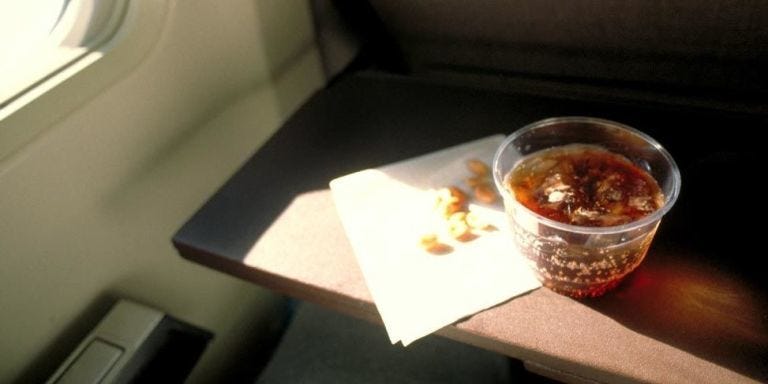
Ever notice how you get a cup of soda, three heroic ice cubes, and approximately four molecules of actual drink? On many flights, you can politely ask for the whole can. It is not guaranteed, but flight attendants often provide it when inventory allows.
This is especially useful on longer flights, late-night flights, or anytime you do not want to press the call button later for a refill. It also reduces the awkward midair balancing act of holding a tiny plastic cup while your seatmate elbows a crossword puzzle into your personal space.
How to Ask Without Sounding Demanding
Try: “Could I have the can if you have enough?” This tiny phrase works wonders because it respects the crew’s need to manage supplies for everyone onboard.
3. Water Refills
Cabin air is dry, travel days are long, and dehydration can make a two-hour flight feel like a desert survival documentary. Most airlines provide complimentary water during beverage service, and you can usually request extra water during the flight.
A smarter move is to bring an empty reusable bottle through TSA and fill it at the airport. But if you finish it onboard, ask the crew if they can refill your cup or bottle. Some airlines may prefer to pour water into a cup for hygiene reasons rather than handle your bottle directly, so be flexible.
For parents, TSA also allows formula, breast milk, toddler drinks, baby food, and related cooling supplies in reasonable quantities beyond the usual 3.4-ounce liquid limit. That is not an airline freebie, but it is a valuable no-cost travel allowance many families forget.
Hydration Tip for Long Flights
Drink water before you feel thirsty. By the time your mouth feels like a forgotten cracker, you are already playing catch-up.
4. Free In-Flight Entertainment
Once upon a time, travelers had to pay for headphones and hope the overhead screen showed something better than a blurry movie edited for a church basement. Today, many airlines offer free entertainment through seatback screens or personal-device streaming.
Delta Studio offers a large library of free movies, shows, and entertainment. JetBlue features free live TV, movies, and seatback entertainment on many aircraft. United provides free entertainment through its app or onboard systems on many flights. Southwest also offers free entertainment options through its onboard portal on equipped aircraft.
The catch? You may need your own charged device and earbuds. Some airlines provide free earbuds on certain flights, but it is safer to bring your own unless you enjoy watching a blockbuster in silent-movie mode.
Before Boarding, Do This
Download the airline app before your flight. In-flight portals can be picky, and airport Wi-Fi is usually faster than trying to download an app after takeoff while your phone clings to one bar of digital hope.
5. Free Wi-Fi or Messaging
In-flight Wi-Fi used to feel like buying a small mortgage. Now, free connectivity is becoming more common. Delta offers fast, free Wi-Fi for SkyMiles members on many domestic U.S. flights. JetBlue is famous for free Fly-Fi on equipped aircraft. Some airlines offer free messaging through apps like iMessage, WhatsApp, or Facebook Messenger, even when full web browsing costs extra.
This can be a lifesaver if you need to coordinate airport pickup, tell your family you landed late, or send the very important message: “Still alive. Snack situation acceptable.”
What to Check Before You Fly
Look up your airline’s Wi-Fi policy and aircraft details. Free internet may depend on the plane, route, loyalty membership, or whether the aircraft has been upgraded.
6. Kids’ Activities, Wings, and Small Souvenirs
Parents know that flying with children can turn into a tiny hostage negotiation at cruising altitude. Some airlines and crews may have small freebies for kids, such as activity sheets, coloring items, stickers, trading cards, or plastic pilot wings.
These are not guaranteed on every flight, but they are worth asking about, especially on family-heavy routes or longer trips. A child who receives wings from a flight attendant may suddenly become the captain of patience for at least seven minutes, which in parent time is basically a spa day.
Best Way to Ask
Say: “Do you happen to have any wings or kids’ activities today?” Keep expectations low and gratitude high. If they have something, wonderful. If not, your backup snacks and downloaded cartoons remain the real MVPs.
7. Bassinets for Babies on Some Long-Haul Flights
Many parents do not realize that some airlines offer onboard bassinets, sometimes called SkyCots, on select international or wide-body aircraft. These are usually free to request, but availability is limited, rules are strict, and they are never guaranteed.
American Airlines offers bassinets on a first-come, first-served basis at the gate on certain 777 and 787 aircraft, with weight limits for infants. Delta offers bassinets on some international flights for babies who meet size and weight requirements. United also allows travelers to request a free bassinet on eligible aircraft and routes.
This perk can be a game-changer on long-haul flights. Holding a baby for ten hours is a workout program nobody signed up for.
Important Bassinet Rules
Request early, confirm again before departure, and understand that bassinets may not be available in every cabin. Babies usually cannot remain in bassinets during taxi, takeoff, landing, or turbulence.
8. Special Meals on Eligible Flights
On many international and long-haul flights, meals are included in the ticket price, even in economy. But travelers often overlook special meal requests. Depending on the airline and route, you may be able to request vegetarian, vegan, gluten-sensitive, diabetic-friendly, low-sodium, kosher, halal, Hindu, child, or other special meals at no extra cost.
United lists multiple special meal options for dietary and cultural needs. Other major airlines also allow advance meal requests on qualifying flights. The key word is “advance.” You usually cannot board the aircraft, announce that you are suddenly gluten-free, and expect the crew to produce a quinoa miracle from the galley.
When to Request a Special Meal
Make the request during booking or at least 24 to 48 hours before departure, depending on airline rules. Then check your reservation again before travel to make sure the request is attached.
9. Basic Medical Help and First-Aid Supplies
If you feel unwell on a flight, tell the crew. Do not suffer silently because you are embarrassed or because you think asking for help costs money. U.S. commercial aircraft with flight attendants are required to carry first-aid kits and emergency medical equipment, and crew members receive safety training for onboard incidents.
This does not mean flight attendants are your personal pharmacy. They cannot diagnose you, and airline rules may limit what they can provide. But they can help assess the situation, access onboard medical supplies when appropriate, contact medical support, and ask whether a medical professional is onboard.
For minor issues, crews may have basic items such as bandages or supplies for small incidents. For serious symptoms like chest pain, trouble breathing, fainting, allergic reactions, or severe dizziness, alert them immediately.
Smart Traveler Reminder
Always pack your own essential medication in your personal item, not in checked luggage. The plane may have emergency supplies, but your prescription medication should fly closer to you than your favorite hoodie.
Bonus Freebies You May Get Depending on Airline and Route
Some perks are too route-specific to include in the main nine, but they are worth knowing. On long-haul international flights, you may receive pillows, blankets, earbuds, amenity kits, eye masks, or toothbrush kits depending on the airline and cabin. Premium cabins often include more comfort items, but some economy cabins on international routes also provide basics.
On certain airlines, families may also qualify for free adjacent seating commitments when conditions are met. The U.S. Department of Transportation tracks which airlines commit to seating children age 13 or younger next to an accompanying adult at no extra charge, subject to limitations. This is not exactly an onboard freebie, but it can save families money and stress before boarding.
How to Ask for Free Things on Flights Without Annoying the Crew
Flight attendants are safety professionals first and hospitality heroes second. They are managing boarding chaos, turbulence, medical concerns, service timing, limited inventory, and passengers who somehow believe bare feet belong on bulkhead walls. A little courtesy goes a long way.
Use Polite, Flexible Language
Instead of saying, “I need another snack,” try, “If you have any extras after service, may I have another?” Instead of demanding a blanket, ask, “Do you happen to have any blankets available?” The difference is small, but the tone is huge.
Ask at the Right Time
Avoid asking during boarding unless it is urgent. Boarding is when the crew is solving overhead bin drama, checking seatbelts, helping families, and preparing the cabin for departure. The best time for small requests is after takeoff, after the initial service, or during a calm part of the flight.
Understand That Free Does Not Mean Unlimited
Airplanes have limited storage. If supplies run out, they run out. A flight attendant cannot open a secret sky pantry because you gave them disappointed eyebrows.
What Not to Expect for Free
Free upgrades are rare. Complimentary alcohol in economy is usually limited to specific airlines, cabins, routes, or disruptions. Full meals on domestic economy flights are not common unless the flight is long enough or the fare includes it. Blankets and pillows are less common on short domestic flights than on international flights. And no, asking nicely will not get you the exit row if the airline charges for it and you did not purchase it.
The best mindset is curiosity, not entitlement. Ask kindly, accept the answer, and remember that travel becomes much smoother when you treat the crew like people rather than vending machines with wings.
Real Travel Experiences: What These Free Flight Perks Feel Like in Practice
The first time you successfully ask for a free in-flight perk, it feels like discovering a secret level in a video game. One traveler might ask for the whole can of ginger ale and suddenly feel like royalty, even though the throne is still an economy seat with questionable recline. Another parent might request pilot wings for a restless child and watch the mood shift from “tiny airport meltdown” to “junior captain reporting for duty.” These little moments do not make the flight luxurious, but they can make it noticeably easier.
On a short domestic flight, the most useful freebies are usually simple: extra water, a second snack, or free entertainment. A traveler who boards tired, hungry, and slightly dehydrated can feel dramatically better after a cup of water and a snack packet. It is not fine dining, of course. Nobody is confusing pretzels with a Michelin-star tasting menu. But at 35,000 feet, a small bag of crackers can have the emotional power of a handwritten apology from the universe.
On longer flights, the value of free perks increases. Free movies can turn a six-hour flight into a manageable binge-watch session. A bassinet request, when available and approved, can help parents survive an overnight international trip with a little more sanity intact. A special meal can make the difference between eating comfortably and poking suspiciously at a tray while wondering whether the sauce contains an ingredient you avoid.
One of the best real-world strategies is to prepare first and ask second. Bring your own essentials: headphones, charger, medication, snacks, empty water bottle, baby supplies, and a light layer. Then treat airline freebies as helpful extras rather than rescue equipment. This way, if the crew has earbuds, great. If not, you are not forced to watch a movie using only facial expressions and vibes.
Another useful experience-based lesson: loyalty accounts matter. Some airlines require passengers to log in with a free loyalty membership to access complimentary Wi-Fi. Signing up before your trip can save time and frustration onboard. It may also unlock smoother entertainment access, trip notifications, and future mileage benefits. Even if you fly only occasionally, a free airline account can be worth having.
Families should be especially proactive. If you need adjacent seats, review the airline’s policy before booking. If you are traveling with an infant, request bassinets early and confirm details repeatedly. If your child has dietary needs, request meals in advance and pack backups anyway. Air travel with kids rewards the prepared and humbles the overly optimistic.
The biggest takeaway from frequent flyers is simple: ask early, ask politely, and ask with flexibility. “Do you have any extras?” is better than “I saw online that I can get this.” The first sounds human. The second sounds like you are about to present legal evidence over a cookie.
Free flight perks are not about beating the airline. They are about understanding what may already be included, using available services wisely, and making the journey more comfortable without spending extra money. In modern travel, that counts as a win. After all, if you can get a snack, a movie, a water refill, and a calmer child without paying more, you have basically found the economy-class treasure chest.
Conclusion
Air travel can feel expensive from the moment you book the ticket to the moment you consider buying a sad airport sandwich for the price of a small appliance. But once you are onboard, you may have access to more free help than you think. Extra snacks, full soda cans, water refills, free entertainment, Wi-Fi or messaging, kids’ items, bassinets, special meals, and basic medical assistance can all make a flight more comfortable.
The golden rule is to check your airline’s policy before you fly and ask the crew politely once onboard. Availability varies, but kindness is always accepted in every cabin.
Note: Free flight perks vary by airline, aircraft, route, cabin, loyalty membership, and onboard supply. Always verify current airline policies before travel and ask flight attendants respectfully.