Shopping for a dress should feel like a stylish adventure, not a pop quiz in geometry. Yet somehow, the internet has turned “find a dress” into “solve your proportions, decode five body-shape charts, then cry in fluorescent lighting.” Let’s make this easier.
The truth is simple: choosing a dress for your body type is less about fixing anything and more about understanding fit, proportion, comfort, and the mood you want to create. Body-shape labels can be useful shortcuts, but they are not laws of nature carved into a dressing-room mirror. A dress should work for you, not the other way around.
Whether you usually describe your shape as hourglass, pear, apple, rectangle, petite, tall, curvy, athletic, or “somewhere between all of the above depending on the brand,” these nine tips will help you pick a dress that feels right, looks intentional, and lets you leave the house without tugging, adjusting, or delivering an acceptance speech to your zipper.
Before the 9 tips: remember this one golden rule
“Body type” is a shopping tool, not a judgment. You do not need to dress to look smaller, bigger, curvier, straighter, taller, or more dramatic unless you personally want that effect. The best dress is the one that fits your body, suits your life, and lets you feel like yourself on a really good day.
1. Start with measurements, not guesswork
If you do only one practical thing before buying a dress, make it this: take your bust, waist, and hip measurements. That sounds boring, yes. It is also wildly useful.
Dress shopping gets much easier when you know your actual numbers, because sizes vary from brand to brand. A size 8 in one label can behave like a size 6 in another and a size “who even approved this pattern?” in a third. Measurements give you a stable reference point when the size tag is feeling chaotic.
Use a soft measuring tape and measure the fullest part of your bust, your natural waist, and the fullest part of your hips. Then compare those numbers with the brand’s size chart every single time. Yes, every time. Especially when the fabric has little stretch.
That one habit can save you from ordering a dress that technically zips but emotionally betrays you.
2. Think in silhouettes, not labels
Many people get stuck asking, “What body type am I?” A better question is, “Which dress shapes do I actually enjoy wearing?” That shifts the focus from category to experience.
Silhouette matters more than any label. Once you know how a few common dress shapes behave, shopping gets much faster.
Common silhouettes worth knowing
A-line: Fitted or smoother through the top, then gently wider through the skirt. Great if you like ease through the hips and a balanced look.
Fit-and-flare: Usually defined at the waist with more volume below. Helpful when you want shape and movement.
Wrap dress: Adjustable, waist-friendly, and one of the easiest styles for many body shapes because you can control the fit.
Sheath or column: Cleaner, straighter lines that skim the body rather than dramatically flare out. Ideal if you prefer a sleek, tailored look.
Empire waist: The waistline sits higher, just below the bust. Useful when you want softness and flow through the midsection.
Shirt dress: Structured but easy, especially when belted. A reliable option when you want polish without high-maintenance drama.
Once you start recognizing silhouettes, you stop buying dresses just because they looked cute on a hanger. Hangers, by the way, are terrible at having hips.
3. Decide how much waist definition you want
One of the simplest ways to choose a dress for your body type is to decide whether you want more waist definition, less waist definition, or adjustable waist definition. That one choice can narrow your options immediately.
If you like a clearly shaped look, try wrap dresses, belted shirt dresses, fit-and-flare styles, or styles with seams that follow the waist. These create structure without requiring you to feel squeezed into your own afternoon.
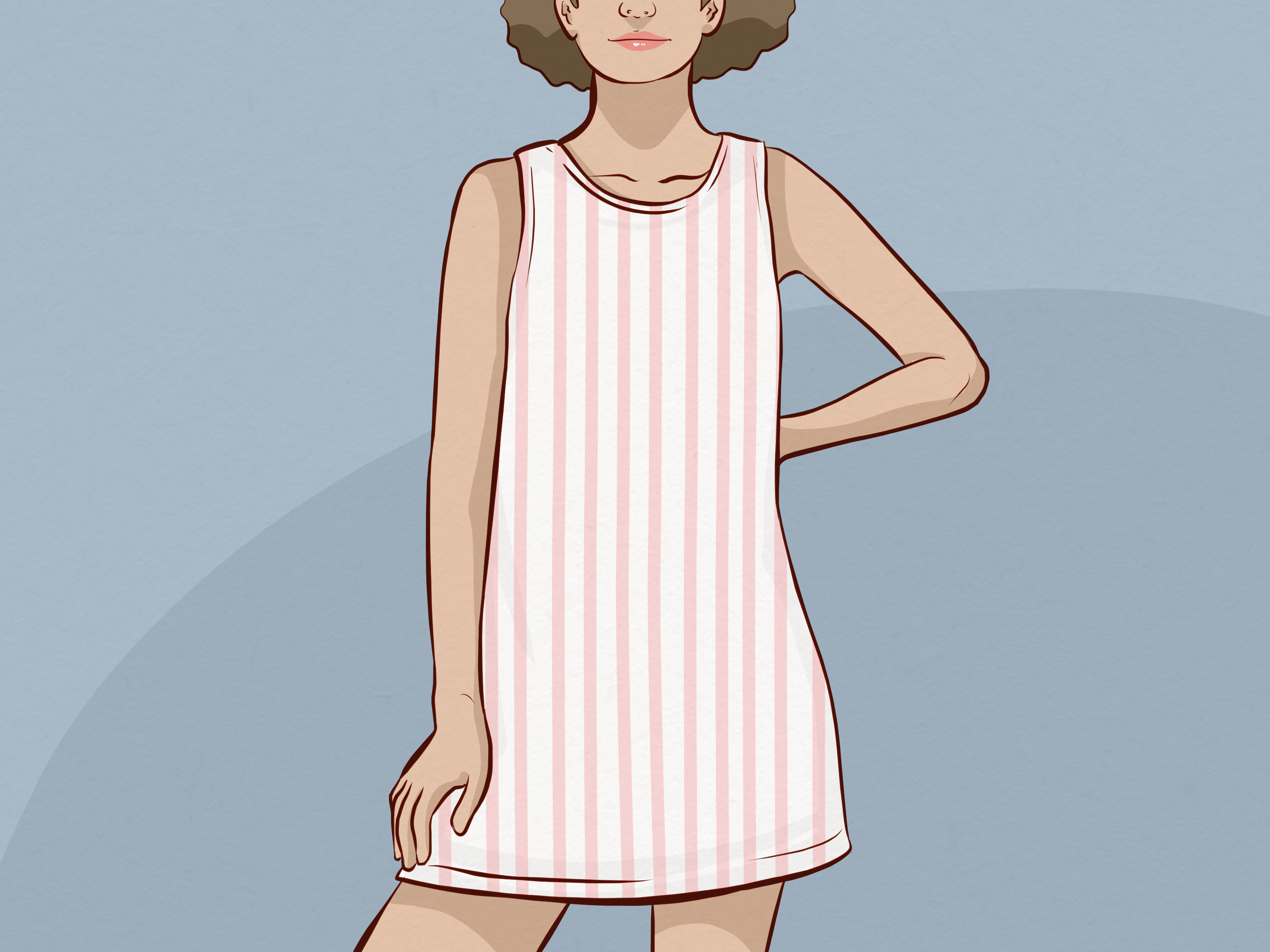
If you prefer a straighter or more relaxed line, look at shift dresses, column dresses, soft slip dresses, or looser midis. These can feel modern, minimal, and effortless.
If your feelings change daily depending on hormones, lunch, weather, or the general emotional tone of the week, adjustable styles are your best friend. Wrap ties, removable belts, smocking, and gentle ruching can make a dress much more forgiving and much more wearable.
The goal is not to “correct” your shape. It is to choose the level of structure that makes you feel comfortable and confident.
4. Use necklines to create balance and focus
People often obsess over waistlines and forget that necklines do a huge amount of visual work. A neckline can make a dress feel softer, sharper, more open, more covered, more romantic, or more modern.
If you enjoy showing more openness through the upper body, V-necks, scoop necks, sweetheart shapes, and surplice fronts can create a longer, more open line. If you prefer a cleaner or more modest look, boatnecks, square necks, mock necks, and higher crew necks can feel elegant and composed.
Necklines are also useful when you want to balance proportions. For example, if you prefer more visual emphasis up top, a statement neckline can help. If you want the skirt or waist to be the star, a simpler neckline may work better.
This is why two dresses with the same length and fabric can feel completely different. The neckline is basically the opening scene of the outfit. Make it a good one.
5. Let fabric do half the job
Fabric changes everything. Two dresses in the exact same silhouette can look and feel completely different depending on whether the material is crisp, stretchy, drapey, heavy, lined, sheer, or clingy in a way that feels personally insulting.
If you want structure, choose fabrics that hold shape, such as poplin, heavier cotton blends, jacquard, structured crepe, or thicker ponte knits. These can help A-line or fit-and-flare dresses keep their form.
If you want softness and movement, jersey, chiffon, viscose blends, silk-like fabrics, and lighter crepes can drape more fluidly. These work well in wrap dresses, bias-cut dresses, slips, and easy maxis.
If you are between sizes, non-stretch fabric usually gives you less room for negotiation. Stretch fabric can be more flexible, but too much stretch may also reveal every seam and underlayer. In other words, fabric is not just a detail. It is the whole personality of the dress.
6. Match the hem length to your proportions and your shoes
Hem length is one of the most underrated dress decisions. A dress can have a beautiful color, lovely neckline, and excellent fit, then lose the plot at the hem.
Mini, knee-length, midi, and maxi dresses each create a different visual rhythm. The right one depends on your height, leg line, shoes, and personal preference.
If you are petite, proportion matters a lot. Petite sizing is helpful because it is usually cut proportionally, not simply made shorter. That means the waist, hip placement, and overall balance are adjusted too. Many petites also prefer hems that show a little ankle or hit at a deliberate point on the calf, rather than a “surprise, this midi is now a maxi” situation.
If you are taller, you may enjoy longer lengths that let the silhouette breathe, especially in column dresses, slips, maxis, and shirt dresses. But height is not a rule either. Plenty of tall women love minis, and plenty of petites wear maxis beautifully when the proportions are right.
Also, try on dresses with the shoes you are likely to wear. A hem that works with flats may become dramatic with heels, and a hem that works with heels may look sad and indecisive with sneakers.
7. Dress for the occasion, not just the mirror
A dress can look fabulous in your bedroom and still be the wrong choice for real life. That is because a good dress does more than fit your body. It fits your situation.
Ask yourself a few practical questions:
Will you sit, walk, dance, climb stairs, reach for things, or survive outdoor humidity?
Is this for work, a wedding, brunch, vacation, dinner, church, graduation, or an event with a dress code that sounds simple until you read the fine print?
Will the fabric wrinkle if you look at it too hard?
A dress that works for your body type but ignores the event is only doing half the job. Formal occasions often call for more polished fabrics and longer lines. Casual events can support easier shapes, breathable fabrics, and simpler styling. Cocktail settings usually live somewhere in the middle: polished, but not opera-level dramatic.
Choose a dress that fits the moment as naturally as it fits your body.
8. Treat tailoring like a strategy, not a last resort
Here is a style truth that deserves better marketing: a slightly imperfect dress with good tailoring is often better than a “perfect” dress that almost works.
A tailor can adjust hems, straps, sleeves, waist placement, zipper issues, and sometimes even the neckline. That means you do not have to reject a dress just because one detail is off. If the shoulders sit well and the overall vibe is right, alterations may turn a decent purchase into your favorite dress.
This is especially useful if you are petite, tall, curvy, long-waisted, short-waisted, fuller-busted, or simply tired of pretending that ready-to-wear clothing was made after a long and loving study of your exact proportions.
Tailoring is not cheating. It is teamwork.
9. Choose the dress you forget to fuss with
The final test is not whether the dress is “flattering” according to the internet. The final test is whether you can wear it without constantly thinking about it.
If you keep pulling the bodice up, adjusting the straps, smoothing the skirt, checking the slit, fixing the wrap, or taking tiny breathing breaks because the waist seam has declared war on your ribs, the dress is not doing its job.
The right dress lets you move, sit, laugh, eat, walk, and exist like a normal human being. It should support your day instead of becoming your full-time administrative task.
That is why the best dress for your body type is usually the one that balances these five things at once: fit, proportion, fabric, purpose, and ease.
A quick body-neutral cheat sheet
If you like more definition at the waist, try wrap dresses, fit-and-flare styles, or belted shirt dresses.
If you like smoother lines, try column dresses, sheath dresses, shifts, or slips with a good drape.
If you want ease through the hips or thighs, A-line and softly flared shapes are often helpful.
If you want more visual emphasis through the upper body, look for strong necklines, shoulder detail, texture, or print near the top.
If you want more visual emphasis through the lower half, fuller skirts, tiers, pleats, or A-line shapes can help.
If you are petite, prioritize proportional cuts, intentional hemlines, and waist placement that does not fall too low.
If you are shopping across plus, straight, or mixed-size ranges, focus on construction, support, and comfort rather than assuming one silhouette works for everyone in that category.
What real dressing-room experience teaches you
Now for the part fashion guides sometimes skip: what it actually feels like to shop for a dress in real life. Because in theory, every dress description sounds wonderful. In practice, some of them feel like a social experiment conducted by someone who has never sat in a chair.
One of the most common experiences people have is realizing that the dress they were sure would work is not the winner, while the “maybe” dress becomes the favorite. That happens because body type is only one part of the puzzle. Fabric, lining, bra compatibility, shoulder width, seam placement, and even pocket placement can change everything. A dress can look simple online and still fit in a surprisingly weird way once it lands on an actual human body.
Another common experience is learning that the size tag is not a moral report card. It is just information from a brand with its own pattern standards. Many shoppers try one dress in their usual size, panic, and assume their body is the issue. Usually, it is the dress. Or the brand. Or the fact that one company thinks a waist belongs in one zip code and another company thinks it belongs in a different state entirely.
People also discover that comfort is more stylish than they expected. The dress that gets worn over and over is rarely the one that requires perfect posture, strategic inhaling, and a backup plan for dessert. It is the one that moves well, photographs well enough, and does not need a full committee meeting every time you stand up.
There is also the oddly emotional experience of trying on a silhouette you “never wear” and loving it. Maybe you always thought you were not a midi person, then one calf-skimming A-line changes your mind. Maybe you assumed wrap dresses were not for you, and then suddenly one fits like it has known you for years. Sometimes the best thing you can do is stay curious instead of loyal to old style rules.
And finally, the most useful shopping experience of all: learning to separate “this dress does not fit me well” from “my body is hard to dress.” Those are not the same thing. Not even close. A badly cut dress is a badly cut dress. Your body is not the production error.
Once you really believe that, shopping becomes lighter. You try on more styles. You make smarter choices. You stop chasing clothes that require you to become a different person. And you start choosing dresses that already make sense for the person you are.
That is the real secret. Not “dress for perfection.” Dress for proportion, personality, comfort, and the life you are actually living. Preferably with a zipper that behaves.
Conclusion
Choosing a dress for your body type does not have to be complicated. Start with measurements, learn a few silhouettes, pay attention to waistlines and necklines, and never underestimate the power of fabric, hem length, or tailoring. Most of all, remember that style advice should help you make decisions, not make you feel restricted.
The best dress is not the one that follows every fashion rule. It is the one that feels natural on your body, suits the occasion, and lets you walk out the door feeling comfortable, polished, and unmistakably like yourself.