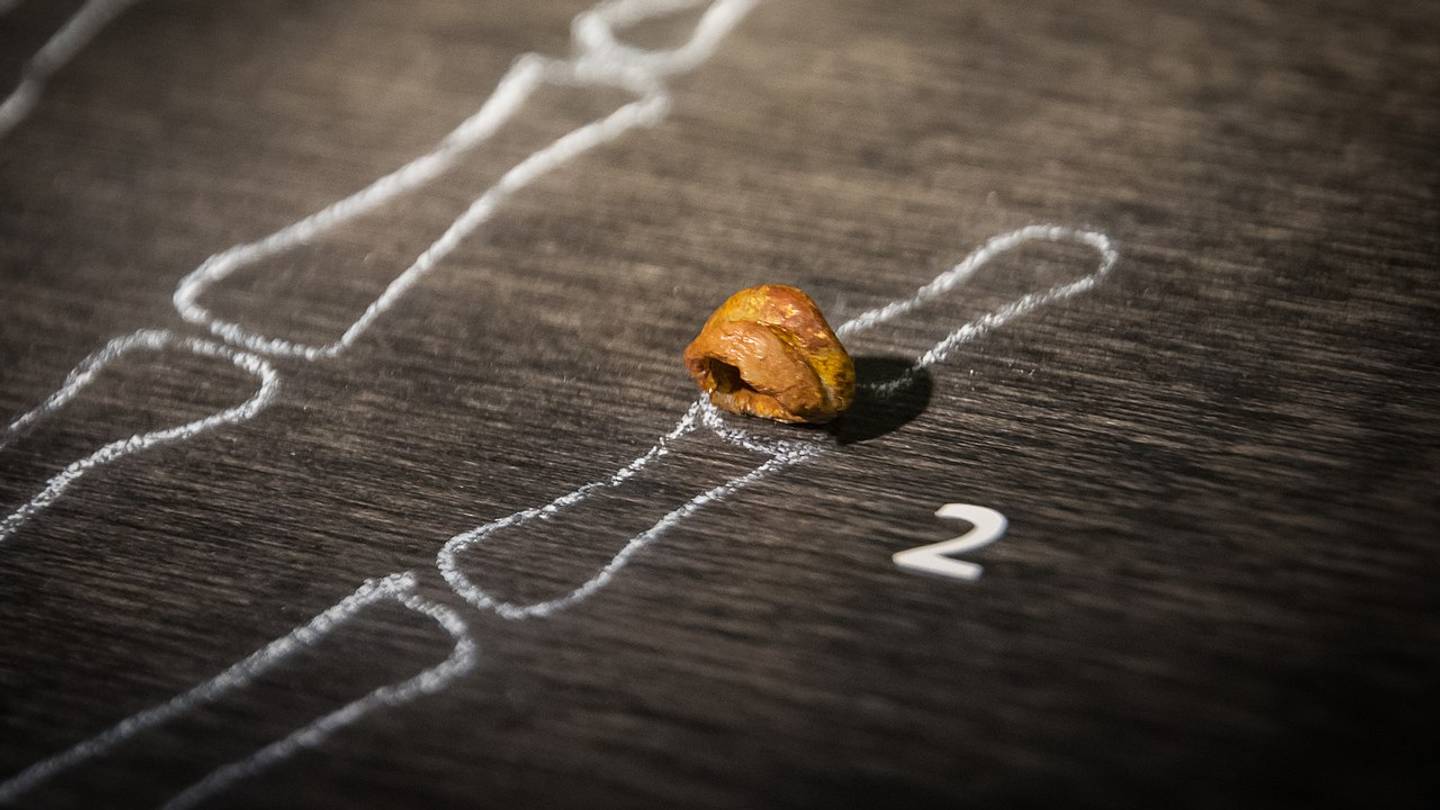
The Denisovans are the ancient relatives who entered human history through the scientific equivalent of a plot twist: not with a dramatic skull, a full skeleton, or a museum-ready jawline, but with a tiny finger bone found in a Siberian cave. From that little fossil fragment came a massive revelation. Scientists discovered an unknown group of ancient humans who lived alongside Neanderthals and early Homo sapiens, interbred with both, adapted to extreme environments, and left genetic fingerprints in people living today.
That is why the Denisovans remain one of the most fascinating mysteries in human evolution. They are close enough to us to be part of our family story, yet elusive enough to feel like characters from a prehistoric detective novel. We know them through ancient DNA, proteins, teeth, jawbones, cave sediments, and genetic traces scattered across modern populations. In other words, they did not leave us a scrapbook. They left us molecular breadcrumbs.
Below are nine compelling facts about the Denisovans, our mysterious human ancestor, and why they matter for anyone curious about ancient human history, Denisovan DNA, Neanderthals, and the tangled roots of modern humanity.
1. Denisovans Were Discovered From DNA, Not a Full Skeleton
Most ancient human relatives were identified because researchers found bones with unusual shapes. Denisovans were different. Their story began in Denisova Cave in the Altai Mountains of Siberia, where archaeologists found a small finger bone fragment. It did not look like much. In fact, it was the kind of fossil that would not exactly scream, “I am about to rewrite human evolution.”
But ancient DNA changed everything. Genetic analysis showed that the individual was neither a Neanderthal nor a modern human. Instead, the bone belonged to a previously unknown group of archaic humans. These people became known as Denisovans, named after the cave where the fossil was discovered.
This made the Denisovans famous for a very modern reason: they were first recognized genetically. Their discovery proved that ancient DNA could reveal entire human populations even when the fossil record was painfully incomplete. It was like finding a family member by reading the ink on a torn envelope rather than seeing their face.
2. Denisovans Were Close Relatives of Neanderthals and Modern Humans
Denisovans were not our direct ancestors in a simple “great-great-grandparent” sense. Human evolution is not a straight ladder; it is more like a crowded family reunion where everyone looks vaguely familiar and someone definitely brought a confusing casserole. Denisovans were a sister group to Neanderthals, and both were close relatives of Homo sapiens.
Genetic studies suggest Denisovans, Neanderthals, and modern humans shared ancient common ancestors hundreds of thousands of years ago. After their lineages split, these groups spread across different parts of Eurasia. Neanderthals became strongly associated with Europe and western Asia, while Denisovans seem to have occupied wide areas of Asia.
The important point is that these ancient humans were not isolated species sealed off from one another. When they met, they sometimes had children. That means the human family tree looks less like a tidy oak and more like a braided river, with streams splitting, rejoining, and leaving traces in unexpected places.
3. We Have Very Few Denisovan Fossils
For a group that has transformed our understanding of human evolution, Denisovans left behind remarkably little fossil evidence. Early confirmed Denisovan remains included a finger bone and several teeth from Denisova Cave. Later discoveries added jawbones, molars, and possible cranial evidence from other parts of Asia.
This shortage is part of what makes them mysterious. Neanderthals are represented by many fossils, including skulls, skeletons, tools, and burial sites. Denisovans, by contrast, long felt like ancient humans known mostly from genetic smoke signals. Scientists could read their DNA, but for years they had only a faint idea of what they looked like.
That picture is improving. A jawbone from Xiahe on the Tibetan Plateau was identified as Denisovan through ancient protein analysis. A molar from Laos has been linked to Denisovans or a closely related population. A jawbone from Taiwan and the famous Harbin “Dragon Man” skull have also been discussed in connection with Denisovans, especially through protein and DNA research. Each new fossil helps turn the Denisovans from a genetic ghost into a more recognizable ancient human population.
4. Denisovans Lived Across a Surprisingly Wide Area
At first, Denisovans were known from one cave in Siberia. That made it tempting to imagine them as a small, cold-weather population tucked away in the Altai Mountains. But later research suggests they were far more widespread.
Evidence now points to Denisovan presence or influence across parts of Siberia, the Tibetan Plateau, mainland Southeast Asia, Taiwan, and possibly northern China. This range is remarkable because these environments were dramatically different. Siberia could be brutally cold. The Tibetan Plateau is high, thin-aired, and unforgiving. Southeast Asia offered humid forests, caves, and tropical ecosystems.
In other words, Denisovans were not one-trick prehistoric ponies. They appear to have been adaptable, mobile, and capable of surviving in environments that would make most modern people immediately search for Wi-Fi, central heating, and a snack.
5. Denisovan DNA Helped Some Modern Humans Adapt to High Altitudes
One of the most famous Denisovan genetic legacies involves high-altitude adaptation. Many Tibetans carry a version of the EPAS1 gene that helps the body function efficiently in low-oxygen environments. This genetic variant is widely understood to have come from Denisovan-like ancestry.
That is a stunning example of ancient DNA doing useful work in the modern world. At high elevations, the human body must handle lower oxygen levels. Without the right adaptations, people can experience serious health challenges. The Denisovan-linked EPAS1 variant helps regulate the body’s response to altitude, making life on the Tibetan Plateau more manageable.
This does not mean Denisovans handed Tibetans a genetic survival manual with a friendly note saying, “Good luck up there.” But through ancient interbreeding, useful genetic variants entered the ancestors of some modern populations. Over time, natural selection favored those variants because they helped people survive and thrive in extreme landscapes.
6. Some Modern People Still Carry Denisovan DNA
Denisovans are extinct, but not entirely gone. Their DNA survives in some modern human populations. People in Melanesia, including Papua New Guinea and nearby Pacific Island populations, can carry some of the highest known levels of Denisovan ancestry, often estimated around 4 to 6 percent. Lower levels occur in some Southeast Asian, East Asian, and Pacific populations.
This genetic inheritance shows that Homo sapiens met and interbred with Denisovans after leaving Africa and spreading through Eurasia and Oceania. It also suggests that Denisovan populations were diverse. Modern genetic studies indicate that different groups of Denisovans may have contributed DNA to different human populations at different times.
That makes Denisovan ancestry more than a fun fact for DNA test enthusiasts. It is evidence of real encounters between ancient peoples. These encounters shaped immune function, adaptation, and possibly other biological traits. Our species did not simply replace all other humans. Sometimes, we absorbed parts of their story into our own bodies.
7. Denisovans Interbred With Neanderthals Too
Denisovans did not only mix with modern humans. They also interbred with Neanderthals. The most famous example is “Denny,” a teenage girl whose bone fragment was found in Denisova Cave. Genetic analysis revealed that her mother was Neanderthal and her father was Denisovan.
Denny is extraordinary because she was a first-generation hybrid. She was not someone with a faint trace of ancestry from thousands of years earlier. Her parents came from two different archaic human groups. That discovery provided direct evidence that Neanderthals and Denisovans met and had children.
It also made the Pleistocene world feel much more human. These were not abstract lineages floating around in a textbook. They were populations that moved through landscapes, encountered one another, formed relationships, and produced families. The ancient world was biologically complex, socially unpredictable, and apparently not shy about mixing the family tree.
8. Denisovans May Have Had Powerful Jaws and Large Teeth
Because Denisovan fossils were so scarce, their appearance remained uncertain for years. However, jawbones and teeth associated with Denisovans suggest that at least some had large molars and robust jaws. The Xiahe mandible from the Tibetan Plateau, for example, is a strong jaw with large teeth. The Penghu jawbone from near Taiwan also points to a powerful chewing apparatus.
More recent work on the Harbin skull, also known as “Dragon Man,” has added even more intrigue. Studies using ancient proteins and DNA have suggested that this large, impressive skull may belong to a Denisovan or a closely related population. If that connection holds, it would give scientists one of the clearest looks yet at a Denisovan face.
Still, caution matters. Paleoanthropology is a field where one fossil can change the conversation, and the next fossil can change it again. What seems clear is that Denisovans were not simply “Neanderthals in Asia” or “modern humans with a different label.” They likely had their own anatomical traits, regional variation, and evolutionary history.
9. Denisovans Changed How Scientists Study Human Evolution
The Denisovan discovery did more than add a new name to the ancient human lineup. It changed the methods of human origins research. Before Denisovans, fossils were usually the star of the show. After Denisovans, DNA and proteins became powerful tools for identifying ancient humans even when bones were fragmentary, worn, or visually confusing.
Scientists now study DNA preserved in cave sediments, which means they can detect ancient human presence even without finding a recognizable bone. They also use proteomics, the study of ancient proteins, to identify fossils when DNA is too degraded. These methods have expanded the map of Denisovan life and may eventually connect more Asian fossils to this mysterious group.
The Denisovans remind us that the fossil record is incomplete, but not silent. Sometimes the smallest remains carry the loudest message. A fingertip, a tooth, a jaw, or even dirt from a cave floor can reveal chapters of human history that were invisible only a generation ago.
Why the Denisovans Matter Today
The Denisovans matter because they make human evolution more honest. For a long time, popular stories about our origins were often simple: modern humans evolved, spread across the world, and replaced everyone else. The truth is richer. Homo sapiens encountered other human groups, exchanged genes with them, and carried some of that inheritance forward.
This does not make modern humans less special. It makes our story more interesting. We are not the product of a lonely march across prehistory. We are part of a network of ancient populations that adapted, migrated, met, competed, cooperated, and sometimes became family.
Denisovans also show how science evolves. In 2010, they were a surprise from a finger bone. Today, they are central to discussions about ancient DNA, human migration, high-altitude adaptation, and the peopling of Asia and Oceania. Tomorrow, a new fossil or protein study may change the story again. That is not a weakness of science. That is the fun part. Human evolution is still being excavated, one molecule at a time.
Experience Section: What Learning About Denisovans Feels Like
Learning about Denisovans is an oddly personal experience, even though they lived tens of thousands of years ago and did not leave behind diary entries, cave selfies, or helpful labels on their tools. The first surprise is how small the beginning feels. You expect a major human ancestor to arrive with a grand fossil, maybe a skull dramatically lit in a glass case. Instead, the Denisovan story begins with a tiny bone fragment. It is a humbling reminder that history does not always announce itself with a trumpet. Sometimes it whispers from a lab sample.
For many readers, the most exciting part is realizing that ancient humans were not as separate as school diagrams once made them seem. Those neat illustrations showing one species after another can make evolution look like a parade. Denisovans turn that parade into a crowded marketplace. Neanderthals were there. Homo sapiens were there. Denisovans were there. Some groups passed through the same regions, sometimes at different times and sometimes close enough to exchange genes. Suddenly, prehistory feels less like a chart and more like a living world.
There is also something wonderfully strange about discovering that ancient DNA still affects people today. The Denisovan-linked high-altitude gene in Tibetans is a perfect example. It connects a vanished population to modern survival in one of the most challenging environments on Earth. That kind of fact makes the past feel immediate. It is not just locked away in museums. It is present in blood, breath, adaptation, and ancestry.
Another memorable experience is looking at a map of Denisovan evidence. Siberia, Tibet, Laos, Taiwan, northern China, Oceaniathe range is astonishing. It challenges the lazy idea that ancient humans stayed in one little corner waiting to be discovered. Denisovans seem to have moved through mountains, forests, caves, and coastlines. Their world was huge, and our evidence is still catching up.
Finally, the Denisovans give readers a healthy appreciation for mystery. In an age when we expect instant answers, Denisovans refuse to be fully explained. What language did they use? What did their communities look like? Did they make symbolic objects? How often did they meet modern humans? Why did they disappear as a distinct population? These questions remain open, and that openness is part of the appeal. The Denisovans are not just ancient relatives. They are a reminder that the human story is unfinished, complicated, and much more interesting than a simple family tree.
Conclusion
The Denisovans are one of the greatest surprises in the study of human evolution. Discovered through DNA from a tiny finger bone, they have grown into a major chapter of ancient human history. They were close relatives of Neanderthals and Homo sapiens, lived across wide parts of Asia, adapted to harsh environments, interbred with other human groups, and left genetic traces in people alive today.
Their story is mysterious because the evidence is still fragmentary. Yet it is also powerful because every new discovery changes what we know about ourselves. Denisovans prove that human ancestry was never simple, isolated, or boring. It was adventurous, tangled, and occasionally powered by very large teeth.
Note: This article is written in original, standard American English for web publication and is based on established scientific research about Denisovans, ancient DNA, fossils, and human evolution.