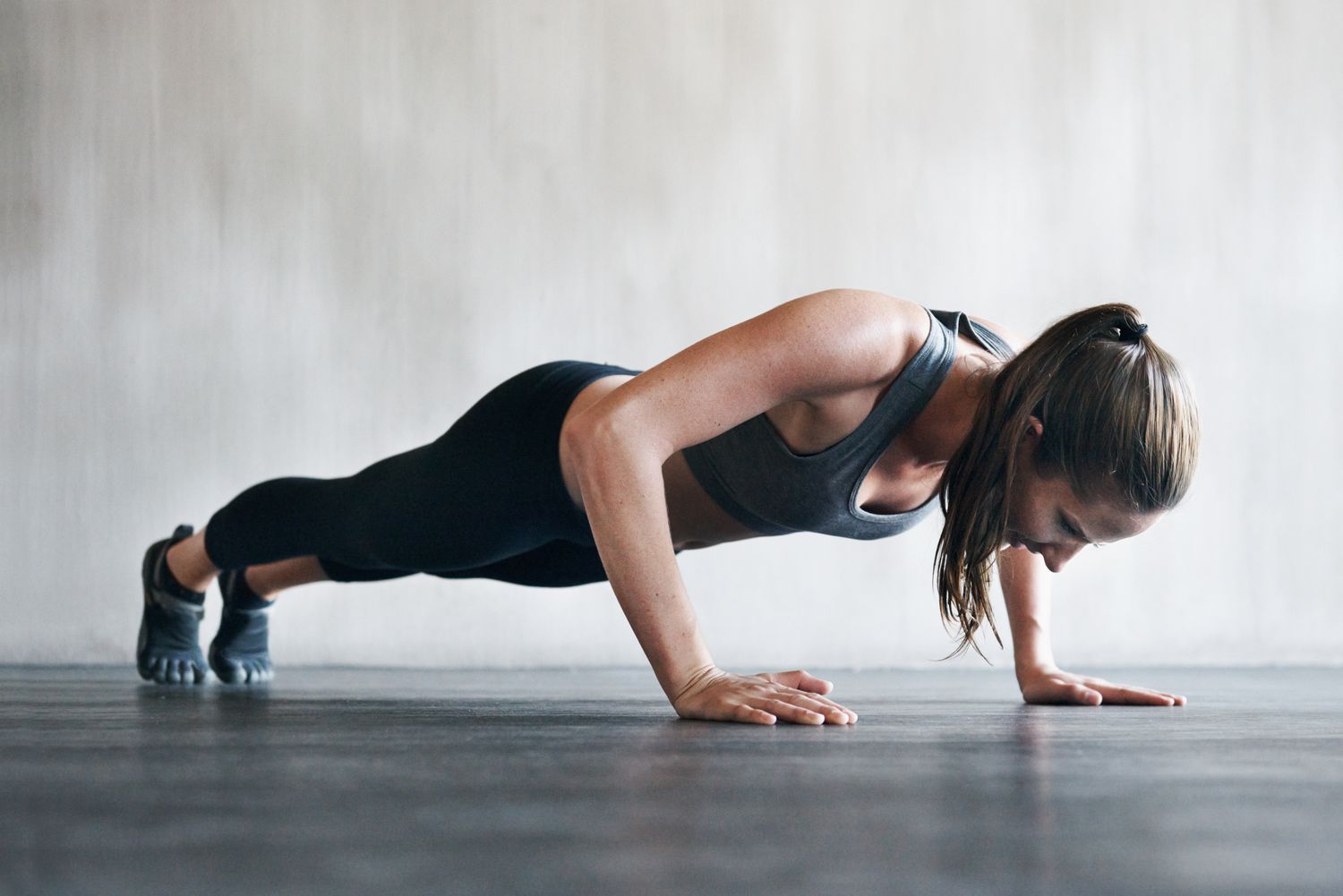
Push-ups are the chicken soup of exercise: simple, classic, and surprisingly effective when done right. They do not require a gym membership, a fancy machine, or a motivational playlist featuring dramatic violin music. All you need is your body, a bit of floor space, and the willingness to get uncomfortably close to the ground for a very good reason.
Fitness trainers keep recommending push-ups because they punch way above their weight. This bodyweight exercise can strengthen the upper body, fire up the core, build muscular endurance, and give you a practical benchmark for progress. Better yet, push-ups are flexible enough for beginners doing wall push-ups and challenging enough for advanced exercisers knocking out decline reps or explosive variations.
If you have ever dismissed push-ups as basic, welcome to the club. “Basic” in fitness often means “works so well people never stop doing it.” Here are eight reasons trainers continue to put push-ups in workout plans, boot camps, physical prep programs, and home fitness routines.
1. Push-Ups Build Serious Upper-Body Strength
The most obvious push-up benefit is also the biggest one: they strengthen your upper body. A well-executed push-up trains the chest, shoulders, triceps, and supporting muscles in the arms. Instead of isolating one muscle at a time, push-ups teach these muscles to work together, which is exactly what your body does in real life.
That matters whether you are carrying grocery bags, pushing open a heavy door, getting up from the floor, or trying to improve performance in sports and other workouts. Trainers like push-ups because they deliver meaningful strength gains without making people wait for a machine to open up at the gym. No line, no membership card, no awkward eye contact.
Why trainers love this benefit
Push-ups develop “usable” strength. You are not just moving iron around for bragging rights. You are learning to control your body through space, which improves coordination and makes strength feel more athletic and functional.
2. They Train Your Core Like a Moving Plank
Many people think of push-ups as a chest exercise, but trainers know the move is really a full-body event. During every rep, your abs, obliques, lower back, hips, and glutes help keep your body in a straight line. In other words, a push-up is basically a plank that decided to become more interesting.
When your core stays engaged, your spine is better supported and your body moves as one connected unit. That is why push-ups are often called a “moving plank.” They challenge your midsection to resist sagging, twisting, or arching, which builds core stability over time.
Core strength is not just about visible abs. It is about balance, posture, and the ability to transfer force efficiently from one part of the body to another. That makes push-ups a smart addition to a well-rounded bodyweight workout routine.
3. Push-Ups Can Improve Shoulder Stability and Control
Done with solid form, push-ups can help improve shoulder stability. Trainers often cue exercisers to keep their hands under or slightly wider than shoulder width, maintain a neutral body line, and control the lowering phase instead of collapsing like a lawn chair.
Why does that matter? Because the shoulders are mobile joints, and mobile joints need strong support. Push-ups train the muscles around the shoulders, upper back, and arms to stabilize the movement. That can help improve control during pressing motions and contribute to better movement quality in other exercises, from overhead presses to planks to burpees.
Form matters more than ego
Shoulder benefits show up when technique is clean. Flared elbows, shrugged shoulders, or a head-first dive toward the floor can turn a good exercise into a sloppy one. Trainers would rather see five crisp reps than 25 dramatic survival attempts.
4. They Build Muscular Endurance
Strength is your ability to produce force. Muscular endurance is your ability to keep doing it without your muscles waving a white flag. Push-ups can train both, especially when you perform them for multiple reps or across several sets.
This benefit is one reason push-ups show up in fitness tests, athletic prep programs, and general conditioning plans. They offer a simple way to challenge the muscles repeatedly, which helps improve upper-body endurance and work capacity over time.
That improved endurance can carry over into everyday life and other workouts. Maybe it means better stamina during circuit training. Maybe it means less fatigue while doing yard work, moving furniture, or carrying your toddler who suddenly believes walking is a personal insult. Either way, endurance matters.
5. Push-Ups Support Better Functional Fitness
Fitness trainers often talk about “functional fitness,” which sounds a little buzzwordy until you realize it simply means training your body for real-world movement. Push-ups fit that idea beautifully because they require strength, stability, body awareness, and control all at once.
The exercise teaches you to brace your midsection, organize your posture, and coordinate several muscle groups through a complete movement pattern. That kind of whole-body tension has value beyond the gym floor. It can support daily activities, improve body control, and help you feel stronger in basic physical tasks.
Push-ups also encourage good movement habits. You learn to keep your neck neutral, your ribs from flaring, and your trunk from collapsing. In a world where many people spend long hours sitting and hunching over screens, that kind of movement education is not exactly a bad deal.
6. They Are Incredibly Convenient and Cost Almost Nothing
One of the most underrated push-up benefits is that they are ridiculously convenient. You do not need a rack, a barbell, a bench, or even much space. A patch of floor, a wall, or a sturdy countertop can get the job done.
That makes push-ups one of the easiest strength exercises to practice consistently. Consistency is where results come from, and convenience is what makes consistency realistic. When trainers program push-ups, they know clients can do them at home, in a hotel room, at a park, or between meetings if life is especially chaotic.
For people who are short on time, this matters a lot. Push-ups slot neatly into warm-ups, strength circuits, high-intensity intervals, and quick movement breaks. They are ideal for home workouts because there is almost no barrier to getting started.
7. Push-Ups Are Easy to Modify for Any Fitness Level
Push-ups have a reputation for being tough, and honestly, they earned it. But trainers still love them because the exercise is easy to scale. If full push-ups from the floor are too difficult, you can start with wall push-ups, incline push-ups using a bench or countertop, or modified push-ups from the knees.
As you get stronger, you can progress to standard floor push-ups, tempo push-ups, close-grip push-ups, decline push-ups, shoulder-tap push-ups, and more advanced variations. That makes the movement accessible to beginners while still giving experienced exercisers plenty of room to grow.
Progression makes push-ups stick
One reason people quit exercises is that they either feel impossible or become boring. Push-ups solve both problems. Regressions make them approachable, and progressions keep them challenging. That makes push-ups a long-term tool, not a short-term gimmick.
8. They Give You a Clear, No-Nonsense Way to Track Progress
Push-ups are refreshingly honest. You can count reps, improve range of motion, clean up your tempo, shorten rest periods, or move from an easier variation to a harder one. Progress is visible, measurable, and satisfying.
That is one reason trainers use push-ups as a benchmark. They help reveal improvements in strength, endurance, control, and confidence. For some people, the first full push-up feels more exciting than a number on the scale because it proves the body is getting stronger in a way you can actually feel.
Push-up performance has even been studied as a simple marker of functional fitness. While no single exercise tells the whole health story, a stronger push-up capacity can reflect meaningful improvements in overall conditioning. At the very least, it is a practical, low-tech reality check.
How to Get More Benefits From Push-Ups
If you want push-ups to love you back, technique matters. Start in a strong plank position with hands under or slightly wider than shoulder width. Keep your body in a straight line from head to heels. Brace your abs, squeeze your glutes, and lower with control. Then press the floor away without letting your hips sag or your neck crane forward like a curious turtle.
Quality beats quantity. Trainers consistently recommend mastering form before chasing high rep counts. A set of controlled push-ups done through a solid range of motion will usually beat a messy set of half-reps performed at warp speed.
Common push-up mistakes
- Letting the lower back sag
- Flaring the elbows too wide
- Dipping the head toward the floor first
- Rushing through reps with poor control
- Using a variation that is too advanced too soon
Who Should Be Careful With Push-Ups?
Push-ups are excellent, but they are not magic and they are not for every shoulder, wrist, or elbow on every day of the week. People with pain, recent injuries, or joint limitations may need a different setup, a modified angle, or guidance from a qualified professional. There is no shame in using an incline, handles, or alternative pressing exercises. Smart training is not about impressing the floor.
Final Thoughts
Push-ups have stuck around for generations because they work. According to fitness trainers, they help build upper-body strength, challenge the core, improve shoulder stability, increase muscular endurance, support functional movement, fit almost any schedule, scale to nearly any ability level, and provide an easy way to measure progress.
In a fitness world that loves shiny new trends, push-ups are refreshingly unglamorous. They are not flashy, but neither is brushing your teeth, and that still turns out to be a pretty good idea. When performed with good form and appropriate progression, push-ups remain one of the most efficient bodyweight exercises you can add to a strength training routine.
Real-World Experiences With Push-Ups: What People Often Notice After Sticking With Them
One of the most common experiences people report with push-ups is that the exercise feels brutally humbling at first and weirdly addictive a few weeks later. In the beginning, even a small set can expose weak points fast. Maybe the chest gets tired early. Maybe the triceps start sending complaint letters after rep six. Maybe the core gives up and the hips begin drifting south. That early struggle is not failure. It is feedback.
Trainers often see beginners gain confidence before they gain big numbers. Someone who starts with wall push-ups may not care about doing 30 reps from the floor yet. What they notice first is better control. Their shoulders feel more stable. Their body stays straighter. They stop holding their breath through every rep like they are defusing a bomb. That kind of improvement matters because it shows the nervous system is learning the movement and the body is organizing itself more efficiently.
Another common experience is how quickly push-ups make people aware of their posture and tension habits. Many office workers discover they are not just training their chest. They are learning how to brace their abs, keep their ribs down, and stop letting the head drift forward. Over time, that body awareness can carry into planks, presses, rows, and even everyday activities. Suddenly, standing taller does not feel like a fake “good posture” pose. It feels normal.
People also tend to notice that push-ups create a satisfying sense of progress because the milestones are easy to understand. The first countertop push-up. The first knee push-up with clean form. The first full push-up from the floor. The first set of 10 good reps. These are concrete wins, and concrete wins keep motivation alive. Unlike vague goals such as “get toned,” push-up progress is obvious. Either you pressed yourself up or you did not. The floor is a brutally honest coach.
More experienced exercisers often describe a different kind of relationship with push-ups. For them, the movement becomes a reliable benchmark they revisit again and again. When life gets busy and gym time disappears, push-ups offer a quick way to maintain training momentum. Travelers use them in hotel rooms. Parents sneak in sets between responsibilities. Athletes drop them into warm-ups to wake up the upper body and core. The simplicity becomes part of the appeal.
Perhaps the most interesting experience is psychological. Push-ups can make people feel capable. There is something deeply satisfying about moving your own body with control. It does not require a machine to guide you or a spotter to save you. It is just you, your strength, and gravity being mildly rude. Over time, many people begin to associate push-ups with resilience, discipline, and proof that small consistent effort adds up. That is a pretty great return from an exercise that does not cost a dime.