Note: This article treats the title as a safety-first maker discussion, not as a how-to guide. It does not provide plans, parts lists, fuel advice, ignition methods, or construction steps for a real flamethrower.
The Viral Idea That Should Stay Mostly Theoretical
“3D Print Yourself A Flame Thrower” sounds like the kind of headline that makes the internet sit up, spill its coffee, and whisper, “Please tell me that’s a joke.” In the world of desktop 3D printing, where people can make phone stands, cosplay armor, replacement knobs, tabletop terrain, and occasionally a spaghetti monster of failed PLA, the phrase has a powerful click. It combines two irresistible maker-culture ingredients: technology and danger.
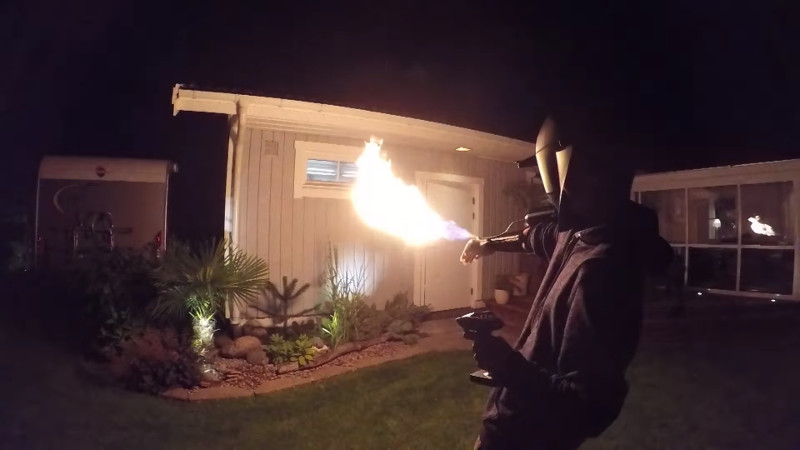
But here is the grown-up sentence in the room: printing parts for a device meant to project fire is not a clever weekend project. It is a legal, safety, environmental, and liability problem wearing safety glasses it found in a drawer. A 3D printer is excellent for prototyping harmless objects. A flamethrower is not harmless. When fire, pressure, flammable liquids, heat, plastic parts, electronics, and human confidence meet in one backyard, the result is less “genius inventor” and more “local news at 6.”
In the United States, flamethrower laws vary by jurisdiction. Maryland law includes “flamethrower” in its definition of destructive devices, and the Maryland State Fire Marshal has warned that manufacturing, possessing, transporting, selling, or using such a device in the state can carry severe criminal penalties. California law defines a flamethrowing device as a portable device designed or intended to propel a burning stream of combustible or flammable liquid at least 10 feet, and California regulations require permits for possession and use under State Fire Marshal authority.
Why 3D Printing and Real Fire Do Not Make a Cute Couple
3D printing is amazing, but it is not magic. Most hobby printers create parts from thermoplastics, which are useful for models, brackets, jigs, toys, organizers, and decorative builds. They are not automatically safe for heat, flame, fuel exposure, pressure, impact, or emergency equipment. A printed part may look solid while hiding weak layer adhesion, microscopic gaps, poor infill choices, heat deformation risk, or fatigue from vibration. That is fine when the project is a cable clip. It is not fine when the project involves fire.
Even the printing process itself deserves respect. NIOSH has evaluated 3D printer emissions and found that printing can produce particles and volatile organic compounds, with exposure concerns still being studied. The Washington State Department of Health says 3D printers can produce fine and ultrafine particulates, volatile organic compounds, and other hazardous byproducts, recommending ventilation and enclosure practices in educational settings. CPSC research also notes that ventilation is a safety concern for both solid-filament and liquid-polymer printers, with resin workflows adding chemical handling and storage concerns.
So before anyone even gets to the “fire” part of the fantasy, the “printing” part already requires basic discipline: ventilation, safe materials, manufacturer instructions, proper electrical setup, and fire awareness. Add an actual flame-projecting concept on top, and the risk stack grows taller than a badly leveled first layer.
The Legal Problem: “I Printed It” Is Not a Defense
One of the most common myths in DIY culture is that if you make something yourself, the rules somehow become optional. They do not. A homemade device can still be regulated, prohibited, evidence in a criminal case, a violation of local fire code, a homeowner insurance nightmare, or all of the above. The printer does not sprinkle legal glitter over the project.
The legal landscape is especially tricky because flamethrowers are not treated the same everywhere. Some places focus on possession. Others focus on use, transport, manufacturing, public danger, fire code, open burning, environmental rules, or reckless conduct. EPA guidance on open burning emphasizes that burning activities must comply with federal, state, and local requirements, and that local agencies may need to be contacted because not every requirement is neatly published online.
That matters because a person does not need to own a “commercial flamethrower” to create a legal problem. A backyard test, a dry field, a shed nearby, a neighbor’s fence, smoke drifting across a street, or a spark during a burn ban can turn “just testing something” into a serious incident. The law tends to become very interested when a homemade fire device leaves the imaginary zone and enters the “someone called 911” zone.
What a Responsible Maker Should Do Instead
The safe way to approach the phrase “3D print yourself a flame thrower” is to separate the visual idea from the dangerous function. You can make something that looks dramatic without making something that projects real fire. In fact, this is where 3D printing shines. It is perfect for harmless props, theatrical shells, LED effects, fantasy gadgets, cosplay accessories, desk sculptures, educational cutaway models, and “sci-fi tool that definitely runs on moon batteries” designs.
1. Build a Nonfunctional Display Prop
A nonfunctional display prop can capture the visual language of a retro-futuristic fire device without containing any hazardous mechanism. Think exaggerated fins, chunky grips, industrial-looking panels, warning-label comedy, and a bright orange muzzle cap that makes the whole thing obviously fake. The best props communicate “movie set” rather than “emergency response.”
2. Use LED Flame Effects
Instead of real flames, use battery-powered LEDs, flicker modules, translucent orange plastic, reflective foil, or a safe decorative lighting assembly. A flickering light inside a printed housing can create the visual drama of fire with none of the heat, fuel, smoke, or liability. It is also easier to take to conventions, photo shoots, school demonstrations, and maker fairs without causing a security guard to age 12 years in one afternoon.
3. Make a Safety Exhibit
Another smart angle is to print an educational exhibit about why real flame devices are dangerous. Create a labeled model that explains risk categories: heat, ignition, fuel, pressure, wind, bystanders, environmental conditions, and local regulations. This turns a risky concept into a useful STEM lesson. It also makes the maker look thoughtful instead of like someone whose emergency plan is “run faster than the sparks.”
Fire Safety Is Not the Place for “Oops”
Fire behaves like a cat with a law degree: independent, unpredictable, and absolutely uninterested in your expectations. The Red Cross advises working smoke alarms, monthly alarm testing, escape planning, and the principle of getting out and staying out during a home fire. That guidance may sound basic, but basic safety is exactly what prevents small mistakes from becoming life-changing disasters.
For makers, fire safety starts long before anything catches fire. Keep printers on stable surfaces, use grounded outlets, inspect cables, avoid unattended printing, follow manufacturer instructions, keep flammables away from heat sources, and understand that plastic can soften, deform, or burn. Educational and institutional guidance commonly recommends enclosures, exhaust ventilation, lower-emission materials where possible, and physical separation from occupied work areas.
A good maker mindset is not “Can I get this to work?” It is “Can this fail safely?” With a pencil holder, failure means ugly plastic. With a costume prop, failure means a loose screw. With a fire-projecting device, failure can mean burns, property damage, criminal charges, environmental harm, or someone else getting hurt. That is not maker culture. That is risk laundering with filament.
The SEO Truth: The Safer Story Is the Better Story
From a content perspective, “3D Print Yourself A Flame Thrower” is a powerful title because it sparks curiosity. But a responsible article should not reward that curiosity with dangerous instructions. The stronger editorial move is to use the title as a doorway into legality, safety, maker ethics, and creative alternatives. Searchers who land on this page may be looking for a wild project, but they can leave with something better: a practical understanding of why some builds should remain props, simulations, or cautionary tales.
This approach also makes the article more durable for Google and Bing. Search engines increasingly favor content that demonstrates experience, expertise, trustworthiness, and user safety. A page that glamorizes hazardous DIY behavior may attract clicks, but it can also attract the wrong audience, the wrong comments, and the wrong kind of attention. A page that explains the risks, cites real regulations and safety guidance, and offers safer alternatives gives readers useful information without becoming an instruction manual for bad decisions.
Examples of Safe 3D Printing Projects With the Same “Wow” Factor
If the real goal is spectacle, there are many safer projects that scratch the same creative itch. Print a sci-fi torch prop with internal lighting. Design a dragon-head lamp that glows through translucent filament. Make a wall-mounted “emergency marshmallow accelerator” that is clearly a joke and never functional. Build a theatrical control panel with switches that trigger sound effects. Create a desktop “mad scientist burner” with no heat source at all. The audience gets the grin; nobody gets the burn cream.
For cosplay, keep props convention-safe: rounded edges, lightweight materials, no real ignition components, no fuel containers, no realistic operating mechanism, and visible cues that the object is fictional. For videos, use editing, lighting, animation, compositing, and practical smoke-free effects. Hollywood has entire departments dedicated to making fake danger look exciting precisely because real danger is expensive, unpredictable, and bad for eyebrows.
Experience Notes: What Makers Learn When They Choose the Safe Version
In maker spaces, classrooms, garages, and online communities, the most respected builders are rarely the people who take the biggest risks. They are the people who can turn a wild idea into something clever, safe, and repeatable. A project inspired by “3D Print Yourself A Flame Thrower” can become a surprisingly good design challenge when the goal changes from “make fire” to “create the feeling of fire without fire.” That shift forces better thinking.
For example, a builder making a nonfunctional prop has to think about silhouette, balance, ergonomics, assembly, paint finish, wiring for safe low-voltage lighting, battery access, heat-free diffusion, and transport. These are real design problems. They teach planning. They reward iteration. They encourage documentation. They also let the maker show the finished object to friends, parents, teachers, event staff, and the internet without needing to begin every sentence with “Okay, technically this might be illegal.”
Another experience many hobbyists discover is that realism is not always the goal. A prop that is too realistic can create problems at public events, in schools, or in shared spaces. The more responsible design choice is often stylization. Oversized shapes, bright colors, fantasy textures, transparent sections, and visible LEDs all help signal that the object is art, not equipment. That is not a downgrade. It is good communication.
Makers also learn that safety constraints can make projects more creative. When real flame is off the table, the design has to sell motion, glow, heat, and drama through harmless methods. Flickering LEDs, layered translucent prints, reflective interiors, sound design, and clever paint weathering can do a lot. A well-made safe prop can look better on camera than a dangerous homemade device because it is designed for storytelling, not chaos.
There is also a community benefit. A safe project can be shared as a downloadable model, classroom activity, Halloween decoration, theater prop, or maker fair display. A dangerous project should not be shared as a build guide at all. That difference matters. The best open-source projects are not just impressive; they are responsible enough for strangers to learn from. When a design avoids hazardous function, more people can enjoy it, remix it, and improve it.
The final lesson is humility. 3D printing makes fabrication feel easy, but it does not eliminate engineering limits. A printed object is not automatically strong, heat-resistant, chemically compatible, or safe under stress. Good makers respect materials. Great makers respect consequences. If a project idea involves flame, fuel, pressure, public spaces, or anything that could injure someone, the smartest upgrade is not a stronger part. It is a safer concept.
Conclusion: Print the Imagination, Not the Emergency
“3D Print Yourself A Flame Thrower” is a title with built-in electricity. It sounds rebellious, futuristic, and just ridiculous enough to make people click. But the responsible takeaway is simple: do not build a real flamethrower. Use the idea as inspiration for a safe prop, educational model, LED sculpture, cosplay accessory, or cautionary maker story instead.
3D printing is at its best when it turns imagination into objects people can safely use, display, teach with, and improve. Fire-projecting devices move the conversation into a world of legal restrictions, fire-code questions, environmental risk, injury potential, and liability. That is not where a hobby project needs to go. The safer version is more shareable, more creative, more publishable, and much less likely to end with sirens.