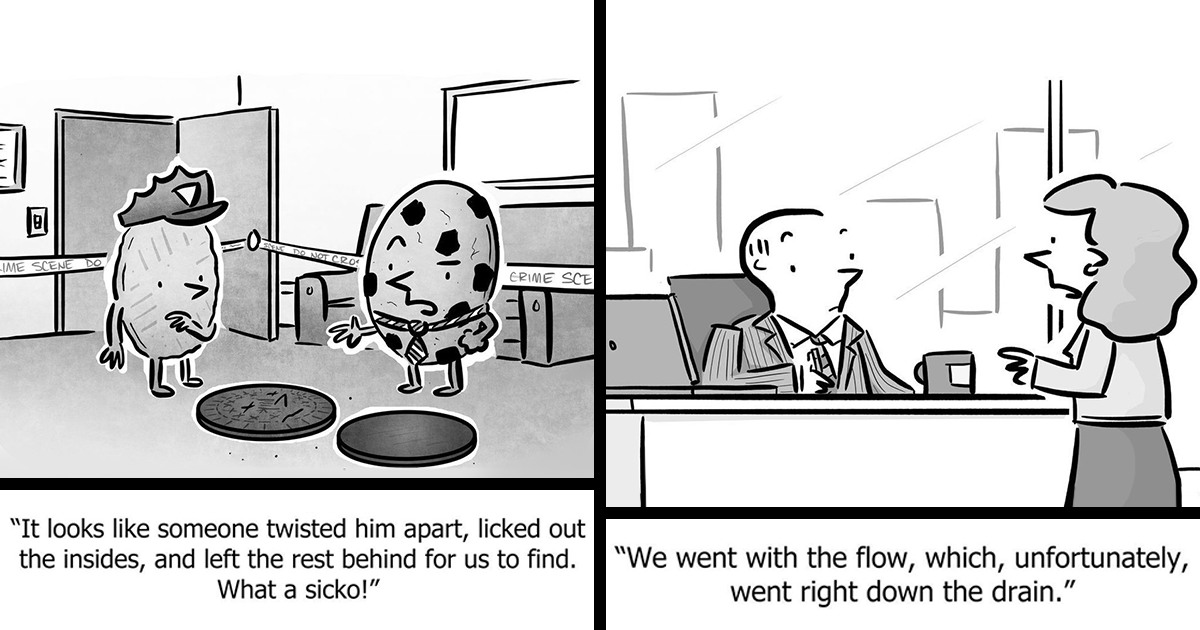
Some jokes need a long setup, three callbacks, and a comedian pacing under a spotlight. A great one-panel comic needs considerably less: one drawing, one sharp idea, and perhaps a penguin explaining quarterly losses to a deeply disappointed board of directors.
The best witty one-panel comics transform ordinary annoyances into miniature worlds. Office meetings become medieval trials. Smartphones develop abandonment issues. Household pets negotiate better benefits than their owners. Within a single frame, a talented cartoonist can establish a setting, introduce a conflict, reveal a character, and deliver a punchline before the reader has finished chewing breakfast.
That economy is part of the form’s magic. The Library of Congress describes single-panel cartoons as tightly constructed works capable of capturing complicated social conditions within one image. Its historical materials also note that gag cartoons commonly draw humor from awkward relationships, family life, social inhibitions, wordplay, and visual puns. The National Cartoonists Society distinguishes recurring panel features from individual gag cartoons sold as stand-alone works, but both depend on the same essential talent: making every line earn its place.
Why One-Panel Comics Are So Satisfying
A one-panel comic works like a tiny trapdoor. The illustration encourages the reader to make an assumption, while the caption quietly removes the floor beneath it. A boardroom looks normal until the chief executive is revealed to be a houseplant. A pirate ship seems historically accurate until the captain begins complaining about password security.
This structure depends heavily on incongruitythe collision of things that should not logically belong together. A robot attending therapy, a ghost struggling with office bureaucracy, or a dinosaur taking a museum selfie becomes funny because the situation is simultaneously recognizable and impossible. Humor can also make uncomfortable experiences easier to discuss, release tension, and create social connection, which helps explain why relatable cartoons are passed between friends, coworkers, and family members with alarming speed.
Words and images must cooperate rather than repeat one another. The drawing supplies information the caption deliberately leaves out, while the caption changes how the picture is understood. The result is not simply an illustrated joke. It is a compact conversation between language and visual storytelling.
30 Witty One-Panel Comics That Turn Daily Life Sideways
-
1. The Smart Refrigerator’s Performance Review
A nervous homeowner sits across from a refrigerator wearing reading glasses and holding a clipboard. Empty vegetable drawers are visible behind it.
Caption: “We’ve noticed your health goals expire faster than the yogurt.”
The joke lands because modern appliances already know far too much. Giving one managerial authority feels less like science fiction and more like next Tuesday.
-
2. The Dog’s Job Interview
A golden retriever sits upright in a corporate conference room while three executives examine its résumé.
Caption: “My greatest weakness is that I care too much about the mail.”
Anyone who has rehearsed a fake weakness before an interview will recognize the strategy. The dog simply has a more honest answer.
-
3. The Office Plant Gets Promoted
Employees gather around a potted fern wearing a tiny necktie. The manager shakes one of its leaves.
Caption: “Unlike the rest of you, Fern has demonstrated consistent growth.”
Corporate language is already rich fertilizer for cartoonists. Add a literal plant, and the annual review practically writes itself.
-
4. Therapy for Robots
A robot reclines on a therapist’s couch while its charging cable trails sadly across the floor.
Caption: “I don’t feel empty. I’m at fourteen percent.”
The panel combines emotional language with a battery warning, proving that even machines may eventually need help establishing healthier charging boundaries.
-
5. The Ancient Password
Archaeologists gather around a stone tablet covered in symbols. One symbol clearly resembles a sticky note.
Caption: “We believe the civilization disappeared after everyone forgot the backup email.”
Digital frustration becomes funnier when treated as a historic catastrophewhich, during account recovery, it certainly feels like.
-
6. Customer Service in the Afterlife
The Grim Reaper waits beside a skeleton holding a phone. A sign reads “Average wait time: eternity.”
Caption: “Your mortality is very important to us.”
Few things unite humanity like being trapped on hold. Not even death offers an escape from cheerful automated reassurance.
-
7. The Museum of Terms and Conditions
Visitors stare at an enormous scroll stretching through several galleries.
Caption: “Experts believe one person reached paragraph seven in 2014.”
The exhibit recognizes one of civilization’s most ambitious literary traditions: agreements everybody accepts and nobody reads.
-
8. The First Notification
A caveman proudly presents a stone tablet that repeatedly taps another caveman on the shoulder.
Caption: “It interrupts you whenever nothing important happens.”
The invention receives immediate investment, followed by several million years of regret.
-
9. Earth’s Tourist Review
An alien stands beside its spaceship, typing into an intergalactic travel app while humans argue in the background.
Caption: “Beautiful oceans. Strange management. Three stars.”
The alien’s calm review turns the entire planet into a poorly operated vacation rental.
-
10. Relationship Counseling for GPS
A couple sits with a therapist while their navigation device rests between them.
Caption: “It keeps bringing up every wrong turn I’ve ever made.”
The GPS remains silent, which somehow makes it appear even more judgmental.
-
11. The Coffee Mug Intervention
Several mugs form a concerned circle around a sleepy office worker clutching an enormous thermos.
Caption: “We love you, but this relationship has become dependent.”
The employee takes another sip and asks whether the meeting can begin after caffeine.
-
12. The Penguin’s Real Estate Search
A penguin tours a tiny apartment containing one rapidly melting ice cube.
Caption: “Is the air conditioning included, or is that considered luxury?”
The humor is light, but its environmental undertone gives the panel an extra layer beneath the slippery floor.
-
13. The CEO in an Escape Room
A chief executive points confidently at a locked door while exhausted employees search for clues.
Caption: “Before we leave, let’s schedule a meeting about leaving.”
Management has discovered the only room that cannot be escaped through additional meetings.
-
14. Homework Help Goes Too Far
A child watches as an artificial intelligence system addresses the school board from the principal’s chair.
Caption: “I only asked it to explain fractions.”
The panel exaggerates a familiar concern: convenient assistance becoming suspiciously enthusiastic about taking control.
-
15. The Open-Plan Haunted House
A ghost floats miserably through a bright office filled with desks and glass dividers.
Caption: “There’s nowhere private to say ‘boo.’”
Even supernatural employees suffer when architecture prioritizes collaboration over basic haunting conditions.
-
16. The Time Traveler’s Discovery
A scientist returns from the future carrying an unfamiliar cable while reporters surround the time machine.
Caption: “Good news: humanity survives. Bad news: they changed the charger again.”
The destiny of civilization is comforting. The accessory replacement budget is not.
-
17. Squirrel Mobile Banking
A squirrel studies a banking app while sitting on a mountain of acorns.
Caption: “I prefer assets I can bury and immediately forget.”
Its investment strategy sounds chaotic until one remembers how many humans treat retirement accounts.
-
18. The Dinosaur Museum Selfie
A dinosaur takes a photograph beside a fossilized human skeleton labeled “Early Commuter.”
Caption: “They disappeared shortly after inventing rush hour.”
Reversing museum roles makes modern routines appear exactly as strange as they deserve to look.
-
19. Superhero Dry Cleaning
A superhero stands at a counter while an employee examines a scorched cape.
Caption: “Next time, please read the label before entering a volcano.”
Saving the world is glamorous until someone has to remove lava stains from delicate fabric.
-
20. The Introvert’s Networking Strategy
A person hides beneath a conference table while business cards are scattered above.
Caption: “I’m building connections from a secure location.”
The comic understands that professional networking sometimes feels like speed dating with résumés and weaker snacks.
-
21. The Subscription Cauldron
A witch angrily taps a glowing cauldron displaying a payment screen.
Caption: “The basic plan only includes minor curses.”
Nothing ruins ancient magic faster than discovering that transformation spells require a premium membership.
-
22. Pirate Password Security
A pirate captain lectures the crew beside a treasure chest fitted with a digital keypad.
Caption: “Stop using ‘ARRR123.’ The navy has guessed it twice.”
The caption mixes classic pirate vocabulary with the least adventurous password imaginable.
-
23. The Weather App Apologizes
A phone wearing a tiny raincoat stands before a soaked family at a ruined picnic.
Caption: “When I said zero percent, I meant emotionally.”
Forecasting becomes much easier when accuracy is replaced with creative interpretation.
-
24. The Moon’s Performance Appraisal
The moon sits across from the sun in a celestial office.
Caption: “Your visibility has been inconsistent, but people remain strangely obsessed with you.”
It is the first employee evaluation measured in phases rather than quarterly targets.
-
25. The Houseplant Group Chat
Several plants lean toward a phone while their owner walks past with an empty watering can.
Caption: “She posted another vacation photo. Stay strong.”
The panel gives neglected greenery a support networkand the homeowner a reason to feel watched.
-
26. Mindfulness in the Elevator
Office workers sit cross-legged inside a stalled elevator while an instructor smiles serenely.
Caption: “You wanted help living in the present. The repair crew arrives tomorrow.”
Enlightenment is apparently easier when the doors refuse to open.
-
27. The Robot Retirement Home
Old robots sit in rocking chairs, comparing outdated charging ports.
Caption: “In my day, updates asked permission.”
Technological nostalgia arrives surprisingly quickly when every device becomes obsolete before its warranty paperwork is filed.
-
28. Writer’s Block Reports for Duty
A construction worker labeled “Writer’s Block” builds a brick wall across an author’s desk.
Caption: “I should be finished preventing progress by lunch.”
Turning an abstract creative struggle into an efficient tradesperson gives frustration a wonderfully punchable uniform.
-
29. The Cat’s Annual Review
A cat sits behind a desk while its owner nervously waits for feedback.
Caption: “Your food service is adequate. Your door-opening response time remains disappointing.”
Every cat owner already knows who conducts the household performance reviews.
-
30. The Cartoonist’s Final Panel
A cartoonist celebrates beside a completed drawing while thirty new blank pages line up outside the studio.
Caption: “Excellent. Now do it again without repeating yourself.”
The last joke points back at the creative process itself: every successful punchline is followed by another empty rectangle demanding attention.
What Makes These One-Panel Comic Ideas Work?
Relatable Problems Wear Absurd Costumes
The situations above begin with recognizable experiences: workplace jargon, forgotten passwords, subscription fees, technical updates, crowded meetings, unreliable forecasts, and demanding pets. The cartoonist then changes one element. A fern receives a promotion. A witch faces a paywall. The moon gets reviewed by management.
This small shift preserves familiarity while creating surprise. Readers understand the problem immediately, so the comic does not need several panels of explanation. They can concentrate on discovering why the situation is ridiculous.
The Captions Leave Room for the Drawing
A weak caption explains everything visible in the picture. A stronger one adds information, reveals motive, or changes the meaning of the scene. The line about the refrigerator does not describe the empty vegetable drawer; it turns that drawer into evidence at a performance review.
Caption contests demonstrate how dramatically a single sentence can alter the interpretation of one illustration. The New Yorker’s long-running contest presents captionless cartoons to readers, while discussions by its cartoon editors have explored timing, reading direction, visual information, and the different effects of captioned and wordless jokes.
Simple Drawings Can Carry Complex Ideas
One-panel cartooning does not require photorealistic art. It requires clarity. A few expressive lines can establish emotion, relationships, status, and movement. Profiles of established cartoonists frequently emphasize the effectiveness of economical drawing and the close partnership between picture and caption.
The visual style may be polished, loose, dark, cute, or deliberately awkward. What matters is whether the reader knows where to look and understands the setup quickly enough for the surprise to work.
The Experience of Reading 30 Witty One-Panel Comics
Reading a large collection of one-panel comics is a peculiar emotional workout. You begin as a responsible adult who intends to glance at two or three drawings. Several minutes later, you are studying a cartoon about a depressed refrigerator and wondering whether your own appliances have discussed you behind your back.
The first pleasure is speed. A novel asks for commitment. A movie requests an evening. A one-panel comic walks into the room, delivers one perfectly shaped observation, and leaves before anyone can assign it additional responsibilities. That brevity makes each cartoon feel effortless, although the best ones are usually the result of ruthless editing. Every unnecessary chair, word, facial expression, or background object can delay the punchline.
After reading several panels, patterns begin to emerge. Cartoonists repeatedly return to offices because offices are theaters where everybody pretends strange behavior is normal. Meetings continue without decisions. Employees translate ordinary thoughts into professional language. Managers announce new processes for repairing problems created by the previous processes. Place those habits in a pirate ship, haunted mansion, or prehistoric cave, and their absurdity becomes impossible to ignore.
Technology provides another rich source of experience. Most people have argued with an automated system, forgotten a password, accepted unread terms, or watched a device install an update at the worst possible moment. A witty cartoon turns that private irritation into a shared joke. The reader experiences a tiny spark of recognition: “Yes, that is ridiculous, and apparently I am not the only person being defeated by it.”
The strongest collections also create rhythm. A loud joke may be followed by a quieter observation. A verbal pun gives way to a visual reversal. A cartoon about artificial intelligence might sit beside one about cats, allowing readers to recover from technological anxiety by remembering that animals have controlled humanity for much longer.
Sharing the comics becomes part of the experience. One panel goes to a coworker who schedules too many meetings. Another goes to the friend who owns twelve plants and remembers to water three. The pirate password joke is sent to the relative still using a pet’s name followed by “123.” In this way, cartoons become miniature social messages. They can tease without delivering a lecture and sympathize without becoming sentimental.
There is also satisfaction in revisiting a good panel. The first reading delivers the central joke. The second reveals a background detail, a character’s expression, or an object that quietly supports the punchline. A talented cartoonist rewards attention without cluttering the frame.
By the thirtieth comic, readers may feel lighter, more observant, and mildly suspicious of their houseplants. Everyday life has not become less inconvenient. Meetings still multiply, chargers still change, and cats still expect immediate service. The difference is that these frustrations now contain possible punchlines. A successful one-panel comic does more than make people laugh for a few seconds. It teaches them to notice how much comedy is already hiding inside an ordinary day.
Conclusion
Witty one-panel comics prove that storytelling does not need a large canvas. A single image can expose workplace nonsense, technological dependence, environmental anxiety, social awkwardness, and the eternal confidence of household pets. When a talented cartoonist combines a clear scene with an unexpected caption, the result feels immediate yet surprisingly layered.
These 30 comic ideas rely on original scenarios, concise writing, visual contrast, and recognizable human behavior. Some deliver playful wordplay; others use reversal, exaggeration, or quiet satire. Together, they demonstrate why the single-panel format remains one of the fastest and most flexible forms of visual humor.
The next time a refrigerator judges your groceries, a navigation app remembers your mistakes, or a meeting is scheduled to discuss reducing meetings, pay attention. You may not be experiencing a problem. You may simply be standing inside an unfinished cartoon.