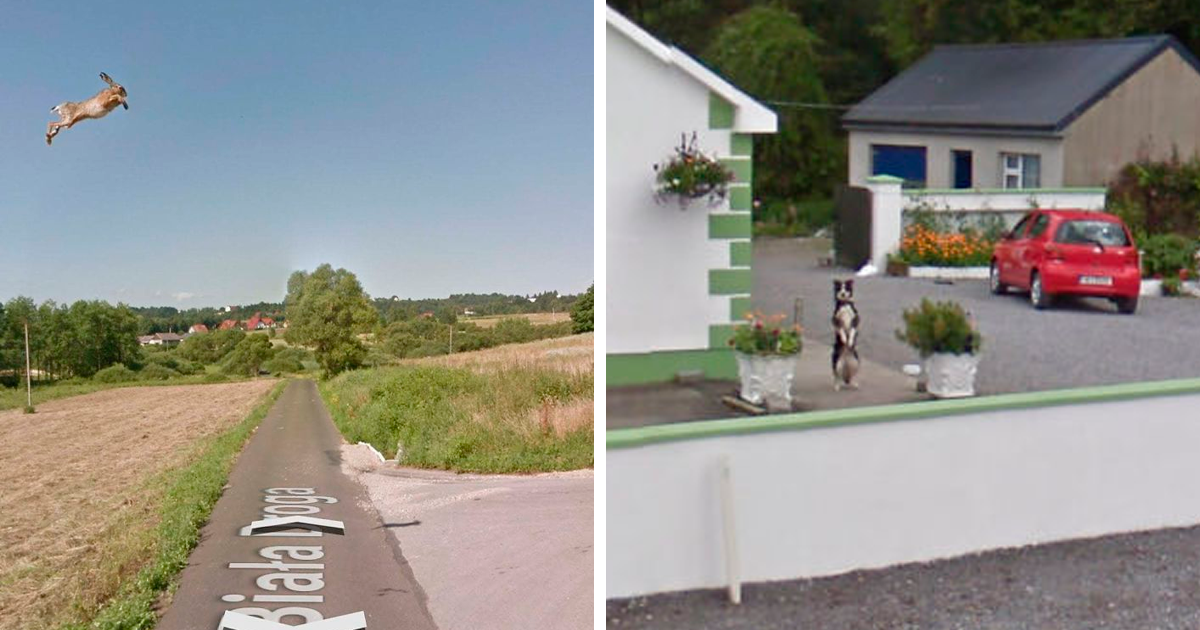
Google Street View was built to help people navigate roads, neighborhoods, landmarks, parks, islands, and places they may never visit in person. But somewhere between mapping the world and stitching together billions of panoramic images, it also became the internet’s most unexpected wildlife photographer. The Street View camera does not ask a goat to pose, does not tell a cat to “look natural,” and certainly does not schedule a penguin portrait session. It simply rolls, hikes, floats, dives, or gets carried alongand animals do what animals do best: wander into frame like they own the planet.
That is why accidentally taken animal pics by Google Street View are so irresistible. They are not polished zoo posters or dramatic nature-documentary stills. They are funny, awkward, mysterious, and oddly charming snapshots of real animals caught in real places. Sometimes it is a dog chasing the Street View car. Sometimes it is a sheep standing in the road like a tiny woolly traffic officer. Sometimes it is a cow whose face gets blurred by privacy technology, as if she is protecting her secret identity as “Moo-dini.”
This article rounds up 30 of the best types of animal moments seen or inspired by real Street View and Google Maps imagery, from city cats and rural cows to Galápagos sea lions, Samburu elephants, Antarctic penguins, and one unforgettable frog that turned a camera lens into its personal throne. Along the way, we will look at why these funny Google Street View animal pics became so popular, what they reveal about digital mapping, and why the internet never gets tired of animals photobombing technology.
Why Google Street View Animal Pics Are So Funny
The magic of Google Street View animal pics comes from surprise. Street View is designed to be useful: find a driveway, preview a restaurant entrance, check a hiking trail, or see what a neighborhood looks like before you visit. Then suddenly, there is a horse staring at the camera with the energy of a suspicious landlord. The contrast is perfect. A serious mapping tool accidentally becomes a comedy album.
Another reason these images work is that animals do not understand the assignment. A person might notice a camera car and wave, hide, or act casual. A cat, however, will simply continue judging humanity from a sunny wall. A dog might sprint behind the car as if the entire project is a game of chase. A goat may climb somewhere ridiculous because goats consider gravity to be more of a suggestion than a law.
Street View has also expanded far beyond city streets. Google and contributors have used cars, backpacks, boats, trikes, snowmobiles, underwater equipment, and other creative collection methods to capture panoramic imagery in places vehicles cannot reach. That broader coverage means more chances for wildlife, farm animals, pets, birds, and even marine life to drift into the digital record. The result is a strange and wonderful archive of animals caught on Google Maps.
30 Best Accidentally Taken Animal Pics By Google Street View
-
1. The Cow With a Blurred Face
One of the most famous funny Google Street View animals is the cow whose face appeared blurred, as if she had entered witness protection. Google normally blurs human faces and license plates for privacy, but the accidental cow blur became an instant internet joke. It is the perfect Street View moment: technically mundane, visually hilarious, and extremely cow.
-
2. The Frog That Took Over the Lens
During a Street View collection project in the Amazon region, a frog reportedly perched right on the camera lens, partially blocking the view. Most animals photobomb from the side. This frog chose full creative control. The result feels less like a mapping image and more like a tiny amphibian saying, “Welcome to my documentary.”
-
3. Penguins Standing Around Like Commuters
Antarctic Street View imagery has given viewers glimpses of penguins in their icy world. The best part is how normal they look in such an extreme landscape. A small penguin group can resemble office workers waiting for the elevator, except the office is frozen wilderness and everyone is wearing formalwear.
-
4. Galápagos Sea Lions Lounging Like Vacation Influencers
Street View imagery from the Galápagos Islands features the kind of animal encounters that feel almost unreal: sea lions resting, stretching, and behaving as if they booked the beach first. These images are funny because sea lions have a natural talent for looking both majestic and deeply lazy.
-
5. Blue-Footed Boobies Showing Off Their Shoes
The Galápagos is also home to the blue-footed booby, a bird famous for its bright blue feet. In Street View-style wildlife imagery, these birds always look like they are modeling limited-edition sneakers. Their unusual color and confident posture make them some of the most memorable animals caught on Google Maps-related collections.
-
6. Giant Tortoises Moving at CEO Speed
Few animals look more unbothered by technology than a Galápagos giant tortoise. These ancient-looking reptiles appear as if they have seen every camera trend come and go. A Street View camera may be modern, but a tortoise gives the impression that it will review the situation over the next three business weeks.
-
7. Marine Iguanas Looking Like Tiny Dragons
Marine iguanas in the Galápagos have a dramatic, prehistoric appearance that makes them perfect accidental stars. When one appears in a panoramic image, the scene suddenly feels like a low-budget dinosaur movieexcept the dinosaur is real, small, salty, and probably judging your swimming technique.
-
8. Elephants on a Virtual Safari
Street View imagery from Kenya’s Samburu region lets viewers explore elephant habitat from home. Elephants bring a different kind of magic to Google Street View animal pics. They are not just funny; they are powerful reminders that mapping technology can help people appreciate wildlife and conservation landscapes without stepping into sensitive habitats.
-
9. Zebras Looking Like Optical Illusions
Zebras are already nature’s barcode, so seeing them in Street View or panoramic wildlife imagery can feel surreal. Their stripes confuse the eye, especially in a wide landscape. A zebra in frame instantly turns a simple road or reserve view into a living pattern test.
-
10. Rhinos Appearing Like Armored Trucks
Rhinoceroses captured in conservation-area imagery are unforgettable because they look both ancient and industrial. A rhino standing in a field has the quiet confidence of a vehicle that does not need headlights. It is one of those Street View wildlife moments where humor and awe sit side by side.
-
11. Feral Cats Ruling Roman Ruins
Google Arts and Culture has highlighted cats around Largo di Torre Argentina in Rome, a historic temple area famously associated with feral cats. The image idea is unbeatable: ancient ruins, dramatic history, and cats acting like they personally approved the architecture. It proves cats do not need a throne; they will claim a civilization.
-
12. Japanese Macaques Soaking Like Spa Guests
Jigokudani Monkey Park in Japan is known for snow monkeys that warm themselves in hot springs. In Street View-style exploration, these macaques look wonderfully human. Their faces say, “Do not talk to me until I have had my thermal bath.” Relatable? Extremely.
-
13. Polar Bears in the Distance
Some of the most exciting animal discoveries in panoramic map imagery are not close-ups. A pale shape in the distance, a moving dot near snow, or a bear-like figure on the horizon can turn viewers into digital wildlife detectives. The thrill is in the search: is that a rock, a shadow, or a polar bear having a very private Tuesday?
-
14. Sheep Blocking the Road
Sheep are among the funniest animals in Street View because they often appear in groups and seem completely unimpressed by traffic. A single sheep can look confused. A flock of sheep looks like a committee meeting. When they block a rural road, the whole image becomes a fluffy negotiation.
-
15. Sheep View in the Faroe Islands
The Faroe Islands famously used sheep equipped with cameras as part of a creative campaign to bring attention to places not yet fully represented on Street View. It was not merely a cute stunt; it showed how local creativity, mapping, and animals can collide in a way the internet instantly loves. Also, “Sheep View” is simply too good a phrase to ignore.
-
16. Dogs Chasing the Street View Car
Dogs may be the unofficial athletes of Street View. In many funny Google Maps photos shared online, dogs appear mid-run, chasing the camera car as if defending the neighborhood from suspicious roof-mounted technology. Their expressions are heroic. Their mission is unclear. Their commitment is total.
-
17. Dogs Napping Through History
Not every dog chooses action. Some are captured sleeping on porches, sidewalks, shop entrances, or sunny patches of pavement. These images are charming because the world is being digitally preserved around them, and the dog has chosen the superior activity: a nap.
-
18. Cats Watching From Windows
A cat in a window is one of the classic accidental animal pics by Google Street View. The camera catches a house, a street, maybe a parked carand then you notice the small face in the window. The cat is not posing. The cat is auditing the entire mapping operation.
-
19. Horses Staring Directly Into the Camera
Horses have a special Street View talent: they can look noble, confused, and mildly suspicious all at once. A horse looking straight at the camera creates the feeling that the viewer has interrupted an important equine thought. Probably about hay. Possibly about taxes.
-
20. Goats on Impossible Surfaces
Goats are natural comedians because they climb things that do not look climbable. When a Street View camera catches a goat on a wall, slope, fence, or random roadside object, the image becomes an instant visual question: “How did you get there, and why are you proud of it?”
-
21. Donkeys Judging the Roadside
Donkeys bring deadpan energy to accidental animal photos. They often appear still, sturdy, and deeply unimpressed. A donkey near a rural lane can make the whole Street View scene feel like a slow western movie where the donkey knows the ending and refuses to spoil it.
-
22. Birds Mid-Flight Near the Camera
Birds create some of the strangest Google Street View animal pics because panoramic stitching can catch them at odd angles. A bird mid-flight may appear stretched, duplicated, ghostly, or perfectly timed. It is nature plus technology plus one bird having no respect for clean image processing.
-
23. Chickens Crossing the Road
Few images feel more accidentally philosophical than chickens crossing a road on Street View. The old joke writes itself, but the picture adds proof. Why did the chicken cross the road? To become part of a global mapping platform, apparently.
-
24. Ducks Taking Over a Sidewalk
Ducks in Street View imagery often look like tiny organized pedestrians. Whether waddling near a pond, crossing a path, or gathering in a parking lot, ducks add instant charm. They move with the confidence of creatures who know traffic rules are optional if you are adorable.
-
25. Deer Frozen in Surprise
A deer captured near a road or forest edge can look like it has just discovered the internet. The wide-eyed pause is familiar to anyone who has seen wildlife near a quiet lane. These images are beautiful, but they also have a comic stillness: deer meets camera, both parties reconsider life.
-
26. Camels in Desert Street View
Google has used creative collection methods in desert landscapes, and camel-related imagery has become part of Street View’s broader adventure story. A camel in a panoramic scene adds instant personality. It is both transportation and celebrity guest, walking through the frame with long-lashed confidence.
-
27. Fish and Sea Life in Underwater Views
Street View is not limited to roads. Underwater collections have helped people explore reefs, shipwrecks, and marine environments. Fish passing through these views feel like accidental extras in a virtual aquarium. They do not care about mapping; they are just commuting through coral.
-
28. Pandas Eating Like Nobody Is Watching
Street View has allowed people to virtually visit animal parks and conservation spaces, including places where pandas can be seen doing what pandas do best: eating bamboo and being dangerously cute. A panda on Street View is less “accident” and more “global morale improvement.”
-
29. Farm Animals Lining Up Like a Parade
Cows, sheep, goats, horses, and chickens sometimes appear together in rural Street View scenes, creating the accidental look of a farm-animal parade. These pictures are funny because the animals seem arranged, even when they are not. It is chaos pretending to be choreography.
-
30. The Mystery Animal You Have to Zoom In to Identify
The best accidentally taken animal pics by Google Street View are sometimes the least obvious. A shadow near a tree, a shape on a beach, a tiny animal on a paththese turn casual browsing into detective work. Half the fun is asking, “What am I looking at?” The other half is deciding it is definitely an animal and refusing all criticism.
What These Animal Pics Reveal About Street View
Funny Street View animal photos may look like simple internet entertainment, but they reveal something deeper about modern mapping. Street View is a technological project, yet it records the untidy, spontaneous texture of real life. Roads are not just roads. They are places where dogs nap, birds fly, cats patrol, cows wander, and wildlife continues living outside the neat lines of a digital map.
These images also remind us that the world is not fully controllable. A camera system can be engineered, mounted, tested, and routed with precision, but a frog can still jump onto the lens. A privacy algorithm can be designed for human faces, and a cow can still become an accidental celebrity. A mapping expedition can aim to document a landscape, and a sea lion can steal the emotional spotlight by flopping on a beach.
That unpredictability is exactly why people love accidentally captured animal photos. They are tiny interruptions in a system built for order. They make digital maps feel alive. Instead of a sterile navigation tool, Street View becomes a living scrapbook of cities, trails, farms, islands, reserves, and coastlines. The animals are not glitches. They are reminders that every mapped location belongs to more than humans.
How to Find Funny Google Street View Animals Yourself
If you want to search for your own Google Maps funny photos, start with places where animals are likely to appear. Rural roads, coastal villages, national parks, farms, zoos, wildlife reserves, islands, and walking trails are excellent places to explore. Use Street View to move slowly through the scene and look beyond the center of the road. Animals often appear near fences, doorways, beaches, trees, riverbanks, and sidewalks.
In cities, check windows, alleys, storefronts, apartment balconies, and parked cars. Cats are masters of hiding in plain sight. Dogs may appear near gates or porches. Birds can show up anywhere, usually at the least convenient moment for panorama stitching. In rural areas, scan fields and roadside edges. A sheep may blend into a pale landscape until you notice four legs and an expression of deep confusion.
Also remember that Street View imagery changes. Google updates many areas over time, and older scenes may disappear or move into historical imagery where available. That means animal discoveries can feel temporary, almost like digital fossils. Today’s funny cow may be tomorrow’s replaced panorama. If you find a great animal moment, enjoy it while it is there.
Experience Notes: The Joy of Hunting for Street View Animal Gems
Exploring Street View for accidental animal pictures feels different from scrolling a normal photo gallery. A gallery gives you the punchline immediately. Street View makes you work for it. You drag the little yellow figure onto a road, spin the camera, move forward, zoom in, and suddenlythere it is. A dog in a driveway. A goat on a wall. A cat in a window. The discovery feels personal, even though the image is public. It is like finding a joke hidden inside a map.
The experience can become strangely relaxing. Instead of rushing through search results, you slow down and study details. You notice the shape of a street, the color of a fence, the weather on the day the image was captured, the way shadows fall across a sidewalk. Then an animal appears and changes the whole mood. A plain country lane becomes funny because a sheep is standing in the middle of it like a security guard. A quiet harbor becomes memorable because a bird is frozen mid-flap near the camera. A beach becomes better because a sea lion looks as comfortable as a retired millionaire.
There is also a travel element. Street View animal hunting lets people experience places they may never physically visit. Someone sitting at home can explore the Galápagos, peek at penguin habitats, wander near elephant country, or virtually pass through small villages where cats and dogs are part of daily life. It is not a replacement for real travel, of course, but it is a surprisingly vivid way to feel connected to the world. Animals make that connection stronger because they are universal. A cat’s suspicious stare translates in every language.
The funniest experience is when the image feels accidental in a way no photographer could plan. A professional wildlife photographer waits for perfect light, ideal movement, and clean composition. Street View sometimes gives us a blurry bird, half a goat, three sheep facing different directions, or a dog that appears in one frame and vanishes in the next. Technically, these are imperfect photos. Emotionally, they are perfect. Their awkwardness is the charm.
These moments also encourage curiosity. After spotting an animal, you may wonder about the place itself. Why are there so many sheep on that island? What species of bird is that? Is that beach known for sea lions? Why is that cow standing so confidently in the road? A funny image becomes the doorway to learning about geography, wildlife, local culture, conservation, and how digital tools document the planet.
Most of all, the experience is a reminder to look closely. The internet often pushes people to scroll faster, but Street View animal pics reward patience. The best finds are not always obvious. Sometimes the animal is tiny, half-hidden, or sitting at the edge of the frame. That makes the discovery feel earned. And when you finally spot it, you get the small, ridiculous joy of saying, “There you are, you weird little legend.”
Conclusion
The 30 best accidentally taken animal pics by Google Street View show why the internet loves unscripted moments. These images are funny because they are real, imperfect, and completely unplanned. They capture animals as they are: curious, sleepy, chaotic, majestic, nosy, and occasionally determined to block a camera lens.
From penguins in Antarctica to sea lions in the Galápagos, from sheep in the Faroe Islands to cats in Rome and dogs chasing camera cars, Street View has become more than a navigation tool. It is a global collection of accidental comedy, quiet beauty, and unexpected wildlife encounters. The animals were not trying to go viral. They were simply living their lives while technology happened to pass by.
And maybe that is the real appeal. In a world full of staged content, accidentally captured animal photos feel refreshingly honest. No filters. No captions required. Just a cow, a cat, a frog, a penguin, or a goat stepping into the frame and making the map a little more alive.
Note: This original article is written for web publication and synthesizes real Google Street View context, publicly known animal examples, and general Street View exploration patterns without adding source links or unnecessary citation artifacts.