There are few moments more awkward than talking to someone while their eyes appear to be holding a secret business meeting with your neckline. You are speaking. Your face is right there. Your mouth is producing actual words. And yet, somehow, his gaze keeps drifting south like it missed an exit on the interstate.
First, let’s make one thing very clear: you are not responsible for managing another person’s respect. Adults are responsible for their own eyes, manners, and self-control. Still, in real life, many women want practical ways to redirect attention without turning every coffee chat, workplace conversation, party introduction, or first date into a courtroom drama. That is where confident communication, smart positioning, and firm boundaries can help.
This article covers three respectful, realistic ways to get guys to look at your face instead of your chest. These tips are not about hiding your body, apologizing for your clothes, or pretending the problem is your fault. They are about reclaiming the conversation, protecting your comfort, and reminding peoplepolitely or not-so-politely, depending on the situationthat your face is the headquarters of the discussion.
Why Eye Contact Matters More Than You Think
Eye contact is not just a decorative social feature, like parsley on a restaurant plate. It helps people feel seen, heard, and taken seriously. When someone repeatedly stares at your chest during a conversation, the message can feel dismissive, disrespectful, or objectifyingeven if the person tries to pass it off as “nothing.”
Research on objectification has long explored how being reduced to body parts can affect confidence, comfort, and mental focus. In everyday language, it feels like this: you are trying to talk about work, school, dinner plans, or whether pineapple belongs on pizza, and suddenly you are wondering if the other person has forgotten you are a full human being with thoughts, humor, ambition, and possibly a very strong opinion about pizza toppings.
The goal is not to force everyone into intense, unblinking eye contact. That would be less “respectful conversation” and more “owl audition.” Natural conversation includes looking away, thinking, laughing, glancing around, and returning to the person’s face. The problem is not a brief accidental glance. The problem is repeated staring that makes you uncomfortable.
Way 1: Redirect His Attention With Confident Face-Level Communication
The first way to get a guy to look at your face is to gently but clearly pull the conversation back to your face. This can be done with your voice, posture, gestures, and timing. Think of it as conversational GPS: “Recalculating route. Destination: my eyes.”
Use direct eye contact as a reset button
If his eyes drift downward, pause for half a second and look directly at his face. You do not have to glare, sigh dramatically, or perform a full Broadway production titled My Eyes Are Up Here. A calm pause often works because it interrupts the rhythm. Many people notice the silence and look back up.
For example, if you are explaining something and notice his gaze wandering, stop mid-sentence for a beat. When he looks up, continue. This subtle technique communicates that the conversation happens face-to-face. It is especially useful in professional or public settings where you may not want to make a direct comment immediately.
Gesture near your face while speaking
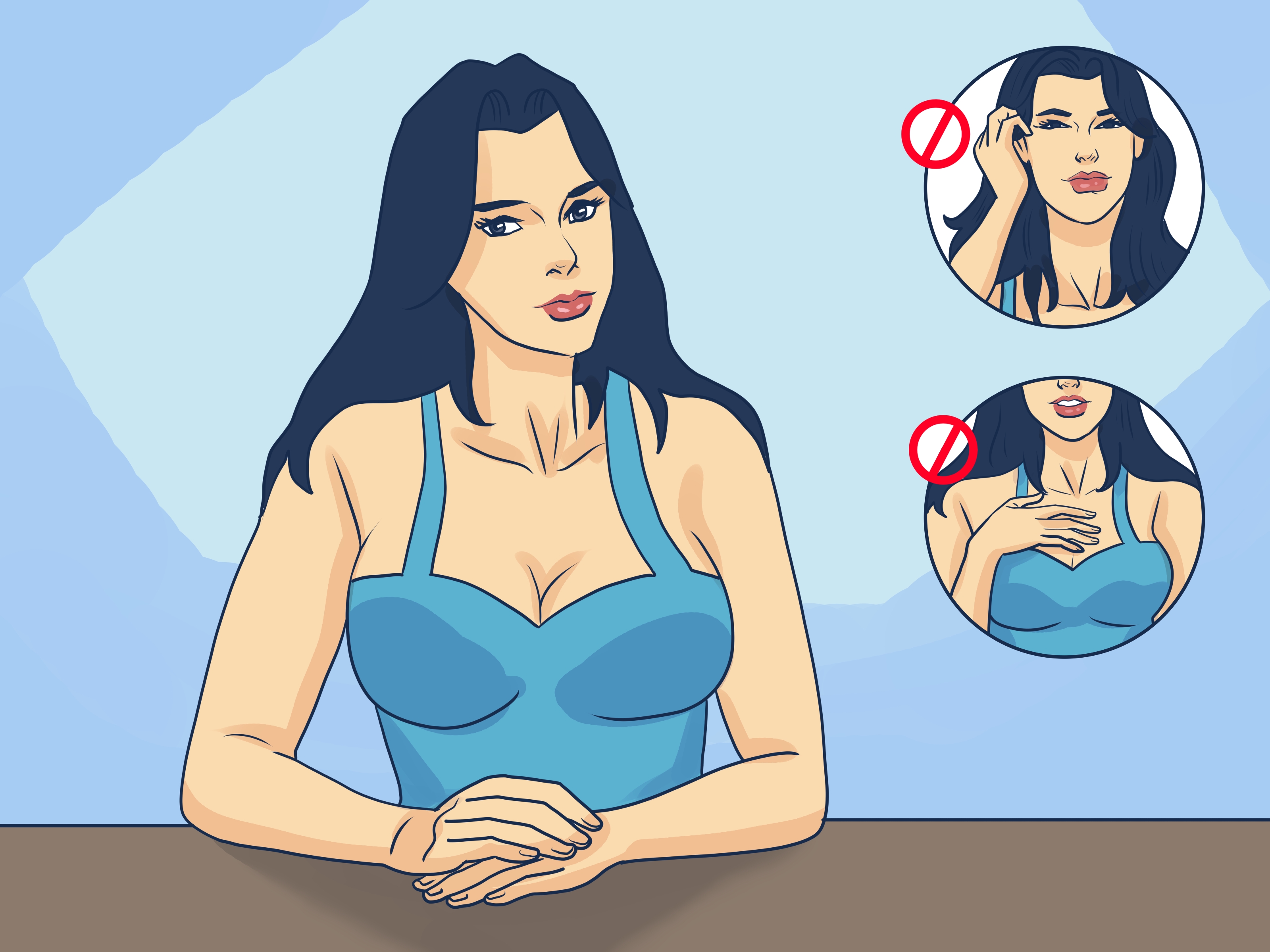
Another simple trick is to use natural gestures near your face. Touch your chin lightly while thinking, hold your coffee cup higher, point toward your smile when joking, or use your hands when explaining a point. These small movements can draw attention upward without feeling forced.
This is not about performing or constantly managing someone’s attention. It is simply a practical tool. Speakers, teachers, and presenters use gestures all the time to guide attention. You can use the same idea in daily conversation. Your face is the main screen; everything else is background scenery.
Ask face-centered questions
Questions can also pull attention upward. Try lines like:
- “What do you think about that?”
- “Does that make sense?”
- “Can you read my expression right now?”
- “You see what I mean?”
These phrases invite him to reconnect with your face because the conversation requires social feedback. They are especially useful when the person is not being aggressive but is clearly distracted. Sometimes a guy simply needs a reminder that communication involves more than standing nearby while his eyeballs wander around unsupervised.
Way 2: Create a Conversation Setup That Keeps Focus Upward
Sometimes the environment makes awkward staring easier. A crowded bar, a low chair, a tight booth, or poor lighting can create angles that make you feel more exposed. You should never have to rearrange your life because someone else lacks manners, but small changes in positioning can help you feel more in control.
Stand or sit at an angle
Facing someone straight on can be intense. Sitting or standing at a slight angle often feels more relaxed and gives you more control over the interaction. If you are at a party, stand beside a table, near a wall, or slightly turned toward the group instead of squarely facing one person who keeps staring.
In a work setting, sitting across a desk or conference table can create a natural face-level focus. In casual settings, holding a notebook, menu, phone, or drink highernot as a shield, but as a normal object in the conversationcan subtly shift the visual field upward.
Use group energy when possible
Group conversations can reduce the pressure of one-on-one staring. If a guy’s gaze is making you uncomfortable at an event, bring another person into the conversation. Try, “Oh, Sarah was just talking about this too,” or “Let’s ask Mark what he thinks.”
This does two things. First, it changes the social dynamic. Second, it reminds the person that other people can see how he is behaving. Some people correct themselves quickly once they realize their manners are not happening in private.
Choose clothing for your comfortnot his behavior
Let’s talk about the closet elephant in the room. Some advice on this topic immediately jumps to clothing: cover up, change your neckline, wear something different. That can sound practical, but it can also slide into unfair territory fast. Clothing may influence where people look, but it does not excuse disrespectful staring.
The better rule is this: dress for your comfort, your purpose, and your setting. If you want to wear a high neckline because it makes you feel relaxed at work, great. If you want to wear a fitted top because you like it, also great. Your outfit is not a permission slip for someone else to act like a poorly programmed security camera.
That said, strategic styling can support your own confidence. A bold lip color, interesting earrings, glasses, a scarf, a strong hairstyle, or a statement necklace worn higher on the chest can draw attention toward your face. These choices should feel expressive, not defensive. The goal is not “How do I disappear?” The goal is “How do I show up in a way that feels like me?”
Way 3: Set a Boundary When Redirecting Does Not Work
Subtle redirection is useful, but it has limits. If someone keeps staring after you have paused, shifted, made eye contact, and tried to reset the conversation, it may be time to use words. Boundaries are not rude. Boundaries are instructions for how people can stay in respectful contact with you.
Use a simple, calm sentence
You do not need a long speech. In fact, short is usually stronger. Try one of these:
- “My eyes are up here.”
- “Please look at my face when I’m talking.”
- “That’s making me uncomfortable.”
- “I need you to stop staring at my chest.”
- “Let’s keep this respectful.”
The tone can match the situation. If it seems like an awkward mistake, a light tone may be enough: “Hey, face is up here.” If the behavior feels deliberate, use a firmer voice. You are not required to soften your message with a laugh, a smile, or a “sorry.” There is nothing to apologize for.
Name the behavior, not your insecurity
A powerful boundary focuses on what the other person is doing. Instead of saying, “I’m probably being weird, but…” say, “You keep looking at my chest, and I want you to stop.” This keeps the responsibility where it belongs.
Many people, especially women, are socialized to protect other people from embarrassment even when those people are the ones behaving badly. But your discomfort matters. You are allowed to describe reality. You are allowed to be direct. You are allowed to make the air a little awkward if the alternative is silently absorbing disrespect.
Exit or escalate when needed
If the person laughs it off, denies it, gets defensive, or continues, you do not need to keep debating. End the conversation. Move away. Find a friend, manager, host, security staff, teacher, human resources representative, or another trusted person depending on the setting.
In a workplace, repeated sexual staring, comments, or other unwelcome behavior may fall under sexual harassment policies. At school, on campus, or in organized spaces, there may be reporting channels. In public, safety comes first. You can leave, call someone, step into a business, ask for help, or use a bystander strategy such as involving another person.
The key is to trust your own discomfort. You do not need to prove that the behavior was “bad enough” before taking care of yourself. If your internal alarm is ringing, do not stand there politely offering it tea.
What Not to Do When Someone Keeps Staring
It is tempting to respond in whatever way instantly relieves the discomfort: nervous laughter, shrinking your posture, crossing your arms tightly, or pretending nothing happened. Those reactions are completely understandable. Many people freeze when they feel objectified or embarrassed. But if you can, try not to make yourself smaller just to make someone else comfortable.
Do not blame yourself. Do not assume you “asked for it.” Do not spend the whole conversation pulling at your shirt unless adjusting your clothes genuinely makes you feel better. And do not feel obligated to educate every man who acts like eye contact is an advanced elective he skipped in college.
You can be kind and still be clear. You can be calm and still be firm. You can be funny and still mean every word. A playful “Hello, my face has joined the meeting” may work in one situation, while a direct “Stop looking at my chest” may be necessary in another.
How to Handle Different Situations
On a date
If you are on a date and he keeps staring, consider it useful information. Attraction is fine. Making you feel like a menu item is not. You might say, “I like flirting, but I also like eye contact.” If he adjusts and respects you, good. If he mocks you or keeps doing it, that tells you something important before you waste three more dates and one excellent outfit.
At work
At work, keep your language professional and document repeated incidents if needed. You can say, “Please keep your attention on my face during our conversations.” If it continues, write down dates, times, locations, what happened, and whether anyone witnessed it. Then consider speaking with a supervisor, HR, or another appropriate reporting channel.
At school or college
In school settings, talk to a trusted teacher, advisor, resident assistant, counselor, or Title IX office if the behavior is repeated or intimidating. You deserve to learn, participate, and exist without being visually picked apart.
In public
In public spaces, prioritize safety over perfect wording. Sometimes the best response is to move closer to other people, call a friend, enter a store, or ask someone nearby for help. You do not owe a stranger a teachable moment. Your job is to get yourself into a safer, more comfortable situation.
Real-Life Experiences: What This Can Look Like in Practice
Many women have a mental file folder labeled “Times Men Forgot My Face Existed.” It may include the coworker who nodded through a presentation while staring at a blouse, the guy at the gym who treated a sports bra like breaking news, or the date who made eye contact only with the appetizer and the neckline. These moments can be funny later, but in real time they often feel uncomfortable, distracting, and exhausting.
One common experience happens in professional settings. Imagine giving an update during a meeting. You are prepared, organized, and speaking clearly. A male colleague keeps glancing down. At first, you wonder if you imagined it. Then it happens again. Instead of rushing through your point, you pause, look directly at him, and continue only when his gaze returns to your face. The room may not even notice, but you feel the shift. You did not create conflict. You simply stopped rewarding disrespect with uninterrupted access to your attention.
Another familiar situation happens during casual socializing. You are at a party, talking to a friend of a friend. He seems nice enough, but his eyes keep dropping. You angle your body toward the group, lift your drink slightly while speaking, and bring another person into the conversation. Suddenly, the interaction feels less trapped. If he corrects himself, fine. If he does not, you have already created an exit ramp.
Then there is the dating version. You are sitting across from someone who appears interested, but not exactly in your opinions. You say, with a half-smile, “My face is doing some excellent work up here, by the way.” A respectful person will laugh, apologize, and do better. A disrespectful person will roll his eyes or accuse you of being too sensitive. That response is not a failure; it is a free preview. Better to learn early that someone cannot handle a basic boundary than after you have memorized his coffee order and met his emotionally complicated dog.
Some experiences require firmness, not humor. If someone repeatedly stares after being redirected, a clear sentence can be the most effective tool: “Stop looking at my chest.” It may feel bold the first time you say it. Your heart may race. Your voice may wobble. That is okay. Courage does not always arrive with perfect posture and movie-trailer music. Sometimes courage sounds like one shaky sentence that still gets the job done.
Over time, many women find that the biggest change is internal. The goal is not to control every gaze in every room. That would be impossible, and frankly, you have better things to do. The real growth is learning to trust your discomfort, respond sooner, and stop carrying responsibility for someone else’s manners. You are allowed to take up space. You are allowed to be noticed for your ideas, humor, intelligence, leadership, kindness, and presence. And yes, you are allowed to expect people to locate your face without needing a treasure map.
Conclusion
Getting guys to look at your face instead of your chest is not about changing who you are. It is about using clear signals, confident communication, and firm boundaries to guide conversations back to respect. Start with subtle redirection when the situation feels safe: pause, make eye contact, gesture near your face, and use questions that require real engagement. If that does not work, adjust the conversation setup or bring in group energy. And when someone continues to stare, say exactly what you need: “Please look at my face,” or “Stop staring at my chest.”
You are not being dramatic. You are not being difficult. You are setting a normal human expectation: conversations should happen with the whole person, not one selected body part. Your face is not hard to find. It has eyes, expressions, and occasionally a look that says, “Try again, sir.” Use it proudly.