Finding a baby bird on the ground can turn an ordinary afternoon into a full-blown emotional event. One minute you are watering your plants, and the next you are staring at a fluffy little creature that looks equal parts brave, confused, and wildly underqualified for outdoor life. Your first instinct may be to scoop it up, whisper “I got you, buddy,” and begin an emergency search for bird-sized parenting advice.
Take a breath. In many cases, a fledgling is supposed to be out of the nest. That awkward hopping, half-flying, “I seem to have graduated early” phase is normal. Parent birds often continue feeding fledglings on the ground or in nearby shrubs while they build strength and learn how to fly. So if it looks like the mom left, that may not be the full story. The bird could still be under active care from one or both parents, who may be watching from a distance like anxious managers at a very tiny internship.
This guide explains how to care for a fledgling the smart way: by knowing when to step back, when to make the area safer, and when it is time to call a licensed wildlife rehabilitator. In other words, this is not about turning your laundry basket into a bird condo. It is about giving a young bird its best shot at survival.
Way 1: Figure Out Whether the Fledgling Actually Needs Help
The most important step in fledgling care is not feeding, watering, or building a mini spa retreat. It is correctly identifying the situation. Many young birds are rescued by kind people when they did not need rescuing at all.
Know the difference between a fledgling and a nestling
A nestling is a very young baby bird that usually has little to no feathers, may look pink or patchy, and cannot perch or hop well. Nestlings belong in the nest. If you find one on the ground and it is uninjured, placing it back in the nest is usually the right move.
A fledgling, on the other hand, is older. It usually has most of its feathers, though it may still have a short tail and a slightly goofy appearance. It can often hop, flutter, grip with its feet, and perch on a low branch or shrub. Fledglings normally leave the nest before they are strong fliers. That is not bad parenting. That is bird childhood.
If the bird is feathered, alert, and moving around, you are probably looking at a fledgling rather than an abandoned baby bird. That matters because the best care for a healthy fledgling is often less hands-on than you think.
Watch first, rescue second
If the fledgling appears healthy, do not assume the parent bird vanished just because you do not see her right away. Adult birds often stay away when humans are nearby. They may be watching silently from a tree, a fence, or a shrub, waiting for you to leave the set.
Step back and observe from a distance. Give the area time to settle down. In many cases, the parent bird returns to feed the fledgling once people, dogs, and general neighborhood chaos move along. A young bird may also be one of several siblings spread out nearby, each being visited in turn. To human eyes, that can look like neglect. To birds, it is Tuesday.
Know the signs of a real emergency
A fledgling may need intervention if it is clearly injured, bleeding, cold, weak, not reacting normally, covered in flies or ants, or has been caught by a cat or dog. Cat contact is especially serious, even if you do not see a dramatic wound. Tiny punctures and bacteria can become life-threatening fast.
You should also act if both parent birds are known to be dead, the fledgling has been alone with no sign of parental activity after careful observation, or it is stuck in an unsafe place like a road, parking lot, pool, or busy walkway. In those cases, the goal is not to become the bird’s new mother. The goal is to get it to a safer place or to a licensed wildlife rehabilitator as quickly as possible.
Way 2: Make the Area Safer Without Turning Yourself Into Bird Mom 2.0
If the fledgling is healthy but vulnerable, the next step is simple support. Think safety, not adoption papers.
Move the bird only if it is in immediate danger
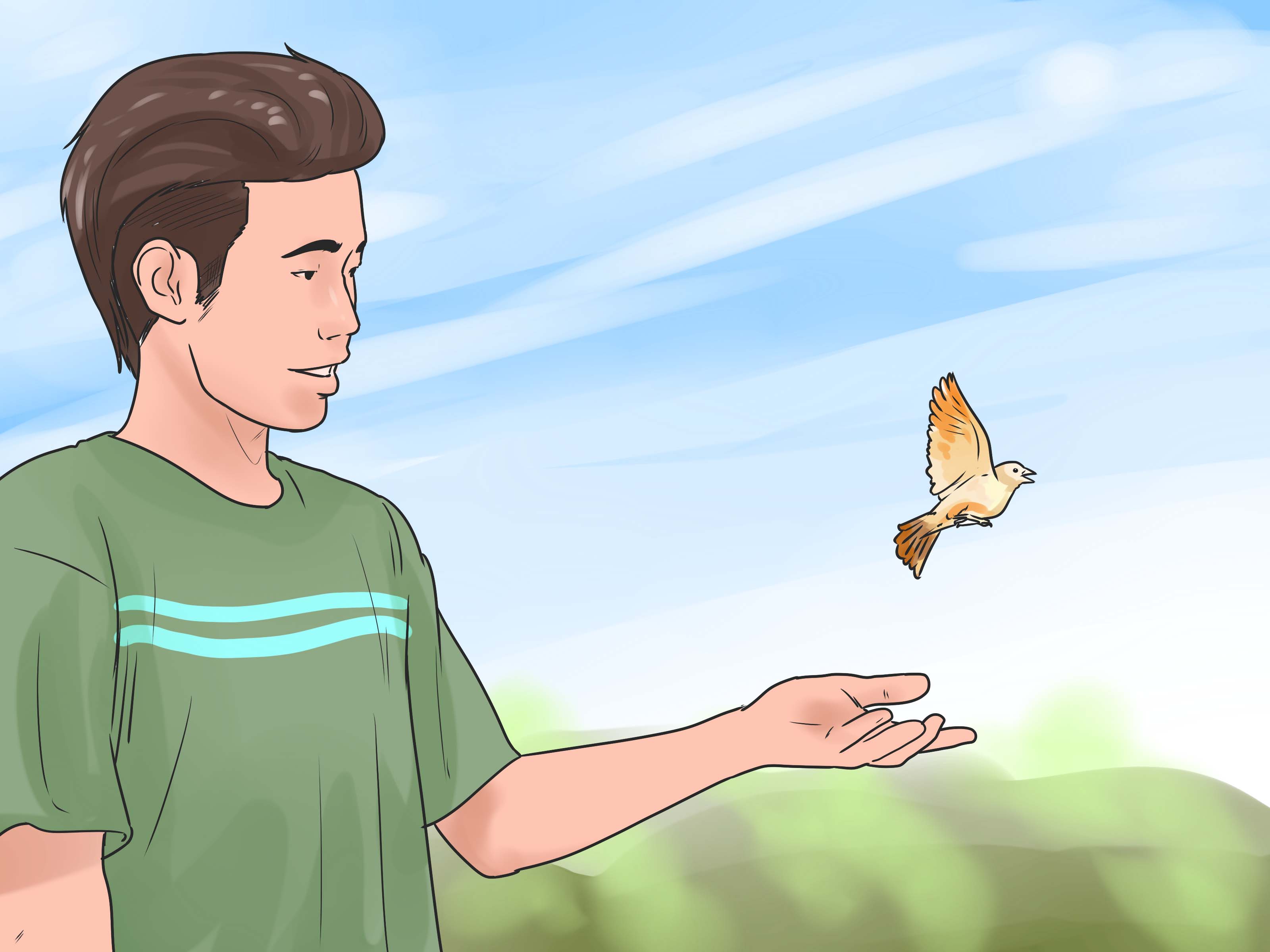
If the fledgling is sitting in the middle of a driveway, sidewalk, bike path, or other high-risk spot, you can gently move it a short distance to a safer nearby location. A low branch, shaded shrub, planter, or protected patch of ground within hearing distance of where you found it is usually best.
Do not carry it across the yard, into your house, or to a completely different block. Parent birds find and feed their young by location and sound. Move the fledgling a little for safety, not a lot for convenience.
If you are dealing with a nestling rather than a fledgling, placing it back in the nest is appropriate if you can do so safely. The old myth that birds will reject a baby because a human touched it is just that: a myth. Birds do not run a forensic scent lab.
Reduce the danger zone
One of the best forms of fledgling care is crowd control. Bring cats indoors. Keep dogs leashed and away from the area. Ask kids to give the bird some space. Postpone the lawn mowing, leaf blowing, hedge trimming, and any other activity that sounds like a tiny construction site.
Young birds are especially vulnerable during the first days out of the nest. A safer yard can be the difference between a fledgling that learns to fly and one that never gets the chance. This is the moment to be less “hands-on rescuer” and more “calm property manager.”
If the bird is injured, contain it briefly and gently
If the fledgling is hurt or truly orphaned, place it in a small ventilated box lined with soft paper towels or a clean cloth. Keep it warm, dark, and quiet. Do not let children handle it, do not cuddle it, and absolutely do not parade it around like a surprise guest.
Stress is dangerous for wild birds. Quiet containment is temporary first aid, not long-term care. Keep the box indoors away from pets, noise, and direct sun while you contact a licensed rehabilitator. Less handling is better. Wild birds are not comforted by affection the way domestic pets may be. To them, giant mammals with good intentions are still giant mammals.
Way 3: Get Professional Help When the Parent Really Is Gone
If the parent bird does not return, the fledgling is clearly compromised, or you know the adult birds are dead, professional help matters. Wildlife rehabilitation is a specialized skill, and in many cases it is regulated by law.
Call a licensed wildlife rehabilitator
The best option for an abandoned fledgling is a licensed wildlife rehabilitator, wildlife veterinarian, or approved bird rescue organization. These experts know species-specific diets, hydration methods, developmental stages, stress management, and release protocols. That is a lot more helpful than advice from a random social media comment that begins with, “My cousin raised a sparrow once.”
When you call, be ready to explain what the bird looks like, where you found it, how long it has been there, whether it is feathered, whether it can stand or hop, and whether it has visible injuries. Mention any cat or dog contact immediately. That detail changes the urgency.
Do not feed or give water unless instructed
This is the part people hate hearing because it feels passive. But feeding a baby bird the wrong food or giving water the wrong way can do real harm. Young birds can aspirate fluid into their lungs, choke, or suffer digestive problems from improper food. Bread, milk, kitchen scraps, seed mixes, and improvised droppers are not a magic fix.
Unless a rehabilitator gives you direct instructions, skip the feeding experiment. Your job is safe transfer, not backyard avian medicine.
Do not keep the bird as a pet
Even when your heart is in the right place, raising a wild baby bird at home is usually a bad plan. Most native wild birds need specialized care and social development from their own kind. They also may be protected under federal and state laws, which means private possession is often not allowed without permits.
A fledgling that survives human care but never learns normal bird behavior faces a rough future. Wild birds need to recognize predators, forage naturally, navigate habitat, and interact with their own species. Love alone is not a substitute for that skill set.
Common Mistakes People Make With a Fledgling
Mistake 1: Assuming “on the ground” means “abandoned”
Not true. Healthy fledglings spend time on the ground or in low vegetation while learning to fly and while still being fed by parents.
Mistake 2: Bringing the bird indoors too quickly
If the bird is healthy, removing it from the area can separate it from active parental care. That often lowers its odds instead of improving them.
Mistake 3: Offering food and water right away
This is one of the most common errors in baby bird rescue. Well-meaning feeding attempts can injure or kill a young bird.
Mistake 4: Keeping pets outside near the fledgling
Even a curious sniff from a cat or dog can become a medical emergency. Give the bird space and keep the area calm.
Mistake 5: Waiting too long with an injured bird
A healthy fledgling should usually be left with its parents. An injured or cold bird, however, needs help fast. Knowing the difference is the whole game.
Real-Life Experiences and Lessons From Fledgling Season
Every spring and summer, people across the United States have the same story: they find a small bird under a tree, panic slightly, open seventeen browser tabs, and begin wondering whether they have been chosen by destiny. In most cases, the best outcome happens when the finder slows down and watches before acting.
One common experience is the “parking lot rescue.” A person sees a feathered young robin or sparrow in a bad spot, gently moves it to a nearby shrub, keeps the dog inside for the afternoon, and then notices an adult bird returning with food later on. What felt like abandonment at first turns out to be a normal feeding routine interrupted by human traffic. The lesson is simple: location matters. A small move for safety can help, while a large move can accidentally break the connection between parent and chick.
Another frequent scenario happens in backyards with outdoor cats. Someone discovers a fledgling hiding under a bush and realizes the yard is much more dangerous than it looked. Families who bring cats indoors during fledgling season often report seeing parent birds continue caring for their young over the next several days. It is not glamorous advice, but it works. Sometimes bird care looks less like heroic rescue and more like temporarily canceling your cat’s patio privileges.
There are also cases where intervention really is necessary. People sometimes find a young bird sitting still in the rain, cold to the touch, or lying on its side after colliding with a structure or after cat contact. In those situations, getting the bird into a quiet box and contacting a wildlife rehabilitator quickly can make all the difference. Many rehabilitators say the most helpful callers are not the ones who guessed perfectly. They are the ones who observed carefully, handled the bird minimally, and reported the facts clearly.
A lot of finders also feel guilty after touching a baby bird because they have heard the old claim that the parents will reject it. That myth has caused more hesitation than it deserves. In real-world situations, people who gently return a nestling to a nest or move a healthy fledgling a short distance out of danger are not ruining its chances. Often, they are improving them. The key is to interfere only as much as needed and no more.
One of the most useful lessons from wildlife rescue stories is that “mother gone” is not always a simple diagnosis. Sometimes the male parent is still feeding the young. Sometimes the adults are staying hidden because humans are too close. Sometimes a fledgling is meant to be alone briefly while a parent feeds a sibling nearby. Bird families do not perform for an audience. Their care can look invisible until you step back.
People who have the best experiences helping fledglings usually follow the same pattern: they identify the bird’s age as best they can, reduce immediate danger, avoid feeding, and call a professional when something is clearly wrong. That combination of patience and action is what saves birds. Not panic. Not guesswork. Not a shoebox nursery with a side of breadcrumbs.
So if you ever find yourself worrying over a tiny feathered teenager in your yard, remember this: good fledgling care is mostly about protecting the bird’s chance to stay wild. Sometimes that means doing very little. Sometimes it means making one careful move. And sometimes it means handing the job over to someone with permits, training, and a lot more experience than your search history.
Conclusion
If you find a fledgling and think the mom left, do not let panic make the first decision. Start by checking whether the bird is actually a fledgling, because many young birds on the ground are exactly where they should be. Then protect the area, move the bird only if it is in immediate danger, and watch from a distance for signs of parental care. If the bird is injured, cold, attacked by a pet, or truly orphaned, contact a licensed wildlife rehabilitator right away.
The best care for a fledgling is not always dramatic. Often, it is calm observation, gentle protection, and knowing when to call in the pros. That may not make you the star of a wildlife movie, but it does make you very usefuland the bird would probably vote for that.