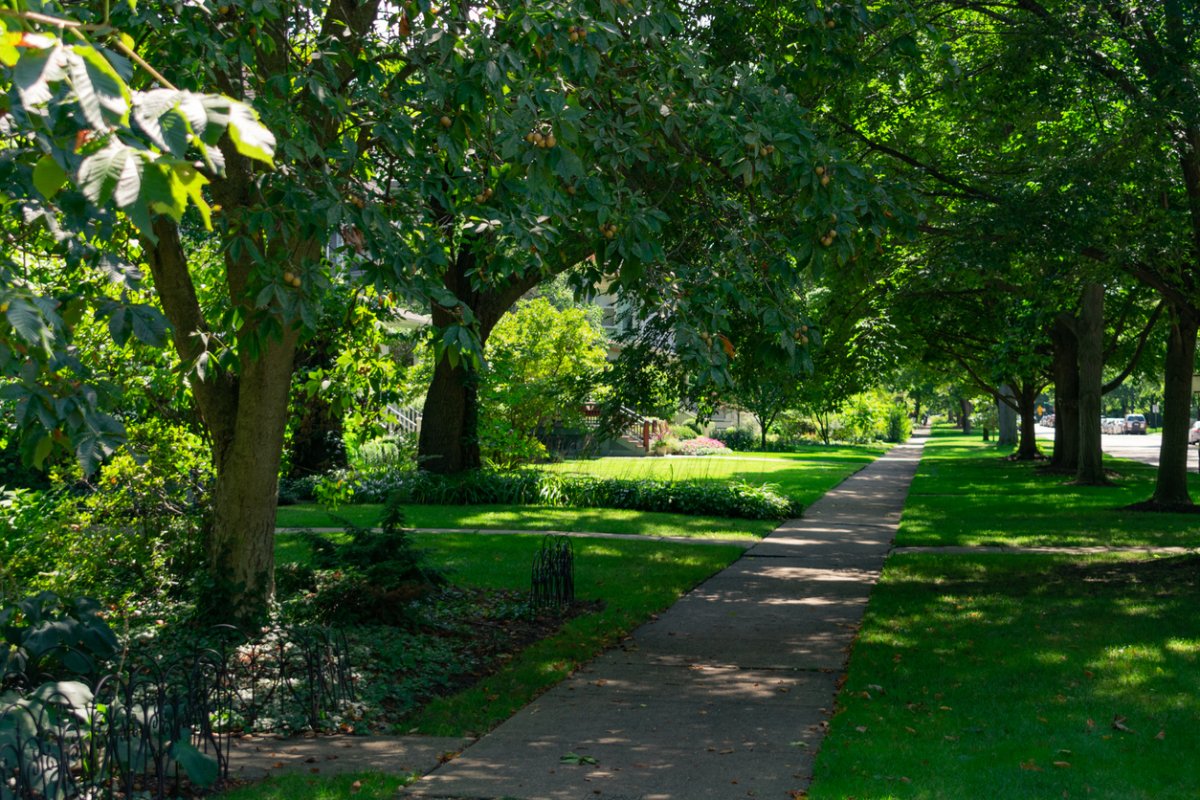
A young shade tree can feel like a tiny green promise planted beside a very sunny patio. Unfortunately, promises do not block afternoon heat. You need branches, leaves, and a canopy broad enough to prevent your lawn chairs from becoming outdoor frying pans.
Fast-growing shade trees can transform an exposed yard sooner than slower species, but speed should never be the only qualification. Mature size, soil drainage, climate, root behavior, storm resistance, and maintenance requirements matter just as much. A tree that grows rapidly into the power lines is not a landscaping success; it is an expensive appointment with a chainsaw.
The following trees include adaptable maples, durable oaks, moisture-loving species, urban survivors, and a few extremely fast growers that require careful placement. Hardiness zones and mature dimensions vary among cultivars, so use this guide as a starting point and confirm local recommendations before planting.
How to Choose a Fast-Growing Shade Tree
Begin by looking up your USDA hardiness zone, then evaluate the planting site rather than choosing the prettiest tree at the garden center. Measure the available space, check how quickly the soil drains, and identify nearby sidewalks, foundations, septic systems, overhead wires, and underground utilities.
Think in terms of mature size. A 6-foot nursery tree may eventually become a 70-foot neighborhood landmark. Large shade trees need substantial room for both their crowns and roots. Planting a giant species in a narrow strip between a driveway and sidewalk is like buying a Great Dane for a studio apartment: everyone will eventually have questions.
Diversity is also important. Planting many trees from the same species, genus, or family can make an entire neighborhood vulnerable to one pest or disease. Iowa State University Extension recommends the widely used 10-20-30 guideline: no more than 10 percent of a community’s trees from one species, 20 percent from one genus, or 30 percent from one family.
Colorful and Adaptable Fast-Growing Shade Trees
1. Red Maple
Red maple (Acer rubrum) is popular because it combines relatively fast growth with broad adaptability and excellent fall color. Depending on the cultivar, mature trees commonly reach 40 to 70 feet. It tolerates moist soil better than many maples, although branch strength, heat tolerance, and fall color can differ considerably among named selections.
2. Freeman Maple
Freeman maple (Acer × freemanii) is a hybrid of red maple and silver maple. Cultivars such as Autumn Blaze are prized for quick growth, an upright canopy, and bright red-orange foliage. Choose a cultivar with strong branch structure, and begin corrective pruning while the tree is young rather than waiting until its limbs are hanging over the roof.
3. Silver Maple
Silver maple (Acer saccharinum) grows rapidly and tolerates wet ground, compacted soil, and periodic flooding. It can produce shade in a hurry, but its shallow roots, weak wood, storm damage, and large mature size make placement critical. Keep it well away from pavement, buildings, drains, and utility lines.
4. River Birch
River birch (Betula nigra) offers fast growth, airy shade, yellow fall foliage, and peeling cinnamon-colored bark. It performs best in moist, acidic soil and is more resistant to bronze birch borer than several other birches. It dislikes severe drought, so dry inland sites may require supplemental irrigation and a generous mulch ring.
5. Northern Catalpa
Northern catalpa (Catalpa speciosa) is not a shy tree. It produces enormous heart-shaped leaves, showy white flowers, and long seedpods that resemble oversized green beans. It can grow quickly in a range of soils and create dense shade, but the flowers, leaves, twigs, and pods generate noticeable litter. Plant it where a little botanical confetti will not cause household negotiations.
6. Tulip Tree
Tulip tree, also called tulip poplar (Liriodendron tulipifera), is a towering eastern native with tulip-shaped leaves and yellow-green spring flowers. It grows best in deep, moist, well-drained soil and needs a large property. Fast juvenile growth can be accompanied by storm-sensitive wood, so avoid planting it close to structures or heavily used outdoor areas.
Large Trees That Can Shade an Expansive Yard
7. American Sycamore
American sycamore (Platanus occidentalis) is a massive, fast-growing native recognized by its patchwork white, tan, and gray bark. It thrives in moist soil and can become wider than some suburban lots. Give it substantial clearance from foundations and pavement, and expect leaves, bark flakes, twigs, and seed balls beneath the canopy.
8. London Plane Tree
London plane tree (Platanus × acerifolia) combines a broad canopy with tolerance for pollution, compacted urban soil, and challenging street conditions. Its mottled bark adds winter interest. It is still a very large tree, however, and should be reserved for spacious yards where roots, falling leaves, and an expanding crown will not overwhelm the landscape.
9. Pin Oak
Pin oak (Quercus palustris) is among the faster-growing red oaks. Its pyramidal form gradually develops into a broad shade canopy, and its leaves often turn deep red or bronze in fall. It prefers acidic soil and may develop iron chlorosis in alkaline ground, resulting in pale leaves with dark green veins. Test the soil before purchasing one.
10. Nuttall Oak
Nuttall oak (Quercus texana) is an excellent southern and south-central shade tree, especially for low areas with moist or poorly drained soil. It develops a large rounded crown and attractive red-orange fall color. Once established, it generally grows faster than many traditional oaks while still offering the longevity and wildlife value homeowners expect from the genus.
11. Shumard Oak
Shumard oak (Quercus shumardii) is a large red oak suited to warm regions and spacious yards. It tolerates heat, urban conditions, and a broader range of soil than pin oak. The crown becomes wide and rounded, producing substantial summer shade and red to reddish-brown fall color when climate and growing conditions cooperate.
12. Willow Oak
Willow oak (Quercus phellos) has narrow leaves that look more like willow foliage than stereotypical oak leaves. It grows into a fine-textured, rounded shade tree and is commonly used along streets, in parks, and across large lawns. It performs best in full sun with moist, acidic soil and ample room for its mature canopy.
13. Bur Oak
Bur oak (Quercus macrocarpa) is not the fastest tree in this list, but it grows reasonably quickly under good conditions and is far more durable than many botanical speed demons. It tolerates heat, drought, pollution, and difficult soils. Its massive crown and deeply furrowed bark make it a superb legacy tree for a large property.
Tough Shade Trees for Urban and Suburban Conditions
14. Thornless Honeylocust
Thornless honeylocust (Gleditsia triacanthos var. inermis) produces light, filtered shade rather than a dark ceiling of foliage. Grass and many garden plants can grow beneath its delicate leaves. It tolerates drought, road salt, and varied soils, but choose a thornless, low-pod or seedless cultivar and avoid overusing it where honeylocust is already common.
15. Common Hackberry
Common hackberry (Celtis occidentalis) is a durable native tree that tolerates wind, drought, alkaline soil, pollution, and urban stress. Its canopy provides dependable shade, while its small fruits feed birds. Cosmetic leaf galls are common and can look alarming, but they rarely threaten an otherwise healthy tree.
16. Disease-Resistant American Elm
Modern American elm (Ulmus americana) cultivars selected for Dutch elm disease resistance can recreate the high, arching canopy that once shaded countless American streets. Growth can be fast, but cultivar selection matters. Purchase from a reputable nursery, confirm documented disease resistance, and provide structural pruning during the tree’s early years.
17. Lacebark Elm
Lacebark elm (Ulmus parvifolia) is valued for its adaptable nature, graceful canopy, and mottled exfoliating bark. It typically grows at a moderate to moderately fast pace. Because the species has escaped cultivation in some regions and may be considered invasive locally, check state and county guidance before planting it.
18. Japanese Zelkova
Japanese zelkova (Zelkova serrata) develops a vase-shaped crown resembling an elm and grows relatively quickly while young. It tolerates urban conditions and can make an attractive lawn or street tree. Proper training is essential because crowded branches and narrow attachment angles can create structural weaknesses if formative pruning is ignored.
Fast-Growing Trees for Moist or Wet Sites
19. Bald Cypress
Bald cypress (Taxodium distichum) is a deciduous conifer that turns rusty orange before dropping its soft needles. Although famous for growing in swamps, it adapts surprisingly well to average residential soil once established. It tolerates flooding, clay, heat, and wind, making it a strong candidate for rain gardens or low areas.
20. Dawn Redwood
Dawn redwood (Metasequoia glyptostroboides) is another deciduous conifer, with feathery green foliage and reddish-brown bark. It grows rapidly in moist, well-drained soil and develops a tall pyramidal form. Its mature height makes it unsuitable beneath power lines, but it can become a dramatic shade and specimen tree on a generous lot.
21. Hybrid Poplar
Hybrid poplar earns a place on nearly every list of extremely fast-growing trees. It can quickly create shade or temporarily shelter slower-growing trees. The trade-off is a comparatively short useful life, aggressive roots, weak wood, and occasional limb breakage. Treat it as a strategic tree for an open area, not a permanent centerpiece beside your house.
22. Weeping Willow
Weeping willow (Salix babylonica) grows quickly into a broad, graceful tree with cascading branches. It is best planted near ponds or in large, consistently moist areas where its roots have room to roam. Keep it far from sewer lines, septic fields, foundations, patios, and small yards. It is beautiful, but subtle it is not.
How to Help a Shade Tree Grow Faster Without Harming It
The fastest-growing species will still struggle when planted too deeply, buried under mulch, or abandoned during drought. Dig a hole no deeper than the root ball and considerably wider, then position the root flare at or slightly above the surrounding grade. Backfill primarily with the existing soil so roots are encouraged to expand beyond the original hole.
Apply a broad layer of organic mulch, generally 2 to 4 inches deep, but leave several inches of bare space around the trunk. The familiar “mulch volcano” traps moisture against bark, hides root problems, and creates excellent housing for rodents. Trees prefer mulch shaped like a doughnut, not a chocolate fountain.
Water according to soil moisture rather than a rigid calendar. The first three years are especially important for establishment. Check the soil several inches below the surface, water when it is becoming dry, and avoid keeping the root zone saturated. Too much water can deprive roots of oxygen just as too little water can cause drought stress.
Do not force growth with excessive nitrogen fertilizer. Rapid, soft growth can be more vulnerable to breakage, pests, and winter injury. Correct structural problems early, remove broken branches, and avoid topping. Topping creates poorly attached shoots and can make a tree more hazardous rather than safely shorter.
Experience-Based Lessons From Fast-Growing Shade Tree Projects
The most successful shade-tree projects usually begin with a less exciting activity than planting: standing in the yard and watching the sun. Morning shade may feel pleasant, but western afternoon exposure is often what turns a deck, wall, or living room into an oven. A tree placed to intercept that low afternoon sun can be more useful than a larger tree planted wherever an empty patch of lawn happened to be available.
One common suburban scenario involves a homeowner choosing the largest, fastest tree at a nursery, planting it close to the patio, and enjoying several years of excellent shade. Then the roots lift the edging, branches scrape the gutters, and leaves fill the outdoor furniture. The tree did exactly what its genetics instructed it to do. The planning failed because nobody translated “mature spread: 50 feet” into the reality of branches extending roughly 25 feet in every direction.
A better experience comes from matching the tree’s personality to the site. River birch works beautifully in a damp corner where other trees struggle, but it may look tired and drop leaves during a hot drought. Thornless honeylocust is useful above a lawn or perennial bed because its filtered shade allows more light to reach the ground. A bur oak takes longer to become impressive, yet it can outlive several generations of quicker, weaker trees. Hybrid poplar produces speed almost immediately, but it is best viewed as temporary infrastructure rather than a family heirloom.
Another practical lesson is that smaller nursery trees often establish faster than oversized specimens. A large transplanted tree creates instant visual impact, but much of its root system was removed during digging. A younger tree is less dramatic on installation day, yet it may recover faster, extend roots into surrounding soil sooner, and eventually catch up. Buying the biggest trunk available is not always the botanical shortcut it appears to be.
Watering habits also separate thriving trees from expensive sticks. New trees need deep, consistent moisture across the developing root zone. Briefly spraying the trunk with a hose accomplishes little. On the other hand, continuously saturated soil can suffocate roots. Homeowners who physically check the soil before watering generally make better decisions than those following an automatic schedule regardless of rainfall.
Mulch provides another highly visible lesson. A broad, flat mulch ring reduces competition from grass, protects the trunk from lawn equipment, and slows moisture loss. Piling mulch against the bark does the opposite. Over time, the buried trunk may remain damp, develop decay, or produce poorly positioned roots. The easiest way to improve many young trees is simply to pull excess mulch away until the natural root flare becomes visible.
Finally, patience still matters even when the label says “fast-growing.” During the first season, a healthy tree may devote more energy to root establishment than spectacular top growth. That is not laziness; it is construction. Once the root system expands, canopy growth often accelerates. Give the tree enough space, water it intelligently, prune for sound structure, and resist the temptation to fertilize it into a leafy panic. Fast shade is useful, but healthy shade is the real goal.
Conclusion
The best fast-growing shade tree is not automatically the species that adds the most height each year. It is the tree that grows quickly enough to meet your goals while fitting your climate, soil, available space, and tolerance for maintenance.
Red maple, Freeman maple, river birch, honeylocust, disease-resistant elm, and several faster-growing oaks can provide a useful balance of speed and durability. Sycamore, tulip tree, willow, silver maple, and hybrid poplar can also deliver dramatic results, but only where their roots, mature size, litter, and structural limitations will not create expensive problems.
Choose carefully, plant at the correct depth, protect the root zone, and water consistently during establishment. Your reward will be a cooler yard, a more inviting outdoor space, and a living feature that becomes more valuable with every season.