Note: This original article is written for web publication, based on documented medieval legal history, Christian hagiographic traditions, and historical scholarship. It contains no source-link placeholders or citation markers inside the publishable HTML.
History is full of strange courtroom scenes, but few are as delightfully baffling as the moments when Christian authorities, bishops, priests, monks, and church courts found themselves dealing with animals as if the barnyard had wandered into canon law class. In medieval and early modern Europe, animals were not merely background characters in human life. They worked fields, guarded homes, spoiled harvests, carried goods, supplied food, and occasionally caused chaos. When that chaos became expensive, frightening, or theologically confusing, people sometimes turned to the Church.
That is how Europe ended up with rats being summoned to court, insects receiving legal warnings, bees being condemned, leeches being ordered to relocate, and saints negotiating with wolves as if running a very intense village homeowners’ meeting. To modern readers, these stories sound like lost episodes of a medieval comedy. Yet to the people involved, they reflected serious concerns about sin, divine order, public safety, agriculture, and the relationship between humans and God’s creation.
The Christian Church did not always “fight” animals in the same way. Sometimes the Church tried to punish them. Sometimes it tried to banish them. Sometimes it interpreted pests as a sign that humans needed repentance more than pesticides. And sometimes, in the stories of saints, animals became symbols of peace, obedience, temptation, or moral instruction. Here are ten unforgettable times the Christian Church took on the animal kingdomand somehow made the courtroom, the farm, and the pulpit part of the same strange drama.
Why Did Church Courts Deal With Animals?
To understand medieval animal trials, we need to step into a world where law, religion, agriculture, and daily survival were woven tightly together. A swarm of insects could threaten a harvest. A rat infestation could mean hunger. A dangerous pig roaming through town could become a public crisis. In a society where Church authority shaped moral life, people often looked to bishops and priests not only for spiritual help but also for practical protection.
Animal trials generally fell into two broad categories. Domestic animals, such as pigs, dogs, horses, and cattle, were often handled by secular courts when they harmed people. Wild animals, insects, rodents, and crop-destroying pests were more likely to appear in ecclesiastical proceedings. These cases could involve prayers, curses, exorcisms, formal summonses, or threats of anathema. In other words, the Church was sometimes asked to do what medieval farming tools could not: convince bugs to leave.
1. The Bees Condemned at Worms
One of the earliest and strangest examples comes from Worms, Germany, in the ninth century. According to later historical accounts, a church council ruled that a hive of bees responsible for a fatal sting should be destroyed. The concern was not only that the bees had caused death, but that honey produced afterward might be spiritually polluted or connected with evil.
Today, this sounds like blaming the toaster for burning breakfast and then calling a theologian. But in a medieval worldview, the natural and supernatural were not neatly separated. Food, death, sin, and ritual purity could all overlap. Bees were valuable, especially for wax used in church candles, but they were not beyond judgment when tragedy struck.
This case reveals an important theme: the Church often responded to animals not merely as biological creatures, but as part of a moral universe. A bee sting was not just a bee sting; it raised questions about danger, divine order, and whether humans had to cleanse the community of a tainted thing.
2. The Leeches of Lake Geneva
In the fifteenth century, Lake Geneva reportedly had a leech problem serious enough to attract the attention of William of Saluces, Bishop of Lausanne. The leeches were accused of harming fish stocks, especially valuable fish that local people depended on. Instead of simply shrugging and saying, “Well, nature is nature,” the bishop treated the situation as a legal and spiritual matter.
The leeches were said to have been formally addressed and ordered to withdraw to a specific part of the lake. In some versions of the story, representatives of the offending leeches were brought before authorities so the process could follow proper legal form. Medieval law loved procedure, even when the defendants were small, slippery, and unlikely to appreciate due process.
The episode is funny, but it also shows how seriously communities took ecological disruption. A lake was not just scenery. It was food, trade, livelihood, and local identity. When nature seemed out of balance, the Church was expected to help restore ordereven if that meant issuing instructions to creatures with no interest in paperwork.
3. The Crop-Destroying Insects of Bern
In 1478, farmers near Bern, Switzerland, faced a destructive insect infestation. The pests were accused of damaging crops, and the matter was brought before ecclesiastical authority connected with the Bishop of Lausanne. The insects were reportedly given a deadline to leave, with warnings delivered in formal religious language.
This was not just theater. For a farming community, a ruined harvest could mean debt, hunger, or disaster. The Church’s involvement gave frightened villagers a sense that the crisis had meaning and that official action was being taken. It also placed the problem within a spiritual framework: perhaps the pests were punishment, perhaps a test, or perhaps simply disorder that needed correction.
From an SEO-friendly angle, this is one of the most vivid examples of medieval animal trials because it captures the odd blend of law, faith, and agriculture. The bugs were not merely bugs. They became defendants in a cosmic courtroom where human survival, divine permission, and legal custom all buzzed around together.
4. The Rats of Autun and the Lawyer Who Outsmarted the Court
The famous rats of Autun, France, may be the greatest legal no-show in animal history. In the early sixteenth century, rats were accused of destroying barley crops in Burgundy. The case went before an ecclesiastical court, and a French lawyer, Bartholomew Chassenée, became associated with the defense of the rodents.
According to the well-known account, Chassenée argued that the rats could not be expected to appear in court unless they were properly summoned throughout the region. When they still failed to arrive, he offered another argument: the journey was dangerous because cats might attack them on the way. Therefore, their absence was understandable. Somewhere in legal history, one imagines a clerk putting down his quill and whispering, “Honestly, fair point.”
The Autun case matters because it demonstrates that animal trials were not always sloppy superstition. They could imitate serious legal procedure. The rats had representation. The summons mattered. The dangers of travel were considered. It was absurd, yes, but it was absurd with paperwork.
5. The Weevils of Saint-Julien
Few church-versus-insect battles are as famous as the weevil cases of Saint-Julien in the French Alps. In 1545, grape growers complained that weevils were damaging their vineyards. Religious authorities responded with prayers and instructions for repentance, suggesting that the pests might be connected to the moral state of the community.
Decades later, in 1587, the weevils returned, apparently having missed the memo. This time, the case became more elaborate. Lawyers argued about whether the insects had a God-given right to food. After all, if God created animals before humans, could humans simply evict them from creation’s buffet? The prosecution answered that human beings had dominion over animals and that vineyards mattered to the community’s survival.
The case is fascinating because it was not only about bugs. It was about theology, property, ecology, and human entitlement. The weevils forced people to ask an uncomfortable question: when nature conflicts with human plans, does faith automatically side with the humans?
6. The Church and the “Vermin Trial” Tradition
Across parts of France, Switzerland, Germany, and Italy, ecclesiastical courts sometimes handled cases involving mice, caterpillars, beetles, flies, slugs, and other pests. These cases are often grouped under the label “vermin trials.” Unlike a single pig accused of harming a person, these proceedings usually targeted entire populations of animals that damaged crops or invaded homes.
The Church’s role in these trials was complicated. On one hand, clergy might denounce pests, order public prayers, or threaten spiritual penalties. On the other hand, some theologians and legal thinkers questioned whether creatures that were not baptized members of the Church could truly be excommunicated. That is a sharp point, and frankly, the worms had a better jurisdictional defense than many human defendants.
These vermin trials show medieval society wrestling with responsibility. Were pests acting naturally? Were they instruments of divine punishment? Were humans being tested? Or were local officials simply trying to calm terrified farmers with the tools they hadlaw, ritual, and a very serious tone of voice?
7. Saint Francis and the Wolf of Gubbio
Not every Christian encounter with the animal kingdom involved punishment. The story of Saint Francis of Assisi and the Wolf of Gubbio is one of the most beloved examples of a saint confronting an animal through peace rather than force. According to Franciscan tradition, a wolf had terrified the people of Gubbio. Francis approached the animal, spoke to it, and arranged a kind of truce: the wolf would stop threatening the town, and the people would feed it.
Whether read as literal miracle, moral legend, or spiritual teaching, the story flips the usual script. Instead of condemning the animal as evil, Francis treats it as a creature capable of reconciliation. The wolf becomes not merely a threat but a participant in restored community.
This tale remains powerful because it offers a different model of Christian authority over nature. The Church, represented by a saint, does not simply crush the beast. It brokers peace. The result is less courtroom drama and more medieval conflict resolution with fur.
8. Saint Patrick and the Snakes of Ireland
The legend of Saint Patrick driving snakes out of Ireland is one of the most famous animal stories in Christian tradition. Historically, scientists note that Ireland likely did not have native snakes after the last Ice Age. So Patrick probably did not conduct a reptile-removal campaign with a bishop’s staff and a travel permit.
Still, the legend became deeply meaningful. The snakes are often interpreted symbolically, representing paganism, evil, danger, or spiritual opposition. In that sense, the animal kingdom becomes a language for religious transformation. Patrick’s victory over snakes is not really about zoology; it is about the triumph of Christianity in the Irish imagination.
The story endures because it is memorable, visual, and wonderfully simple. A saint arrives, the snakes leave, and Ireland becomes part of Christian storytelling forever. As history, it is shaky. As legend, it is marketing genius.
9. Saint Cuthbert and the Protected Birds of Farne
Saint Cuthbert, associated with Lindisfarne and the Farne Islands, became linked with seabirds, especially eider ducks, sometimes called “Cuddy ducks” in his honor. Later medieval traditions described Cuthbert as protective toward birds nesting near the monastic community. Rather than taking on animals as enemies, this story presents a churchman defending them.
This matters because Christian history is not only full of curses, trials, and condemnations. It also includes early traditions of care for animals and habitats connected to holy places. Monks living near wild birds had to share space with them. The result was a kind of sacred ecology, where animals near a saint’s island could be seen as part of the spiritual landscape.
For modern readers interested in Christianity and animals, Cuthbert’s birds offer a refreshing counterpoint. The Church did not always drag animals into court. Sometimes it gave them sanctuary, or at least a holy reputation strong enough to make people think twice before bothering them.
10. The Church’s Long Argument With Cats
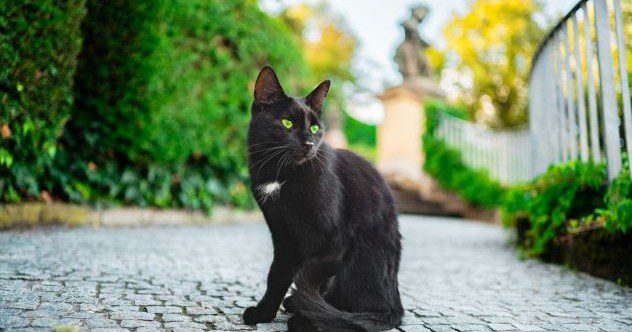
No list about Christianity and animals would be complete without cats, the internet’s favorite tiny landlords. Medieval Europe had complicated attitudes toward cats. They were useful for controlling rodents, but they were also linked in folklore with witchcraft, darkness, and the uncanny. The papal document Vox in Rama, issued under Pope Gregory IX in the thirteenth century, described alleged heretical rituals involving a demonic black cat figure.
It is important to be careful here. Modern myths often claim that the Church ordered a continent-wide extermination of cats and thereby caused the Black Death. That claim is widely disputed and oversimplified. The actual history is messier: cats appeared in anti-heresy imagery, local superstitions, and later witchcraft fears, but the sweeping “war on cats” story should not be repeated as fact.
Still, the cat’s place in Christian Europe shows how animals could become symbols in religious fear. The animal itself might be ordinary, even helpful. But once imagination, rumor, and theology got involved, a house cat could become a character in a spiritual drama it never auditioned for.
What These Stories Reveal About Faith, Fear, and Control
The Christian Church’s encounters with animals were not random acts of medieval weirdness. They reveal how people tried to make sense of a world that often felt unstable. Disease, crop failure, animal attacks, and famine were not abstract problems. They were immediate threats. When ordinary solutions failed, communities reached for extraordinary ones.
Church courts, blessings, curses, prayers, and saintly legends gave people a framework for action. Even when the action looks strange today, it served a purpose. It reassured communities that someone was responsible, that disorder could be named, and that creation still operated within divine oversight.
At the same time, these stories raise surprisingly modern questions. Do animals have moral responsibility? Can human legal systems represent nonhuman interests fairly? What happens when animals harm human property simply by living according to their nature? Are humans stewards of creation or merely its loudest litigants?
Medieval animal trials may look ridiculous, but they expose tensions we still recognize. Farmers still fight pests. Cities still debate how to manage rats, pigeons, coyotes, feral cats, and invasive species. Religious communities still discuss animal welfare, creation care, and human responsibility. The old courtrooms are gone, but the argument continues.
Experiences and Reflections: Reading These Stories Today
Spending time with stories about the Christian Church and the animal kingdom is a strangely humbling experience. At first, the details invite laughter. Rats with lawyers? Weevils with legal rights? Leeches being ordered to move to another part of a lake? It sounds like a medieval sitcom written by someone who had never met either a judge or a beetle. But after the first laugh, the stories begin to feel less silly and more revealing.
One experience many readers share is the surprise of recognizing human anxiety behind the absurdity. The farmers of Saint-Julien were not staging insect theater because they were bored. Their vineyards mattered. A failed crop could damage an entire village economy. The people of Autun were not amused by rats in the barley. They were worried about food. The communities that appealed to bishops were often asking for help in the only language of authority that made sense to them.
Another experience is realizing how much medieval people cared about order. Modern readers often assume the past was chaotic, but these animal proceedings show the opposite impulse. People wanted rules. They wanted summonses, arguments, advocates, and judgments. Even when the defendant was a swarm of insects, the structure mattered. The law created a public ritual where fear could be managed. The Church added spiritual weight to that ritual, giving people the comfort that the crisis had been acknowledged before God and community.
There is also something oddly moving about the contrast between punishment and compassion. The same broad Christian tradition that imagined pests as subjects of curses also preserved stories of saints protecting birds, taming wolves, and treating animals as fellow creatures. Saint Francis and the Wolf of Gubbio remains popular because it offers a hopeful alternative. Instead of asking, “How do we defeat this animal?” the story asks, “How do we live together without destroying each other?” That question feels very current.
For writers, teachers, and curious readers, these episodes are valuable because they make history memorable. They open doors into medieval law, theology, farming, folklore, environmental pressure, and everyday life. A student may forget a list of church councils, but they will remember the rats who missed court because cats made travel unsafe. Humor becomes a doorway to serious learning.
The biggest lesson may be that humans have always used animals to talk about ourselves. Bees represented purity and danger. Wolves represented violence and reconciliation. Snakes represented evil or transformation. Cats became screens for fear and superstition. In every case, animals carried meanings humans placed upon them. The animal kingdom became a mirror, and the reflection was not always flattering.
Today, we do not need to excommunicate beetles or summon rats to court. But we still need better ways to think about coexistence, responsibility, and humility. These stories remind us that nature is not a prop in the human story. It pushes back. It eats the crops, nests near the chapel, howls outside the town, and occasionally walks straight into our legal imagination. The medieval Church’s animal encounters may be strange, but they remain unforgettable because they reveal a timeless truth: when humans do not understand nature, we often put it on trial.
Conclusion
The history of the Christian Church and the animal kingdom is far richer than a collection of odd medieval footnotes. It includes fear, faith, law, comedy, ecology, and moral imagination. From bees at Worms to rats at Autun, from weevils in vineyards to the Wolf of Gubbio, these stories show how deeply animals shaped religious and social life.
They also remind us that people in the past were not simply foolish. They were trying to solve real problems with the tools available to them. Their tools happened to include bishops, court clerks, public prayers, legal arguments, and occasionally a very unlucky insect population. The result is one of history’s most fascinating intersections: Christianity, law, and animals meeting in a courtroom where nobody could be completely sure whether the defendant understood Latin.
For modern readers, the value of these stories lies in more than amusement. They invite us to think about how humans assign blame, how communities respond to crisis, and how religious traditions shape our understanding of the natural world. The animal kingdom may no longer be summoned before church courts, but it still challenges human pride. And perhaps that is the final lesson: before we judge the medieval people who put animals on trial, we might ask how often we still treat nature as guilty for refusing to obey us.