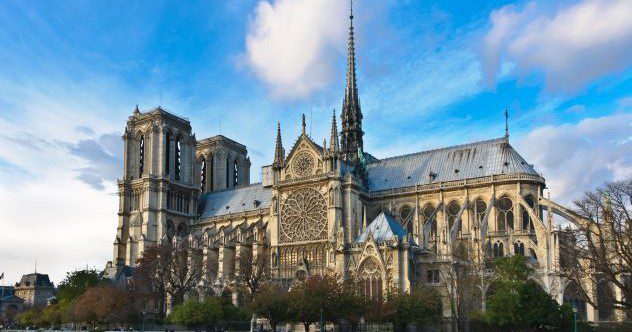
Notre Dame Cathedral is one of those rare places that somehow manages to be both world-famous and still full of surprises. Everyone knows the postcard version: the towers, the stained glass, the fire, the dramatic comeback. But the deeper you go, the more Notre Dame starts to feel less like a static monument and more like a living, slightly stubborn masterpiece that has reinvented itself for centuries.
If you think this Paris icon is just a beautiful old church with good lighting and excellent publicity, think again. Notre Dame is packed with hidden stories, architectural tricks, dramatic close calls, and historical twists that are far stranger than fiction. In fact, some of the cathedral’s most famous features are not what most visitors think they are. Others survived destruction by what can only be described as a miracle with scaffolding.
Here are 10 surprising secrets of Notre Dame Cathedral that reveal why this Gothic giant continues to fascinate historians, architects, travelers, artists, and anyone who enjoys discovering that the most famous landmarks still have a few tricks up their stone sleeves.
Why Notre Dame Still Matters
Before diving into the secrets, it helps to remember what makes Notre Dame Cathedral so powerful in the first place. It is not simply old. Plenty of buildings are old. Notre Dame matters because it sits at the crossroads of religion, politics, architecture, literature, craftsmanship, and memory. It has been shaped by medieval ambition, royal ceremony, revolutionary rage, literary rescue, modern disaster, and historic restoration. In other words, this cathedral has had a busier life than most world capitals.
1. Notre Dame Was Built on Top of Even Older Sacred Ground
One of the most surprising facts about Notre Dame Cathedral is that it did not appear on an empty patch of land like some majestic stone mushroom. The cathedral rose on the site of earlier sacred structures, including older Christian buildings and even earlier religious layers tied to Roman Paris. That means Notre Dame is not just a cathedral. It is a long conversation between civilizations.
This helps explain why the site feels unusually charged, even to people who are not especially religious. Long before the Gothic walls climbed into the Paris sky, the island at the heart of the Seine was already a meaningful center of urban and spiritual life. Notre Dame inherited that legacy and then multiplied it with medieval ambition.
2. Its “Flying” Architecture Was Once Shockingly Modern
Today, flying buttresses are one of the most recognizable features of Gothic architecture. Back when Notre Dame was rising in the 12th and 13th centuries, though, they were daring engineering. Medieval builders were chasing something radical: more height, more light, and more glass without the whole thing politely collapsing into a holy pile of rubble.
That is where the rib vault, pointed arch, and flying buttress came in. These structural innovations shifted weight outward and downward, letting the walls open up for taller windows and a more luminous interior. The result was architectural magic: stone that looked lighter than logic suggested it should. Notre Dame was one of the key places where this Gothic engineering became spectacularly visible.
So yes, the cathedral is ancient. But in its day, it also represented cutting-edge design. Medieval Paris was not just building a church. It was showing off.
3. A Lot of the “Gargoyles” Are Not Actually Gargoyles
This may be the most charmingly nerdy secret of Notre Dame Cathedral: many of the creepy stone creatures people call gargoyles are technically not gargoyles at all. True gargoyles are functional waterspouts. If a carved beast is not channeling rainwater away from the building, it is usually a grotesque or chimera instead.
That means famous figures like Le Stryge, the brooding horned creature that looks as if it has been judging Paris for centuries, are decorative chimeras rather than actual gargoyles. It is a little like discovering that the celebrity everyone calls “doctor” is really just very well dressed.
Even more surprising, many of these beloved monsters are not medieval originals. A large number were designed or reimagined during the 19th-century restoration of the cathedral. So the spooky skyline crew that tourists adore is part medieval spirit, part restoration-era imagination, and one hundred percent memorable.
4. The Spire That Fell in 2019 Was Not Medieval Either
When the world watched Notre Dame burn in April 2019, the collapse of the spire became the defining image of the disaster. Many people assumed that spire had stood there since the Middle Ages. It had not.
The spire destroyed in the fire was a 19th-century creation by architect Eugène Viollet-le-Duc, the same man who led a major restoration of Notre Dame after the building had suffered centuries of damage and neglect. His version was magnificent, dramatic, and deeply influential, but it was still a restoration-era interpretation rather than the untouched medieval original.
That detail changes how we think about authenticity. Notre Dame has never been frozen in time. It has always been revised, repaired, and reimagined. The rebuilt spire continues that tradition, which is both comforting and slightly humbling. Even icons have updates.
5. The Rose Windows Are Older, Stranger, and Tougher Than They Look
The cathedral’s three famous rose windows are among the most beloved features of Notre Dame, and for good reason. They are dazzling feats of color, geometry, symbolism, and spiritual storytelling. But there are two surprising details many readers miss.
They were not all part of the earliest design
The rose windows were later additions to the cathedral’s development. The west rose, the oldest of the three, dates to the early 13th century, and the others followed as the church evolved. In other words, Notre Dame did not spring into existence fully formed. It grew.
They survived the 2019 fire
Despite global panic during the fire, the three great rose windows survived. Protected by the stone vaulting, these fragile-looking masterpieces proved astonishingly resilient. That survival felt almost symbolic: the cathedral’s “eyes” endured even when the roof and spire did not.
And that is the thing about Notre Dame. It often looks delicate right before it reminds you it is built like medieval determination.
6. The French Revolution Almost Unmade the Cathedral
If the 2019 fire was not enough drama for one building, the French Revolution had already put Notre Dame through a brutal identity crisis. Revolutionary mobs targeted the cathedral as a symbol of both monarchy and the Church. Statues on the west facade were beheaded because they were mistaken for French kings, even though they actually represented the biblical Kings of Judah.
That is not a minor misunderstanding. That is an architectural case of “wrong guy, very enthusiastic consequences.”
Notre Dame was plundered, stripped of religious imagery, and even renamed the Temple of Reason. For a time, it became a stage for revolutionary ceremonies rather than Christian worship. Much of the interior was looted. The fact that the cathedral survived at all is remarkable. Its continued existence is less a smooth story of preservation than a record of repeated escapes.
7. Victor Hugo Helped Save the Real Notre Dame
Most people know Victor Hugo because of The Hunchback of Notre-Dame. What many do not realize is that the novel did more than create Quasimodo. It helped rescue the actual cathedral.
By the early 19th century, Notre Dame was in poor condition and no longer fully appreciated as the architectural wonder it was. Hugo’s 1831 novel reignited public fascination with the building and helped fuel a preservation campaign. That wave of renewed attention led to the major restoration led by Viollet-le-Duc and Jean-Baptiste Lassus.
So yes, literature saved architecture. A novel helped preserve a cathedral. This is extremely good news for book lovers and mildly intimidating for anyone who thought reading fiction was not productive.
8. One of Its Most Famous Bells Survived When Others Did Not
Notre Dame’s bells are not background decoration. They are part of the cathedral’s identity, almost like its voice. The most famous of them is Emmanuel, the great bourdon bell, revered for its tone and historical significance.
During the French Revolution, many of the cathedral’s bells were melted down. Emmanuel, however, survived. That makes it more than a musical instrument. It is a survivor with a bronze résumé. Over the centuries, the bell has marked major public moments, from royal and national ceremonies to times of grief and celebration.
This is one of the reasons Notre Dame feels unusually alive in memory. The building has never only been seen. It has also been heard.
9. Notre Dame Had a Digital Twin Before Disaster Struck
Here is a secret that sounds almost futuristic: before the fire, art historian Andrew Tallon created highly detailed laser scans of Notre Dame. His work captured the cathedral with extraordinary precision, documenting the structure in billions of data points.
That scan turned out to be invaluable after the 2019 disaster. It helped experts better understand the building’s geometry, hidden irregularities, and construction logic. It also supported the restoration process by preserving a remarkably accurate record of the cathedral before the blaze.
There is something poetic about this. A medieval building, shaped by hand tools and sacred ambition, found backup support in 21st-century technology. Gothic stone met laser data, and somehow the partnership made perfect sense.
10. The 2019 Fire Was Devastating, But It Was Not the End of the Story
The fire of April 15, 2019, destroyed much of the roof, brought down the spire, and damaged parts of the vaulting. Yet Notre Dame was not lost. Firefighters saved the main structure, the towers, important relics, the rose windows, and the grand organ. Restoration then became one of the most ambitious heritage projects in the world.
By December 2024, Notre Dame reopened to the public, marking a dramatic new chapter in its long life. That reopening did not erase the loss, but it proved something important: the cathedral’s story is not about untouched perfection. It is about endurance.
That may be the biggest secret of all. Notre Dame is not famous because it remained unchanged. It is famous because it kept surviving change.
What These Secrets Reveal About Notre Dame Cathedral
Once you know these hidden stories, Notre Dame becomes more than a beautiful landmark. It becomes a layered human achievement. Its sacred site sits atop older sacred ground. Its architecture records bold experimentation. Its famous monsters are partly restoration inventions. Its bells survived political fury. Its rescue came from both a novelist and a laser scanner. And its near-destruction in 2019 only made its resilience more visible.
That is why the phrase “Notre Dame secrets” is so compelling. The cathedral is not hiding trivia. It is revealing how history really works: through reinvention, argument, artistry, memory, and the occasional astonishing escape.
The Experience of Notre Dame After You Know Its Secrets
Reading about Notre Dame Cathedral is one thing. Standing near it, or even imagining yourself approaching it through the streets of Paris, is something else entirely. Once you know the secrets behind the structure, the whole experience changes. The cathedral stops feeling like a famous backdrop and starts feeling like a living presence with a thousand stories tucked into stone, glass, timber, bronze, and silence.
You notice the towers differently. Instead of just seeing symmetry, you start thinking about centuries of labor, changing plans, and medieval builders trying to push architecture into the future. You look up at the facade and realize that some of what seems ancient is actually the result of restoration, interpretation, and rescue. Suddenly, Notre Dame does not feel frozen in history. It feels active, layered, and gloriously complicated.
The creatures on the exterior become more fascinating too. A casual visitor might smile, snap a photo, and move on. But once you know the difference between gargoyles and chimeras, the cathedral starts playing a little game with you. Which figures drain water? Which ones are decorative? Which are medieval in spirit, and which are 19th-century dreamwork? It becomes less like sightseeing and more like decoding a visual riddle written by generations of artists.
Then there is the emotional experience of the space itself. Notre Dame carries a rare kind of gravity. Even people who are not religious often describe a hush inside or around the cathedral that feels larger than noise reduction. It is the feeling of entering a place that has absorbed centuries of prayer, grief, celebration, fire, restoration, and wonder. Once you know how close it came to destruction more than once, every surviving detail feels more precious.
The rose windows become especially moving in that context. They are not just pretty circles of stained glass. They are survivors. Knowing that these vast, intricate medieval works endured upheaval, revolution, weather, neglect, and fire changes the way you look at them. Their beauty feels less decorative and more defiant.
Even the bells take on a stronger presence once you know their history. Emmanuel is not just a bell. It is a witness. It has outlasted revolution, war, and catastrophe. Thinking about sound as part of the cathedral’s identity adds a whole extra dimension to the experience. Notre Dame is not only visual. It is atmospheric. It is acoustic. It is emotional architecture.
And perhaps the most powerful part of the experience today is the cathedral’s comeback. Knowing that it reopened after the 2019 fire makes it feel less like a relic and more like proof of human persistence. Notre Dame is still here because people kept refusing to let it disappear. Builders, historians, firefighters, artists, engineers, clergy, donors, conservators, and ordinary admirers all became part of the same long rescue story.
That is what makes the experience of Notre Dame Cathedral so unforgettable. It is not just that the building is beautiful. It is that beauty there has survived argument, damage, neglect, and time. And when a place can do all that while still looking magnificent, you leave with the strange but wonderful feeling that stone itself can be brave.
Conclusion
Notre Dame Cathedral remains one of the most fascinating landmarks on Earth not because it is perfect, but because it is layered, resilient, and full of surprises. From buried sacred history to revolutionary violence, from literary rescue to modern laser scans, the cathedral reveals that great monuments are never just buildings. They are living archives of human ambition and emotion.
So the next time you hear someone mention Notre Dame, do not just picture a famous Paris church. Picture a daring Gothic experiment, a survivor of political rage and catastrophic fire, a stage for bells and stories, and a masterpiece that keeps reminding the world that history is never finished.