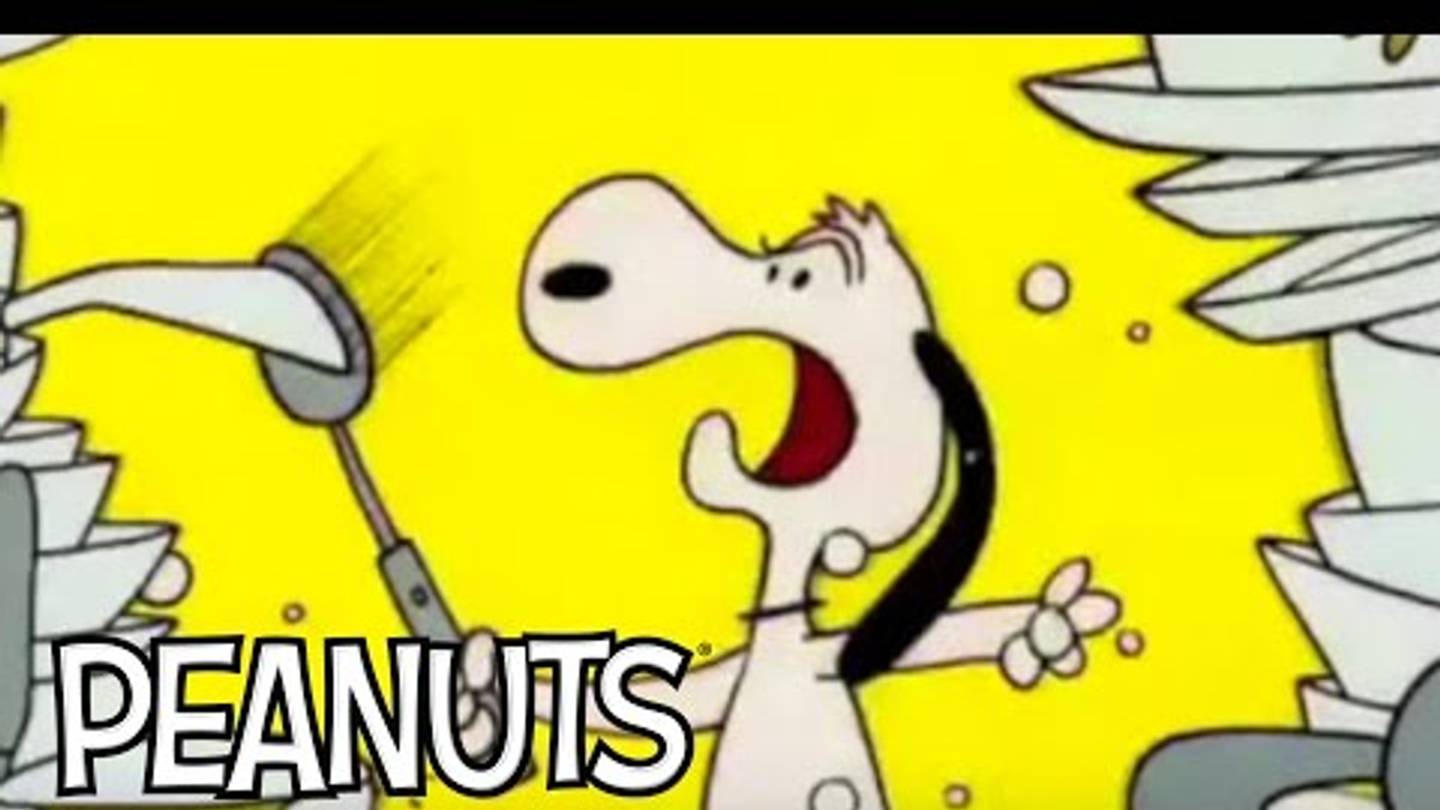
Snoopy may look like a mild-mannered beagle, but his résumé includes novelist, college student, wilderness leader, astronaut, attorney, and World War I flying ace. Since joining the Peanuts gang in 1950, Charlie Brown’s imaginative dog has grown into one of the most recognizable comic-strip characters in the world. These fascinating facts about Snoopy explore his real-life inspiration, unusual home, famous friendships, NASA connection, animated voice, and enduring ability to make ordinary life feel like an adventure.
Why Snoopy Is Much More Than Charlie Brown’s Dog
At first glance, Snoopy seems simple: white fur, black ears, a red collar, and a talent for appearing conveniently when dinner is served. Look a little closer, however, and you will find a character with enough personalities to fill an entire airport departure board. He can be a pilot before breakfast, a novelist at noon, and Joe Cool by the time school lets out.
Charles M. Schulz used Snoopy to turn imagination into visible action. Charlie Brown worries about the world as it is; Snoopy confidently redesigns it. A red doghouse becomes a fighter plane, a typewriter becomes a doorway to literary fame, and a tiny yellow bird becomes a trusted confidant. That contrast helped Peanuts remain funny, thoughtful, and emotionally recognizable throughout its original 50-year newspaper run.
Whether you have read thousands of Peanuts strips or simply recognize Snoopy from a coffee mug, these 10 facts reveal how an ordinary cartoon dog became an extraordinary American cultural icon.
1. Snoopy Appeared Just Two Days After Peanuts Began
The first Peanuts strip was published on October 2, 1950, in seven newspapers. Snoopy made his debut two days later, on October 4. He was therefore present almost from the beginning, although the early version of the character looked and behaved much more like a conventional puppy.
In those first strips, Snoopy walked on four legs, played ordinary dog games, and had not yet claimed the roof of his doghouse as his personal observation deck. He was also not immediately established as Charlie Brown’s pet. His relationship with the neighborhood children developed gradually before the strip firmly identified him as Charlie Brown’s dog.
That slow introduction is important. Schulz did not unveil Snoopy as a fully assembled superstar. The character evolved through years of drawing, experimentation, and comic timing. In other words, the world’s most famous beagle had to work his way up from entry-level puppy.
2. A Real Dog Named Spike Helped Inspire Him
Snoopy’s most important real-life inspiration was Spike, a black-and-white dog from Schulz’s childhood. Spike was not actually a beagle; he has frequently been described as a pointer-type mixed-breed dog. What mattered was his appearance, intelligence, and unusual personality.
Schulz drew Spike when he was a teenager, and one of those drawings was published by the newspaper feature Ripley’s Believe It or Not!. Years later, memories of Spike’s antics helped shape Snoopy. Schulz eventually reused the name “Spike” for Snoopy’s mustached brother, who lives among the cacti near Needles, California.
Snoopy nearly received a different name. Schulz considered calling the character “Sniffy,” but the name was already being used in another comic. He remembered that his mother had once suggested “Snoopy” as a possible name for a future family dog. The backup choice turned out rather well. “Sniffy the World War I Flying Ace” does not have quite the same altitude.
3. Snoopy Gradually Became More Human
From Neighborhood Pet to Independent Personality
Early Snoopy behaved like a recognizable dog. As the 1950s progressed, he began standing upright, dancing, skating, imitating people, and expressing increasingly complex thoughts. Schulz later identified Snoopy as the character who changed the most during the history of Peanuts.
Giving readers access to Snoopy’s inner thoughts changed everything. The children in the strip generally could not hear those thoughts, but readers could follow his opinions, fantasies, complaints, and grand declarations. This created a wonderful comic imbalance: Charlie Brown might see a silent dog staring into the distance, while the audience knew that Snoopy was composing an insult, planning an expedition, or contemplating the burden of genius.
Walking on two legs also expanded what Schulz could do visually. Snoopy could dance with Lucy, lean against a wall, operate a typewriter, play sports, salute imaginary officers, and participate in stories without becoming just another talking human. He remained recognizably canine while enjoying freedoms unavailable to any real beagle.
4. His Doghouse Is Larger on the InsideAt Least in His Imagination
The Best Seat in the House Is on the Roof
One of the most familiar Snoopy images shows him sleeping on top of his red doghouse. Schulz began using the rooftop pose in the late 1950s, and it became the character’s headquarters, bed, stage, office, airplane cockpit, and thinking place.
Readers sometimes wondered how Snoopy could sleep on a sharply angled roof without sliding off. Schulz jokingly explained that Snoopy’s ears could lock him in position. It is the sort of explanation that answers the engineering question while raising several exciting new questions about beagle anatomy.
The doghouse itself became a running exercise in impossible space. Stories suggested that its unseen interior held a remarkable collection of possessions. Schulz wisely avoided drawing a realistic floor plan. The humor depended on allowing readers to imagine a private world far larger and stranger than the small red structure seen from Charlie Brown’s yard.
This contrast captures Snoopy perfectly. From the outside, he has a modest home. From his perspective, he occupies a creative empire.
5. The World War I Flying Ace Debuted in 1965
The Doghouse Becomes a Sopwith Camel
Snoopy first appeared as the World War I Flying Ace in October 1965. Wearing aviator goggles and a scarf, he imagined that his doghouse was a Sopwith Camel fighter plane. His recurring opponent was the Red Baron, the famous German pilot Manfred von Richthofen.
The fantasy worked because the artwork remained wonderfully simple. Schulz did not need to draw clouds, aircraft, explosions, or a detailed battlefield. Snoopy sat on a doghouse while his thoughts supplied the danger, weather, engine noise, and dramatic aerial maneuvers. The reader performed the special effects.
Schulz also researched World War I aviation, giving the jokes a surprising foundation of historical detail. The Flying Ace appeared in comics, animated specials, songs, toys, and advertising, becoming one of Snoopy’s most recognizable identities.
Naturally, he rarely defeated the Red Baron. That did not damage his confidence. Snoopy understood a truth familiar to every imaginative child: losing the imaginary battle simply means another imaginary battle is required tomorrow.
6. Snoopy Has an Enormous Collection of Alter Egos
The Flying Ace may be the most famous, but Snoopy has imagined himself in dozens of roles. He has been Joe Cool, a novelist, an attorney, a surgeon, a tennis professional, a hockey player, a detective, a vulture, an astronaut, and the leader of the Beagle Scouts.
Joe Cool is especially memorable. Wearing sunglasses and leaning casually against a wall, Snoopy imagines himself as the most admired student on campus. He does not appear burdened by classes, homework, tuition, or any evidence that he has actually enrolled. Joe Cool has mastered the atmosphere of college while avoiding its paperwork.
His literary career is equally ambitious. Snoopy types manuscripts while sitting on his doghouse, often beginning with “It was a dark and stormy night.” Rejection letters arrive with dependable efficiency, but he continues writing. The joke is partly about bad prose, yet it also celebrates persistence. Snoopy fails repeatedly without accepting failure as a permanent identity.
These alter egos made him an unusually flexible character. Schulz could place Snoopy in nearly any genre without moving him from the backyard.
7. Woodstock Became Snoopy’s Best Friend and Confidant
Birds had appeared around Snoopy for years, but one small yellow bird gradually developed into a recurring companion. In 1970, Schulz named him Woodstock after the famous 1969 music festival in New York.
Woodstock communicates through tiny scratch-like marks that Snoopy somehow understands. He is a poor flier, a loyal assistant, a capable typist, and a frequent participant in Snoopy’s expeditions. He may be small enough to nap on Snoopy’s nose, but he is never treated as emotionally insignificant.
Their friendship is also more balanced than it initially appears. Snoopy can be bossy, impatient, and magnificently self-centered. Woodstock can be stubborn, sensitive, and willing to object. They irritate each other, misunderstand each other, and remain inseparable.
Schulz described Woodstock as Snoopy’s friend and confidant. Their relationship gave Snoopy something his fantasies could not provide: a companion who accepted his strange world and occasionally helped organize it. Every famous author, pilot, and scout leader apparently needs one dependable bird.
8. Snoopy Comes From a Large Beagle Family
Snoopy was born at the fictional Daisy Hill Puppy Farm. His best-known siblings include Spike, Belle, Marbles, Olaf, and Andy. Each has a distinctive appearance and personality, although none possesses quite the same limitless fantasy life.
Spike is the most frequently seen sibling. Thin, mustached, and usually wearing a hat, he lives in the desert outside Needles, California. Belle is Snoopy’s sister, while Olaf is known for cheerfully embracing his unconventional appearance. Marbles tends to prefer reality over Snoopy’s elaborate make-believea difficult position when visiting a brother who may identify as an airline pilot before lunch.
Snoopy also had an owner before Charlie Brown. A girl named Lila adopted him, but her family lived in an apartment that could not accommodate the puppy, so he was returned to Daisy Hill. The story later became important in Snoopy Come Home, adding a surprisingly emotional chapter to his history.
These relatives expanded Snoopy’s background without completely explaining him. Apparently, an active imagination is not automatically included with every Daisy Hill beagle.
9. Snoopy Has a Remarkable Connection to NASA
Snoopy’s space career is not merely another backyard fantasy. NASA’s association with Peanuts began during the Apollo era, when the agency adopted Snoopy as a symbol connected with human spaceflight safety.
During Apollo 10 in May 1969, the command module was called “Charlie Brown,” while the lunar module was called “Snoopy.” The lunar module descended toward the moon to test procedures that would help prepare for Apollo 11’s historic landing.
NASA also presents the Silver Snoopy Award to employees and contractors whose work contributes to mission success or human-flight safety. The honor is personally presented by an astronaut and includes a sterling silver Snoopy pin that has flown in space. Receiving one is a serious professional distinction, despite the award featuring a beagle in a spacesuit.
Snoopy’s NASA relationship continued into the Artemis era. A plush Snoopy flew aboard the uncrewed Artemis I mission as a zero-gravity indicator in 2022. The spacecraft traveled around the moon and covered roughly 1.4 million miles. For a dog who began in a seven-newspaper comic strip, that is an impressive commute.
10. Snoopy’s Animated “Voice” Came From Bill Melendez
In classic animated Peanuts productions, Snoopy does not speak ordinary English aloud. Schulz wanted him to remain a dog, even though viewers could understand his emotions and comic intentions.
Animator and director Bill Melendez created Snoopy’s vocal sounds by recording laughs, sobs, growls, muttering, and improvised noises, then altering the recordings. What began as a temporary experiment became Snoopy’s signature animated voice. Melendez also produced Woodstock’s distinctive sounds.
The result matched the comic strip beautifully. Snoopy could communicate excitement, outrage, pride, fear, and theatrical despair without suddenly sounding like a human actor wearing a dog costume.
His silent-but-expressive personality did not prevent him from becoming a Hollywood celebrity. In November 2015, Snoopy received the 2,563rd star on the Hollywood Walk of Fame. Appropriately, his star was placed next to the star honoring Charles Schulz.
The Snoopy Experience: Why the Character Still Feels Personal
Reading Snoopy at Different Ages
Experiencing Snoopy as a child is often different from encountering him as an adult. Young readers see a funny dog dancing, battling the Red Baron, arguing with a bird, or waiting impatiently for supper. Adults are more likely to notice the emotional machinery underneath the jokes.
Snoopy’s confidence is funny partly because it exists beside Charlie Brown’s uncertainty. One character expects rejection; the other turns rejection into material for his next performance. Reading the same strip years later can therefore produce a new reaction. A childhood gag about a failed author may become an adult observation about creative persistence.
Discovering Snoopy Through Everyday Objects
Many people encounter Snoopy before they ever read a complete Peanuts collection. He appears on lunch boxes, greeting cards, watches, notebooks, clothing, holiday decorations, and coffee cups. That familiarity can make him feel less like a licensed character and more like a cheerful household guest who has accumulated an alarming amount of merchandise.
Collecting Snoopy items can also become a form of personal history. A scratched childhood lunch box, an old holiday ornament, or a paperback inherited from a parent may carry memories unrelated to its monetary value. Snoopy’s design is simple enough to remain recognizable across decades, yet each era gives him a slightly different visual flavor.
Visiting the World Behind the Comic Strip
Seeing original Schulz artwork adds another dimension to the experience. Reproduced strips appear smooth and effortless, but original drawings reveal corrections, changing line weight, handwritten lettering, and the physical rhythm of ink on paper. The Charles M. Schulz Museum in Santa Rosa, California, preserves and interprets this creative process through original art, exhibitions, and research materials.
A museum visit can make Snoopy seem both more magical and more handmade. His personality emerged from repeated decisions by one cartoonist working at a drawing board, not from a committee calculating how many flying-ace jokes the market required. That human scale is part of the charm.
Sharing Snoopy With a New Generation
Snoopy is particularly rewarding to share with children because the comedy works at several levels. A child can enjoy the slapstick of Snoopy falling from his doghouse. An adult can appreciate the pride that caused the fall. Neither reader needs to explain the joke to the other.
Families can also use Snoopy as a starting point for creative play. After reading a Flying Ace strip, a cardboard box can become an airplane. After seeing Snoopy at his typewriter, a child can write a deliberately dramatic story. Woodstock can inspire drawings made from a few expressive lines. The goal is not to copy Schulz perfectly but to notice how much imaginative space he created with very little visual clutter.
Ultimately, the most valuable Snoopy experience may be permission to reinvent an ordinary moment. A school wall can become Joe Cool’s campus. A rainy afternoon can become a wilderness expedition. A backyard can become an airfield. Snoopy does not wait for life to become interesting; he supplies the missing scenery himself.
Conclusion: One Beagle, Countless Adventures
Snoopy began as a small supporting character and developed into the imaginative center of Peanuts. His history includes a real childhood dog, a nearly rejected name, an impossible doghouse, a loyal bird, an extended family, a collection of alter egos, and a genuine role in NASA tradition.
His lasting appeal comes from the balance between simplicity and possibility. Schulz drew Snoopy with a few clean lines, yet those lines could represent a pilot, writer, student, athlete, scout leader, or astronaut. He reminds readers that imagination does not require expensive equipment. Sometimes it needs only a red doghouse, a patient friend, and complete confidence that today’s rejected manuscript will become tomorrow’s masterpiece.