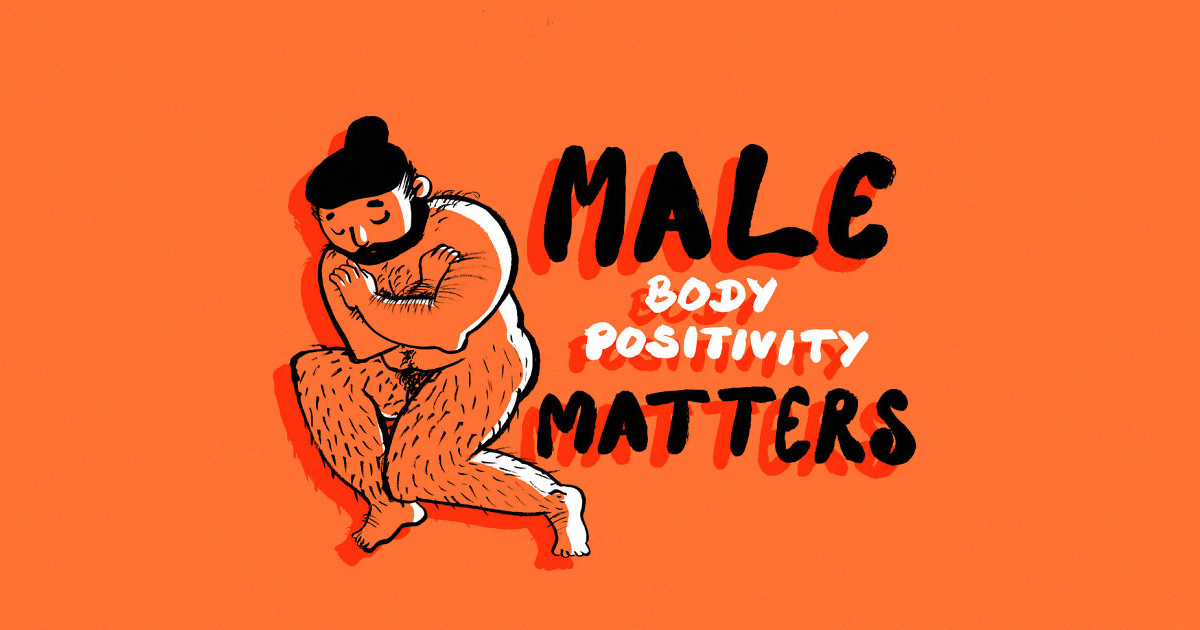
Male body image issues are often treated like a whisper in a room full of shouting. Everyone knows they exist, but too many people still act surprised when a man admits he feels uncomfortable in his own skin. That is part of what makes BoPoLena’s illustration series so powerful. The work does not arrive wearing a lab coat, carrying a clipboard, or declaring, “Good evening, I am here to diagnose society.” Instead, it uses warm, simple, emotionally direct art to say something many men have been waiting to hear: your body is not a problem to solve before you are allowed to live.
Lena Dirscherl, known online as BoPoLena, is an artist and body acceptance activist whose work focuses on body positivity, self-worth, and inclusive representation. Their series about male bodies gained attention because it pushed a conversation usually centered on women into a wider and more honest frame. Body positivity is not only for women. It is not only for people in one size range, one gender identity, one age group, or one “acceptable” version of imperfection. It is for everybodyand yes, that includes men who have been silently wrestling with the mirror since middle school.
The title “Male Body Image Issues Are Important” may sound obvious, but culturally, it still lands like a plot twist. For decades, men have been told to be confident, stoic, muscular, tall, energetic, emotionally contained, and somehow also totally relaxed about all of that pressure. That is a lot to fit into one pair of jeans.
Who Is BoPoLena?
BoPoLena is the online name of Lena Dirscherl, an illustrator whose body-positive artwork has circulated widely on social media. Their illustrations are known for soft colors, rounded forms, direct captions, and a tone that feels like a supportive friend gently taking your phone away after your third round of doom-scrolling through fitness influencers.
BoPoLena’s art often centers people who rarely see themselves represented with tenderness: fat bodies, disabled bodies, trans bodies, queer bodies, hairy bodies, scarred bodies, aging bodies, and bodies that simply do not look like the carefully filtered version of “normal” sold to us by advertising. The male body image series continues that mission by showing men as human beings rather than before-and-after photos waiting to happen.
The illustrations do not mock insecurity. They do not scold men for caring about appearance. Instead, they recognize a complicated truth: many men have been hurt by beauty standards while also being told they are not supposed to care about beauty standards. That double bind can be isolating. BoPoLena’s work cuts through it with compassion.
Why Male Body Image Issues Deserve More Attention
When people hear “body image,” they often picture women and girls dealing with diet culture, thinness pressure, and beauty marketing. Those problems are real and serious. But male body image issues are real, too. They simply tend to appear under different labels: fitness obsession, bulking season, cutting season, “discipline,” “self-improvement,” or the classic “I’m just trying to get in shape,” even when the person saying it is already exhausted, anxious, and measuring their worth in protein grams.
Research and clinical sources show that boys and men can experience body dissatisfaction, eating disorders, body dysmorphic disorder, and muscle dysmorphia. Muscle dysmorphia, sometimes called “bigorexia,” involves a distressing preoccupation with being insufficiently muscular or too small, even when others would not see the body that way. It can lead to compulsive exercise, rigid eating patterns, body checking, supplement misuse, social withdrawal, and significant emotional distress.
The problem is not wanting to be healthy, strong, or active. Movement can be joyful. Strength training can be empowering. A good workout can make the brain feel like someone finally opened a window. The issue begins when appearance becomes a courtroom and the body is always on trial.
The Cultural Script Men Are Given
Men are often handed a narrow script about what their bodies should look like. The “ideal” body is usually tall, lean, visibly muscular, broad-shouldered, symmetrical, full-haired, clear-skinned, and conveniently free of bloating, aging, stretch marks, acne, softness, disability, or ordinary human variation. It is less a realistic body than a video game character with a supplement sponsorship.
This standard appears everywhere: superhero movies, gym ads, dating apps, action figures, underwear campaigns, sports culture, social media reels, and even Halloween costumes with fake padded abs for children. Boys absorb these messages early. By adolescence, many have already learned that muscles can be treated as proof of discipline, masculinity, attractiveness, and social value.
That creates a brutal equation: bigger muscles equal better man. But human worth is not an algebra problem, and no one should need visible abs to qualify for tenderness, friendship, romance, or respect.
What BoPoLena’s 30 Illustrations Get Right
The strength of BoPoLena’s male body positivity illustrations lies in their emotional clarity. The artwork does not try to out-shout toxic masculinity with another performance of toughness. It goes softer, which somehow makes it stronger.
1. They Show Different Male Bodies Without Turning Them Into Jokes
Many depictions of male bodies outside the cultural ideal are played for laughs: the bald man, the fat dad, the short guy, the skinny guy, the hairy guy, the man with stretch marks, the man with a belly, the man who does not look like he lives inside a gym locker. BoPoLena’s illustrations reject that lazy punchline. The men in the work are not “comic relief bodies.” They are just bodiesworthy, expressive, and normal in their variety.
2. They Challenge the Gym-As-Redemption Narrative
Fitness culture often frames the body as a fixer-upper. The message is: once you lose weight, gain muscle, sharpen your jawline, and become the “after” photo, then you can finally enjoy confidence. BoPoLena’s art pushes back against that idea. A person does not need to earn self-respect through transformation. You can want change and still deserve kindness today. Revolutionary? Apparently. Necessary? Absolutely.
3. They Make Room for Vulnerability
Male body image struggles are often hidden because vulnerability is still treated as suspiciously “unmanly.” Many men learn to joke before they admit pain. They say, “I’m built like a refrigerator,” or “I need to stop eating like a raccoon,” because humor feels safer than honesty. BoPoLena’s work makes emotional honesty feel less dangerous. It gives visual permission for men to say, “Actually, I have been struggling.”
4. They Expand Body Positivity Beyond One Gender
Body positivity has sometimes been misunderstood as a women-only movement. That misunderstanding hurts everyone. Men need body acceptance. Nonbinary people need it. Trans people need it. Disabled people need it. Older people need it. People with scars, acne, hair loss, belly fat, loose skin, surgical marks, and changing bodies need it. The goal is not to compete over who has suffered most. The goal is to build a world where fewer people suffer alone.
Male Body Image and Social Media: The Comparison Machine
Social media can be inspiring, hilarious, educational, and occasionally full of people arguing with furniture in comment sections. But it can also distort body image. Men scrolling through endless images of lean, muscular bodies may begin to treat those bodies as average, even when they are carefully posed, edited, filtered, dehydrated, professionally lit, genetically uncommon, or maintained through routines that most people cannot safely or realistically follow.
The phrase “comparison is the thief of joy” gets repeated so often it has practically become a throw pillow, but it remains true. When men compare their everyday body to someone else’s best-lit, best-angled, monetized body, the result is rarely peace. It is usually pressure.
Body-positive content can help interrupt that cycle by showing diverse bodies in affirming ways. However, even body positivity needs to include men’s specific concerns: muscularity, height, hair loss, chest shape, belly size, skin, genital anxiety, aging, and the fear of seeming weak or undesirable. A movement that says “all bodies are good bodies” should not quietly forget half the population.
The Difference Between Healthy Goals and Harmful Obsession
There is nothing wrong with wanting to exercise, eat well, build strength, or feel more comfortable in your body. The warning signs appear when body goals begin to shrink the rest of life. If workouts replace relationships, meals become moral tests, mirrors become interrogation rooms, or one missed gym session ruins an entire day, it may be time to pause.
Some common warning signs of unhealthy body image in men include compulsive mirror checking, avoiding social events because of appearance concerns, exercising despite injury, extreme dieting, constant body comparison, anxiety around eating, reliance on unregulated supplements, obsession with leanness or muscularity, and feeling worthless because of normal body changes.
In more serious cases, men may experience eating disorders or body dysmorphic disorder. These are not vanity problems. They are mental health concerns that can affect work, school, relationships, physical health, and safety. Professional support from a doctor, therapist, registered dietitian, or eating disorder specialist can make a major difference.
Why Representation Matters in Art
Art cannot single-handedly cure body shame, but it can loosen its grip. Seeing a body like yours drawn with care can feel surprisingly emotional. It says, “You are not an error.” That message matters because many men have rarely seen bodies like theirs represented without mockery, pity, or a makeover plot.
BoPoLena’s illustrations work because they are not trying to sell a new ideal body. They are trying to remove the idea that bodies must be ideal to be loved. That is a very different message from mainstream self-improvement culture, which often says, “You are enough, but here are 47 ways to become more enough by Tuesday.”
The simplicity of the illustrations is part of the impact. A rounded belly, a soft chest, a hairy back, a short frame, a thin build, or a body with scars can be shown plainly and lovingly. No dramatic lighting. No apology. No “before” label. Just presence.
How Men Can Build a Healthier Relationship With Their Bodies
Practice Body Neutrality
Not everyone can jump from body shame to body love overnight. For some people, “I love my body” feels impossible at first. Body neutrality can be a gentler starting point. It means respecting what your body allows you to do, even when you do not feel thrilled about how it looks. Your legs carry you. Your arms hug people. Your stomach digests tacos, which is honestly heroic.
Clean Up the Digital Environment
If certain accounts make you feel like a failed science experiment, unfollow them. Curate your feed with the same seriousness you would use to choose roommates. Follow creators who show diverse bodies, realistic fitness, mental health literacy, humor, recovery, disability visibility, and genuine humanity.
Talk About It Without Turning It Into a Joke
Humor can help, but it can also hide pain. Men benefit from conversations where they can say, “I feel insecure about my body,” without being dismissed. Friends, partners, parents, coaches, and health professionals can all help create that space by listening instead of immediately offering a workout plan.
Separate Health From Appearance
Health is not a costume. People can look fit and be struggling. People can live in larger bodies and have strong, active, meaningful lives. People can be thin and still feel unwell. Appearance gives limited information. A healthier approach asks: Do I have energy? Can I rest? Am I eating enough? Am I moving in ways that support my life? Am I treating myself like a person instead of a project?
Specific Examples of Male Body Image Pressure
Consider the teenage boy who starts lifting because he wants confidence, then slowly becomes afraid to eat anything that does not fit a strict plan. Or the man in his thirties who avoids dating because hair loss makes him feel older than he is. Or the father who refuses to swim with his children because he hates how his stomach looks. Or the college student who takes shirtless progress photos every morning, not because he feels proud, but because he is terrified of losing control.
These examples may look different on the surface, but they share a common thread: the body becomes a gatekeeper. It decides whether someone is allowed to enjoy the beach, go on a date, wear a fitted shirt, join a photo, eat dessert, or simply relax. BoPoLena’s illustrations challenge that gatekeeper. They remind viewers that life should not be postponed until the body meets a standard that keeps moving anyway.
The Bigger Message Behind “Male Body Image Issues Are Important”
The phrase matters because it names something often minimized. Male body image issues are important because men are people. That should be enough. They are not immune to shame because they were told to “man up.” They are not protected from eating disorders by facial hair. They are not magically confident because society sometimes gives men more permission to age naturally than women. Pressure still lands. It just lands differently.
BoPoLena’s work helps widen the emotional vocabulary around men’s bodies. It gives people a way to talk about softness, insecurity, desire, fear, comparison, aging, masculinity, and self-acceptance without turning the conversation into a contest or a lecture.
Experiences Related to Male Body Image Issues
One of the most common experiences around male body image is the quiet changing-room moment. A man tries on a shirt, looks in the mirror, and suddenly he is not just seeing fabric. He is seeing every comment he absorbed growing up: too skinny, too soft, too short, too hairy, not muscular enough, not handsome enough, not “manly” enough. The shirt may fit perfectly, but the story in his head does not.
Another familiar experience happens at the gym. A man walks in hoping to feel better and immediately compares himself to the biggest person in the room. Suddenly, the workout is no longer about energy or strength. It becomes a referendum on masculinity. The dumbbells feel heavier because they are carrying shame, not just iron. He may push too hard, ignore pain, or leave feeling worse than when he arrived. That is the sneaky thing about body pressure: it can disguise itself as motivation while quietly draining joy.
Dating can make these feelings louder. Many men worry about height, weight, chest shape, hairline, skin, or whether they look impressive enough in photos. Dating apps, with their tiny squares and instant judgments, can turn insecurity into a full-time unpaid internship. A man may spend twenty minutes choosing a picture, then delete the app because none of the photos feel acceptable. The issue is not that he is vain. The issue is that he has learned to evaluate himself through an imagined audience that is always disappointed.
Friend groups can also reinforce body shame without meaning to. Jokes about “dad bods,” bald spots, beer bellies, chicken legs, or being “too small” may seem harmless, especially when everyone laughs. But sometimes the person laughing hardest is the one storing the comment for later. Men are often trained to absorb insults as bonding. BoPoLena’s art offers a different kind of bonding: recognition without ridicule.
Family life brings another layer. A father who dislikes his body may avoid swimming, taking photos, or being physically playful with his kids. He may think he is hiding insecurity, but children often notice absence more than appearance. When adults model body respectwearing the swimsuit, joining the photo, eating without moral dramathey teach younger people that bodies are for living in, not constantly apologizing for.
Aging is another deeply human experience. Hair thins. Skin changes. Metabolism shifts. Injuries happen. Muscles respond differently. The body that once felt predictable becomes a new language. For men whose identity has been tied to strength, athleticism, or sexual attractiveness, these changes can be painful. Body acceptance does not mean pretending aging is always easy. It means refusing to treat aging as personal failure.
The most hopeful experience is the moment a man realizes he is allowed to be kinder to himself. It may happen after seeing an illustration, reading a story, talking to a therapist, hearing a friend admit the same struggle, or simply getting tired of fighting the mirror every morning. That moment may not fix everything. But it can open a door. On the other side is a life where food is not a threat, exercise is not punishment, photos are not enemies, and the body is not an unfinished assignment.
Conclusion: BoPoLena’s Art Makes the Invisible Visible
“Male Body Image Issues Are Important: 30 Illustrations By BoPoLena” resonates because it treats men’s insecurities with seriousness and warmth. It does not ask men to stop caring about their bodies. It asks society to stop teaching them that only one kind of body deserves confidence.
BoPoLena’s illustrations are not just cute internet art. They are part of a larger cultural correction. They remind us that men can be harmed by diet culture, gym culture, social media comparison, rigid masculinity, and unrealistic appearance ideals. They also remind us that healing does not always begin with a dramatic transformation. Sometimes it begins with a drawing that says, gently and clearly, “You are already worthy.”
That message should not be radical. But until it becomes ordinary, art like BoPoLena’s will remain necessary.