At the end of the growing season, gardeners often face a small mountain of used potting soil. Throwing it away feels wasteful, but pouring it straight into a new container can transfer pests, diseases, compacted roots, and last year’s gardening regrets.
So, can you reuse potting soil? Usually, yesif the previous plant was healthy and the mix still drains well. Used potting mix should be cleaned, inspected, loosened, and refreshed before another planting. Soil from diseased plants, badly compacted containers, or persistent pest problems is not worth saving. Fresh sterile media is also the safer choice for seedlings, microgreens, cuttings, and other vulnerable young plants.
The goal is not to make old soil magically new. It is to decide whether the material still has value, then restore the air space, moisture balance, and nutrients that container plants need.
What Happens to Potting Soil Over Time?
Commercial potting soiloften more accurately called potting mixis designed for containers. It commonly contains peat moss or coconut coir, aged bark, perlite, vermiculite, compost, fertilizer, and wetting agents. Unlike ordinary garden soil, a quality mix is lightweight and porous enough to hold moisture while allowing excess water to drain.
After a season of roots, watering, heat, and fertilizer, that structure changes. Organic ingredients decompose into finer particles. Roots fill pore spaces. Nutrients are absorbed or washed through drainage holes. Fertilizer and hard water may leave soluble salts behind.
As the mix ages, it may hold too much water and too little air. This is why an old pot can remain soggy for days even though the surface appears dry. Reusing the mix without correcting that problem can lead to slow growth, yellow leaves, or root rot.
When Is Potting Soil Safe to Reuse?
Potting soil is a good reuse candidate when the previous plant grew normally and completed its life cycle without unexplained wilting, root decay, or a serious infestation. The material should smell earthy, accept water readily, and drain without turning into mud.
Reuse makes the most sense in large outdoor planters, window boxes, hanging baskets, and decorative containers where replacing every gallon each year becomes expensive. Healthy old mix can also be refreshed for established houseplants, herbs, annual flowers, and many container vegetables.
Use this quick checklist:
- The former plant was healthy.
- The mix has no sour, swampy, or rotten odor.
- There are no obvious larvae, root pests, weed rhizomes, or unusual fungal growth.
- Water still moves through the material at a reasonable rate.
- The mix has not become mostly roots, dust, or hard clumps.
- You are willing to add fresh material and replace nutrients.
When Should You Throw Old Potting Soil Away?
After Root Rot or Soilborne Disease
Do not reuse mix from a plant with root rot, damping-off, bacterial wilt, or another suspected soilborne disease. Mixing a little contaminated soil into a clean batch does not make it safer; it simply gives the problem a larger apartment.
Diseased potting mix should generally stay out of an ordinary home compost pile because many backyard piles do not heat evenly enough to destroy pathogens. Follow local disposal guidance instead.
For Seedlings and Propagation
Young seedlings have delicate roots and little resistance to damping-off organisms. Use fresh seed-starting mix for seeds, microgreens, propagation trays, and valuable cuttings. Reusable trays and pots are fine, but they should be cleaned and sanitized before use.
When the Structure Has Collapsed
Retire a mix that remains waterlogged, forms solid bricks when dry, or has become extremely fine and dense. A small scoop of perlite cannot rescue material that has lost nearly all of its pore space.
After a Persistent Pest Problem
Soil containing root mealybugs, vine weevil larvae, nematode problems, or repeated infestations should not be moved to another pot. Fresh mix is usually cheaper than creating a pest subscription service for your plant collection.
How to Reuse Potting Soil Step by Step
1. Remove Plants, Roots, and Debris
Empty the container onto a tarp, into a tub, or into a wheelbarrow. Pull out stems, bulbs, thick roots, labels, drainage mesh, and dense root mats. Fine roots can remain if the soil is healthy, but the mix should no longer be held together by a root web.
2. Inspect the Material
Look for insects, slimy areas, salt crusts, mold, and weed roots. Smell the mix. Healthy material usually has a mild earthy odor. A sour or sewage-like smell suggests that the soil stayed saturated and oxygen-poor for too long.
3. Break Up Clumps
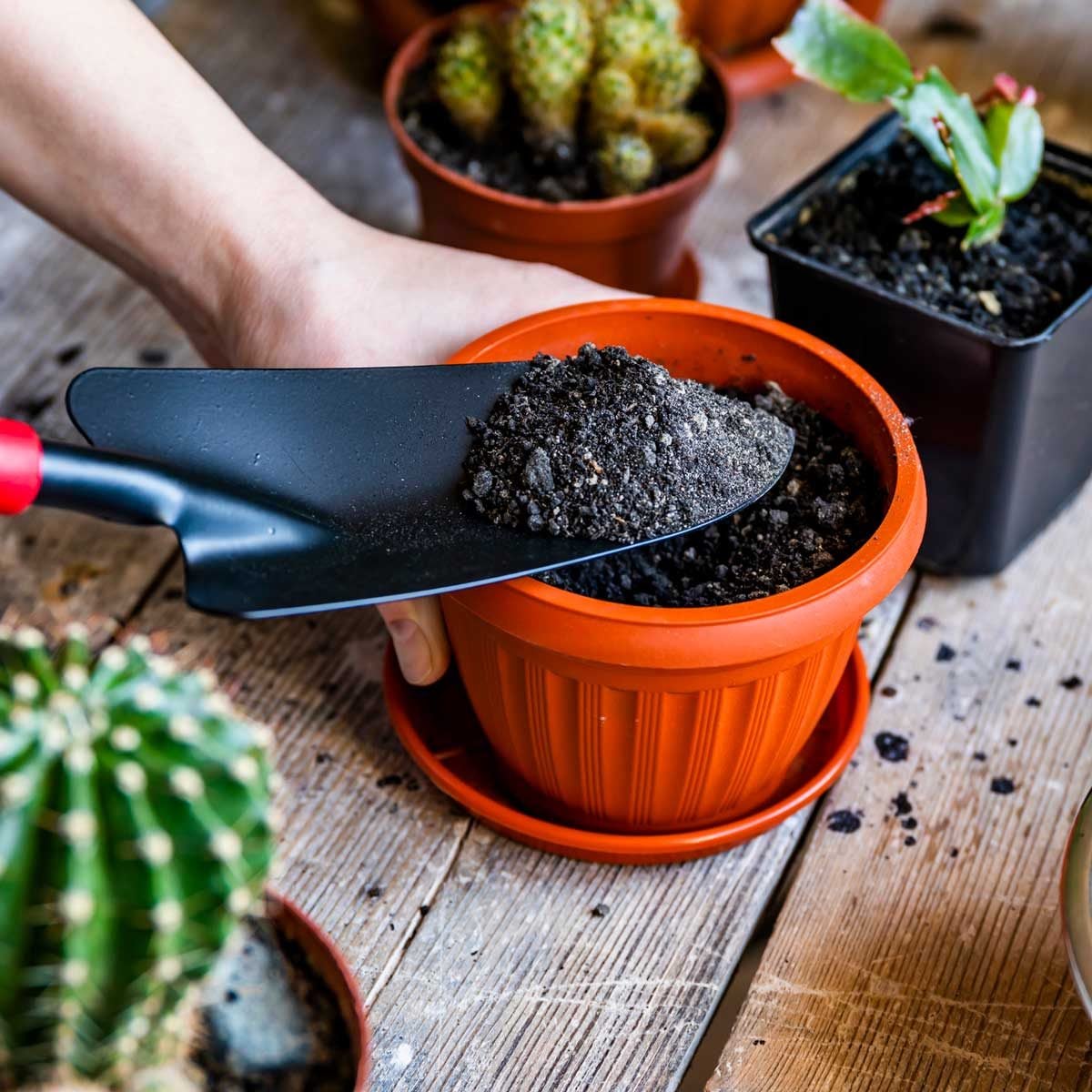
Loosen the mix with gloved hands or a small cultivator. A garden sieve is useful for large batches, but it is optional. The aim is an even, crumbly texturenot soil groomed for a magazine cover.
4. Restore Drainage and Air Space
For healthy one-season-old mix, start with about two parts old material to one part fresh potting mix. If the old mix is noticeably fine or will support demanding plants such as tomatoes, use approximately equal parts old and new.
Add perlite, pumice, or fine pine bark when the blend needs more porosity. Match the amendment to the plant. Tropical foliage plants may prefer more moisture retention, while succulents require a faster-draining, mineral-rich mix.
5. Replace Nutrients
Old potting soil should not be treated as a complete fertilizer. Add a controlled-release fertilizer according to its label, or begin an appropriate liquid-feeding program after planting.
Mature compost can contribute organic matter and nutrients, but use it moderately. A blend containing roughly 10 to 20 percent finished compost works for many outdoor containers. Too much fine compost can make the mix dense and slow-draining.
6. Clean the Container
Scrub away roots, algae, old soil, and mineral deposits. When sanitation is important, disinfect the pot with a solution of one part household bleach to nine parts water, then rinse thoroughly with clean water. Wear gloves, work in a ventilated area, and never mix bleach with other cleaning products.
7. Test Before Planting
Moisten the refreshed mix, fill the pot lightly, and water it. Excess water should leave through the drainage holes instead of sitting on the surface. Do not place rocks or gravel in the bottom; a continuous column of potting mix usually drains better than layered materials.
How Much Fresh Mix Should You Add?
| Planting Use | Practical Starting Blend | Key Consideration |
|---|---|---|
| Established houseplants | Two parts sound old mix to one part fresh mix | Adjust for the plant’s moisture needs. |
| Tomatoes, peppers, and annual flowers | About half old mix and half fresh mix | Heavy feeders need reliable fertilization. |
| Large decorative planters | Old mix refreshed with new mix and aeration material | Remove root mats and confirm drainage. |
| Succulents and cacti | Clean old mix plus generous mineral amendment | Never reuse soil from a rotted succulent. |
| Seedlings and microgreens | Fresh seed-starting mix only | Reducing disease risk matters most. |
These ratios are starting points, not rigid formulas. Potting mixes vary widely. A coarse bark-based blend may remain airy after several seasons, while a fine peat-based product may compact quickly.
Can You Reuse Potting Soil for Vegetables?
Yes, but container vegetables are demanding. Tomatoes, peppers, eggplants, cucumbers, and flowering annuals can remove large amounts of nutrients during one season. Reusing their soil without fresh mix and fertilizer often produces pale leaves and a disappointing harvest.
Rotate plant families when practical. After growing a healthy tomato, consider beans, lettuce, herbs, or flowers rather than another tomato-family crop. Rotation does not eliminate every container disease, but it can reduce repeated pressure from crop-specific problems.
Never grow edible plants in reused media that may have contacted floodwater, pet waste, unsafe chemicals, herbicides, or questionable compost. When the soil’s history is unknown, buy fresh commercial potting mix.
How Long Can Potting Soil Be Reused?
There is no fixed expiration date. A quality mix may remain useful for two or three seasons when it stays disease-free and is refreshed regularly. Other mixes lose structure after one hot, heavily watered season.
Judge the material by performance rather than age. Good container media accepts water, drains freely, holds some moisture, and remains airy. When repeated amendments cannot restore those qualities, move disease-free soil to a lower-risk use, such as a small addition to a compost pile or ornamental garden bed.
Common Mistakes When Reusing Potting Soil
- Adding fertilizer but ignoring compaction: Nutrients cannot fix oxygen-starved roots.
- Using too much compost: Rich does not always mean well-drained.
- Reusing soil from mystery plant deaths: Uncertainty is a valid reason to start fresh.
- Using old mix for seedlings: Saving a few dollars is not worth a tray of collapsed sprouts.
- Leaving refreshed mix uncovered: Open piles can collect weeds, insects, runoff, and contaminated debris.
Experience Notes: Lessons From Reusing Potting Soil
The first lesson is that old potting soil can look much better than it performs. A large patio container may appear full of dark, rich material while hiding a dense root mass underneath. Replanting directly into that pot can create channels where water races down the sides and exits the drainage hole without wetting the center. The gardener sees water coming out and assumes success; the roots remain thirsty and file a silent complaint.
Emptying each container into a tub is the most useful habit I have learned. It reveals whether the mix is fluffy, compacted, sour-smelling, pest-filled, or mostly roots. Healthy media usually crumbles easily. Exhausted media forms hard chunks when dry or sticky clods when wet. Five minutes of inspection prevents weeks of wondering why a new plant refuses to grow.
Another lesson is that compost and fertilizer solve different problems from perlite, bark, or pumice. I once refreshed old soil with generous compost because it looked dark and nutritious. The plants received plenty of food, but the containers stayed wet after every rain. The mix needed air space, not another serving of organic matter. Roots require oxygen as surely as they require nutrients.
Reused soil also performs better when assigned according to risk. Fresh seed-starting mix goes to seedlings and cuttings. The best refreshed blend goes to tomatoes, peppers, and favorite flowering plants. Older but healthy material goes to tough herbs, seasonal annuals, or large decorative planters. This ranking saves money without pretending every scoop of old soil has equal value.
Crop history matters. Soil from a healthy basil or marigold container is an easy candidate for reuse. Soil from a tomato that slowly wilted for no clear reason deserves suspicion. Gardeners naturally want to blame heat, a missed watering, or bad luck, but unexplained decline may involve roots or pathogens. Replacing that mix buys peace of mind as well as sanitation.
Storage is another overlooked detail. Refreshed mix left in an open wheelbarrow can collect rain, weeds, insects, and dirty tool debris. Store only healthy material, keep it reasonably dry, and place it in a clean covered bin or bag off the ground. A simple label such as “healthy annuals, 2026” is surprisingly valuable when spring arrives and every container looks like an anonymous box of brown material.
Finally, successful reuse depends more on observation than on perfect recipes. Squeeze a damp handful. It should hold together lightly, then crumble when touched. Water a test pot and watch the drainage. Notice how long the mix remains wet. A coarse blend may need only fertilizer, while a fine mix may need substantial fresh material and aeration amendments.
The real benefit is larger than saving the cost of a bag. Reusing potting soil teaches gardeners how roots, water, air, nutrients, and disease interact inside a container. When a refreshed planter produces another season of flowers or vegetables, the old mix earns a satisfying second actwithout anyone pretending it has discovered the fountain of youth.
Conclusion
You can reuse potting soil when the previous plant was healthy and the material still drains well. Remove roots and debris, inspect for pests or disease, add fresh mix and aeration material, replace depleted nutrients, and clean the container. Use fresh sterile media for seedlings, cuttings, microgreens, and any plant following root rot or suspected soilborne disease.
The best rule is simple: reuse healthy soil, refresh tired soil, and discard risky soil. Your gardening budget will stretch farther, and your new plants will not inherit the botanical equivalent of a haunted house.