Introducing solid foods is an exciting milestoneright up until the first spoonful of oatmeal lands on the wall, the dog, or your freshly washed shirt. A well-designed baby spoon cannot eliminate the chaos, but it can make feeding safer, easier, and considerably less frustrating.
The best baby spoons are not simply miniature adult utensils. They have smaller bowls, gum-friendly edges, developmentally appropriate handles, and shapes that help babies bring food to their mouths without requiring the wrist control of a concert pianist.
To create this 2025 guide, we compared published hands-on evaluations from established parenting laboratories, family product testers, pediatric feeding professionals, and infant-feeding authorities. We also reviewed current manufacturer specifications for materials, age recommendations, cleaning instructions, and safety features. The final nine picks cover parent-led feeding, baby-led weaning, teething, travel, temperature checking, and those gloriously messy first attempts at self-feeding.
Best Baby Spoons of 2025 at a Glance
| Baby Spoon | Best For | Material | Suggested Stage |
|---|---|---|---|
| ezpz Tiny Spoon | Best overall | Food-grade silicone | 6 months and older |
| Béaba First Stage Baby Spoon | First purées and combination feeding | Silicone | 4 months and older |
| NumNum GOOtensils | Pre-spoon learning | Food-grade silicone | 6 months and older |
| Olababy Training Spoon | Learning to scoop | Food-grade silicone | Approximately 6 to 18 months |
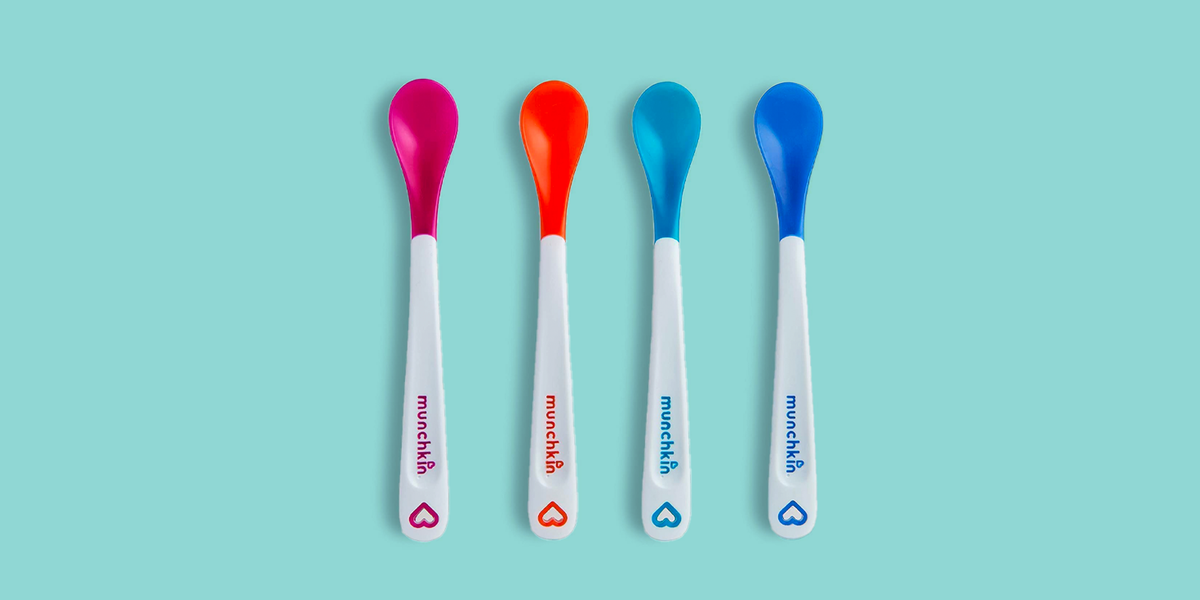
| Munchkin White Hot Safety Spoons | Temperature awareness and value | BPA-free plastic | 3 months and older |
| OXO Tot On-the-Go Feeding Spoon | Travel and restaurants | Silicone, stainless steel, and plastic | 6 months and older |
| Bumkins Silicone Chewtensils | Teething babies | Platinum silicone | 6 months and older |
| Nuby Dipeez Self-Feeding Spoons | Dipping and early independence | Soft silicone | 6 months and older |
| Itzy Ritzy Sweetie Spoons | Easy-grip loop handle | Food-grade silicone | 6 months and older |
How We Evaluated the Best Baby Feeding Spoons
Published expert tests commonly evaluate baby utensils for ease of use, grip, spoon depth, feeding effectiveness, material quality, cleaning, durability, portability, and value. Family testing adds another essential measurement: whether food reaches the baby or takes an unscheduled flight across the kitchen.
We gave priority to spoons with soft edges, age-appropriate dimensions, practical handles, simple cleaning requirements, and consistently positive performance in professional or parent testing. We also considered whether each design served a distinct feeding stage rather than selecting nine nearly identical pieces of silicone.
Babies are generally ready to explore complementary foods at about 6 months, although individual development matters more than the date on a calendar. Readiness signs include good head control, the ability to sit upright with support, interest in food, bringing objects to the mouth, and swallowing food instead of automatically pushing it out. Parents should obtain individualized guidance from their pediatrician, especially when a baby was born prematurely or has feeding, growth, allergy, or developmental concerns.
The 9 Best Baby Spoons of 2025
1. ezpz Tiny Spoon Best Overall Baby Spoon
The ezpz Tiny Spoon earns our best-overall position because its proportions make sense for a beginning self-feeder. The handle is short and rounded, allowing a baby to use a palmar grasp instead of wrestling with a long adult-style handle. A shallow silicone bowl makes it easier to remove food with the lips, while sensory bumps help babies recognize how far the spoon has entered the mouth.
It works particularly well with oatmeal, mashed avocado, yogurt, hummus, and other foods that cling to the utensil. Parents can preload the spoon and place it on the tray for the baby to pick up. That simple handoff encourages independence without expecting a 6-month-old to master scooping on day one.
Advantages: Excellent size for little hands, soft on gums, dishwasher-safe, and designed with feeding development in mind.
Limitations: The bowl is intentionally tiny, so it is inefficient when an adult is trying to deliver a larger meal quickly. Silicone may also absorb strongly scented dishwasher detergent.
2. Béaba First Stage Baby Spoon Best for First Purées
The Béaba First Stage Baby Spoon is a strong choice when an adult is doing most of the feeding but still wants a utensil the baby can occasionally hold. Its elongated handle reaches comfortably into bowls and jars, while the narrow silicone tip fits a small mouth without delivering an oversized bite.
Testing by baby-gear reviewers has repeatedly praised its comfortable adult grip, seamless one-piece construction, gentle spoon tip, and easy cleaning. The balance also makes it more manageable than many floppy silicone utensils. It is especially useful for thin purées, infant cereal, smooth vegetables, and the first cautious tastes of food.
Advantages: Soft tip, comfortable handle, seamless construction, and suitable for early parent-led feeding.
Limitations: The long handle is less convenient for independent feeding. Pale silicone can stain after contact with tomato, carrot, beet, or sweet potato purées, although prompt rinsing helps.
3. NumNum GOOtensils Best Pre-Spoon
A traditional spoon requires several separate skills: dipping, scooping, keeping the bowl level, moving it toward the face, finding the mouth, and releasing the food. The NumNum GOOtensils simplify that complicated mission.
Instead of relying on a deep spoon bowl, the first-stage utensil uses textured channels that capture purées and mashed foods from almost any angle. A baby can press it into food, lift it, and obtain a successful taste without performing a perfect scooping motion. The short, thick handle is also easy to grab with either hand.
This design is ideal for babies who become frustrated when food slides off a conventional spoon. It creates quick wins, and quick wins are useful when your dining companion has the patience of a tiny, hungry CEO.
Advantages: Food adheres to the textured head, no wrist rotation is required, and the handle supports early self-feeding.
Limitations: A pre-spoon does not teach conventional scooping by itself. Babies should eventually practice with a shallow bowl-shaped spoon as their coordination improves.
4. Olababy Training Spoon Best for Learning to Scoop
The leaf-shaped Olababy Training Spoon looks playful, but its unusual shape has a practical purpose. Its flexible tip can collect food when it approaches a bowl from different directions, making it forgiving of the unpredictable angles used by beginning eaters.
The short silicone handle suits a baby’s fist-like grasp, while the broad base allows the spoon to stand upright on some surfaces. That can keep the eating end away from a messy tabletopat least until the baby discovers that knocking it over is also entertaining.
The Olababy performs best with thicker foods such as mashed potatoes, oatmeal, ricotta, thick yogurt, or mashed beans. These textures remain on the flexible tip during the journey from bowl to mouth.
Advantages: Flexible scoop, soft silicone, short grip, upright base, and effective performance from multiple angles.
Limitations: Some caregivers find the tip too flexible for firm foods. Like many silicone products, it may attract lint or retain detergent odors if not rinsed thoroughly.
5. Munchkin White Hot Safety Spoons Best Temperature-Sensing Spoons
Munchkin White Hot Safety Spoons are inexpensive, widely available, and equipped with a temperature-sensitive tip that turns white when food is approximately 110°F or hotter. This feature can provide a useful visual warning after purée has been warmed.
The narrow bowl is comfortable for small mouths, and the long handle gives adults good control when feeding from across a high-chair tray. A multipack also means one spoon can be in the dishwasher, one can be in the diaper bag, and one can be hiding beneath the refrigerator with several missing crackers.
The color-changing feature should be treated as a backup, not a thermometer. Stir heated food thoroughly and test its temperature before feeding, since microwaves can create hot spots.
Advantages: Affordable multipack, heat-sensitive tip, gentle shape, long parent-friendly handle, and top-rack dishwasher cleaning.
Limitations: Not designed for self-feeding, and the temperature-response function can weaken over time. Replace damaged or worn spoons promptly.
6. OXO Tot On-the-Go Feeding Spoon Best Baby Spoon for Travel
The OXO Tot On-the-Go Feeding Spoon solves one small but irritating travel problem: where to put a sticky spoon after lunch. Its compact carrying case keeps food residue away from diapers, clothing, pacifiers, and every other object in the bag.
The shallow silicone-coated bowl is soft on gums and useful for scraping food from jars, bowls, or a baby’s chin. Its curved, non-slip handle is comfortable for an adult and includes a flat section that helps prevent rolling.
This is primarily a parent-feeding spoon. Babies can hold it, but the relatively long handle is not as developmentally convenient as a short self-feeding utensil.
Advantages: Protective travel case, soft edge, comfortable adult grip, dishwasher-safe construction, and excellent portability.
Limitations: Less suitable for baby-led self-feeding, and the carrying case becomes one more tiny item that must be washed and kept track of.
7. Bumkins Silicone Chewtensils Best for Teething Babies
When teething and hunger arrive at the same time, many babies would rather chew the spoon than use it. Bumkins Chewtensils accept this reality instead of fighting it.
The short spoon-and-fork set is made from soft platinum silicone with rounded, textured handles. Sensory bumps provide something soothing to mouth, while a ventilated guard limits how deeply the utensil can travel. The compact proportions also give babies more control than they would have with a long feeding spoon.
The fork is best viewed as an introductory utensil rather than a serious spearing instrument. Its soft tines are designed for exploration, dipping, and learningnot capturing a slippery piece of chicken with surgical precision.
Advantages: Teething-friendly texture, short handle, built-in guard, soft material, and easy grip.
Limitations: The fork has limited food-piercing ability, and some babies may treat the entire set as teethers rather than eating tools.
8. Nuby Dipeez Self-Feeding Spoons Best Double-Ended Design
The Nuby Dipeez offers two feeding surfaces on each utensil. One end resembles a conventional spoon for assisted feeding, while the other has a textured dipper that holds soft foods for independent practice.
This arrangement helps families transition gradually. A caregiver can offer a few bites with the spoon end, then turn the utensil around or preload the textured end when the baby wants control. Built-in guards and easy-grip handles make the design particularly approachable for beginning self-feeders.
The Dipeez performs well with yogurt, smooth hummus, mashed fruit, oatmeal, and vegetable purées. Very thin liquids may drip, while dry or loose foods do not adhere effectively.
Advantages: Two feeding methods in one utensil, soft silicone, built-in guards, and useful texture for dipping.
Limitations: The textured areas require careful washing, and the double-ended shape can become impressively messy at both ends.
9. Itzy Ritzy Sweetie Spoons Best Looped Handle
The defining feature of the Itzy Ritzy Sweetie Spoons set is its large looped handle. A baby can grasp the loop from several directions, which is useful before precise finger control develops. The braided texture adds traction, while the all-silicone construction stays gentle against gums and developing teeth.
The set includes a spoon and a soft introductory fork, making it suitable for families who want both utensils available from the beginning. Its short length and broad handle also help prevent the dramatic over-insertion that can happen when babies enthusiastically investigate a long spoon.
Advantages: Easy-to-grab loop, tactile handle, soft construction, top-rack dishwasher compatibility, and attractive design.
Limitations: The loop and textured details can trap residue, and the soft fork is intended more for practice than effective spearing.
How to Choose the Best Spoon for Your Baby
Match the Handle to the Person Feeding
Choose a longer handle when an adult will deliver most bites. It provides better reach into jars and more control from the opposite side of a high chair. Choose a short, thick, or looped handle when the baby will hold the utensil. Small hands do not need a miniature soup ladle.
Look for a Small, Shallow Spoon Bowl
A shallow bowl helps babies remove food with their upper lip. An excessively deep spoon may retain most of the meal, leaving the baby chewing enthusiastically on an empty-looking utensil.
Prioritize Soft, Smooth Edges
Silicone is popular for first spoons because it is flexible and gentle on sensitive gums. Plastic can be light and affordable, while stainless steel becomes more useful as toddlers gain control. Whatever the material, inspect the utensil regularly for cracks, torn silicone, sharp edges, loose pieces, or heavy wear.
Consider Cleaning Before Falling in Love With the Design
Complex textures and guards can improve grip, but they also create extra places for yogurt to establish permanent residency. One-piece utensils are usually easiest to maintain. Although many silicone spoons are dishwasher-safe, hand-washing with fragrance-free dish soap may reduce lingering detergent smells or flavors.
Do Not Rely on Marketing Claims Alone
Terms such as “BPA-free,” “food-grade,” and “non-toxic” are useful starting points, but they do not replace age guidance, proper care, product inspection, and active supervision. Purchase baby utensils from identifiable manufacturers and follow their cleaning, replacement, and temperature instructions.
Frequently Asked Questions
When can a baby start using a spoon?
Many babies begin exploring spoons when they start complementary foods at about 6 months. A caregiver may control the spoon initially while also offering a preloaded self-feeding spoon. Development varies, so readiness and safe positioning matter more than reaching an exact birthday.
Are silicone spoons better than plastic spoons?
Silicone is softer and often more comfortable for teething babies, while plastic spoons can be lighter, less expensive, and easier to clean in multipacks. Neither material is automatically perfect. Choose a well-constructed, age-appropriate utensil and replace it when it becomes damaged.
What foods are easiest for spoon practice?
Thicker foods stay on the utensil more successfully. Try plain yogurt, oatmeal, mashed avocado, hummus, mashed sweet potato, ricotta, thick applesauce, or mashed beans. Begin with small amounts and expect exploration to be as important as consumption.
How many baby spoons do families need?
Three or four spoons are practical for most households. Babies drop utensils frequently, and offering two spoons at once can work well: the baby holds one while the caregiver loads or uses the other.
Real-World Baby Spoon Experiences: What Caregivers Commonly Learn
The first lesson is that the technically “best” spoon is not always the spoon a particular baby accepts. One child may immediately understand a NumNum-style pre-spoon, while another may chew it like a premium teething toy and continue eating yogurt with both hands. This is not failure. Mouthing, dropping, banging, smearing, and switching between fingers and utensils are all part of learning. A useful spoon reduces unnecessary difficulty, but it cannotor should notremove experimentation from the process.
Caregivers also discover that two-spoon feeding can prevent surprising amounts of drama. Babies often grab the utensil being used by the adult, bringing the entire operation to a halt. Giving the baby a second spoon creates a harmless distraction and an opportunity to practice. The caregiver can alternate utensils, reloading one while the baby investigates the other. This simple technique is especially effective with short self-feeding spoons and foods thick enough to remain attached during a slow, wobbly trip to the mouth.
Another common experience involves silicone and soap. A spoon may look perfectly clean but make oatmeal taste faintly like a lavender-scented kitchen. Silicone can retain fragrances after repeated dishwasher cycles, particularly when strongly scented detergent is used. Families often solve the problem by hand-washing small silicone utensils with fragrance-free soap, rinsing thoroughly, and allowing them to dry completely. Staining is usually cosmetic, but persistent odors, sticky surfaces, tears, or structural damage are reasons to examine the spoon carefully and consider replacing it.
Travel changes priorities as well. At home, a bulky guard or textured handle may be convenient. In a restaurant, the winning feature may simply be a case that prevents a used spoon from touching everything in the diaper bag. Parents frequently keep one inexpensive long-handled spoon at home, one short training spoon on the high-chair tray, and one cased utensil permanently packed for outings. The perfect universal spoon is rare; a small rotation often works better than buying a large matching collection before learning the baby’s preferences.
Finally, progress rarely follows a smooth timeline. A baby may use a spoon successfully on Monday, throw it exclusively on Tuesday, and return to finger feeding for the rest of the week. Teething, fatigue, hunger, texture, seating, and mood all affect performance. Calm repetition is more productive than constant correction. Demonstrate how to scoop, offer a preloaded utensil, let the baby attempt the final movement, and keep expectations realistic. The early goal is familiarity and coordinationnot flawless table manners before the first birthday.
Final Verdict
The ezpz Tiny Spoon is the best all-around choice for babies beginning independent feeding, thanks to its short handle, shallow bowl, and developmentally thoughtful design. The Béaba First Stage Baby Spoon is better for parent-led purées, while NumNum GOOtensils provide the easiest introduction for babies who have not yet learned to scoop.
Families dealing with teething may prefer Bumkins Chewtensils, frequent travelers will appreciate the cased OXO Tot On-the-Go Feeding Spoon, and cautious reheaters may find the color-changing Munchkin White Hot Safety Spoons reassuring. Ultimately, the best baby spoon is soft, appropriately sized, easy to clean, and compatible with the way your child is currently learning to eat.
Note: Follow the manufacturer’s age and care instructions, inspect feeding utensils before every use, and supervise babies throughout meals. Temperature-changing spoons and built-in guards provide additional assistance but cannot prevent every burn, gagging incident, or choking hazard. Contact your pediatrician or a qualified feeding specialist when you have concerns about swallowing, growth, food reactions, or feeding development.