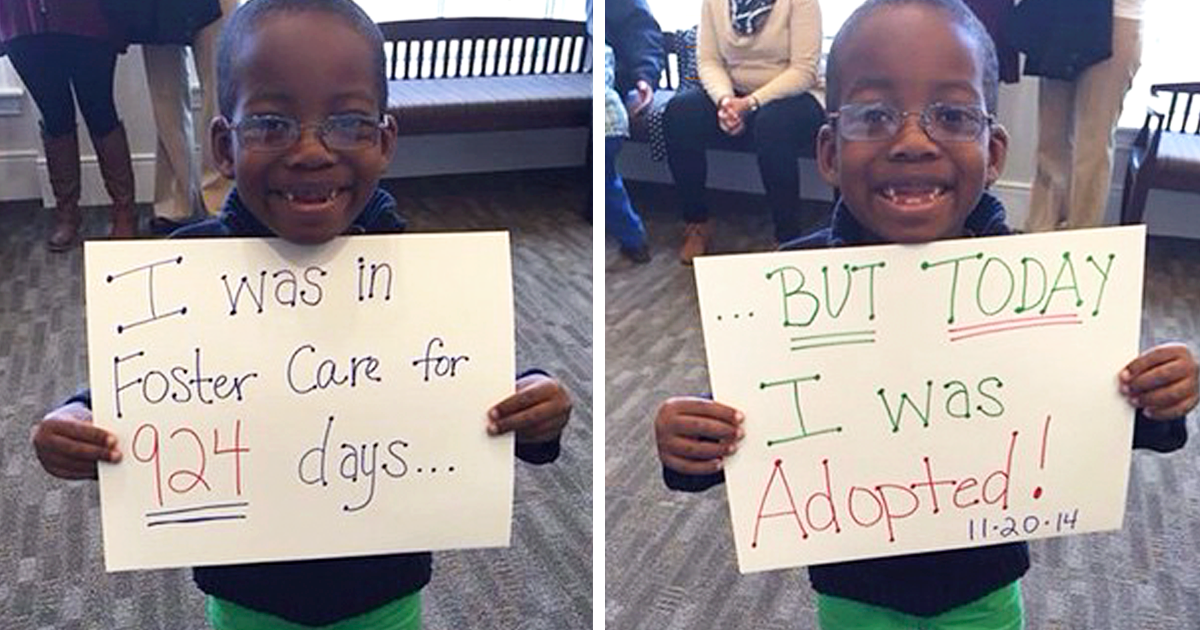
Some photographs need dramatic lighting, expensive lenses, and a photographer willing to lie on the floor for the perfect angle. Adoption-day pictures usually need none of that. A handmade sign, a courthouse hallway, and a child realizing that today is different can tell the whole story.
Pictures of newly adopted children often capture enormous emotions in wonderfully ordinary details: a teenager trying not to smile, siblings squeezing into one family portrait, a judge posing with a stuffed animal, or parents holding a sign after monthsor yearsof paperwork. The smiles are real, but the meaning behind them reaches far beyond one happy afternoon.
Adoption creates a permanent legal parent-child relationship, while permanency in child welfare refers more broadly to a stable, lasting family situation. For children who have lived with uncertainty, that promise of dependable connection can be deeply significant. Still, responsible adoption storytelling also recognizes that joy, grief, relief, loyalty, fear, and hope may all appear in the same family photograph.
Why Adoption-Day Photos Touch So Many People
Most family milestones arrive with familiar rituals. Birthdays have candles. Graduations have caps. Weddings have cake and at least one relative who ignores the dress code. Adoption finalizations do not have a single universal tradition, so families invent their own.
Some children hold signs announcing the number of days they spent in foster care. Others wear matching shirts with their new siblings. A few celebrate quietly with pancakes after court. These personal touches transform a legal proceeding into something a child can see, understand, and remember.
The most moving photographs rarely look perfectly polished. Someone is blinking. A toddler is examining the judge’s desk instead of facing the camera. A teenager has both hands in hoodie pockets while standing half an inch closer to a parent than usual. That imperfect honesty is precisely what makes the images powerful.
A Photo Can Mark a Beginning Without Erasing the Past
Adoption is not an eraser. Children may carry important relationships, memories, cultures, names, traditions, and questions from before finalization. Some continue meaningful connections with relatives or former caregivers when those relationships are safe and appropriate. Kinship and family-engagement practices emphasize belonging, identity, cultural continuity, and lasting connectionsnot simply placement in a new house.
That is why thoughtful captions focus on commitment rather than rescue. A child is not a broken project, and adoptive parents are not caped superheroes swooping into a courthouse. The better story is quieter and stronger: adults are promising to remain present through ordinary mornings, difficult conversations, school projects, inside jokes, and every mysterious sock that disappears in the laundry.
70 Heartwarming Adoption Moments Worth Celebrating
The following caption-style moments represent the kinds of scenes that make adoption galleries unforgettable. Each one highlights not perfection, but connection.
Little Signs With Enormous Meaning
- A child holds a chalkboard saying, “Today I became a permanent part of my family.”
- A toddler displays an adoption date while wearing one shoe and absolutely no concern about it.
- Three siblings lift signs reading, “Together forever,” each at a completely different angle.
- A teenager holds a simple card that says, “Worth the wait.”
- A little girl proudly announces that she now shares her family’s last name.
- A boy counts the days from placement to finalization on a brightly painted poster.
- A child writes, “I chose them too,” adding an important voice to the celebration.
- A handmade sign thanks foster parents, relatives, caseworkers, teachers, and supporters.
- A preschooler holds a backward sign while everyone wisely decides not to correct it.
- A family poses with one word printed across several cards: “HOME.”
Courthouse Smiles and Happy Tears
- A judge steps down from the bench to join the family portrait.
- A child sits in the judge’s chair and immediately looks ready to issue a snack-related ruling.
- Parents hug after hearing the final legal declaration.
- A teenager smiles at the exact moment the courtroom applauds.
- A younger sibling waves at the court clerk throughout the entire ceremony.
- A child bangs a ceremonial gavel with slightly more enthusiasm than courthouse furniture prefers.
- A family leaves the courtroom holding hands instead of documents.
- A grandparent wipes away tears while pretending to adjust a pair of glasses.
- A caseworker stands beside a family whose journey took years to complete.
- A quiet child offers the smallest smileand somehow becomes the center of the photograph.
Siblings Finally Celebrating Together
- Brothers wear matching bow ties that remain straight for nearly seven seconds.
- Sisters hold each other so tightly that the photographer barely needs to pose them.
- A sibling group piles onto one couch for its first official family portrait.
- An older sibling fixes a younger child’s collar before the camera clicks.
- Children celebrate being adopted together after worrying they might be separated.
- A new big brother proudly introduces himself to everyone in the hallway.
- A sister carries a sign saying, “Officially stuck with us.”
- Five children attempt a synchronized jump and achieve five different altitudes.
- A teenager places a protective arm around a younger sibling during the ceremony.
- New siblings exchange the slightly awkward, completely sincere hug of a family still growing.
Parents Realizing the Long Wait Is Over
- A parent closes tired eyes while holding a child after finalization.
- Two dads beam beside a child who has already stolen both their ties.
- A single mother holds the final paperwork in one hand and her daughter in the other.
- Parents wear shirts reading, “We said yes,” while their child’s shirt says, “So did I.”
- A father kneels so the family photograph is centered on the child.
- A mother laughs through tears when her son calls the judge’s robe “a giant blanket.”
- Parents celebrate without pretending the road to this day was easy.
- A couple surrounds a teenager instead of asking the teen to stand in front like a display piece.
- A parent carries a sleeping toddler out of court after the biggest event the toddler will not remember.
- A family’s relief appears not in a giant cheer, but in shoulders finally relaxing.
Extended Families Joining the Celebration
- Grandparents arrive wearing matching “official” family shirts.
- Cousins crowd around the newest permanent member of the family.
- An aunt brings balloons large enough to require their own courthouse security screening.
- Teachers and coaches appear because family support is bigger than a household.
- A former foster parent remains part of the celebration and the child’s support network.
- Relatives hold photographs of loved ones who could not attend.
- A family includes safe and meaningful birth-family connections in the day.
- Neighbors decorate the front porch before the family returns home.
- A community group organizes dinner so the parents do not have to cook.
- A beloved family dog waits at home wearing a bandana that says, “Promoted to sibling.”
Older Children and Teenagers Choosing Connection
- A teenager signs adoption papers with a serious expression and celebrates later with milkshakes.
- A young person keeps the same name while gaining a permanent family.
- A teen designs the family’s adoption-day shirts.
- An older child asks for a low-key ceremony and receives exactly that.
- A high school student poses with parents who promise to attend future graduations.
- A teenager brings a close friend to the courthouse for emotional backup.
- A young person chooses the restaurant, dessert, and playlist for the day.
- An older sibling jokes through the ceremony, then quietly asks for an extra copy of the photograph.
- A teen’s cautious smile reflects trust built through consistency rather than grand speeches.
- A family celebrates the child’s future without treating the child’s previous life as a prologue to discard.
Older youth may have understandable concerns about adoption, including fears of losing existing relationships, changing names, leaving communities, or appearing disloyal to their families of origin. Adoption professionals therefore encourage adults to listen carefully and let young people participate meaningfully in decisions that affect their identity and future.
Ordinary Moments That Say “You Belong Here”
- A newly official family eats takeout on the living-room floor.
- A child hangs a courthouse picture beside school drawings on the refrigerator.
- Parents tuck the adoption papers safely away while the child plays with the folder.
- A sibling teaches the new family handshake on the drive home.
- A child chooses where to place the framed adoption-day photograph.
- The family celebrates with cupcakes that lean dramatically but taste excellent.
- A teenager changes the group-chat name to “Officially Family.”
- A parent prepares the same familiar bedtime snack after an extraordinary day.
- A child asks what happens tomorrow and hears the reassuring answer: “Breakfast, school, and us.”
- The final photograph shows everyone tired, rumpled, happy, and exactly where they belong.
The Real Story Continues After the Camera Is Put Away
Finalization is a major legal and emotional milestone, but it does not magically resolve every challenge. Children may continue processing separation, trauma, disrupted attachments, identity questions, or uncertainty about relationships. Trauma-informed pediatric guidance emphasizes safety, resilience, attachment, family engagement, and ongoing support rather than expecting children to “move on” according to an adult timetable.
A child can feel delighted about adoption and sad about earlier losses. A teenager can love adoptive parents while missing relatives. A young person can enjoy a celebration while disliking public attention. None of these feelings cancel the others. Emotion is not a courtroom vote in which only one side may win.
Post-Adoption Support Is Part of the Commitment
Healthy families ask for help before a challenge becomes a crisis. Post-adoption services may include family counseling, peer groups, respite resources, medical assistance, educational advocacy, and professionals who understand adoption-related grief and trauma. Adoptive-parent support groups can also reduce isolation by connecting families with people who recognize the unusual combination of joy, paperwork, uncertainty, and occasionally explaining to strangers that no, the child’s personal history is not public trivia.
National foster-care and adoption data systems continue to track children waiting for adoption and children who reach permanency. Behind every data point is a young person with individual preferences, relationships, strengths, and dreams. The goal should never be to find any child for an adult who wants one; it is to find safe, prepared, committed families capable of meeting a particular child’s needs.
How to Share Adoption Photos Respectfully
Adoption-day photographs can encourage other families and challenge harmful myths, but a child’s privacy deserves more protection than a social-media post deserves applause.
Ask Before Posting
Children who are old enough to express an opinion should be included in decisions about which images are shared, who can see them, and what captions are used. A child who happily agrees today should also be allowed to request removal later.
Protect Personal History
A smiling portrait does not give viewers permission to know why a child entered care, what happened to the child’s parents, or which diagnoses appear in confidential records. Adoption guidance stresses that children have a right to privacy and should eventually control how much of their own story they tell.
Avoid Labels That Follow a Child Forever
Captions should not define children by trauma, behavior, disability, or the length of time they waited. Use names only with appropriate permission, remove identifying courthouse or school information, and consider sharing photographs privately rather than publicly. Some adoption organizations restrict access to waiting-child images specifically to preserve confidentiality.
Let the Child Be More Than an Adoption Story
The best future family album will contain much more than finalization day. It will include muddy shoes, science fairs, burnt pancakes, vacations, ordinary Tuesdays, awkward school portraits, and birthdays when someone insists that frosting counts as breakfast. Adoption may be part of a child’s identity, but it is not the child’s entire identity.
Experiences Behind the Smiles: What Families Often Learn
The most meaningful adoption experiences rarely unfold exactly as adults imagined. Parents may picture a child running into their arms after the judge signs the order. The child may instead ask whether the courthouse has Wi-Fi. That does not make the moment less important. It simply reminds everyone that children experience milestones in their own ways.
Many families discover that trust grows through repetition. It develops when a parent returns after an argument, attends another school meeting, remembers which cereal the child dislikes, and keeps a promise that seemed too small to matter. A child who has experienced disrupted relationships may test whether adults truly mean “forever.” The answer is not delivered once in a ceremonial speech. It is demonstrated hundreds of times.
Families also learn to make room for complicated anniversaries. An adoption date may bring pride and happiness, but it may also remind a child of separation or unanswered questions. Wise parents do not demand gratitude or insist that the day feel cheerful. They ask what the child wants: a party, a quiet dinner, a visit with relatives, time alone, or no special observance at all.
Siblings often experience the transition differently. One child may immediately embrace new family traditions, while another protects familiar routines. Children already living in the home may feel excited, jealous, protective, confused, or all four before lunch. Family counseling can help everyone speak honestly and adjust to new relationships without assigning one child the role of “the difficult one.” An AdoptUSKids family story, for example, describes counseling as useful in helping parents and children adapt to changing family dynamics.
Parents frequently become more careful with language. They stop asking whether someone is a child’s “real” parent and instead use specific terms such as birth parent, first parent, foster parent, relative caregiver, or adoptive parent according to the family’s preferences. They learn that speaking respectfully about a child’s family of origin supports the child’s developing identity rather than threatening the adoptive relationship.
Transracial and transcultural adoptive families may discover that love alone does not teach a child how to navigate racial identity. Children benefit from cultural continuity, honest conversations about discrimination, appropriate hair and skin care, and relationships with adults and peers who share aspects of their background. Lived-experience perspectives emphasize the value of role models who resemble the child and can offer forms of understanding adoptive parents may not personally possess.
Older children and teenagers may need adults to prove that permanence extends beyond age eighteen. They want to know who will answer a midnight call from college, teach them to file taxes, attend a future wedding, or provide a place to spend Thanksgiving. Adoption is not merely about childhood supervision. It is about creating lifelong family membership.
Perhaps the biggest lesson is that successful adoption is not measured by how closely a family resembles a cheerful stock photograph. It is measured by safety, honesty, stability, mutual respect, and the willingness to seek help. The courthouse photo is beautiful because it captures a promise. The years that follow give that promise its meaning.
A Photograph of Hope, Not a Perfect Ending
These 70 heartwarming adoption moments invite us to celebrate children receiving lasting family connections. They also ask us to look beyond matching shirts and colorful signs. Every child deserves to be understood as a whole personwith a past worth respecting, a voice worth hearing, and a future that should not depend on performing happiness for a camera.
The loveliest adoption-day photograph may be the one taken after the official portrait: a child reaching for a parent’s hand, a sibling making an outrageous face, or a family heading home to continue building trust one ordinary day at a time.
Editorial note: This article synthesizes guidance, data, and lived-experience material from U.S. child-welfare agencies, pediatric experts, adoption organizations, legal references, family-support nonprofits, and responsible adoption-story resources, including Child Welfare Information Gateway, the Children’s Bureau, AdoptUSKids, HealthyChildren.org, Casey Family Programs, the National Council For Adoption, the Dave Thomas Foundation for Adoption, Cornell Law School’s Legal Information Institute, Holt International, and the original adoption-photo gallery context.