Some flowers are masters of mixed signals. They arrive wearing velvet petals, delicate bells, or trumpet-shaped blooms, then quietly reveal that they contain chemicals capable of causing vomiting, heart problems, organ damage, or worse. In other words, the botanical world has its own collection of charming villains.
Fortunately, a toxic flower is not automatically a flower you must fear or remove. Most poisonous garden plants are safe to admire when they are correctly identified, handled carefully, and kept away from curious children and animals. The danger usually comes from chewing, swallowing, drinking contaminated vase water, or handling irritating sap without protection.
This guide explores 10 beautiful but toxic flowers commonly found in gardens, landscapes, and floral arrangements. You will learn what makes each plant dangerous, which parts contain the greatest concentration of toxins, what symptoms exposure may cause, and how to enjoy these striking blooms more safely.
Why Can a Beautiful Flower Be Poisonous?
Plants cannot run away when something tries to eat them. Instead, many species manufacture defensive chemicals such as alkaloids, cardiac glycosides, saponins, cyanogenic compounds, and irritating oils. These substances may discourage insects and grazing animals, but they can also affect people, dogs, cats, horses, and other animals.
Toxicity is not identical in every situation. Risk depends on the plant species, the part consumed, the quantity, the person or animal’s body size, and how quickly treatment begins. One flower may produce only temporary stomach irritation, while another can disrupt the heart after a surprisingly small exposure.
1. Oleander
Beautiful enough for a resort, dangerous enough for caution
Oleander, or Nerium oleander, is an evergreen shrub covered with clusters of pink, red, peach, white, or yellowish flowers. It thrives in hot, dry conditions and is frequently planted along highways, coastal landscapes, patios, and property boundaries. Its toughness is impressive. Unfortunately, so is its toxicity.
Every part of oleander contains cardiac glycosides, including the flowers, leaves, stems, sap, and seeds. These compounds interfere with the electrical activity of the heart. Swallowing oleander may cause nausea, vomiting, abdominal pain, weakness, dizziness, a slow or irregular heartbeat, and potentially life-threatening cardiac complications.
Never use oleander branches as cooking skewers, and do not burn garden trimmings. Wear gloves while pruning, wash tools afterward, and collect every clipping instead of leaving tempting sticks on the ground for pets. Oleander is lovely, but it is not interested in becoming part of your barbecue.
2. Foxglove
A cottage-garden classic with a pharmaceutical side
Foxglove, especially Digitalis purpurea, produces tall spires covered with tubular flowers in shades of purple, pink, cream, and white. The spotted throats resemble tiny decorated hallways designed specifically for bees. In a cottage garden, few plants create more vertical drama.
Foxglove contains powerful cardiac glycosides related to compounds used in certain heart medications. That medical connection does not make homemade foxglove tea a clever wellness experiment. All parts of the plant are poisonous, and the concentration of active chemicals can vary considerably.
Possible symptoms include nausea, vomiting, diarrhea, stomach pain, confusion, unusual color vision, tremors, a slow pulse, and dangerous heart rhythm changes. Keep foxglove away from vegetable beds and areas where young children play. After handling or deadheading it, wash your hands before touching food.
3. Monkshood
One of the garden’s most elegant troublemakers
Monkshood, also called wolfsbane or Aconitum, bears dramatic blue, violet, white, or purple flowers shaped like miniature helmets. It is prized for bringing intense color to partially shaded borders at a time when many other perennials are beginning to look tired.
The plant contains aconitine and related alkaloids, particularly in its roots and tubers. These chemicals disrupt normal nerve and heart function. Poisoning may produce burning or tingling sensations, numbness, vomiting, muscle weakness, low blood pressure, abnormal heart rhythms, and respiratory complications.
Monkshood should be handled with gloves, especially when dividing roots or cutting damaged stems. Avoid planting it beside edible herbs, where a leaf or root could be harvested accidentally. Label it clearly, and never assume that “natural” means gentle. Nature also created lightning, poison dart frogs, and family group chats.
4. Autumn Crocus
A fall bloom with serious consequences
Autumn crocus, or Colchicum autumnale, sends up delicate pink, lavender, or white flowers when many gardens are winding down for the season. The flowers emerge without visible leaves, which explains the plant’s less formal nickname, “naked ladies.”
Despite its common name, autumn crocus is not the same plant as the culinary saffron crocus. It contains colchicine, a potent alkaloid found throughout the plant and especially in the corm. Ingestion can cause severe abdominal pain, persistent vomiting, bloody diarrhea, dehydration, shock, bone-marrow suppression, organ failure, and death.
Symptoms may worsen after an initial delay, so apparent improvement should never be treated as proof that everything is fine. Autumn crocus is especially concerning when its leaves or bulbs are confused with edible wild plants. Grow it away from food gardens and label stored corms before someone mistakes them for onions.
5. Lily of the Valley
Tiny bells with a powerful chemical defense
Lily of the valley, or Convallaria majalis, looks almost impossibly innocent. Its arching stems carry rows of fragrant white bells above broad green leaves. It spreads readily in shady gardens and is often used as a romantic ground cover beneath trees.
All parts of lily of the valley contain cardiac glycosides. The plant may also produce attractive red or orange berries, which can be particularly tempting to children. Ingestion may cause nausea, vomiting, dizziness, confusion, blurred vision, slow heart rate, and abnormal cardiac rhythms.
Because it spreads through underground rhizomes, lily of the valley can wander beyond its intended bed. Monitor its growth and remove flowers before berries develop in family gardens. Do not confuse it with edible wild greens. A pleasant fragrance is not a certificate of snackworthiness.
6. Daffodil
The cheerful spring flower with an unfriendly bulb
Daffodils are among the most recognizable signs of spring. Their yellow, white, orange, or peach trumpets emerge early, often while the rest of the yard is still deciding whether winter is truly over.
Daffodils contain lycorine and other irritating compounds. The bulbs generally contain the highest concentration, although the stems, leaves, and flowers should not be eaten. Poisoning commonly causes drooling, nausea, vomiting, diarrhea, and abdominal pain. Larger exposures may result in weakness, tremors, low blood pressure, or heart rhythm changes.
Daffodil bulbs occasionally cause poisoning after being mistaken for onions. Store flower bulbs in labeled containers away from the kitchen, and never place them beside produce. Florists and gardeners who handle large numbers of daffodils may also develop skin irritation, so gloves can be useful during planting and harvesting.
7. Tulip
Spring elegance with concentrated danger underground
Tulips provide nearly every color a gardener could request, from restrained white to purple so dark it appears almost black. Their neat shapes make them favorites for formal beds, spring containers, and cut-flower arrangements.
Tulips contain compounds commonly called tulipalins. The greatest concentration is typically found in the bulbs. Dogs and cats that dig up or chew bulbs may develop drooling, vomiting, diarrhea, mouth irritation, depression, or loss of appetite. Serious symptoms are more likely after a substantial exposure.
Repeated occupational handling can also cause a form of contact dermatitis sometimes called “tulip fingers.” Gardeners planting large quantities should wear gloves and wash exposed skin. Once again, bulb storage matters: a tulip bulb should never be allowed to mingle anonymously with onions, garlic, or shallots.
8. Hydrangea
Big flower clusters hiding cyanogenic compounds
Hydrangeas produce enormous rounded or lace-like clusters in blue, pink, purple, green, and white. Depending on the variety and soil chemistry, some can even change color, which feels like botanical sorcery performed by a shrub wearing a very fancy hat.
Hydrangea leaves, buds, and flowers contain cyanogenic glycosides. When plant tissue is crushed or chewed, these compounds can release small amounts of cyanide-related substances. Typical exposure is more likely to cause nausea, vomiting, diarrhea, lethargy, or abdominal discomfort than severe cyanide poisoning, but the plant should still be treated as inedible.
Do not use untreated hydrangea flowers as cake decorations or cocktail garnishes. A blossom being photogenic does not make it food-safe. Keep fallen leaves and pruned branches away from animals that habitually chew garden debris.
9. Azalea and Rhododendron
Spectacular shrubs with grayanotoxins
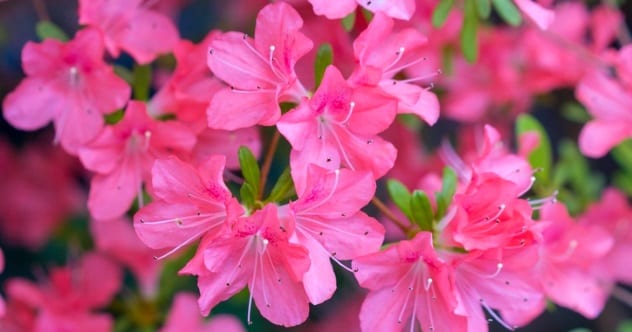
Azaleas and rhododendrons can cover themselves in brilliant pink, red, orange, purple, or white blossoms. They are landscaping favorites across much of the United States, particularly in woodland gardens and acidic soils.
These plants contain grayanotoxins in their flowers, leaves, and nectar. Ingestion may cause burning in the mouth, excessive drooling, nausea, vomiting, weakness, low blood pressure, confusion, and an unusually slow or irregular heartbeat. Pets can become seriously ill after chewing leaves or stems.
Small clippings deserve attention because a bored puppy can turn yard waste into an unauthorized tasting menu. Fence vulnerable shrubs, supervise pets outdoors, and dispose of trimmings promptly. Families with livestock should also prevent access to discarded branches.
10. True Lilies and Daylilies
A gorgeous bouquet that can be deadly to cats
True lilies from the genus Lilium include Easter, Asiatic, Oriental, tiger, and stargazer lilies. Daylilies belong to the genus Hemerocallis. Both groups produce bold, graceful flowers, and both are extremely dangerous to cats.
A cat does not need to eat an entire plant to face an emergency. Chewing a small piece of leaf or petal, licking pollen from its fur, or drinking water from a lily vase may lead to acute kidney failure. Early signs can include vomiting, drooling, reduced appetite, and lethargy, followed by changes in urination and severe kidney damage.
The exact toxic substance responsible has not been identified, but the practical rule is simple: households with cats should not bring true lilies or daylilies indoors. Remove the entire bouquet rather than plucking out one flower, because pollen may already have fallen onto nearby foliage or furniture. Immediate veterinary treatment offers the best chance of survival.
How to Grow Toxic Flowers More Safely
You do not necessarily need to turn your garden into a padded room. A few sensible precautions greatly reduce the likelihood of accidental poisoning.
- Identify every plant: Keep nursery labels and record botanical names. Common names can refer to unrelated species with very different toxicity profiles.
- Separate ornamentals from food: Do not grow toxic bulbs or leafy plants where they can be confused with onions, herbs, or edible greens.
- Wear gloves: Protect your skin while pruning, dividing roots, planting bulbs, or handling sap.
- Control access: Use raised containers, fencing, closed rooms, or pet-safe garden zones when children or animals are present.
- Manage plant waste: Collect leaves, flowers, bulbs, and branches immediately after pruning or storms.
- Avoid improvised uses: Never turn unidentified flowers into tea, garnishes, herbal remedies, cooking tools, or craft materials intended for the mouth.
- Act quickly after exposure: Save a sample or take clear photographs of the plant, then contact an appropriate medical or veterinary professional.
Practical Experience: What Living With Toxic Flowers Is Really Like
The following practical observations reflect common experiences shared by gardeners, florists, homeowners, and pet owners. They are not a substitute for professional poisoning advice, but they illustrate how small habits can prevent very large problems.
The first lesson is that labels disappear exactly when they become important. A plastic plant marker looks permanent in April, but by August it has faded, cracked, migrated beneath the mulch, or been stolen by a squirrel with interior-design ambitions. Keeping a simple digital garden map with photographs and botanical names makes future identification much easier. This becomes invaluable when a child picks a berry or a dog appears beside a half-chewed stem.
The second lesson is that pets do not read gardening books. A dog may ignore an oleander for five years and suddenly chew a fallen branch after a storm. A cat that has never shown interest in houseplants may investigate a new bouquet because it smells different, moves in the breeze, or arrived in an exciting sheet of crinkly paper. Past good behavior does not guarantee future restraint.
Cut flowers create risks that gardeners sometimes overlook. A plant growing behind a fence may be reasonably controlled, but a bouquet places flowers, pollen, leaves, and vase water directly on a kitchen counter. Lilies are the clearest example. Cat owners frequently focus on petals while forgetting that loose pollen can land on fur and be swallowed during grooming. The safest strategy is not a higher shelf; it is a lily-free home.
Bulb season creates another preventable hazard. Tulip and daffodil bulbs can resemble small onions, particularly after labels are lost. Experienced gardeners store ornamental bulbs in a separate garage cabinet or clearly marked container rather than beside vegetables. The extra thirty seconds spent writing “NOT FOOD” is considerably more enjoyable than an emergency-room visit.
Protective gloves are also more useful than many people expect. Most gardeners will not be poisoned simply by touching a leaf, but sap, damaged roots, and repeated handling can irritate skin. Monkshood, tulips, daffodils, and oleander deserve particular caution during division and pruning. Gloves also prevent plant residue from traveling directly from the garden to a sandwich.
Garden design can quietly improve safety. Toxic ornamentals can be placed at the back of borders, behind low fencing, or in sections that pets cannot access. Edible herbs and vegetables should occupy clearly separate beds. This reduces mistaken harvesting and makes the garden easier for visitors, babysitters, and pet sitters to understand.
Finally, preparation removes panic. Keep local medical, veterinary, and poison-control numbers somewhere easy to find. Photograph established plants while they are flowering, because identification may be harder after a pet has reduced the evidence to three damp leaves and a suspicious expression. When exposure occurs, quick, accurate information is more helpful than guessing, waiting for symptoms, or searching social media for someone whose cousin once owned a flower.
Frequently Asked Questions
Can toxic flowers harm you just by being nearby?
Most toxic flowers do not poison people simply through normal proximity. Risk generally comes from ingestion, sap exposure, contaminated hands, or, in certain cases, smoke from burning plant material. People with allergies or sensitive skin may react more easily.
Are poisonous flowers always dangerous to both humans and pets?
No. Toxic effects can be highly species-specific. True lilies are a major kidney threat to cats, while the same exposure does not usually produce identical effects in dogs or people. Never assume that a plant safe for one species is safe for another.
What should I do when a child eats part of a flower?
Remove remaining plant material from the mouth, gently rinse the mouth, and contact Poison Control or a medical professional immediately. Do not wait for symptoms and do not induce vomiting without expert instructions. Keep a sample or photograph for identification.
What should I do when my pet chews a toxic plant?
Contact a veterinarian or animal poison-control service immediately. Provide the animal’s species, weight, symptoms, estimated amount consumed, time of exposure, and the plant’s name when known. With lilies and cats, treat even minor suspected exposure as an emergency.
Can toxic flowers be composted?
Many plant toxins break down during proper composting, but home compost conditions vary. Avoid composting highly toxic plants when pets or livestock can access the pile. Bagging and disposing of dangerous clippings may be the safer option, particularly for oleander, monkshood, and autumn crocus.
Conclusion
The world’s most beautiful flowers are not always the friendliest. Oleander, foxglove, monkshood, autumn crocus, lily of the valley, daffodils, tulips, hydrangeas, azaleas, and true lilies all demonstrate that appearance is a poor guide to safety.
That does not mean every toxic flower must disappear from the landscape. Accurate identification, thoughtful placement, protective gloves, careful cleanup, and strict separation from food-growing areas can make many ornamental gardens safer. The major exception is a home with cats, where true lilies and daylilies are simply not worth the risk.
Admire dramatic flowers, photograph them, grow appropriate species responsibly, and let pollinators enjoy the buffet. Just remember that the prettiest bloom in the garden may come with a firm botanical warning: look, but do not taste.
Note: This article provides general educational information and does not replace medical, toxicological, or veterinary advice. Toxicity may vary by species, plant part, dose, and individual sensitivity. Seek professional help immediately after a suspected exposure.