When Jeopardy! does anything new, fans do not exactly respond with a polite golf clap. They respond like people who have memorized entire clue archives, own strong opinions about buzzer timing, and can spot a weird ruling from orbit. So when Pop Culture Jeopardy! arrived, it was never going to drift quietly into the streaming world like a harmless little spin-off. It was going to be examined, debated, praised, nitpicked, compared to classic Jeopardy!, compared to Celebrity Jeopardy!, and probably judged for the width of its podiums. Naturally, that is exactly what happened.
The show had a built-in challenge from day one. It needed to feel like Jeopardy! without being a copy. It needed to be looser, brighter, and more pop-savvy without turning into trivia karaoke. It needed to welcome viewers who know every lyric from a 2000s one-hit wonder and can identify a Marvel side character from a blurry screenshot, while still convincing longtime Jeopardy! loyalists that the franchise had not wandered off and joined a group chat called “Garbage Knowledge Forever.” That balancing act is why Jeopardy! fans have had so many thoughts about Pop Culture Jeopardy!. The show is familiar, but not too familiar. It is respectful of the original, but not too reverent. In other words, it is the kind of thing fandom loves to argue about.
Why Pop Culture Jeopardy! Got Fans Buzzing So Fast
Part of the early excitement came from the premise alone. A pop culture version of Jeopardy! sounds like a dangerous amount of fun. Instead of waiting for the rare movie or music category on the regular show, fans were promised a format built around the stuff people debate in group texts, at brunch, and while pretending not to care too much about awards season. That made the spin-off feel immediately more social. It was easier to imagine playing along on the couch with friends and shouting out answers like you were trying to win the world’s most stressful bar trivia night.
The team-based format helped too. Instead of one contestant standing alone at each lectern, Pop Culture Jeopardy! put teams of three on stage. That one change made the show feel faster, chattier, and more communal. It also made the energy different from classic Jeopardy!. Regular Jeopardy! is cool, crisp, and disciplined. Pop Culture Jeopardy! feels like its extroverted cousin who still studies hard but also knows which celebrity memoir contains the juiciest chapter titles. Fans noticed that shift immediately, and many of them liked it.
There was also the simple fact that the show looked like an event. The set had more swagger, the wider podiums gave it a team-sport vibe, and the giant retro-style letters in the background sparked instant nostalgia. For a fandom that notices every tweak to the main show’s rhythm and appearance, the visual makeover mattered. Viewers were not just reacting to a new category lineup. They were reacting to a whole new mood.
Colin Jost Became the Main Character of the Conversation
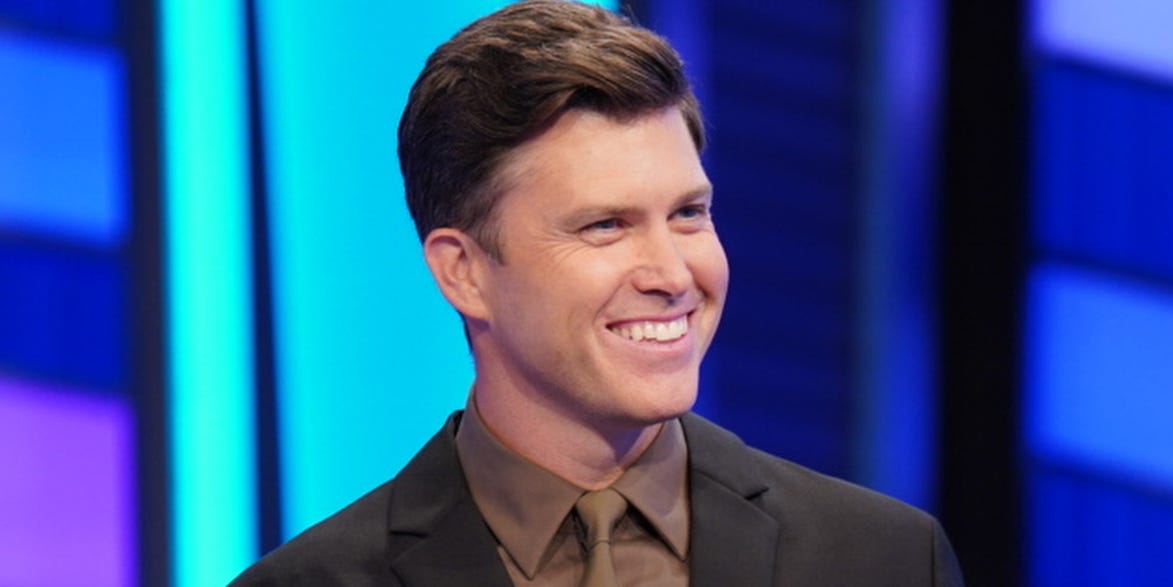
If there was one topic that dominated fan chatter, it was Colin Jost. His casting made sense on paper. He is quick on his feet, comfortable with live television, and fluent in the kind of celebrity-and-entertainment references that make pop culture trivia hum. But fans do not grade hosts on paper. They grade them in real time, with opinions sharp enough to cut glass.
A lot of viewers were pleasantly surprised. Some thought Jost looked polished right away. Others liked that he brought a dry, low-key wit instead of trying to perform a Vegas version of “game show host.” His style struck many fans as a good fit for a spin-off that is supposed to feel a little more playful than the flagship show. He did not try to become Ken Jennings 2.0, and that was probably smart. The best reaction Jost earned was not “He’s exactly like the regular host.” It was more like, “He gets the assignment.” For a franchise this beloved, that counts as a standing ovation with inside voices.
Still, not everyone was ready to hand him a buzzing trophy. Some longtime viewers thought his delivery could feel a little too snarky or self-aware. A few found him slightly low-energy compared with the bright, clean pace they expect from Jeopardy!. Others liked him on this show specifically but drew a firm line at the idea of him taking over the main syndicated version. That distinction came up again and again in fan reactions: Jost works for Pop Culture Jeopardy!, but regular Jeopardy! is still Ken Jennings territory.
That may actually be the best possible outcome for the show. Instead of launching a host war, Pop Culture Jeopardy! clarified that different corners of the franchise can support different energies. Jennings brings scholar-athlete credibility. Jost brings late-night polish and pop-aware timing. Fans may disagree on which one they prefer, but the spin-off seems strongest when it does not ask viewers to choose. It asks them to accept that this is a different room with a different vibe.
The Format Is Familiar Enough to Comfort Fans, Different Enough to Start Arguments
Pop Culture Jeopardy! did not throw away the Jeopardy! blueprint. That was important. The famous answer-and-question format stayed intact, and the show kept the general structure that makes the franchise addictive. But it also introduced the kind of twist that fans immediately began analyzing like they were breaking down film before the playoffs.
The biggest addition was Triple Play, a new clue mechanic built for the team format. In theory, it is clever: one team can earn triple the clue value if all three teammates contribute correct responses. In practice, it adds chaos, risk, and a lot of second-guessing. Fans loved talking about whether teams were using good strategy, ringing in too quickly, or relying on hope as a game plan. That is the kind of innovation a spin-off needs. It should not feel like a costume change. It should create new kinds of tension.
Even the release strategy became part of the conversation. Dropping episodes in batches gave fans something to binge instead of rationing one game a day. For some viewers, that was a treat. For others, it raised broader questions about whether the Jeopardy! universe is expanding too aggressively. When a franchise becomes a bigger ecosystem, the audience starts sorting content into categories: essential, fun extra, and “do we really need this many tournaments?” Pop Culture Jeopardy! landed in the middle of that debate almost immediately.
Fans Loved the Set, but the Clues Sparked More Debate
One thing that drew relatively easy praise was the set. The giant letters, the updated board, and the oversized podiums gave the show a distinct personality without making it feel unrelated to the parent brand. That mattered. Fans want the comfort of recognition with just enough novelty to justify the spin-off. On that level, Pop Culture Jeopardy! mostly succeeded.
The clue material, though, inspired a lot more back-and-forth. That was probably inevitable. “Pop culture” is one of those phrases that sounds precise until you ask ten people what it means. For some viewers, it means movies, television, music, internet culture, and celebrity lore all mashed into one glorious trivia buffet. For others, it needs to be niche, sharp, and maybe a little dangerous. They do not just want “famous thing happened.” They want “obscure but fair detail from a famous thing.”
That tension showed up quickly. Some fans thought the show had the right mix of accessible and brainy. Others argued that certain clues felt too broad, too easy, or not pop-culture-specific enough. Then there were moments that pushed the opposite direction, like the now-discussed scoring correction involving a Paul Rudd film title. That kind of detail is catnip for serious trivia fans. It also proves that even on the splashier spin-off, precision still matters. Jeopardy! viewers can forgive many things. Sloppy clue logic is not usually one of them.
Another moment that got attention was when former Jeopardy! contestants missed a clue tied to Denzel Washington. Scenes like that become instant fan fuel because they combine surprise, secondhand embarrassment, and the irresistible urge to say, “I got that one from my couch.” The show needs those moments. Trivia television lives on them. They make social chatter happen, and they remind viewers that even very smart players can short-circuit when the spotlight hits.
Why Some Jeopardy! Purists Still Side-Eye the Spin-Off
No matter how entertaining the show is, a portion of the fandom was always going to approach it with raised eyebrows. That is not because these viewers hate fun. It is because Jeopardy! fans are deeply protective of the franchise’s identity. They worry about drift. They worry about overexpansion. They worry that a beloved institution could turn itself into “content” if nobody watches the thermostat.
That concern helps explain why some reactions to Pop Culture Jeopardy! sounded less like reviews and more like constitutional law arguments. Is this still Jeopardy!? Is the tone too loose? Is the humor too visible? Are the clues too self-aware? Does the franchise risk exhausting viewers by multiplying tournaments, formats, and side branches? Those questions are not random grumbling. They reflect a real anxiety about what makes Jeopardy! special in the first place.
And yet, the existence of those debates also proves the spin-off is doing something interesting. Fans do not argue this passionately about forgettable TV. They argue because Pop Culture Jeopardy! is close enough to the real thing to matter, but different enough to challenge expectations. It is not background noise. It is a test case for how far the brand can stretch without snapping.
What Pop Culture Jeopardy! Gets Right
For all the nitpicking, the strongest argument in the show’s favor is simple: it is fun. That might sound obvious, but it matters. The regular version of Jeopardy! is thrilling in a precise, almost elegant way. Pop Culture Jeopardy! allows itself to be a little more chaotic, a little more chatty, and a little more gleeful about the silliness of knowing too much about television, movies, music, and celebrity culture. It understands that “trash knowledge” can still require a frighteningly good memory.
It also broadens what counts as worthy trivia territory. Pop culture is often treated as fluff right up until someone realizes they cannot remember the original title of a Paul Rudd movie, the plot of Fences, or the correct answer hiding behind a seemingly easy clue. That is part of the show’s appeal. It quietly argues that cultural literacy is still literacy. You may not be identifying 19th-century European monarchs, but if you can navigate a category that jumps from Broadway to superhero franchises to viral internet weirdness, your brain is still getting a workout.
Most importantly, the spin-off gives the franchise room to breathe. It does not replace classic Jeopardy!. It lets the brand try on a different jacket for a while. Some fans will always prefer the original cut, and fair enough. But as long as the spin-off keeps the clues sharp, the rulings fair, and the tone playful rather than smug, it can occupy a useful lane.
The Real Reason Fans Have So Many Thoughts
The truth is that fans have a lot of thoughts about Pop Culture Jeopardy! because the show presses on something very current: the collapsing wall between “serious” knowledge and “entertainment” knowledge. Modern audiences do not separate those worlds as neatly as they used to. Knowing Shakespeare is still impressive. Knowing the entire Real Housewives timeline, every major Marvel release, and which pop star had which reinvention phase is also a kind of expertise. Maybe an alarming kind, but expertise all the same.
That is why the spin-off feels bigger than a novelty act. It turns a cultural habit into a competition format. It says the things people once dismissed as fluff can now power a high-pressure trivia contest with real stakes. Fans respond strongly because they recognize themselves in that setup. They are not just watching contestants answer clues. They are watching the value of their own obsessions get taken seriously for once. And honestly, that might be the most satisfying clue of all.
Extended Fan Experience: What Watching Pop Culture Jeopardy! Actually Feels Like
Watching Pop Culture Jeopardy! feels a little like being invited to the smartest party in town, only instead of discussing macroeconomics, everyone is arguing about sitcom theme songs, prestige TV finales, famous flops, and whether a clue about an actor’s early filmography was too easy or weirdly evil. There is a very specific pleasure in that. It feels social even when you are watching alone. The categories are built to trigger instant reactions: excitement, outrage, smugness, regret, and the deeply human need to yell, “I knew that!” at a television that cannot validate you back.
For longtime fans of Jeopardy!, the experience is especially funny because it produces two contradictory emotions at once. First, there is the sacred thrill of hearing the familiar structure of the game. Then there is the realization that the clue board may ask about reality TV, comic-book franchises, celebrity books, or some wildly specific cultural reference you absolutely should not know but somehow do. The result is a kind of intellectual whiplash in the best sense. One minute you feel refined. The next minute you are fist-pumping because your years of absorbing nonsense have finally paid rent.
The team format changes the emotional texture too. On classic Jeopardy!, watching a contestant struggle can feel lonely. On Pop Culture Jeopardy!, the teams make every success and failure feel shared. When a group nails a Triple Play, it is genuinely satisfying. When they ring in too soon and fall apart halfway through, it is the kind of sports-movie collapse that makes viewers lean forward and mutter at the screen like unpaid assistant coaches. That creates a different kind of investment. You are not only rooting for individuals. You are reading chemistry, confidence, panic, and group dynamics in real time.
There is also something sneakily relatable about the show’s whole premise. Most people have at least one pop culture lane where they feel unstoppable. Maybe it is 1990s movies. Maybe it is boy bands. Maybe it is prestige drama, old sitcoms, or awards-show history. Pop Culture Jeopardy! taps into that fantasy that your oddly specific knowledge base is not random at all. It is destiny. It is your moment. It is why your brain kept storing facts about celebrity marriages instead of remembering where you left your keys.
And perhaps that is why fans keep talking about the show after the episodes end. It does not just entertain them. It flatters them, challenges them, annoys them, and occasionally exposes them. It reminds viewers that pop culture is not just background noise. For many people, it is the language of everyday life. So when Pop Culture Jeopardy! gets something right, it feels like a victory lap for modern fandom. And when it gets something wrong, fans react like a trusted friend just misquoted their favorite movie. That level of feeling is hard to fake. It is also a sign the show has already found the one thing every spin-off needs: a reason for people to care loudly.
Conclusion
Jeopardy! fans have a lot of thoughts about Pop Culture Jeopardy! because the show gives them a lot to think about. It is flashy without being unrecognizable, clever without always being perfect, and playful without completely abandoning the high standards that make the franchise work. Some viewers love Colin Jost. Some miss the smoother rhythm of the main show. Some think the clues should be tougher, stranger, or more niche. Others are just thrilled that years of carrying encyclopedic knowledge about movies, music, celebrities, and television can finally look like a respectable skill instead of a cry for help.
That mix of excitement, skepticism, and obsession is not a problem. It is the proof of life. A dead-on-arrival spin-off would not inspire this much conversation. Pop Culture Jeopardy! did. And in the Jeopardy! universe, getting fans to care this much is not a warning sign. It is a very good answer.