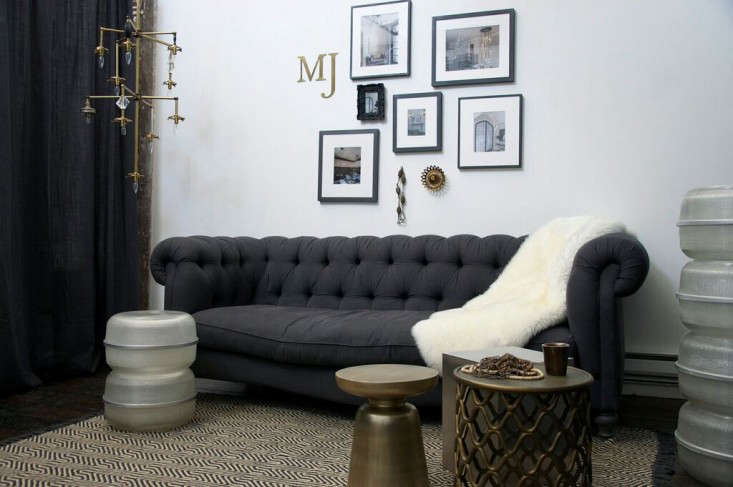
Some lighting merely helps you find your keys. Michelle James lighting, on the other hand, looks like it may have borrowed your keys, driven to a jazz club, and returned home wearing vintage jewelry. From her Red Hook, Brooklyn studio, James creates custom chandeliers, pendants, and sconces that combine repurposed vintage glass globes, old lamp elements, brass, steel, and a very particular kind of glamour: polished, architectural, nostalgic, and never shy.
The story of Michelle James NYC begins with an instinct familiar to many design obsessives: “I cannot find the exact thing I want, so I suppose I’ll have to make it myself.” James, a former fashion stylist and jewelry designer, began designing lighting while renovating a historic Brooklyn brownstone. What started with vintage pieces and basement experimentation grew into a custom lighting studio known for fixtures that feel both antique and modern, restrained and theatrical, serious and just a little flirtatious.
Today, the Red Hook studio is more than a workshop. It is part showroom, part archive, part materials library, and part evidence that glass globes have more personality than many dinner guests. The space reflects the work itself: clean white walls, dark accents, practical shelving, brass details, and shelves of glass waiting patiently for its second act.
From Fashion Eye to Lighting Studio
Michelle James did not arrive at lighting through the most predictable route. Her background in fashion styling and jewelry design matters because her fixtures behave like accessories for a room. They do not simply illuminate a space; they finish the outfit. A dining room with one of her globe chandeliers feels dressed. A hallway with a Chrysler-inspired pendant feels considered. A bathroom with a brass-and-glass sconce suddenly believes it is in a boutique hotel and frankly refuses to go back.
This fashion sensibility shows up in proportion, shine, contrast, and restraint. James’s work rarely screams. Instead, it glows, gleams, and catches the corner of your eye like a good cuff bracelet. The use of vintage glass brings softness and irregularity, while brass, steel, and custom cast elements provide structure. The result is custom lighting that works in historic homes, modern lofts, restaurants, salons, hotels, and interiors where “builder-grade ceiling boob light” is considered a personal attack.
Why Red Hook Is the Right Setting
Red Hook, Brooklyn has long attracted artists, designers, woodworkers, metalworkers, and independent makers. The neighborhood’s industrial past, waterfront buildings, cobblestone character, and slightly tucked-away geography make it a natural home for studios that need space, focus, and a little grit. For a lighting designer working with vintage components, brass, steel, tools, shelving, assembly areas, and clients who want to see things in person, Red Hook offers the right kind of room to think.
There is also a poetic match between the neighborhood and the work. Red Hook is not glossy in the obvious way; it is textured. Its charm comes from warehouses, working spaces, creative adaptation, and the feeling that beautiful things are being made behind large doors. Michelle James’s lighting follows the same logic. Vintage glass is not erased or disguised. It is honored, reframed, rewired, and placed in conversation with modern metalwork.
The Signature Look: Vintage Glass Meets Modern Metal
The most recognizable Michelle James pieces use vintage glass globes and lamp elements, often paired with brass or steel. These materials give the fixtures their tension. The glass brings memory. The metal brings discipline. Together, they create lighting that feels collected rather than manufactured, designed rather than decorated.
Vintage Glass Globes
Vintage glass is central to the studio’s identity. Milk glass, opalescent glass, smoked glass, cube glass, and Chrysler-style globes can all create different moods. Some globes diffuse light softly, making them ideal for bedrooms and lounges. Others add sparkle and drama, especially when used in multi-arm chandeliers. The important point is that the glass has presence even when the light is off. In daylight, these fixtures still read as sculpture.
Brass, Steel, and Jewelry-Like Detail
James’s fixtures often use brass, blackened steel, polished nickel, antique brass finishes, and custom cast components. The finishes are not just decorative; they shape the mood of the piece. Polished brass leans glamorous and Art Deco. Blackened steel makes the same vintage glass feel more architectural. Antique brass softens the shine and gives the fixture a collected, heirloom quality.
Custom Composition
Because many pieces are custom or one-of-a-kind, composition becomes everything. A five-globe fixture might feel intimate and jewel-like over a small dining table. A nine-arm fixture can anchor a large living room. A single pendant can make a powder room feel intentional without turning it into a stage production. The art lies in knowing when to add another globe and when to stop before the ceiling starts auditioning for Broadway.
Collections With Personality
Michelle James NYC has grown from early globe-focused designs into multiple collections, including Brilliant, Axis, Chrysler, and Art Deco-inspired pieces. Each collection has a slightly different personality, but all share the studio’s interest in vintage material, clean structure, and glamorous restraint.
Brilliant Collection
The Brilliant fixtures often emphasize glass globes arranged with vintage brass or jewelry elements. They are especially effective in spaces that need warmth and softness. Think of them as the room’s champagne toast: not necessary for survival, but extremely good for morale.
Axis Fixtures
Axis fixtures tend to feel more architectural. Multi-arm compositions, smoked glass details, and balanced radial forms make them excellent for rooms with strong lines, high ceilings, or modern furnishings. They can bridge the gap between a traditional shell and a contemporary interior.
Chrysler and Art Deco Designs
The Chrysler and Art Deco pieces are where James’s love of historic glamour becomes especially clear. Custom cast details, polished brass, and geometric forms nod to early 20th-century design without drifting into theme-restaurant territory. Used well, these pieces add sophistication, not costume.
How Glamorous Lighting Changes a Room
Lighting is one of the fastest ways to change how a room feels. Paint matters. Furniture matters. Rugs matter, especially if your dog has opinions. But lighting controls atmosphere. It decides whether a space feels cozy, flat, moody, elegant, or like a dentist’s waiting room from 1997.
Michelle James’s work is particularly useful because it operates on several levels. First, the fixtures provide practical illumination. Second, they act as sculptural focal points. Third, they introduce material contrast: glass against metal, old against new, shine against shadow. Finally, they create a story. A room with vintage glass lighting feels layered because the object itself has a past.
Design Lessons from the Red Hook Studio
1. Use Lighting as Jewelry, Not an Afterthought
A good light fixture should not be the last thing you panic-buy after the sofa arrives. In James’s work, lighting is central to the design language. It is the necklace, the cuff, the final wink. If the fixture has enough character, the rest of the room can relax.
2. Mix Old and New Without Apologizing
The studio’s vintage globes and modern metalwork prove that “matching” is not the same as “working.” A historic glass piece can look fresh when paired with a simple brass stem. A modern blackened steel frame can feel warm when softened by opalescent glass. The best interiors often rely on this kind of tension.
3. Respect Scale
Glamour depends on proportion. A chandelier that is too small looks timid. One that is too large looks like it has taken over the lease. Custom lighting allows designers and homeowners to tune width, height, drop length, finish, and visual weight to the room.
4. Let Materials Age Gracefully
Brass, vintage glass, and hand-finished metal are appealing because they do not feel disposable. They invite patina, reflection, and close inspection. In a world of flat-pack everything, that kind of material depth is quietly luxurious.
Where Michelle James Lighting Works Best
These fixtures are especially compelling in Brooklyn brownstones, loft apartments, historic renovations, boutique hotels, salons, restaurants, and interiors that need a focal point with history. A globe chandelier can soften a dark dining room. A Chrysler pendant can bring elegance to a narrow hallway. A wall sconce can add intimacy to a reading corner or bedside area without consuming floor space.
For homeowners, the practical lesson is simple: choose one major lighting moment per room. Let it earn attention. Then support it with quieter lamps, recessed lighting, or secondary sconces. Glamorous lighting works best when it has room to breathe. Too many statement pieces in one room can feel like everyone at the party is talking at once.
Why Custom Lighting Still Matters
Custom lighting is not only about luxury; it is about fit. Older homes have strange ceiling heights, off-center junction boxes, narrow stair halls, quirky plaster, and rooms designed before people owned three phone chargers and a robotic vacuum. Off-the-shelf lighting can work beautifully, but custom fixtures solve problems while adding personality.
In James’s case, customization also preserves and reimagines vintage material. Repurposed glass and lamp elements gain new function rather than becoming display-only antiques. This approach gives the work a sustainable undertone without turning the design into a lecture. Nobody wants a chandelier that says, “I am ethically superior.” A chandelier should glow, not scold.
Studio Visit Experience: What the Space Teaches About Design
A studio visit changes how you understand lighting. In a finished room, a chandelier looks inevitable, as though it floated down from the ceiling with excellent timing and a union electrician. In a studio, you see the decisions behind that final ease: the globe options, the finish samples, the hardware, the wiring, the sketches, the proportions, and the trial-and-error that turns raw parts into a graceful object.
The most memorable experience related to a place like Michelle James’s Red Hook studio is the shift from product to process. Shelves of glass globes are not just inventory. They are possibilities. A smoked globe may become part of a moody dining room fixture. A milk-glass shade may soften a bedroom sconce. A vintage brass detail may be held up, reconsidered, rejected, rescued, and finally used in the one place where it looks as if it always belonged.
For designers, this kind of studio visit is a reminder to slow down. Online shopping rewards speed: filter, click, cart, panic, repeat. A maker’s studio rewards looking. You notice scale in three dimensions. You see how a finish changes under daylight versus warm bulbs. You understand why a fixture that seems simple may involve custom casting, careful sourcing, electrical standards, fabrication, finishing, and weeks of lead time. Glamour, it turns out, has a production schedule.
For homeowners, the experience is equally useful. Many people know they want “beautiful lighting” but cannot yet describe what that means. Standing near actual fixtures helps translate taste into decisions. Do you prefer clear sparkle or diffused glow? Do you like polished brass or antique brass? Should the fixture feel delicate, industrial, vintage, modern, or all of the above? A studio visit makes these questions less abstract and much less terrifying.
Red Hook adds its own atmosphere to the experience. The neighborhood’s industrial character makes the polished fixtures feel even more alive. Glamorous lighting in a pristine showroom is beautiful, but glamorous lighting in a working Brooklyn studio has extra charm. It feels earned. The contrast between tools and shine, shelves and sparkle, old glass and new metal gives the work credibility. This is not glamour that arrived by limousine and refused to touch the door handle. This is glamour that knows where the drill bits are.
The biggest takeaway is that great lighting is emotional before it is technical. Yes, dimensions matter. UL-listed components matter. Finish, drop length, wattage, diffusion, and installation all matter. But what people remember is the feeling: the warm pool of light over a dinner table, the soft glow beside a bed, the glimmer at the end of a hallway, the way a room seems to exhale when the right fixture is switched on. Michelle James’s Red Hook studio captures that feeling in physical form, one globe, arm, socket cup, and brass detail at a time.
Conclusion
Michelle James’s glamorous lighting from Red Hook proves that the best fixtures do more than brighten a room. They carry history, craft, and personality. Her work blends vintage glass with modern metal, fashion-trained polish with architectural structure, and Brooklyn maker spirit with old-world sparkle. Whether installed in a brownstone, a loft, a boutique hotel, or a carefully designed powder room, these chandeliers, pendants, and sconces remind us that lighting is not a finishing detail. It is the mood-maker, the storyteller, and sometimes the best-dressed guest in the room.