Starting a new job is supposed to be a gentle launch: meet the team, learn where the coffee lives, nod confidently during onboarding, and pretend the HR portal is not slowly draining your soul. But some people manage to turn day one into a career-ending speedrun. The phrase “I don’t do women’s work” is not just a bad sentence; it is a flaming resume tossed into a paper shredder.
Across real workplace anecdotes, HR guidance, safety rules, and common termination practices, one theme appears again and again: first impressions matter because employers are watching for judgment. A new hire does not need to be perfect. Nobody expects mastery of the register, warehouse scanner, pizza oven, software suite, or mysterious office printer that demands a blood sacrifice before printing page two. But employers do expect basic professionalism, respect, honesty, and enough common sense not to light a flame near fuel tanks.
This article breaks down 30 reasons people got fired on their first day on the job, why those mistakes are so serious, and what both employees and managers can learn from them. Some stories are funny in the “please tell me this did not happen” way. Others are reminders that unsafe behavior, harassment, theft, discrimination, and dishonesty are not adorable rookie errors. They are job-ending problems with steel-toed boots.
Why Can Someone Be Fired on the First Day?
In much of the United States, employment is generally considered at-will, meaning an employer may end employment for a lawful reason, a poor-fit reason, or sometimes no stated reason at all, as long as the termination is not illegal discrimination, retaliation, or a violation of a contract or protected right. That does not mean employers should be reckless. Smart companies document the issue, apply policies consistently, and avoid decisions based on protected characteristics. But when a brand-new employee creates a serious safety risk, threatens someone, steals, harasses coworkers, or flatly refuses essential duties, the company may decide that the trial period has already produced its final episode.
First-day firing usually falls into several categories: misconduct, dishonesty, safety violations, harassment, attendance problems, insubordination, poor judgment with company property, and behavior that damages trust immediately. In other words, most people are not fired because they asked too many questions. They are fired because they made everyone else ask, “How did this person survive the interview?”
30 Reasons People Got Fired on Their First Day
1. Refusing “women’s work”
One of the most infamous first-day firing stories involves a new delivery worker being asked to help with dishes and cleaning between orders. His response: that was “women’s work.” A workplace is not a time machine to 1952. Refusing assigned duties while insulting half the staff is a fast way to turn an apron into a souvenir.
2. Making sexual comments about coworkers
Some new hires try to be “funny” by making crude remarks about waitresses, cashiers, office staff, or customers. This is not personality. It is liability wearing deodorant. Sexual comments can create a hostile work environment, and managers often act quickly to protect employees and customers.
3. Harassing the boss’s family
There are stories of first-day employees making inappropriate remarks about a supervisor’s teenage child or a business owner’s daughters. Even if the person thought they were joking, nobody laughs when HR has to enter the chat with a legal pad.
4. Arriving hours late and acting entitled
Being a few minutes late because of traffic is human. Showing up four hours late and asking whether you still get paid for the work everyone else completed is not human; it is a sitcom villain origin story. Reliability starts before the first shift begins.
5. Not showing up because the start date was unclear
Sometimes the failure belongs partly to the employer. A worker may be marked absent even though no one clearly confirmed the start date. This is why companies need organized onboarding. A first day should not be a scavenger hunt with someone’s paycheck at the end.
6. Taking an absurdly long lunch
A one-hour lunch becoming a two-and-a-half-hour shopping trip tells the employer the new hire may treat the schedule like a mood board. On day one, disappearing without permission makes managers wonder what day 30 will look like.
7. Stealing or misusing company property
Office supplies, uniforms, tools, inventory, and equipment are not welcome gifts. Taking items without permission on the first day shows an immediate breach of trust. The stapler may be small, but the red flag is the size of a parade balloon.
8. Treating the company credit card like a shopping spree
Corporate cards are for approved business expenses, not emergency wardrobe glow-ups. A new hire who uses a company card for personal luxury purchases has not found a perk; they have found the exit.
9. Eating food meant for customers
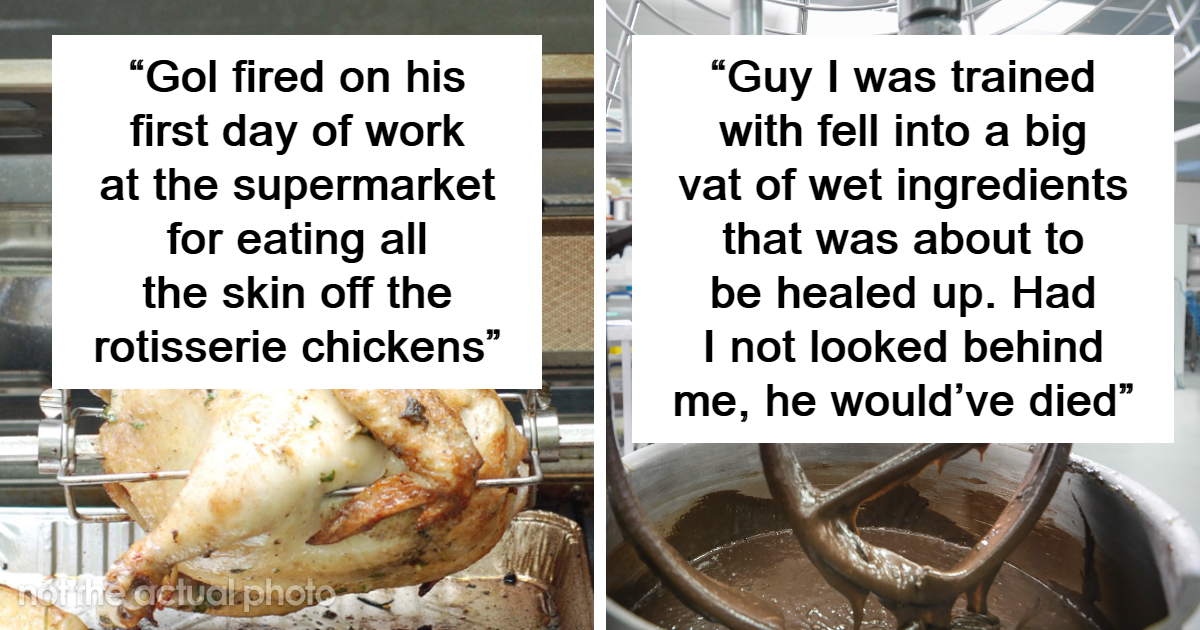
Food service stories are legendary: workers sampling patties, rotisserie chickens, toppings, or desserts without permission. One bite might lead to a warning. A buffet-style attack on inventory is a termination appetizer.
10. Violating hygiene rules
Using a food prep knife for personal grooming, failing to wash hands, or ignoring sanitation procedures can end a food-service job immediately. Customers do not want a sandwich with a side of microbiology lecture.
11. Getting intoxicated or high during the shift
Drug and alcohol policy violations can become especially serious in warehouses, restaurants, hospitals, transportation, manufacturing, and childcare. Being impaired at work can endanger coworkers, customers, and the employee.
12. Leaving animals, equipment, or inventory unsecured
In pet stores, warehouses, and retail environments, letting products, animals, or expensive goods wander off is not a quirky ethical statement. It can create safety risks, financial loss, and a very confused manager holding a clipboard.
13. Creating a major safety hazard
Safety mistakes can be unforgiving. Using a lighter near flammable materials, bypassing lockout procedures, ignoring protective gear, or operating equipment without training may justify immediate removal. Employers have a duty to maintain a safe workplace.
14. Driving carelessly in a company vehicle
Transportation jobs depend on trust. Putting the wrong fuel in a diesel truck, leaving keys inside a delivery vehicle, speeding, texting while driving, or damaging company property on day one can make the job end before the route does.
15. Lying about skills
A design hire who cannot use design software, a forklift operator who cannot operate a forklift, or a cashier who has never touched a register may be exposed quickly. Employers can train beginners. They cannot train honesty retroactively.
16. Refusing training from women or younger coworkers
Some new hires sabotage themselves by refusing to be trained by female staff, younger supervisors, or people they assume are beneath them. Respecting the chain of knowledge is part of the job. Ego is not a credential.
17. Threatening coworkers
Threats of violence are not workplace drama; they are security incidents. A first-day employee who threatens someone can be removed immediately to protect staff and customers.
18. Fighting or aggressive behavior
Shouting, shoving, cornering coworkers, or throwing objects is not “high energy.” It is a workplace safety issue. Managers do not need a full season arc to decide aggression is unacceptable.
19. Ignoring confidentiality
Some roles involve customer information, patient details, financial data, private company records, or trade secrets. Sharing confidential details on day one is a trust breach that can bring serious consequences.
20. Posting inappropriate workplace content online
Taking photos in restricted areas, mocking customers online, posting confidential information, or recording coworkers without permission can damage both privacy and brand reputation. The internet has screenshots. Screenshots have receipts.
21. Being rude to customers
Retail, restaurant, hospitality, healthcare, and service jobs all require basic customer respect. A new hire who insults customers, argues loudly, ignores service standards, or behaves dismissively may not get a second shift.
22. Being rude to support staff
Receptionists, assistants, cleaners, dishwashers, drivers, and warehouse workers often know how the workplace actually functions. Disrespecting them on day one is like unplugging the Wi-Fi router and wondering why the office hates you.
23. Refusing normal duties
Many jobs include tasks outside the glamorous part of the role. Servers may roll silverware. Drivers may clean. Office workers may organize files. If the task is lawful, safe, and part of the job, refusing it because it feels beneath you is a career faceplant.
24. Sleeping through the shift
Everyone gets tired. But disappearing to nap for hours, especially during paid work time, sends a message that the job is optional background music. Managers generally prefer employees who remain conscious.
25. Leaving without telling anyone
Some people panic when they realize they cannot perform the role, then slip out at lunch and never return. It is better to ask for help, admit confusion, or resign respectfully than vanish like a magician with direct deposit.
26. Breaking dress code or safety gear rules
Uniforms, closed-toe shoes, hair restraints, gloves, hard hats, and badges are not decorative suggestions. Dress code and safety rules often exist because someone once learned the hard way.
27. Flirting instead of working
Trying to impress a customer, coworker, or drive-thru visitor while ignoring the job can become embarrassing fast. Confidence is great. Turning the register window into a dating app is not.
28. Misusing company technology
Company computers, phones, tablets, and accounts are for business. Watching adult content, gaming all shift, downloading suspicious files, or accessing unauthorized systems can lead to instant termination and possibly an IT department group scream.
29. Failing to follow basic instructions
New employees are expected to ask questions. They are not expected to repeatedly ignore simple instructions after being corrected. If a mistake risks safety, money, customers, or compliance, the employer may act quickly.
30. Showing zero accountability
The final reason is not one mistake but the attitude after it. People can survive first-day errors by being honest, apologetic, and coachable. They usually do not survive blaming everyone else, arguing, laughing off serious concerns, or acting like rules are merely workplace fan fiction.
What These First-Day Firings Reveal About Workplace Culture
These stories are entertaining because they are extreme, but they also reveal something serious: a first day is a trust test. Employers are not only evaluating whether someone can perform tasks. They are watching how the person responds to correction, handles pressure, treats others, and respects boundaries.
Good companies should make that test fair. A strong onboarding program gives new hires clear schedules, job duties, safety training, workplace policies, dress expectations, break rules, equipment instructions, and a real person to ask for help. If a company tosses a new worker into chaos and then punishes confusion, the failure is shared. A messy first day can create preventable turnover, lower morale, and a reputation that makes future candidates sprint away like the building is haunted.
At the same time, employees have responsibilities. No onboarding checklist can fix open sexism, theft, harassment, threats, dangerous behavior, or lies on a resume. Those are not gaps in training. They are gaps in judgment big enough to park a forklift inside.
How New Hires Can Avoid Becoming a Day-One Disaster Story
The best first-day strategy is simple: arrive early, listen more than you talk, ask questions, write things down, respect everyone, and do not improvise with safety rules. If you do not know how to do something, say so. A manager would rather hear “Can you show me again?” than discover you guessed your way through a task involving knives, fuel, children, patient records, or the company van.
New hires should also treat every person as important. The coworker training you might not have a fancy title, but they may know the shortcuts, hazards, customer preferences, and unwritten rules that keep the place running. Being kind to them is not only decent; it is strategic. Nobody wants to help the new person who arrived with a crown, a bad attitude, and no clue where the mop bucket is.
Finally, keep your phone under control. Do not record private areas, post complaints in real time, text through training, or scroll while someone explains how not to lose a finger. Day one is a performance, and the audience includes coworkers, managers, cameras, customers, and sometimes the payroll system quietly deciding whether you will ever meet payday.
What Managers Can Learn From First-Day Firing Stories
Managers should not treat first-day firing as entertainment. Every immediate termination should prompt a question: did the employee fail because they were reckless, or did the company fail to communicate? If the issue was harassment, threats, theft, or safety danger, swift action may be necessary. But if the issue was confusion, unclear scheduling, poor training, or missing instructions, the company should improve the process.
A good first day includes welcome, structure, and standards. The new hire should know where to go, who to report to, what to wear, when breaks happen, what tasks are expected, what behavior is unacceptable, and how to ask for help. This does not make employees perfect. It simply removes the fog so true performance can be evaluated fairly.
Managers should document serious incidents, apply rules consistently, and avoid public humiliation. Even when someone behaves badly, professionalism still matters. The goal is not to create office folklore. The goal is to protect the workplace, maintain trust, and keep the team from wondering whether every new hire will arrive carrying chaos in a tote bag.
Experiences and Real-Life Lessons From Day-One Job Disasters
One common experience behind first-day firing stories is the clash between expectation and reality. A person imagines the job as one clean, narrow role: driver, cashier, designer, server, receptionist. Then the actual workplace says, “Great, and when it is slow, please wipe counters, stock shelves, answer phones, or help the team.” That is where maturity shows up. Many jobs include unglamorous support tasks. The employee who says, “Sure, show me how you like it done,” earns trust. The employee who says, “That is not my job,” while still wearing a fresh name tag may be volunteering for unemployment.
Another pattern is panic. Some new workers realize quickly that they oversold their skills, underestimated the pace, or misunderstood the job. Instead of asking for help, they hide, pretend, blame the equipment, or disappear. That instinct is understandable but dangerous. Most supervisors can work with nervousness. They cannot work with deception. A simple sentence like, “I’m not as familiar with this system as I thought, but I’m ready to learn,” can save a day that pride would destroy.
Safety-related stories are the least funny because the consequences can be permanent. A first-day warehouse, restaurant kitchen, construction site, hospital, laboratory, or driving route is full of rules written by experience. Sometimes that experience involved injury. Gloves, goggles, lockout procedures, sanitation steps, fuel rules, and lifting techniques are not there to make the employee handbook heavier. They exist because one bad decision can hurt people. When a new hire treats safety like optional decoration, managers may have no choice but to remove them.
Then there are the social disasters. A first day is not the time to test edgy jokes, flirt aggressively, debate everyone’s competence, insult customers, gossip about coworkers, or announce outdated beliefs about gender. People are still deciding whether they feel safe around you. Respect is the cheapest and most effective onboarding tool available. Use it generously.
Many experienced workers say the best new hires are not the most skilled on day one. They are the most coachable. They show up on time, admit what they do not know, take notes, apologize when corrected, and treat small tasks like part of the team’s success. That attitude buys patience. A person who is humble and reliable can grow into a strong employee. A person who is arrogant, careless, or hostile may not make it to the second coffee break.
For employers, these experiences are also a mirror. When several new hires fail quickly, the problem may not be only the candidates. It could be vague job ads, rushed interviews, unrealistic expectations, poor training, or a workplace culture that throws people into the deep end and then criticizes their swimming form. Hiring is not finished when the offer letter is signed. It continues through onboarding, feedback, and the first weeks of support.
The big lesson is simple: day one is not about perfection. It is about proof of judgment. You can mispronounce a coworker’s name, forget where the restroom is, or ask how to clock in three times and still be fine. But if you bring sexism, theft, harassment, safety risks, dishonesty, or reckless ego into the building, the building may kindly ask you to leave.
Conclusion
The wildest first-day firing stories make great internet reading because they combine comedy, disbelief, and secondhand embarrassment. But underneath the laughs is a serious workplace truth: trust begins immediately. Employers want people who are reliable, respectful, safe, honest, and willing to learn. New hires want clear expectations, decent training, and a fair chance to succeed.
The phrase “I don’t do women’s work” became memorable because it captures so many first-day mistakes at once: disrespect, arrogance, refusal to help, and total misunderstanding of teamwork. In a healthy workplace, work is not gendered. Work is shared, assigned, trained, completed, and appreciated. The fastest way to succeed on day one is not to act like the smartest person in the room. It is to act like someone the room can trust.
Note: This article is based on synthesized U.S. workplace guidance, HR best practices, safety principles, and reported first-day firing anecdotes. Specific employment rules may vary by state, industry, contract, and company policy.