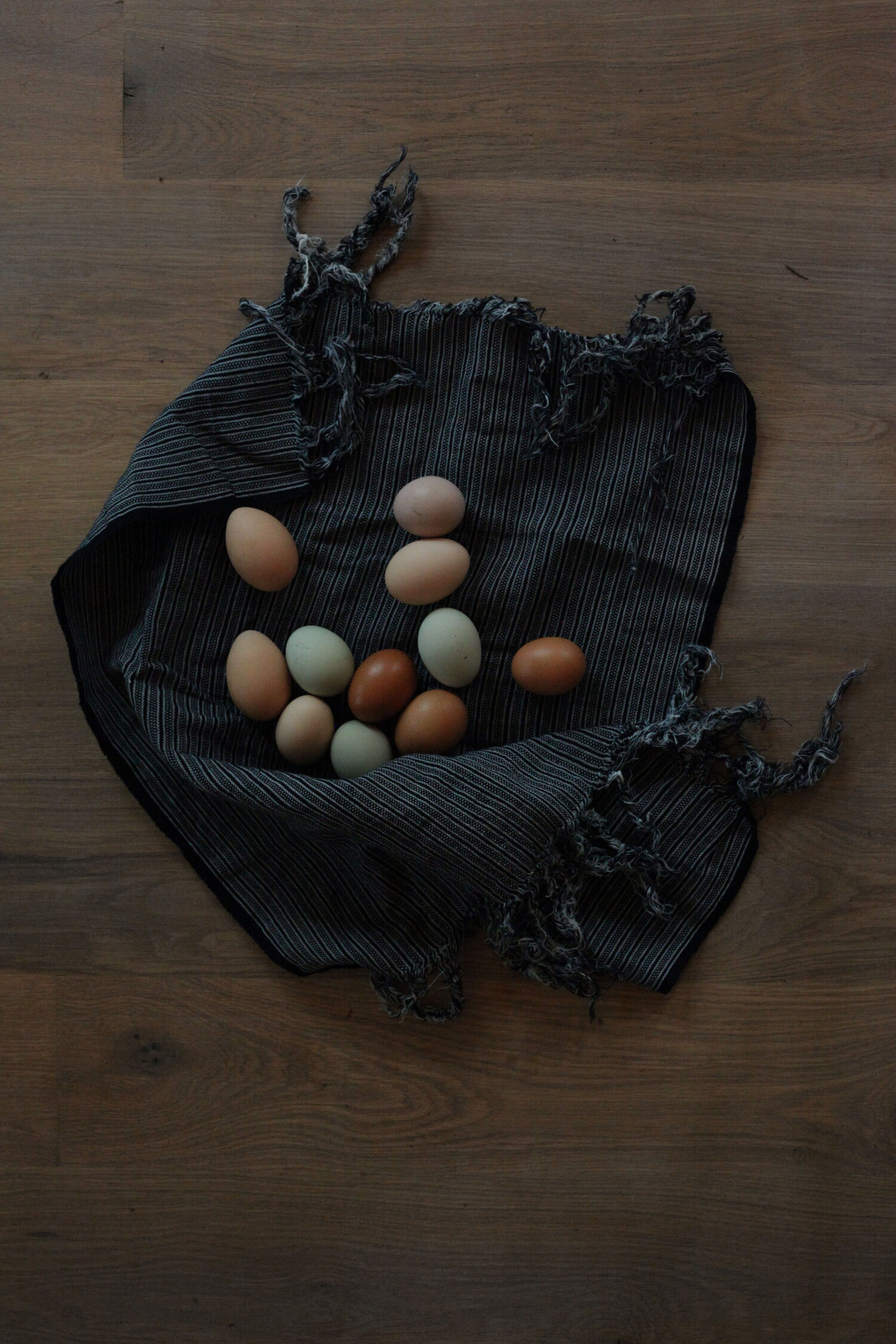
The Mangyan Cotton Indigo Tea Towel is proof that an ordinary kitchen object does not have to look as if it was ordered by the dozen for a restaurant supply closet. Handwoven from cotton, colored with natural indigo, and shaped by a living textile tradition from the Philippines, this towel combines everyday usefulness with the unmistakable personality of handmade cloth.
At approximately 23 by 18 inches, it is compact enough to hang beside a sink but substantial enough to dry dishes, cover bread, line a serving basket, or rescue a countertop from an overly enthusiastic coffee pour. Its deep navy coloring, pale woven stripes, fringed ends, and naturally irregular surface give it the kind of quiet visual interest that mass-produced kitchen linens often attempt to imitatewith considerably more machinery and considerably less charm.
What Is the Mangyan Cotton Indigo Tea Towel?
The Mangyan Cotton Indigo Tea Towel is a handwoven kitchen textile associated with Handa Textiles and made by Mangyan craftswomen in the Philippines. It is constructed from 100 percent cotton and colored with natural indigo. The original product has been offered in traditional-looking stripe variations known as Big Wave and Little Wave.
Unlike a printed towel, its pattern is created through the arrangement of dyed and undyed threads during weaving. The blue and white elements are therefore part of the fabric’s structure rather than decoration sitting on top of it. This gives the cloth a more dimensional appearance and helps explain why its design still looks attractive when rumpled, folded, draped, or hanging from an oven handle at a slightly questionable angle.
Key characteristics
- Approximately 23 inches by 18 inches
- Made from 100 percent cotton
- Colored with natural indigo
- Hand-dyed and handwoven
- Finished with selvedge edges and fringe details
- Available in wave-inspired stripe patterns when in stock
- Designed to soften and become more absorbent through use
Because the cloth is handmade, variations in stripe placement, weave tension, dimensions, and color intensity are normal. These are not factory defects. They are the textile equivalent of a signaturesubtle evidence that a person, rather than an automated production line, controlled the process.
The Mangyan Weaving Tradition Behind the Cloth
“Mangyan” is a collective name associated with several Indigenous communities of Mindoro, an island in the Philippines. These communities have distinct identities, languages, practices, and artistic traditions, so the term should not be treated as though it describes one completely uniform culture.
Textile production is especially significant among Mangyan communities with established traditions of spinning, dyeing, and weaving cotton. Cloth has historically been used for garments, wraps, household purposes, and carrying children. In this setting, fabric is not simply a decorative surface. It is practical material, cultural expression, accumulated knowledge, and family labor woven into one object.
The striped designs associated with the Mangyan Cotton Indigo Tea Towel are described as recalling waves approaching the shore. This interpretation connects the blue-and-white sequence with the coastal history of Mangyan communities before many families moved farther into the interior of Mindoro.
Why cultural context matters
Calling the towel “artisan-made” is accurate, but the phrase alone does not explain much. It could describe anything from a carefully woven Indigenous textile to a potholder made during a very ambitious Saturday afternoon. The Mangyan connection gives this cloth a specific cultural and geographical context.
A responsible appreciation of the towel recognizes both its beauty and its makers. Buyers should look for transparent information about who produced the fabric, how the seller works with weaving communities, and whether traditional knowledge is represented respectfully. A meaningful textile deserves more than vague marketing language about being “tribal,” “exotic,” or “inspired.” Those words tend to create fog precisely where useful information should be.
How Backstrap-Loom Weaving Shapes the Fabric
Mangyan textiles of this type are woven on a traditional backstrap loom. This portable loom stretches the warp threads between a fixed pointsuch as a post, wall, or treeand a strap positioned around the weaver’s body. By leaning backward or moving forward, the weaver adjusts the tension of the threads.
This arrangement is mechanically simple but technically demanding. The weaver’s body becomes part of the loom, controlling tension throughout the process. Small changes in posture can influence the density and character of the finished cloth. That close physical relationship helps create the subtle irregularities prized in handwoven textiles.
Selvedge edges and handwoven character
A selvedge is the naturally finished edge created along the sides of woven fabric. Because the edge is formed during weaving, it does not require the same cut-and-hem treatment used on fabric sliced from a wide industrial bolt. On the Mangyan Cotton Indigo Tea Towel, selvedge edges emphasize the narrow-loom construction and preserve the cloth’s handmade identity.
The surface is also described as naturally nubby. Rather than feeling flawlessly flat, the cotton has minor changes in thickness and texture. Those variations catch light, make the indigo appear more layered, and help the towel avoid the sterile perfection of fabric that looks as though it has never encountered a human handor a tomato sauce emergency.
Natural Indigo Gives Every Towel a Living Blue
Natural indigo is famous for its deep blue color, but its appeal goes beyond the finished shade. Traditional indigo dyeing involves transforming plant-derived material into a form that can bond with textile fibers. When fabric emerges from a dye vat, oxidation helps develop the recognizable blue. Multiple dyeing cycles may be used to build greater depth.
The resulting color is rarely as uniform as synthetic navy produced in a large industrial batch. One area may appear nearly midnight blue, while another reveals a softer tone or a visible thread of lighter cotton. This tonal movement is part of the towel’s visual richness.
Why indigo may change over time
Natural indigo can release excess dye during early washes and may gradually soften in color at folds, raised threads, and frequently handled areas. Owners familiar with raw denim will recognize the principle, although a tea towel is considerably less likely to start an argument about whether it should be washed after six months.
Fading should not automatically be viewed as deterioration. Gentle changes can make the pattern more dimensional and record how the textile has been used. Proper care remains important, but preserving the towel does not mean freezing it in showroom condition.
Why Cotton Works So Well in the Kitchen
Cotton is naturally absorbent, washable, flexible, and comfortable to handle. A flat or lightly textured cotton weave can dry dishes without the bulky pile of a bath towel, and it generally leaves less lint on glassware than thick terry cloth.
The Mangyan towel’s woven cotton is expected to become softer and more absorbent with repeated washing. New cotton fibers may initially feel slightly firm, particularly when the fabric has been naturally dyed and tightly woven. Everyday use gradually relaxes the structure.
Practical uses beyond drying dishes
- Drying plates, cups, utensils, and glassware
- Covering rising bread dough
- Lining a basket of rolls or fruit
- Wrapping a loaf of bread for the table
- Serving as an informal placemat
- Protecting a tabletop beneath a teapot
- Drying washed herbs and produce
- Adding textile color to an open kitchen shelf
A dry, properly folded cotton towel may sometimes help handle warm cookware, but a decorative tea towel should not automatically be treated as a certified oven mitt. Wet fabric conducts heat rapidly, and thin material may not provide adequate protection. In other words, admire its versatility without asking it to negotiate directly with a 450-degree cast-iron skillet.
How to Style an Indigo Tea Towel
The towel’s deep blue palette fits naturally into modern, rustic, coastal, farmhouse, and minimalist interiors. Indigo adds color without behaving like a neon sign, while the white stripes keep the surface from appearing heavy.
In a light, neutral kitchen
Drape the towel over a wooden rail or oven handle in a kitchen with white tile, pale plaster, oak, or marble. The dark indigo creates a strong focal point, while the woven texture softens hard surfaces.
With natural materials
Pair it with cutting boards, unglazed pottery, woven baskets, and handmade ceramics. These materials share the towel’s tactile quality without producing a room that feels excessively coordinated. The goal is collected, not “the entire kitchen arrived in one matching carton.”
On the dining table
Use the towel as a small runner beneath a bread basket or tea service. Its fringed edges and stripes offer enough visual detail to decorate a casual table without competing with patterned dishes or food.
As textile art
A towel kept primarily for display can be hung from a simple wooden peg or mounted carefully in a reversible textile frame. Because culturally significant fabric deserves respect, avoid cutting it into small craft pieces unless it is badly damaged and reuse is the only practical option.
How to Wash and Care for the Towel
Natural indigo requires more thoughtful care than colorfast synthetic fabric. The maker recommends washing the towel separately or with other dark items because blue dye may bleed. Do not soak it, particularly during early washes.
Recommended care routine
- Wash the towel separately or with dark-colored textiles.
- Select cold water and a gentle cycle.
- Use a mild soap or detergent without aggressive bleaching agents.
- Do not leave the towel soaking in a basin or washing machine.
- Tumble dry gently or air-dry away from intense, prolonged sunlight.
- Expect a small amount of softening, shrinkage, and color evolution.
Avoid chlorine bleach, which can alter natural indigo dramatically and weaken cotton fibers. Fabric softener is also unnecessary. It can coat fibers and reduce absorbencythe laundry equivalent of buying a raincoat and then carefully drilling decorative holes in it.
Kitchen hygiene still matters. Rotate clean towels frequently, allow damp cloth to dry completely between uses, and wash it promptly after contact with food residue. Consider assigning separate towels to hands, dishes, and messy cleaning tasks. The beautiful indigo piece does not need to spend its afternoon wiping raw chicken juice from the counter.
Is the Mangyan Cotton Indigo Tea Towel Worth Buying?
As a purely economical tool for wiping spills, an inexpensive multipack of restaurant-style towels will win. The Mangyan Cotton Indigo Tea Towel occupies a different category: it is a functional object that also carries evidence of specialized handwork, natural dyeing, cultural tradition, and individual variation.
Its value will be most apparent to someone who appreciates artisan home textiles and intends to use them rather than hide them permanently in a drawer. The cotton should improve with washing, the indigo should develop character, and the compact format makes the textile easy to incorporate into daily life.
It may be a good choice for:
- Collectors of handwoven and naturally dyed textiles
- Home cooks who appreciate useful decorative objects
- People seeking a distinctive housewarming gift
- Fans of indigo, navy, and blue-and-white interiors
- Buyers interested in traditional Filipino craftsmanship
It may not be ideal for:
- Someone who wants perfectly identical matching towels
- A household that regularly uses chlorine bleach on kitchen linens
- A cook seeking a thick terry towel for heavy spill absorption
- Anyone distressed by natural fading or handmade irregularity
How to Shop for Handmade Indigo Textiles Responsibly
Before purchasing any traditional textile, examine the seller’s description. It should identify the makers or community as clearly as possible, explain the materials and production process, and avoid presenting cultural knowledge as an anonymous design trend.
Look for evidence of an established relationship with artisans rather than a product description assembled from decorative adjectives. Information about weaving methods, regional origins, natural dyes, and care instructions usually indicates that the seller understands the object beyond its color palette.
Handmade variation should also be disclosed. If every towel appears completely identical, the product may be mechanically woven or printed despite being marketed with craft-oriented language. Genuine handwork tends to leave small, logical differencesnot random damage, but variations created by dye, yarn, tension, and the movement of the maker.
Everyday Experience With a Mangyan Cotton Indigo Tea Towel
The first experience of handling a new Mangyan Cotton Indigo Tea Towel is likely to be visual. The navy can appear almost black in dim light, then reveal a warmer, more complex blue near a window. The pale stripes interrupt the dark field with a rhythm that feels graphic from across the room and distinctly handwoven at close range.
Its texture may initially feel firmer and less fluffy than a conventional kitchen towel. That is not necessarily a disadvantage. Flat-woven cotton bends easily around plates, stems, handles, and the corners of serving dishes. It also occupies less space in a drawer and dries more quickly than a thick terry towel under ordinary conditions.
During the first wash, seeing blue-tinted water can be surprising. With natural indigo, some bleeding is expected, which is why separating the towel from pale laundry is essential. Nobody wants to discover that an entire collection of white napkins has joined an unplanned blue period. Cold water, mild detergent, and a short gentle cycle keep the process manageable.
After several uses, the cotton generally begins to relax. The cloth folds more easily, absorbs water more readily, and loses some of its brand-new stiffness. The fringe may become slightly less orderly, while the high points of the weave can lighten. These changes make the towel feel lived with rather than worn out.
In daily use, the most satisfying role may be drying glassware or serving dishes. The woven surface can reach around rims and curves without the heavy bulk of plush fabric. When draped over a bowl of rising dough or placed under a bread basket, it adds color to the counter while performing a practical job.
The towel also tends to change how a kitchen looks with almost no effort. Hanging one dark indigo textile against a white cabinet or pale wall introduces contrast, texture, and a sense of craftsmanship. This is useful for anyone whose decorating method is less “complete renovation” and more “move one attractive object near the sink and congratulate yourself.”
Owners may eventually develop a small ritual around the towel: using it for clean dishes and bread rather than dirty cleanup, washing it separately, smoothing it while damp, and returning it to the same hook. That extra attention is not a burden for everyone. It can be part of the pleasure of owning something whose material and construction are worth noticing.
Over months, the indigo may become softer at folded edges and frequently touched areas. The pattern remains, but its contrast can mellow. Instead of looking newly manufactured forever, the textile records its household life. A slightly faded corner might mark where it was repeatedly grabbed; a softened center might show where dishes were dried most often.
This gradual evolution is the central experience of the Mangyan Cotton Indigo Tea Towel. It is not simply a decorative purchase waiting to be protected from reality. It is a handwoven object designed to enter ordinary routines, become more useful, and acquire character. The towel starts with a story supplied by its materials and makers, then gathers another through the home that uses it.
Conclusion
The Mangyan Cotton Indigo Tea Towel brings together natural indigo, absorbent cotton, wave-inspired pattern, and traditional backstrap-loom weaving in an object small enough to become part of everyday kitchen life. Its handmade variations give it personality, while its practical proportions allow it to dry dishes, cover bread, line baskets, and decorate a room without becoming precious or impractical.
Proper care is simple but important: wash it with dark colors, use cold water and gentle detergent, avoid soaking and bleach, and allow the indigo to age naturally. With time, the cotton should soften and the blue should develop the subtle marks of use that make naturally dyed cloth especially appealing.
For people who value useful design, traditional craftsmanship, and textiles that improve rather than become anonymous with age, this tea towel offers much more than a convenient place to dry a coffee cup.