The 1960s may be remembered as the decade when songwriters had plenty to say, but some of its most durable records said absolutely nothing—at least not with words. A Hammond organ could smirk. A reverb-soaked guitar could summon a coastline. A trumpet could turn a sunny melody into a worldwide celebration. Even a television theme could charge into the pop charts wearing a badge and looking suspiciously ready to book somebody.
The best instrumental songs from the ’60s were not background music. They were the main event. They crossed rock, soul, jazz, surf music, orchestral pop, easy listening, and soundtrack composition while proving that a memorable riff often communicates faster than a three-verse confession. This ranking weighs chart impact, originality, influence, cultural staying power, and the all-important question: does the record still make a room feel different within five seconds?
Why 1960s Instrumental Music Still Sounds So Alive
Instrumental hits flourished during the decade because radio audiences were unusually open to musical variety. A teenager buying a surf-rock single, a parent enjoying an orchestral melody, and a jazz fan following a celebrated trumpeter could all encounter one another on the same pop chart. Producers were also learning to treat the recording studio as an instrument. Reverb, compression, unusual microphone placement, electric organs, fuzzed guitars, and sharply arranged brass gave records personalities before a singer had a chance to clear his throat.
These tracks also reward active listening. Without lyrics directing the story, listeners supply their own scenes. “Pipeline” can become a nighttime drive, “Love Is Blue” can score a bittersweet memory, and “Green Onions” can make an ordinary walk to the kitchen feel like confidential business.
The Top 10 Instrumental Songs from the ’60s
10. “A Taste of Honey” — Herb Alpert & the Tijuana Brass (1965)
Herb Alpert transformed a theatrical melody into polished brass-pop with snap, warmth, and just enough drama to make a cheese plate feel cinematic. The arrangement moves from a restrained opening into brighter trumpet phrases and a confident rhythmic lift. It became a major pop hit and won Record of the Year, along with instrumental performance and arrangement honors at the Grammys. That matters because the award did not go to a vocal showcase; it went to tone, pacing, and arrangement. “A Taste of Honey” is elegant without becoming sleepy and cheerful without grinning like a game-show host.
Source verification:
9. “Hawaii Five-O” — The Ventures (1969)
Morton Stevens wrote the original theme for the CBS crime series, but the Ventures turned it into a full-throttle pop instrumental. The famous opening drum pattern practically kicks down the door before brass, guitar, and rhythm section race through the melody. The result is both television music and stand-alone rock single, which is harder to achieve than it sounds. Remove the images of ocean waves and detectives, and the record still works because its arrangement never stops moving. It is musical caffeine with a police scanner.
Source verification:
8. “Pipeline” — The Chantays (1963)
Written by Chantays members Bob Spickard and Brian Carman while they were still in high school, “Pipeline” is one of surf rock’s moodiest landmarks. Its electric piano and low-register guitar create an undertow rather than a sunny beach party. The melody arrives in clean, clipped phrases while the rhythm section maintains a controlled sense of danger. Many surf instrumentals sprint; “Pipeline” glides, watches the horizon, and knows something you do not. Its unusual balance of guitar, bass, keyboard, and drums helped give it a sound that remains instantly recognizable.
Source verification:
7. “Love Is Blue” — Paul Mauriat and His Orchestra (1968)
Paul Mauriat’s arrangement of André Popp’s melody became a No. 1 hit in the United States, an extraordinary achievement for an orchestral instrumental during rock’s psychedelic era. The record layers harpsichord-like keyboard figures, sweeping strings, light percussion, and a melody that seems to sigh without ever becoming melodramatic. Its appeal lies in emotional clarity: it sounds romantic, wistful, and slightly formal, as though heartbreak remembered to wear a clean shirt. “Love Is Blue” also demonstrates how easy listening, at its best, can be meticulously designed pop rather than sonic wallpaper.
Source verification:
6. “Grazing in the Grass” — Hugh Masekela (1968)
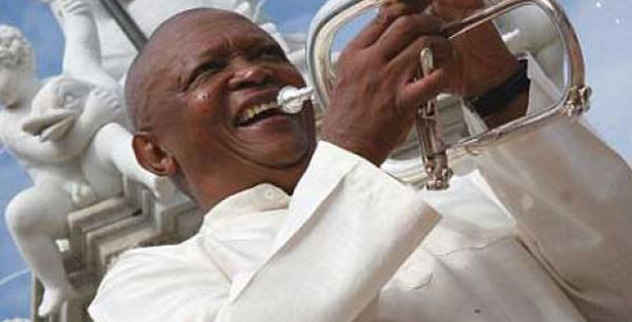
South African trumpeter Hugh Masekela delivered one of the decade’s happiest instrumental hits, although “happy” understates its rhythmic sophistication. Written by Philemon Hou, the track combines bright trumpet lines, cowbell, guitar, piano, and a buoyant groove that seems physically incapable of sulking. It reached No. 1 on the U.S. pop chart and was later inducted into the Grammy Hall of Fame. The melody is conversational, with Masekela’s trumpet tossing out phrases that the rhythm section answers. It is joyous music made by serious musicians—proof that sophistication does not require wearing a frown.
Source verification:
5. “Classical Gas” — Mason Williams (1968)
“Classical Gas” begins with acoustic guitar precision and expands into an orchestral rush, combining folk picking, pop structure, and classical-style drama. Mason Williams wrote a piece that sounds virtuosic without losing its hook, while arranger Mike Post helped shape the sweeping changes in scale and color. The recording earned Grammy honors for instrumental composition and arrangement. Its enduring trick is contrast: intimate guitar passages suddenly open into brass, strings, and percussion, then pull back before the spectacle becomes exhausting. It is the rare instrumental that can impress guitar students, casual listeners, and people who enjoy dramatically staring out of car windows.
Source verification:
4. “Telstar” — The Tornados (1962)
Producer and composer Joe Meek named “Telstar” after the communications satellite, and the record sounds like a homemade transmission from an optimistic future. Its compressed keyboards, clavioline-like electronic lead, galloping rhythm, and strange studio effects created a space-age sound years before synthesizers became common pop equipment. The Tornados carried the melody with enough directness to make Meek’s eccentric production accessible, and the record became a transatlantic smash. Today it feels both futuristic and charmingly handmade—a rocket assembled in a garage, held together by imagination, tape echo, and possibly one very determined roll of electrical tape.
Source verification:
3. “Wipe Out” — The Surfaris (1963)
Few recordings announce themselves as efficiently as “Wipe Out.” After the cracking sound and manic laugh, Ron Wilson’s drum break launches a rite of passage for generations of young drummers and generations of parents reconsidering the wisdom of buying a drum kit. The guitars attack a simple blues-based pattern with speed and reverb, but the drum performance is the record’s permanent signature. “Wipe Out” reached the upper end of the pop chart and later returned to popularity, an unusual second life that confirmed its durability. It is raw, funny, athletic, and nearly impossible to hear at low emotional volume.
Source verification:
2. “Walk, Don’t Run” — The Ventures (1960)
The Ventures’ breakthrough recording helped define the clean, propulsive electric-guitar sound that would feed surf rock and influence players around the world. Their version adapted a composition associated with jazz guitarist Johnny Smith and a later Chet Atkins interpretation, tightening it into a crisp rock arrangement. The lead melody is memorable, but Don Wilson’s forceful rhythm guitar gives the track its engine. The Ventures later revisited the tune in 1964, yet the original remains a blueprint for instrumental rock: strong theme, sharp dynamics, no wasted motion. Its title advises restraint; the performance ignores that advice in the best possible way.
Source verification:
1. “Green Onions” — Booker T. & the M.G.’s (1962)
“Green Onions” takes the top spot because it is simultaneously simple, mysterious, danceable, and foundational. Booker T. Jones’ Hammond organ states a riff that sounds cool before the concept of cool has finished entering the room. Steve Cropper answers with economical guitar lines, while bassist Lewie Steinberg and drummer Al Jackson Jr. create a pocket so deep it should have its own postal code. The recording emerged from an informal studio session and became the signature hit of the racially integrated Stax house band.
Its influence reaches far beyond instrumental soul. Rock bands learned from its restraint, funk musicians absorbed its rhythmic discipline, and filmmakers discovered that the opening riff could establish attitude instantly. The Library of Congress added the recording to the National Recording Registry, recognizing its cultural importance. More than six decades later, “Green Onions” still sounds less like an old record than a permanent law of groove.
Source verification:
Honorable Mentions That Nearly Made the List
A top 10 necessarily leaves excellent records leaning against the velvet rope. Strong contenders include Herb Alpert’s “The Lonely Bull,” Young-Holt Unlimited’s “Soulful Strut,” Acker Bilk’s “Stranger on the Shore,” Floyd Cramer’s “Last Date,” Al Hirt’s “Java,” the Marketts’ “Out of Limits,” and the Bar-Kays’ “Soul Finger,” which uses shouted vocal interjections but functions primarily as an instrumental workout. Add film and television themes such as “The Pink Panther Theme” and “Mission: Impossible,” and the decade begins to look less like a vocal-pop monopoly and more like an instrumental playground.
What These Classic Instrumentals Have in Common
The records differ wildly in style, but each establishes a distinctive world almost immediately. They rely on memorable melodic shapes, recognizable instrumental tones, disciplined arrangements, and rhythm sections that do more than keep time. Most are also concise. The musicians introduce an idea, vary it, intensify it, and leave before anyone starts checking a watch.
That economy is a major reason these 1960s instrumental songs remain useful in movies, television, advertising, sports arenas, playlists, and beginner music lessons. A strong instrumental can serve as atmosphere, character, and action all at once. Lyrics may explain what a song means; these recordings let sound perform the explanation.
A Listener’s Experience: Spending an Evening with the Best ’60s Instrumentals
Listening to these records in sequence creates a surprisingly vivid tour of the 1960s. The experience is richer when the songs are played as complete singles rather than treated as anonymous background tracks. Start with the room quiet, put the phone face down, and allow each opening sound to make its entrance. The first lesson arrives quickly: these musicians did not need long introductions. A drum crack, an organ riff, or a tremolo guitar could establish the entire emotional climate before a modern pop song might finish its first atmospheric swell.
Surf instrumentals create the most physical response. “Pipeline” encourages a steady head nod, while “Wipe Out” makes the hands search for a tabletop to abuse. “Walk, Don’t Run” feels more controlled, but its rhythm guitar produces a forward pull that makes sitting still seem mildly unreasonable. Listening closely also reveals that surf music is not one mood. It can be shadowy, playful, aggressive, spacious, or precise. The ocean imagery may have helped sell the genre, but the best performances survive perfectly well several states away from the nearest wave.
The soul and jazz-based recordings change the temperature. “Green Onions” makes a room feel smaller and cooler, as though every piece of furniture has agreed to keep a secret. The beauty of the track is how little it forces. The musicians leave air between phrases, and that restraint invites the listener into the groove. “Grazing in the Grass,” by contrast, opens the windows. Its cowbell and trumpet create a communal energy that can brighten even a routine task. Folding laundry remains folding laundry, but for two minutes and forty seconds it has a horn section.
The orchestral selections produce another kind of immersion. Through good headphones, “Love Is Blue” reveals careful layers that can disappear when the song is heard in passing. The keyboard pattern provides motion while the strings carry the emotional weight. “Classical Gas” is even more dynamic: the intimate guitar makes the orchestral surges feel enormous. It is an excellent demonstration of arrangement as storytelling. Nothing is sung, yet the music clearly moves through anticipation, release, and return.
Then there are the records that turn technology and media into musical subjects. “Telstar” captures the early space age not through scientific realism but through wonder. Its electronic timbres now sound vintage, yet that only adds personality. “Hawaii Five-O” demonstrates how a theme can escape its television program and become a social signal. Play the opening rhythm in a room full of people who know it, and several will immediately sit taller, grin, or mime a dramatic wave. Recognition becomes part of the performance.
The most rewarding part of this listening session is discovering how modern the best tracks remain. Their recordings may carry tape hiss, hard stereo placement, or period-specific effects, but their central ideas are remarkably sturdy. Each piece has a sonic identity strong enough to survive changing formats, changing fashions, and countless cover versions. By the end of the playlist, the absence of lyrics no longer feels like an absence. It feels like space—space for memory, movement, imagination, and a few highly questionable attempts at air drumming.
Conclusion
The top instrumental songs from the ’60s show how much personality musicians can create without a lead vocal. From Booker T. & the M.G.’s disciplined soul groove to the Surfaris’ explosive drumming, the Ventures’ guitar precision, Hugh Masekela’s jubilant trumpet, and Joe Meek’s handmade vision of outer space, these records turn melody and texture into unmistakable identities. Rankings will always invite debate, but that is part of the pleasure. The decade produced enough classic instrumentals to build several excellent top 10 lists—and enough unforgettable riffs to keep every one of them arguing late into the night.