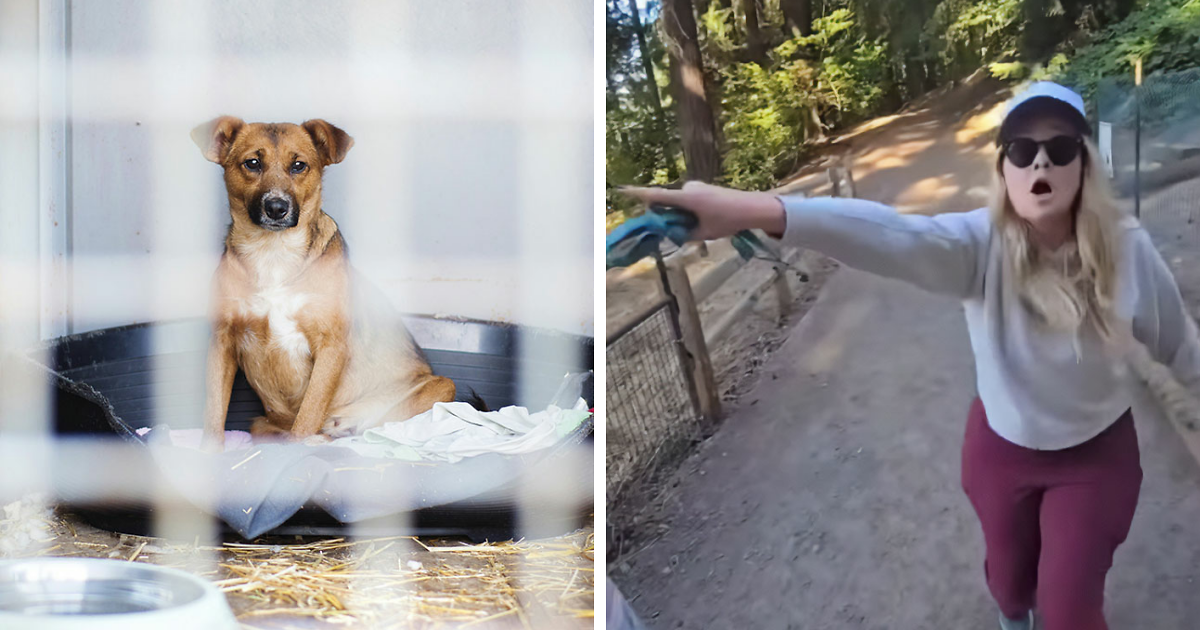
A roureportedly turned into the kind of confrontation that makes people wonder whether leaving the house without a body camera is still considered optimistic.
In footage shared online, a woman confronts a man walking two dogs at Mount Tabor Park, criticizes him for apparently owning purebred animals, and then rapidly expands the dispute into accusations involving harassment, racism, politics, immigration, and his masculinity. Meanwhile, the dogs appear to be wondering why humans cannot simply sniff a tree and move on.
The viral dog park confrontation is entertaining in the uncomfortable way that many public meltdowns are entertaining. However, it also raises more serious questions about responsible dog ownership, filming confrontations in public, online shaming, and how an ordinary disagreement can accelerate into a potentially dangerous encounter.
What Happened During the Viral Dog Park Confrontation?
The incident was reportedly recorded at Mount Tabor Park in Portland, Oregon. Public reporting describes the confrontation as beginning when a woman challenged a man over his two dogs, apparently assuming that he had purchased them from a breeder rather than adopted them from a shelter. p>According to the available footage and reports, the woman accused the dog owner of being unethical and suggested that buying a dog indirectly causes shelter animals to lose their lives. The man attempted to explain that the animals were a mother and her puppy, but the explanation did not bring the conversation back to Earth. Instead, the argument continued climbing the emotional ladder while leaving logic several floors below.
The confrontation reportedly escalated when the woman began following the man along the trail while simultaneously claiming that he would not leave her alone. She called for help, accused him of harassment, labeled him racist, insulted him personally, suggested that he supported Donald Trump, and threatened to contact Immigration and Customs Enforcement. No information presented in the video established that the man was undocumented or had committed an immigration-related offense. p>The man continued recording, responded with occasional humor, and ultimately walked away while warning other park visitors about the confrontation. The woman could still be heard shouting as the encounter ended.
The Camera Changed the Balance of the Encounter
One of the most striking moments was the apparent reversal of roles. The person shown initiating the confrontation began presenting herself as the person being pursued or harassed. Without a recording, witnesses might have received two dramatically different accounts of the same event.
A video does not automatically provide every important detail. It may begin after an argument starts, omit relevant context, or capture only one angle. Still, recordings can preserve exact words, movements, distances, and changes in tone that human memory may later rearrange.
Why the Argument Over Buying or Adopting Dogs Is More Complicated
The confrontation appears to have been fueled by a familiar slogan: “Adopt, don’t shop.” That message has helped shelters promote adoption and draw attention to homeless animals. The underlying concern is legitimate. Millions of dogs and cats continue to enter shelters and rescue organizations across the United States.
Shelter Animals Count reported that approximately 5.8 million dogs and cats entered shelters and rescues in 2025. About 4.2 million were adopted, and the national dog adoption rate increased from 55% in 2024 to 57% in 2025. Those figures demonstrate both meaningful progress and the continuing need for adopters, foster homes, volunteers, and community support. p>None of that makes it reasonable to interrogate random dog walkers about where their pets came from.
Responsible Breeders and Irresponsible Sellers Are Not the Same
Commercial puppy mills, negligent backyard breeding, and impulse purchases from poorly regulated sellers can contribute to animal suffering. Responsible breeding, however, involves health testing, thoughtful placement, veterinary care, transparency, socialization, and a willingness to take responsibility for an animal throughout its life.
The ASPCA states that responsible breeders carefully plan litters, disclose health information, provide appropriate care, use clear contracts, screen potential homes, and maintain return policies. The American Kennel Club similarly advises buyers to look for breeders who answer questions, screen breeding dogs for relevant health conditions, allow buyers to see where puppies are raised, and accept responsibility for the dogs they produce. p>A person may choose a responsibly bred dog because of predictable size, temperament, working ability, allergy considerations, or suitability for a particular household. Another family may find its ideal companion through a municipal shelter, rescue organization, foster network, or breed-specific rescue.
Both paths can be ethical. Both can also be handled irresponsibly. The meaningful questions concern animal welfare, preparation, long-term commitment, and the practices being supportednot whether a stranger has passed an ideological purity test beside the water bowl.
Mount Tabor Is a Real Dog Park, Not an Argument Arena
Mount Tabor Park is a large public park built around an extinct volcanic cinder cone. Portland Parks & Recreation lists trails, picnic areas, sports facilities, playgrounds, scenic viewpoints, and a designated dog off-leash area among its amenities. p>Portland’s rules allow dogs to be off leash only in designated areas and require handlers to remain responsible for their animals. The city’s Mount Tabor off-leash area generally operates from 7 a.m. to 9 p.m. Dog owners must follow posted rules, remove waste, prevent aggressive behavior, and keep their dogs under control. p>Nothing in those rules appoints individual park visitors as freelance investigators for the Department of Canine Purchasing Decisions.
Good Dog Park Etiquette Applies to Humans Too
The American Kennel Club recommends that dog park visitors remain attentive, monitor canine body language, prevent bullying, avoid bringing unsuitable dogs into chaotic environments, and intervene before tension becomes a fight. Owners should not spend the entire visit staring at a phone while their pets reenact a low-budget wildlife documentary. p>Human behavior also affects canine safety. Shouting, rushing toward someone, crowding an animal, waving arms, and creating prolonged tension may excite or frighten dogs. The American Veterinary Medical Association advises people to respect a dog’s personal space and remember that any dog may bite when frightened, injured, threatened, or placed under enough stress. p>When an argument begins in an area filled with unfamiliar animals, the priority should be creating distancenot winning the final round of the National Debate Championship.
Was the Man Allowed to Film the Confrontation?
Photography and video recording are generally permitted in public places when the person recording is lawfully present and the subject is plainly visible. The American Civil Liberties Union notes that streets, sidewalks, parks, and other public areas usually carry a greatly reduced expectation of visual privacy. p>Audio recording is more complicated because state laws differ. Oregon has historically required consent from all participants for certain in-person conversations, although exceptions and court decisions may affect how the law applies to openly recorded public encounters. The Reporters Committee for Freedom of the Press advises checking the specific state statute and the circumstances before assuming that every audio recording is lawful. p>This means “You are in public, so I can record absolutely anything in any manner” is too broad. Visual recording, audio interception, private conversations, hidden devices, harassment, trespassing, and commercial use can involve different legal standards.
From a practical standpoint, openly holding up a phone during an active confrontation can provide evidence and discourage false claims. It can also make an angry person more performative or more aggressive. Recording should therefore be paired with distance, a visible escape route, and a willingness to contact park staff or emergency services if threats become credible.
Why Viral “Karen” Videos Spread So Quickly
The internet loves a simple moral structure: one person behaves badly, another remains calm, and millions of viewers arrive with popcorn, reaction GIFs, and courtroom-level confidence after watching 90 seconds of vertical video.
The label “Karen” has become shorthand for an entitled personoften a white, middle-aged womanwho attempts to control strangers, demands special treatment, or uses institutions such as police, management, or immigration authorities as leverage. The term can describe a recognizable pattern of behavior, but it can also become a gendered insult used against women who express ordinary complaints or set reasonable boundaries.
In this case, the online label stuck because the behavior shown in the video reportedly included unsolicited moral policing, aggressive personal attacks, claims of victimhood, and threats to involve authorities. Nevertheless, criticizing observable conduct is more responsible than speculating about a stranger’s medical condition, personal history, employment, or family.
Accountability Can Turn Into a Digital Pile-On
Pew Research Center found that 41% of American adults had experienced at least one form of online harassment measured in its 2020 survey. Among people reporting a recent harassment experience, social media was by far the most common setting. Severe experiences included stalking, sustained harassment, sexual harassment, and physical threats. p>A viral clip may expose misconduct, locate witnesses, or protect someone from a false accusation. It can also trigger doxxing, threats, mistaken identification, harassment of relatives, and punishment far beyond what the original behavior warrants. Research on online public shaming has examined how audiences move between accountability, entertainment, moral judgment, and collective punishment. p>Viewers can condemn what appears in a video without hunting for a home address, contacting an employer, or turning uninvolved relatives into supporting characters. Accountability does not require becoming the next person behaving badly on camera.
How to Handle an Aggressive Stranger While Walking Your Dog
No strategy guarantees safety, particularly when another person is unpredictable. Still, several actions can reduce the chance that a verbal confrontation becomes physical.
Keep Your Response Brief
Long explanations rarely persuade someone who is shouting. Use a neutral sentence such as, “I’m not discussing this,” “Please give us space,” or “I’m leaving now.” Repeat it once if necessary. Do not try to answer every accusation, because a rapidly changing argument is often designed to keep you engaged rather than reach a resolution.
Create Distance Without Turning Your Back Immediately
Move toward an exit, populated area, ranger station, business, or group of witnesses. Keep your dog close and avoid allowing the leash to wrap around your legs. Do not let the other person position themselves between you and your safest route.
Lower the Temperature
Anger-management guidance emphasizes slowing physical reactions, communicating calmly, challenging exaggerated thoughts, and leaving situations that are becoming unsafe. Matching another person’s volume usually increases arousal rather than restoring reason. p>You do not need to agree with an accusation. A calm statement such as, “I hear that you disagree, but I’m leaving,” acknowledges that words were spoken without accepting blame.
Record Safely and Preserve the Original File
When lawful and safe, begin recording without pushing the phone into someone’s face. State the location, ask the person to stay back, and capture your attempts to disengage. Save the original file, note the time, and record witness contact information. Avoid immediately editing the footage into a comedy montage if it might later become evidence.
Call for Help When Behavior Becomes Threatening
Contact park personnel, security, or emergency services if the person blocks your path, follows you persistently, attempts to touch you, threatens violence, reaches for a weapon, or creates an immediate risk to people or animals. Safety is more important than producing a satisfying final line for social media.
Experiences and Practical Lessons From Similar Public Confrontations
Anyone who regularly walks a dog eventually encounters a self-appointed neighborhood official. Sometimes the complaint is reasonable: a dog is off leash where leashes are required, waste has not been collected, or an animal is approaching people who clearly want space. Other times, the complaint is based on assumption, personal preference, or the ancient human tradition of being loudly incorrect.
Consider a common scenario at a neighborhood park. A dog owner is walking a young shepherd mix on a six-foot leash. Another visitor insists that the leash is too long and begins lecturing the owner about “dangerous breeds.” The owner explains that the dog is in training, vaccinated, and under control. Instead of calming down, the visitor moves closer, points at the dog, and raises their voice.
The first lesson is that accurate information does not always solve an emotional confrontation. The dog owner may possess training records, veterinary documents, and enough canine knowledge to teach a weekend seminar. None of that matters if the other person is not seeking information. A short boundary“Please do not approach my dog”is more useful than a five-minute defense of the dog’s ancestry.
A second scenario occurs in an off-leash area. Two dogs begin playing roughly. One owner recognizes healthy play: loose bodies, role reversals, pauses, and voluntary reengagement. Another sees a wrestling match and assumes an attack is underway. They rush between the animals while shouting and grabbing collars, creating confusion and increasing the risk of a redirected bite.
The practical lesson is to address the dogs before debating the interpretation. Call the animals apart, create a pause, check for injuries, and leave if either dog appears overstimulated. There will be plenty of time later to discuss body languageor silently decide never to return at 5:30 p.m. on a Saturday.
A third experience involves filming. Imagine that a stranger begins accusing a dog walker of allowing an animal to damage private landscaping. The dog walker knows the animal never entered the yard, but the accuser announces that police are being called. At that point, discreetly recording the location, the leashed dog, the distance from the property, and the ongoing conversation may protect everyone involved.
However, filming should not become bait. Following the accuser, laughing inches from their face, narrating insults, or refusing to leave because “this is going viral” transforms documentation into participation. The strongest recording often shows the filmer setting boundaries, backing away, and attempting to end the encounter.
A fourth lesson comes after the event. Adrenaline can remain high long after a confrontation ends. A dog may also carry that stress home, becoming restless, reactive, unusually quiet, or reluctant to return to the same location. Give the animal a calm decompression period, offer water, check for injuries, and choose a quieter route for the next walk.
The human participant should write down what happened while details remain fresh. Save photographs, video files, names, timestamps, and descriptions of witnesses. If threats or physical contact occurred, report the incident through the appropriate channel rather than relying exclusively on social media judgment.
Finally, remember that dog ownership choices are often invisible and complicated. A purebred-looking dog may have come from a shelter. A rescued dog may have been purchased from an irresponsible seller before being surrendered. A family may need predictable traits for service work, livestock protection, sports, or compatibility with children and other animals. Oregon Humane Society’s adoption programs, for example, evaluate individual animals and provide post-adoption resources because successful placement depends on matching the pet with an appropriate householdnot applying one slogan to every situation. p>The useful question is not, “Did this stranger obtain a dog exactly as I would have?” It is, “Is the animal safe, healthy, controlled, and cared for?” That question protects dogs. Screaming at their owners in a public park mostly protects nobody’s afternoon.
Conclusion: A Dog Walk Should Not Become a Trial
The Mount Tabor confrontation became viral because it combined a familiar public setting with a spectacular escalation. A disagreement about dog adoption reportedly turned into accusations of harassment, racism, political extremism, immigration violations, and personal inadequacyall before the dogs had a chance to finish their walk.
Supporting shelter adoption is worthwhile. Opposing puppy mills is worthwhile. Encouraging responsible breeding and informed pet ownership is also worthwhile. None of those goals is advanced by cornering strangers, insulting them, or making unsupported accusations.
The man’s recording appears to have helped document how the confrontation developed, but the larger lesson is not that every disagreement needs an audience. It is that boundaries, distance, calm communication, responsible dog handling, and timely disengagement are often more effective than winning an argument.
When another park visitor seems determined to turn a walking trail into daytime television, keep your dog close, preserve evidence when appropriate, move toward safety, and let the internet provide the dramatic background music later.