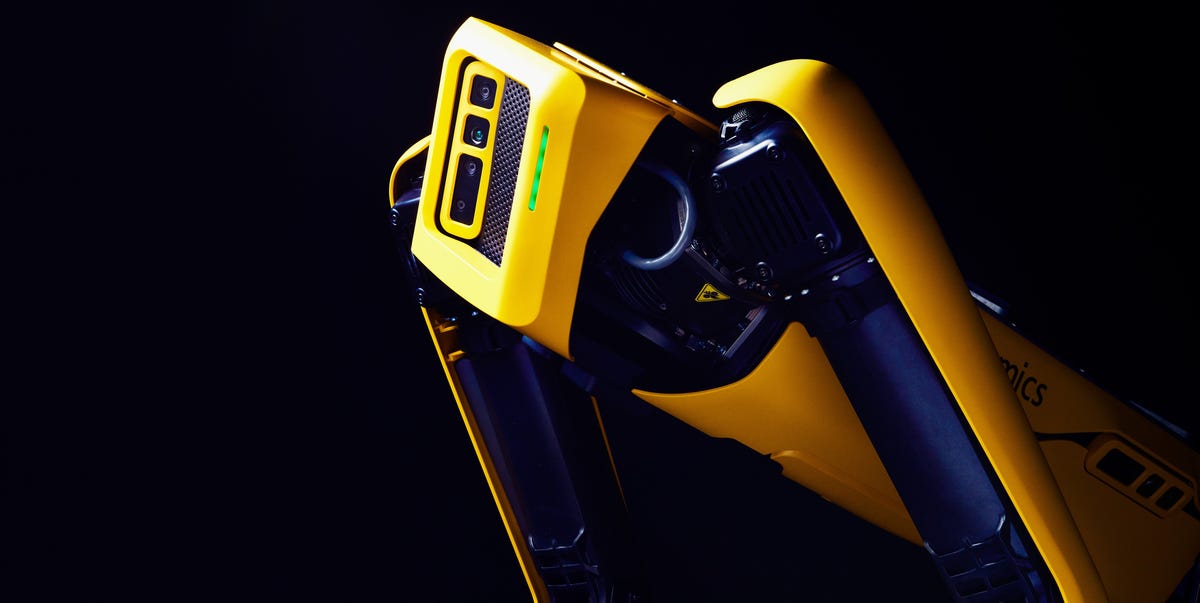
If you have ever watched Boston Dynamics’ yellow four-legged robot trot across a factory floor, climb stairs, open doors, or dance with suspiciously better rhythm than most wedding guests, you have probably asked the obvious question: is the Spot robot dog for sale? The answer is yesbut not in the same way a blender, laptop, or suspiciously cheap “smart robot puppy” on a marketplace site is for sale.
Spot is not a toy, a household pet, or a novelty gadget for startling your neighbors during trash day. It is an industrial quadruped robot built for companies, public agencies, researchers, and technical teams that need a mobile machine capable of going where wheels struggle, people face risk, or repetitive inspection work eats up valuable time.
The phrase “Spot robot dog for sale” usually brings three kinds of searchers: curious tech fans, serious business buyers, and people hoping they can get one for the price of a gaming laptop. The first group will be delighted. The second group should keep reading. The third group may need a chair, because Spot’s original commercial price was widely reported at about $74,500, and modern enterprise deployments can cost much more depending on software, payloads, support, sensors, and accessories.
What Is the Spot Robot Dog?
Spot is Boston Dynamics’ agile mobile robot, often described as a robot dog because it walks on four legs and has a canine-like silhouette. Unlike a dog, it does not chase squirrels, shed on your sofa, or judge your snack choices. Its job is to carry sensors, collect data, inspect facilities, map spaces, support public safety teams, and operate in environments that are too dull, dirty, dangerous, or inconvenient for humans.
The robot is designed to move through real-world spaces rather than carefully staged laboratory floors. It can climb stairs, walk over uneven ground, navigate around obstacles, and perform repeatable routes. That makes it useful in places such as construction sites, power plants, manufacturing facilities, mines, tunnels, utility corridors, research labs, and emergency response scenes.
Boston Dynamics positions Spot as a flexible platform. Buyers can equip it with cameras, thermal sensors, lidar scanners, communications hardware, inspection tools, robotic arms, and specialized software. In other words, the base robot is only the beginning. Spot becomes truly valuable when it is configured around a specific job.
Is Spot Actually for Sale?
Yes. Boston Dynamics launched commercial sales of Spot in 2020 after an earlier leasing and early adopter period. Today, the company’s website directs serious buyers to contact sales, which reflects Spot’s shift from a simple online purchase into a more customized enterprise solution.
That matters because most buyers are not purchasing “a robot dog” in isolation. They are purchasing a robotic inspection or automation system. A construction company may need autonomous progress documentation. A utility may need thermal inspection. A public safety agency may need remote situational awareness. A data center may need regular patrols and anomaly detection. Each use case changes the final package.
So, while Spot is for sale, the smartest way to think about it is this: you are not buying a robot pet; you are buying a mobile robotics platform. That platform may include hardware, batteries, chargers, software subscriptions, payloads, training, service plans, integration support, and internal workflow changes. Yes, it walks like a futuristic dog. No, the invoice does not fit in the “pet supplies” budget.
How Much Does a Spot Robot Dog Cost?
When Spot became commercially available, the reported price for the Spot Explorer package was about $74,500. That figure became famous because it placed Spot in “luxury car” territory, except this luxury car has four legs and looks like it escaped from a science museum.
Current pricing is generally quote-based. The total cost can vary depending on the configuration. A basic Spot package may be close to the original price range, while enterprise deployments with advanced sensors, fleet software, robotic arm capabilities, data management tools, service plans, and training can climb well above that. Reports on industrial robot dog deployments commonly place real-world systems in the six-figure range when fully equipped.
What affects the final price?
The final cost of a Spot robot dog for sale depends on several practical factors:
- Hardware package: the robot, controller, batteries, charger, and core accessories.
- Payloads: thermal cameras, lidar, 360-degree cameras, gas sensors, acoustic sensors, or custom inspection tools.
- Spot Arm: an integrated robotic arm that allows Spot to manipulate objects, open doors, press buttons, or move items.
- Software: autonomy tools, data capture systems, fleet management, remote operation, and analytics.
- Training and support: operator training, maintenance coverage, implementation assistance, and service plans.
- Integration: connecting Spot to existing facility systems, digital twins, BIM models, dashboards, or safety workflows.
For buyers, the better question is not simply “How much is Spot?” The better question is “What job will Spot perform, and how much value will that job create?” A robot that saves an hour a day on a small task may be interesting. A robot that reduces hazardous human entries, catches equipment failures early, documents a multi-million-dollar construction project, or improves facility uptime becomes a serious business investment.
Who Should Buy Spot?
Spot is best suited for organizations with real operational problems, not people looking for a very expensive conversation starter. The ideal buyer has a specific use case, a technical team or integration partner, and a clear plan for measuring return on investment.
Industrial inspection teams
Industrial sites are one of Spot’s strongest markets. Refineries, power plants, manufacturing facilities, and utilities often need frequent inspections in large, complex, or hazardous environments. Spot can carry sensors through repeatable routes, capture images, gather thermal readings, and help operators compare data over time.
This is where Spot makes sense: it does not get bored, it does not forget the same corner of the facility every Tuesday, and it does not complain about walking the same route for the 400th time. For inspection work, boring consistency is not a flaw. It is the whole point.
Construction companies
Construction sites change constantly. New materials arrive, walls appear, temporary hazards move, and today’s clear hallway becomes tomorrow’s maze of equipment. Spot can help document progress, scan spaces, collect visual data, and support project teams that need accurate site information without repeatedly sending staff through every area.
When combined with lidar, cameras, or construction-focused software, Spot can support reality capture and project monitoring. This helps compare actual site progress with digital plans, identify delays, improve documentation, and reduce the need for repeat manual walkthroughs.
Public safety and emergency response
Spot is also used by some public safety teams for remote inspection of dangerous situations. Potential use cases include suspicious packages, hazardous materials, barricaded suspects, collapsed structures, and environments where sending a human first would be risky.
This use case is powerful but sensitive. Communities want safety, but they also want oversight, transparency, and clear rules for robotic systems. Boston Dynamics has publicly stated that it does not support weaponizing its general-purpose robots, and its terms and policies are designed around beneficial, non-weaponized use.
Research and education
Universities and research labs use robots like Spot to study autonomy, mobility, mapping, perception, human-robot interaction, and field robotics. For research teams, Spot offers a commercially supported platform with advanced mobility, which can save years compared with building a legged robot from scratch.
Key Spot Robot Specifications Buyers Care About
Spot’s value comes from its combination of mobility, autonomy, payload support, and rugged design. According to Boston Dynamics’ published specifications, Spot weighs roughly 74 pounds with its battery, walks at up to 1.6 meters per second, handles slopes of about 30 degrees, and can step over obstacles nearly 12 inches high.
The robot has 360-degree perception for terrain sensing and obstacle avoidance. Its typical battery runtime is around 90 minutes, which is enough for many inspection routes but still requires planning for longer missions. Industrial users often purchase multiple batteries or docking options so Spot can work in repeatable cycles.
Spot is also modular. That is a fancy way of saying it can wear different “work outfits.” One day it may carry a thermal camera. Another day it may carry a lidar scanner. Add the Spot Arm, and it can interact with the environment rather than simply observe it. The robot is not magic, but it is impressively adaptable when matched with the right payload.
What Can Spot Actually Do?
Spot can be manually operated, semi-autonomous, or configured for repeatable autonomous missions. A human operator can drive it with a tablet controller, while more advanced deployments allow Spot to repeat routes and collect consistent data.
Common tasks include:
- Routine visual inspections in industrial sites
- Thermal checks on equipment
- Construction progress documentation
- Laser scanning and site mapping
- Remote investigation of dangerous areas
- Public safety situational awareness
- Research in robotics, AI, navigation, and perception
- Data center patrol and infrastructure monitoring
What Spot does not do is equally important. It is not designed for in-home use. It is not meant to replace trained staff without planning. It is not a plug-and-play robot butler. And despite the dog shape, it will not emotionally support your bad decisions after midnight. Spot is a serious machine for serious work.
Where Can You Buy a Spot Robot Dog?
The safest and most reliable route is to contact Boston Dynamics directly through its official sales process. This ensures the buyer receives accurate pricing, proper configuration guidance, approved accessories, support options, warranty information, and compliance details.
Buyers should be cautious with third-party listings claiming to offer a “Boston Dynamics robot dog” at strangely low prices. Many marketplace listings are toys, miniatures, accessories, novelty items, or unrelated quadruped robots. Some may use the words “robot dog” in a broad way that has nothing to do with Spot.
If a listing claims to sell a real Spot robot at a bargain price, pause before getting excited. Ask for serial information, proof of ownership, support status, transfer eligibility, battery condition, software access, and confirmation from Boston Dynamics. A cheap unsupported industrial robot can become very expensive modern art.
Spot vs. Cheaper Robot Dogs
The robot dog market has expanded quickly. Today, buyers can find consumer and research quadrupeds that cost far less than Spot. Some small robot dogs are great for education, coding, hobby projects, demos, or light research. They may walk, dance, respond to commands, and carry small sensors.
But Spot competes in a different category. It is built for enterprise reliability, industrial payloads, rugged movement, professional support, and commercial deployment. Comparing Spot to a toy robot dog is like comparing a forklift to a remote-control truck because both have wheels. Technically true, spiritually misleading.
Cheaper quadrupeds can be useful for learning robotics concepts or prototyping. Spot makes sense when failure is expensive, environments are challenging, and support matters. If your goal is to teach students Python, a lower-cost platform may be enough. If your goal is to inspect a power plant or document a major construction site, Spot becomes much more compelling.
Pros and Cons of Buying Spot
Pros
- Excellent mobility: Spot can travel over terrain that blocks many wheeled robots.
- Flexible payload options: it can support cameras, lidar, thermal sensors, and custom tools.
- Repeatable data collection: ideal for inspections, documentation, and monitoring.
- Improved worker safety: it can enter risky areas before people do.
- Strong brand and support ecosystem: Boston Dynamics is one of the best-known names in legged robotics.
Cons
- High upfront cost: real deployments can reach six figures.
- Not for home use: Spot is an industrial platform, not a household companion.
- Training required: operators need time to learn safe and effective use.
- Battery planning matters: typical runtime requires mission scheduling and charging strategy.
- Integration can be complex: the best results often require software, sensors, and workflow planning.
Buying Advice: How to Decide If Spot Is Worth It
Before contacting sales, define the exact problem Spot needs to solve. “We want a robot dog” is a fun sentence, but it is not a business case. “We need weekly thermal inspection of 600 hard-to-reach assets across a hazardous facility” is much stronger.
Start with the workflow. Identify where humans currently spend time, where safety risk exists, where data is inconsistent, and where downtime is costly. Then estimate what improvement would be worth. If Spot can reduce manual inspection hours, improve documentation quality, detect failures earlier, or keep people out of dangerous spaces, the purchase may be justified.
Also consider who will own the program internally. A Spot deployment needs operators, maintenance planning, IT involvement, safety review, data management, and executive support. The robot may walk on four legs, but the project stands on planning.
Experiences Related to Spot Robot Dog for Sale
For many first-time observers, seeing Spot in person changes the conversation immediately. Online videos make it look almost playful, but in a real facility it feels more like a compact industrial coworker. It is low, sturdy, deliberate, and oddly calm. People often start by laughing because it looks like a metal dog. Then they watch it climb stairs, avoid obstacles, and carry a sensor payload, and the laughter turns into the classic engineer face: eyebrows up, mouth slightly open, brain already calculating use cases.
A common experience during early demonstrations is that teams quickly stop asking, “Isn’t this cool?” and start asking, “Could it inspect that area?” That shift is important. Spot’s appeal is not just the novelty of a walking robot. The real value appears when someone points toward a hot, loud, cramped, remote, repetitive, or risky part of a site and realizes the robot could go there instead of a person.
Construction professionals often respond to Spot with curiosity first and practicality second. On a busy job site, documentation is a constant challenge. Progress photos, scans, safety checks, and coordination walks take time. A robot that can repeat a route and collect consistent data becomes more than a mascot. It becomes a mobile record keeper. The experience is not perfectsites are messy, routes change, and humans still need to interpret the resultsbut the benefit is obvious when teams spend less time guessing what changed and more time acting on reliable information.
Facility managers tend to focus on consistency. Human inspections can vary from person to person. One technician may photograph every gauge; another may skip one because access is awkward. Spot can help standardize that routine. When paired with the right payload, it can collect readings from the same position at the same time on a regular schedule. That kind of repeatability is valuable because small changes become easier to detect. A warm bearing, a leaking pipe, an unusual sound, or a blocked access point can be flagged sooner.
Public safety experiences are more complex. On one hand, sending a robot into a dangerous area can protect officers, firefighters, bomb technicians, and civilians. On the other hand, communities may have concerns about surveillance, privacy, and robotic policing. The best deployments are transparent, limited, and clearly governed. Spot should be introduced as a safety tool, not a mysterious mechanical creature appearing without explanation. Trust matters as much as technology.
Another real-world lesson is that Spot is not a “buy it Friday, transform operations Monday” product. Successful buyers treat it like a program. They train operators, test routes, choose payloads carefully, document safety procedures, and measure results. Teams that expect instant magic may be disappointed. Teams that build a practical workflow around the robot are more likely to see value.
There is also the human factor. Workers may initially worry that the robot is there to replace them. In many deployments, Spot is better understood as a tool that handles unpleasant or repetitive data collection while people make decisions. The robot can walk the route, but humans still plan the work, interpret the data, maintain the equipment, and respond to problems. Spot is not stealing someone’s hard hat; it is carrying sensors so the hard hat can stay out of unnecessary danger.
The biggest experience-based takeaway is simple: Spot is impressive, but it is most impressive when it is boring. A robot dancing on video gets attention. A robot completing the same inspection route every day without drama creates value. For industrial buyers, boring reliability beats viral entertainment every time.
Final Thoughts on Spot Robot Dog for Sale
Spot is for sale, but it is not for everyone. It is an advanced industrial robot designed for organizations with serious inspection, safety, mapping, research, and automation needs. The price can be high, especially once payloads, software, training, and support are included, but the value can be real when Spot is matched with the right job.
For hobbyists, there are cheaper robot dogs. For businesses with hazardous inspections, complex facilities, large job sites, or high-value assets, Spot deserves a closer look. The key is to buy the outcome, not the hype. A walking robot is fun. A walking robot that saves time, improves safety, and captures better data is a business case.