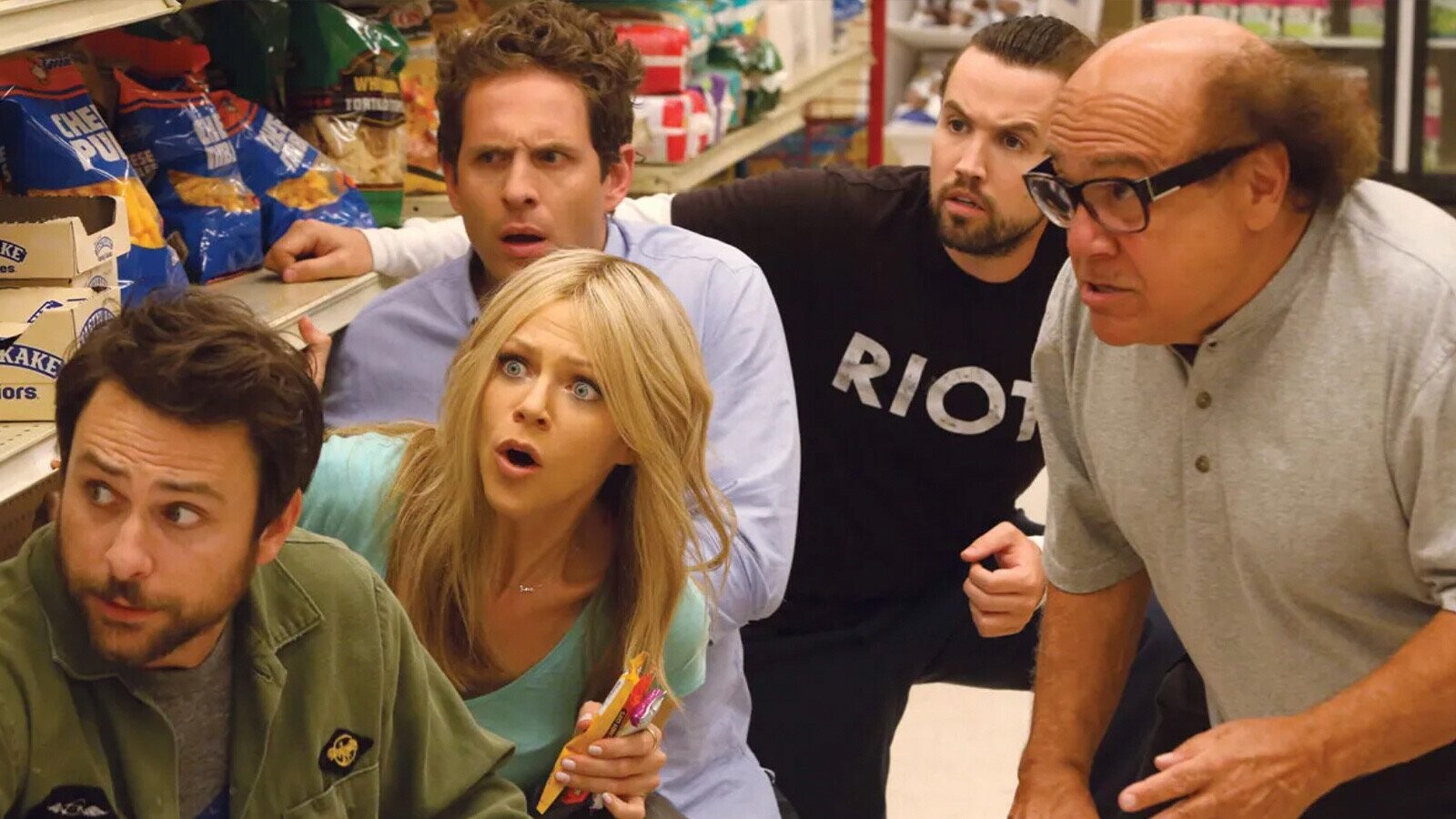
Some TV shows arrive fully formed. It’s Always Sunny in Philadelphia did not. The series now feels so deeply wired into South Philly grime, petty grudges, barstool chaos, and that special local blend of pride and menace that imagining it anywhere else sounds almost illegal. But before Paddy’s Pub existed, before the Gang weaponized cheesesteak energy, and before Philadelphia became the spiritual fifth or sixth or fifteenth main character, the show was headed somewhere much more familiar: Los Angeles.
That little twist is more than trivia. It explains why Sunny still feels different from nearly every long-running sitcom around it. The series was not born as a city comedy with a clear regional identity. It was reshaped into one. And in a rare miracle of television development, the note from the network actually made the show better instead of turning it into oatmeal.
The Show Almost Started as an L.A. Story
In its earliest version, It’s Always Sunny in Philadelphia was built around a group of struggling actors in Los Angeles. That concept makes sense when you remember where the creators were in life: young performers in Hollywood, scraping together work, absorbing rejection, and seeing plenty of weird self-obsession up close. In other words, they did not have to imagine narcissists in an unstable ecosystem. They could just look around.
The original homemade pilot had Charlie Day, Glenn Howerton, and Rob McElhenney playing self-involved aspiring actors rather than bar owners. One early version of the project even carried a title built around television rather than Philadelphia, which tells you exactly where its head was at. This was show-business satire before it became neighborhood anarchy.
The premise was sharper than “three roommates with quirky jobs,” but it still lived in well-traveled comic territory. Hollywood strivers, ego problems, audition drama, emotional vacancy disguised as ambition? Funny, yes. Unique, not exactly. Television has never met a story about miserable people in Los Angeles that it didn’t at least want to date for a while.
The First Pilot Was Basically Made With Spare Change and Delusion
Part of the origin story has become legendary because it sounds like a dare. The early pilot was made for next to nothing, with reports putting the cost at roughly the price of tapes, pizza, and pure stubbornness. It was DIY in the most literal sense: cheap cameras, unpaid work, apartments, friends, and the kind of confidence that usually belongs either to future stars or men trying to start a band in a garage.
That low-budget approach mattered. It gave the project an energy polished comedies often lose on the way to getting approved. The homemade pilot looked rough because it was rough. But the roughness became part of the pitch. The creators were not presenting a glossy fantasy. They were presenting a tone: these people are selfish, embarrassing, and emotionally broken, and the camera is not going to rescue them.
There is something beautifully on-brand about Sunny beginning with almost no money. Of course this show started like a scam that somehow worked.
Why Philadelphia Beat Los Angeles
Here is the funny part: the change that made the show iconic did not begin as some grand auteur masterstroke. It came from a practical realization that another comedy about actors in Los Angeles would blend into the landscape. The creators were told, in essence, that the network did not want a show about actors. Fair enough. Hollywood already had a surplus of people talking about themselves while pretending not to.
So the idea evolved. Instead of out-of-work actors orbiting auditions and self-regard, the central characters would run a bar. Instead of Los Angeles, the story would move to Philadelphia, Rob McElhenney’s hometown. That solved multiple problems at once. It gave the show a fresher geographic identity. It created a plausible business that let the characters avoid real employment while still having a place to gather. And it pushed the comedy away from insider-Hollywood satire into something more universal and much stranger.
A Bar Was the Perfect Comic Machine
Changing the characters from actors to bar owners did more than swap one background for another. It built the engine of the show. A dive bar is a perfect sitcom lab. People drift in and out. Schemes can begin over nothing. Grudges can be nurtured for years. The characters can appear employed while doing almost no work. They can also fail publicly in a way that is much funnier than quietly failing in an audition room.
If the original idea was about ambition, the new version was about stasis. That was the genius move. The Gang does not chase growth. They chase shortcuts, validation, revenge, attention, and occasionally denim. A bar lets them do all of that while remaining gloriously stuck.
Philadelphia Gave the Show a Face
Los Angeles would have made the early concept readable. Philadelphia made the finished show memorable. The city gave Sunny texture: rowhouse density, neighborhood identity, sports rage, local defensiveness, working-class grit, and an attitude that can sound like love, insult, and threat all in the same sentence. For a comedy about people who are always convinced they are crushing it while actively ruining everything, that setting is a gift.
Just as important, Philadelphia gave the series a kind of anti-glamour. These characters are not clawing toward fame. They are already kings and queens of a very small, very filthy kingdom of their own making. Their dreams are often absurdly grand, but their world is cramped, specific, and grounded in a place that feels lived in rather than industry-manufactured.
That difference is enormous. In Los Angeles, their vanity might have felt expected. In Philadelphia, it feels delusional. Delusion is always funnier.
What the Los Angeles Version Probably Would Have Been
To be clear, the Los Angeles version might still have worked. Day, Howerton, and McElhenney were already funny, and the original pilot reportedly had the bones of what would become the series’ first aired season. You can see the DNA. The cruelty. The selfishness. The willingness to let jokes come from characters being deeply, almost academically, terrible.
But the L.A. version likely would have leaned harder on entertainment-industry jokes: auditions, agents, fake friendships, desperation, career sabotage, and the warped etiquette of aspiring fame. That could have been smart, but it also could have dated the show faster. A lot of Hollywood satire ages like a trendy juice cleanse: loudly and badly.
The Philadelphia version unlocked something broader. Once the Gang became bar owners, the show stopped being about one business and started becoming about every human weakness with a liquor license nearby. Pride, insecurity, greed, lust, tribal loyalty, status games, fear of irrelevance, fake expertise, and catastrophic confidence all had room to breathe. Or, more accurately, wheeze.
The Switch Changed the Whole Social Ecosystem
The move to Philadelphia did not just change the address on the script. It changed the kind of people the Gang could collide with. Neighbors, local weirdos, scam artists, suburban interlopers, civic institutions, sports culture, family members, and recurring side characters all fit more naturally in the Philly setup. The city gave the show an ecosystem rather than just a premise.
That ecosystem is why the world of Sunny feels so rich even though the characters are such disasters. The Gang can bully, exploit, misunderstand, or accidentally destroy anyone from a priest to a school system to a local politician to a rival bar. Philadelphia works because it feels simultaneously specific and expandable. The city has shape, but the show can still wander into almost any corner of it and find something ridiculous.
Philly Also Makes the Show’s Meanness Funniest
Sunny survives because the characters are not secretly sweet. They are funny because they are selfish, petty, insecure, and often horrifying. The show has spent years proving that comedy can get away with almost anything if it makes the joke on the characters rather than for them.
Philadelphia helps that balancing act. The city’s toughness gives the show a natural abrasion. The insults sound right. The grudges sound right. The constant chest-thumping sounds right. The Gang’s worst impulses feel less like random nastiness and more like exaggerated local pathology. Not because Philadelphia actually created these monsters, obviously, but because the setting makes their emotional weather believable.
In another city, they might have seemed cruel. In Philly, they seem cruel with regional commitment.
The Show’s Rough Origins Never Really Left
Even after the premise changed, the homemade spirit stayed in the series’ bones. That helps explain why It’s Always Sunny in Philadelphia has lasted so long without becoming too neat. The camera style, pacing, rhythms of confrontation, and willingness to let scenes sit in discomfort all trace back to a version of the show that had to be invented by people with limited resources and zero interest in sounding “network nice.”
You can feel that in the writing. Episodes are often structured like escalating bad decisions rather than traditional sitcom lessons. The show rarely pauses to reassure you that everyone learned something. Usually they learned the wrong thing, learned nothing, or accidentally proved they should never be allowed near a public hearing.
That attitude connects directly to the original pilot’s handmade chaos. The premise became Philly. The soul stayed guerrilla.
Why the Philadelphia Version Became the Only Version That Matters
In hindsight, it is hard not to treat the setting switch as destiny. Philadelphia gave the show originality without making it precious. It gave the Gang a believable home base, a sharper comic identity, and a city big enough to satirize but specific enough to feel owned. The result was a sitcom that never behaved like a normal sitcom.
That is the real reason the “not originally set in Philadelphia” detail fascinates fans. It reveals how close the show came to being merely clever. Instead, it became distinct. It stopped being about aspiring actors in a city full of aspiring actors and became about a gang of morally vacant bar owners treating one American city like their personal sandbox, battlefield, and recurring victim.
And honestly, that feels right. Los Angeles would have given us a version of Sunny. Philadelphia gave us the version: meaner, funnier, grimier, and somehow warmer in its own broken way. Like finding out the world’s most dangerous raccoon was almost raised indoors.
Viewer Experiences: What This Origin Story Changes on a Rewatch
Once fans learn that It’s Always Sunny in Philadelphia was almost an L.A. show, the viewing experience changes in a sneaky way. Suddenly, the series starts to look less accidental and more like a brilliant case of comic evolution. You begin to notice how much of the show’s identity depends on place. The fights hit differently. The bar feels more essential. The city stops looking like a backdrop and starts looking like the pressure cooker that makes the Gang possible.
For longtime viewers, that realization can make a rewatch unusually satisfying. The early episodes feel scrappier, but they also feel more focused than many first seasons of other sitcoms because the creators had already tested a version of the show in another form. The rough edges are not signs of confusion so much as signs of survival. You are watching a series that already discarded one skin before the audience ever met it.
There is also a special pleasure in realizing how much Philadelphia saves the show from generic television gravity. Fans who revisit classic episodes after learning the origin story often describe the same reaction: of course this had to be Philly. Of course these people needed a city that could absorb their schemes, amplify their egos, and still feel weirdly tougher than they are. In Los Angeles, they would have been just another group of self-absorbed lunatics. In Philadelphia, they become local mythology in cargo shorts.
The discovery also reshapes how viewers experience the show’s humor. A lot of Sunny works because it feels specific without becoming exclusive. You do not need to be from Philadelphia to understand the Gang, but the city gives the comedy weight. It creates flavor. It tells you these characters belong to a world with history, blocks, grudges, rivalries, institutions, and neighborhoods that existed before they barged in and made everything worse. That makes the jokes land harder because the Gang is always colliding with something sturdier than their nonsense.
For fans who have visited Philadelphia, or want to, the origin story adds another layer. The city becomes more than the name in the title. It becomes the answer to a creative what-if. Every rowhouse shot, every local reference, every bit of sports fury, every grubby street-level scheme starts to feel like evidence that the right decision was made. The show may film plenty outside Philadelphia, but the city still gives it its heartbeat.
And maybe that is the best audience experience tied to this piece of trivia: it makes the finished show feel even more improbable. A nearly no-budget pilot about struggling actors turns into one of television’s most durable comedies because somebody realized the funniest possible move was to leave Hollywood and head for South Philly. That is not just a production note. That is the kind of absurd, lucky, gloriously sideways decision the Gang themselves would probably fail to appreciate. Which is exactly why the rest of us should.
Conclusion
It’s Always Sunny in Philadelphia was not originally built as a Philadelphia story, but becoming one is what made it special. The shift from Los Angeles actors to Philly bar owners did not merely improve the premise. It sharpened the satire, deepened the characters’ world, and gave the series a sense of place that still separates it from every other comedy about terrible people behaving terribly. Sometimes the smartest creative move is not doubling down on your first idea. Sometimes it is admitting your original plan was decent, your revised plan was deranged, and the deranged one is television history.