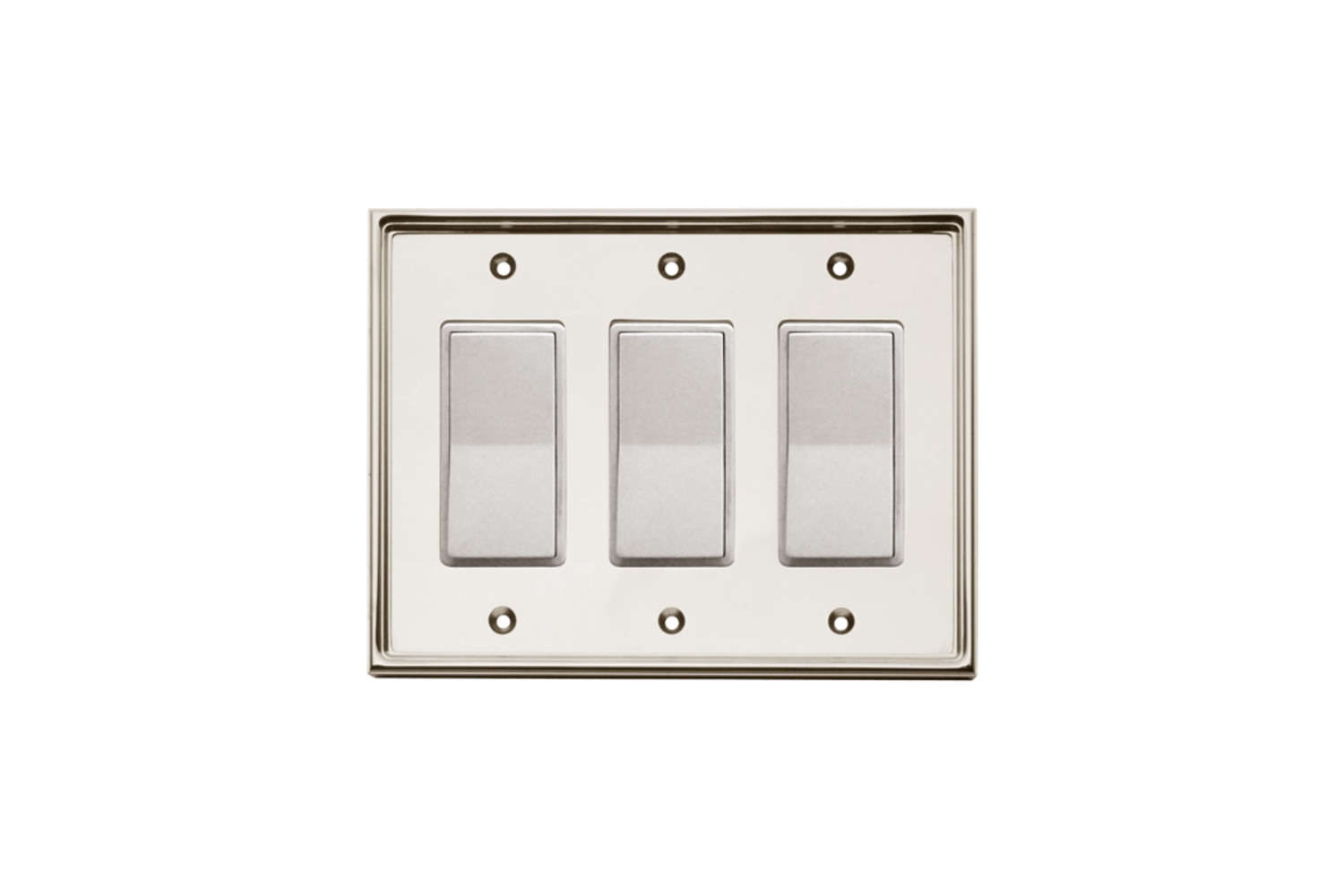
The No 9810LT3 Rectangular Switch Plate is the kind of small architectural detail that proves a wall switch does not have to look like an apology. Designed by NANZ & Company, this decorative rectangular switch plate brings stepped molding, refined metal finishes, and custom configurability to a part of the home that is usually ignored until it looks wrong.
What Is the No 9810LT3 Rectangular Switch Plate?
The No 9810LT3 Rectangular Switch Plate is a decorative electrical wall plate from NANZ & Company, a luxury architectural hardware manufacturer known for high-end door hardware, bath fittings, cabinet hardware, and custom metalwork. Unlike a basic white plastic cover from a hardware aisle, the 9810LT3 is designed as a visible design element. It frames a switch or outlet with the same seriousness usually reserved for door levers, cabinet pulls, and stair rail brackets.
The defining feature is its layered rectangular profile. The plate has stepped molding around the edge, with a small cove transition leading into the flat face of the plate. That detail may sound tiny, but in interior design, tiny details are often where the magic hides. A cove edge can soften the transition between wall and plate, while the stepped border gives the piece shadow, depth, and a more architectural presence.
The listed size for the No 9810LT3 is 5 inches by 6.5 inches, making it larger and more substantial than many standard switch plates. That extra presence helps it feel intentional rather than accidental. In a finished room, it reads less like “the electrician needed to cover a box” and more like “the designer meant for this to be here.”
Why a Switch Plate Matters More Than People Think
Most homeowners spend weeks choosing paint colors, cabinet hardware, lighting fixtures, tile edges, and faucets. Then, at the end of the project, someone installs the cheapest switch plate available, and suddenly the wall has the design equivalent of sneakers with a tuxedo. Nothing against sneakers, of course. Just maybe not at the formal dinner.
A switch plate is touched every day. It sits at eye level or hand level. It interrupts wallpaper, plaster, stone, paneling, tile, and paint. When it is poorly chosen, it becomes visual noise. When it is carefully selected, it quietly supports the whole room. The No 9810LT3 Rectangular Switch Plate is especially useful in interiors where the hardware language matters: historic renovations, luxury apartments, boutique hotels, custom homes, powder rooms, libraries, dining rooms, and carefully restored older houses.
Wall plates also have a practical purpose. They cover electrical boxes, protect the finished opening, and create a cleaner transition around switches, dimmers, outlets, or specialty controls. A plate should cover the box properly, align neatly with the device, and sit securely. Beauty is wonderful, but electricity is not the place to freestyle like a jazz drummer. For installation, a licensed electrician should handle wiring, box conditions, grounding, and code compliance.
Design Details: Stepped Molding, Cove Edge, and Classic Proportion
The No 9810LT3 is not minimalist in the flat, barely-there sense. It is refined, layered, and classic. Its stepped molding creates a border that gives the plate depth without turning it into a tiny picture frame fighting for attention. The cove detail softens that geometry, making the plate adaptable to both traditional and contemporary rooms.
Traditional Interiors
In a traditional home, the 9810LT3 feels natural beside paneled walls, crown molding, unlacquered brass knobs, marble fireplace surrounds, and polished wood floors. Its stepped edge echoes millwork details and gives the wall a finished, period-appropriate look. If the room already features antique brass, pewter, or burnished metal accents, this switch plate can tie those elements together gracefully.
Contemporary Interiors
In a modern room, the same plate can work as a contrast piece. Satin nickel or pewter can make it feel crisp and restrained, while antique brass can bring warmth to white walls, limestone, plaster, or dark-stained cabinetry. The trick is to use it intentionally. A decorative switch plate in a modern space should look curated, not accidentally inherited from a Victorian uncle with excellent taste and too many candlesticks.
Transitional Interiors
Transitional design is where the No 9810LT3 really earns its keep. The plate is classic but not fussy, decorative but not loud. It can bridge shaker cabinetry, modern lighting, vintage rugs, and clean-lined furniture. That makes it a strong option for homeowners who want warmth and detail without turning the room into a museum exhibit.
Finishes: Choosing the Right Look
NANZ offers plated and patinated finishes, and recommended finishes for the No 9810LT3 include antique brass, burnished brass, pewter, antique gold, and satin nickel. Each finish changes the personality of the plate.
Antique Brass
Antique brass is warm, familiar, and excellent for interiors with traditional hardware, warm wood, cream paint, green cabinetry, or vintage-inspired lighting. It has enough depth to avoid looking shiny-new, which is helpful when the goal is character rather than sparkle.
Burnished Brass
Burnished brass feels rich and quietly luxurious. It works beautifully in libraries, formal dining rooms, entry halls, and powder rooms. If antique brass is a well-loved leather chair, burnished brass is that same chair after someone placed it next to a fireplace and handed it a good book.
Pewter
Pewter is cooler, softer, and less reflective than polished chrome or bright nickel. It pairs well with stone, gray cabinetry, black doors, soapstone counters, and rooms that lean moody or historic. Pewter is also a smart choice when you want metal presence without the warmth of brass.
Antique Gold
Antique gold is the most decorative of the commonly recommended options. It can be stunning in formal rooms, boutique hospitality spaces, and interiors with gilded mirrors or ornate lighting. Use it with confidence, but also with restraint. A little antique gold says “custom interior.” Too much says “pirate ship ballroom.”
Satin Nickel
Satin nickel is clean, versatile, and modern. It coordinates with many contemporary plumbing fixtures, appliance pulls, and door hardware finishes. For homeowners who want the quality of the 9810LT3 without a strongly historic look, satin nickel is often the safest choice.
Custom Configurations and Specialty Uses
One of the most important advantages of the No 9810LT3 Rectangular Switch Plate is configurability. NANZ can manufacture switch or outlet configurations and can also make custom plates for elevators, intercoms, and other technical devices. That matters because real homes are rarely perfect grids of standard single-toggle switches.
Think about a renovated townhouse entry with an intercom, a light switch, and a security control. Or a kitchen with a dimmer, outlet, and under-cabinet lighting switch all competing for wall space. Or an elevator landing in a private residence where a plastic plate would feel wildly out of place. A custom decorative plate allows functional controls to live inside the design language of the room.
This flexibility also helps in older homes, where electrical layouts may have evolved over decades. Instead of forcing a one-size-fits-all wall plate into a difficult location, a custom plate can create a cleaner, more intentional result. That said, custom configuration should be planned carefully. Measurements, device types, wall thickness, box position, and code requirements all matter.
No 9810LT3 vs. Standard Switch Plates
A standard switch plate is usually affordable, easy to replace, and available in plastic, thermoset, metal, nylon, wood, ceramic, or specialty finishes. For many spaces, a simple plate is perfectly fine. Laundry rooms, garages, closets, rental units, and utility spaces do not always need luxury hardware. The No 9810LT3 belongs in a different category.
Instead of disappearing, it elevates the wall. Instead of simply hiding a device opening, it frames the switch as part of the architectural finish. The difference is similar to basic cabinet knobs versus custom brass pulls. Both open the cabinet. Only one makes you pause and say, “Well, that’s handsome.”
The 9810LT3 also has a larger, more substantial size than many everyday plates. That scale can help cover imperfect edges around a box, although it should not be used as a shortcut for unsafe or sloppy electrical work. A neat plate is not a magic cape for bad wiring.
Where This Switch Plate Works Best
Powder Rooms
Powder rooms are perfect places for upgraded switch plates because they are small, detailed, and often more decorative than the rest of the house. A brass or pewter 9810LT3 can pair beautifully with wallpaper, marble sinks, framed mirrors, and statement sconces.
Entryways and Hallways
Entryways create the first impression. If your front door hardware, lighting, and flooring are carefully chosen, a luxury rectangular switch plate can keep the design consistent. Hallways also tend to have multiple switches, making wall plates more visible than people expect.
Libraries and Studies
Rooms with built-ins, paneling, and warm finishes benefit from hardware that feels permanent. The No 9810LT3 can look especially good against dark paint, stained wood, grasscloth, or plaster walls.
Kitchens
Kitchens require caution because wall plates may sit on tile, stone, painted walls, or backsplash material. A custom metal plate can look excellent, but the finish should coordinate with faucets, cabinet hardware, lighting, and appliance pulls. The goal is harmony, not a hardware cage match.
Hospitality and Boutique Commercial Spaces
Luxury switch plates can make sense in boutique hotels, private clubs, restaurants, galleries, and design-forward offices. Guests may not consciously notice every plate, but they do notice when a space feels consistently finished.
Installation and Planning Tips
Before ordering a No 9810LT3 Rectangular Switch Plate, confirm the exact device configuration. Is it a toggle switch, rocker switch, dimmer, duplex outlet, GFCI, data port, intercom, elevator button, or a combination? Do not guess. Guessing is how people end up with beautiful metal plates that fit nothing except regret.
Measure the existing opening and review the wall condition. If the plate will be installed over tile, stone, paneling, or wallpaper, coordination is especially important. The installer should account for wall thickness, box depth, device projection, screw alignment, and whether the plate will sit flat. In high-end projects, switch plates are often coordinated early with the designer, architect, electrician, and millworker.
For metal switch plates, grounding and compatibility should be handled properly by a qualified professional. If a device is loose, a box is recessed too deeply, or wiring looks questionable, do not simply cover it with a nicer plate. A luxury plate should be the finishing touch, not a disguise.
Care and Maintenance
Hand-finished metal hardware may change over time with touch, cleaning, humidity, and exposure. That aging can be part of the appeal, especially with brass and patinated finishes. However, maintenance should match the finish. Harsh abrasives, acidic cleaners, and aggressive polishing can damage the surface or alter the intended patina.
For routine care, use a soft dry cloth or a slightly damp cloth when appropriate. Avoid soaking the plate, spraying cleaner directly into switches, or using anything gritty. If the finish is unlacquered or designed to patinate, expect natural variation. That is not a flaw; that is the metal living its little metal life.
If the plate is installed in a bathroom, kitchen, or coastal environment, finish selection becomes more important. Moisture, salt air, and frequent cleaning can affect patinated metal. When in doubt, request finish samples and ask the manufacturer or supplier how the finish will behave in the intended location.
Buying Considerations
The No 9810LT3 is not the kind of switch plate most shoppers toss into an online cart while buying paper towels. It is a specification-grade product, often best approached through a designer, architect, builder, or direct consultation with NANZ. Pricing may depend on finish, configuration, customization, and order details.
Before purchasing, prepare a simple schedule of locations. Include room name, wall finish, device type, desired finish, and quantity. This helps avoid mismatched plates and last-minute confusion. In a whole-home project, consistency matters. You may choose one finish throughout the home or vary finishes by room, but the decision should feel deliberate.
Also consider the rest of the hardware package. Door levers, hinges, cabinet pulls, plumbing fixtures, lighting finishes, and switch plates should speak the same design language. They do not all need to match exactly, but they should look like they attended the same meeting.
Experience Notes: Living With a Decorative Rectangular Switch Plate
Using a switch plate like the No 9810LT3 changes the way a room feels in a subtle but memorable way. At first, most people do not walk into a room and announce, “Wow, excellent switch plate.” That would be unusual behavior, even among design people. But they do notice the sense of finish. The room feels more complete, more considered, and less interrupted by generic plastic rectangles.
In a powder room, for example, a decorative brass plate can make wallpaper look more intentional. A standard white plate on dark botanical wallpaper can feel like a sticker someone forgot to remove. A warm metal rectangular plate, especially one with molded edges, frames the switch and makes it part of the design. The same idea applies to painted paneling. A plate with depth and shadow feels much more at home on millwork than a flat plastic cover.
The tactile experience is also different. Metal has weight, temperature, and presence. When you reach for a switch next to a solid brass door lever or a stone countertop, a high-quality plate feels consistent with the rest of the room. This is one reason designers obsess over small details. The hand notices what the eye may only half-register.
Another real-world advantage is visual discipline. Once you upgrade one switch plate, you start noticing every other plate in the house. This can be dangerous. Suddenly the hallway plate looks sad. The kitchen outlet looks nervous. The bedroom dimmer is pretending not to be seen. A product like the 9810LT3 encourages a more thoughtful hardware plan, which can make the entire home feel calmer and more unified.
That said, decorative switch plates work best when they are used with restraint and proper context. Not every room needs a showpiece plate. In a utility closet, a simple durable cover is perfectly acceptable. In a formal entry, library, primary suite, or powder room, the upgraded plate makes more sense. Think of it as jewelry for the wall. Beautiful jewelry is wonderful; wearing all of it at once to walk the dog is where things get complicated.
From an installation perspective, the most important experience-based lesson is to plan early. Switch plates are often treated as afterthoughts, but custom or high-end plates need coordination. Device style, box placement, wall material, finish samples, and lead time all matter. If the wall is already tiled and the box is slightly off-center, even the most beautiful plate cannot fully rescue poor planning. The best results happen when the switch plate is specified before the final wall finish goes in.
The No 9810LT3 Rectangular Switch Plate is especially rewarding in rooms where architectural details already matter. It complements crown molding, brass fixtures, vintage-inspired hardware, stone surfaces, and custom cabinetry. It can also bring warmth to a contemporary space that risks feeling too plain. In the right setting, it is not flashy. It is confident. It says, quietly, “Yes, even the switch plate was invited to the design meeting.”
Final Thoughts
The No 9810LT3 Rectangular Switch Plate is a premium architectural detail for people who believe the finishing touches are not optional extras. With its stepped molding, cove transition, substantial rectangular size, custom configuration options, and broad finish possibilities, it can elevate switches, outlets, intercoms, and specialty controls from necessary utilities to polished design elements.
It is best suited for interiors where craftsmanship, finish coordination, and long-term design quality matter. Choose the finish carefully, plan the configuration accurately, and involve a qualified electrician for installation. Done well, the 9810LT3 proves that even the smallest rectangle on the wall can carry a surprising amount of style.
Note: This article is based on real product information from NANZ & Company and related U.S. design, wall plate, electrical safety, and architectural hardware resources. Always consult a licensed electrician for installation or code-sensitive electrical work.