Note: This article is written for web publishing and is based on current expert testing, manufacturer specifications, and reputable coffee-gear evaluations. Source links are not embedded in the body to keep the HTML clean for copying.
If your morning coffee tastes like a mysterious weather eventsometimes bright and balanced, sometimes bitter enough to negotiate withyour beans may not be the villain. Your scoop might be. A coffee scale is one of the smallest tools on the counter, yet it can make the biggest difference in flavor because it turns “eh, that looks right” into actual, repeatable brewing.
The best coffee scales of 2025 are not just tiny kitchen scales wearing a barista apron. They are faster, more precise, easier to read, often equipped with timers, and designed to survive the splashes, steam, and sleepy mistakes that happen before 8 a.m. Appliance experts evaluated coffee scales for accuracy, ease of use, responsiveness, cleaning, brewing performance, and whether they actually make espresso and pour-over routines smoother instead of more dramatic.
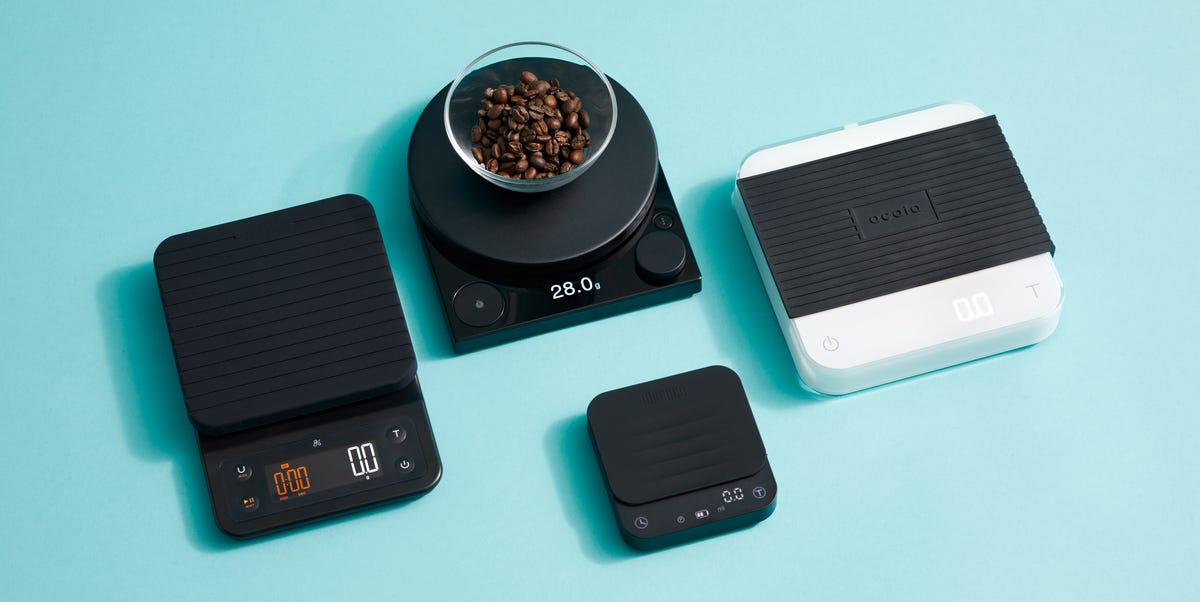
After comparing lab-tested models, hands-on coffee reviews, and brand specifications, four coffee scales stand out for different kinds of home brewers: the Acaia Pearl, Greater Goods Morning Maestro, Fellow Tally Pro Studio, and Wacaco Exagram Pro. One is the polished all-rounder, one is the value hero, one is a pour-over wizard, and one is tiny enough to travel without demanding its own suitcase.
Why a Coffee Scale Matters More Than Your Scoop
A scoop is convenient, but coffee beans are not all the same density. A tablespoon of light-roast beans may weigh differently than a tablespoon of dark-roast beans. Grounds also settle, clump, and behave like tiny caffeinated snowdrifts. That means volume measurements can change from cup to cup, even when you think you are doing the same thing.
A digital coffee scale fixes that problem by measuring coffee and water by weight. Once you know that you like, for example, 20 grams of coffee to 320 grams of water, you can repeat that brew tomorrow, next week, or after a disastrous Monday meeting. For espresso, precision matters even more. A change of 0.1 gram can affect shot timing, extraction, body, and flavor. For pour-over, a scale helps you control bloom, pouring stages, and total brew time.
The sweet spot for most home brewers is a scale that reads in 0.1-gram increments, has a built-in timer, tares quickly, responds without lag, and has a display you can read while half-awake. Bonus points for rechargeable batteries, silicone heat protection, water resistance, and a size that fits your actual brewing setup.
Quick Comparison: The 4 Best Coffee Scales of 2025
| Rank | Coffee Scale | Best For | Key Strength | Potential Drawback |
|---|---|---|---|---|
| 1 | Acaia Pearl Coffee Scale | Best Overall | Excellent accuracy, app connectivity, premium build | Learning all features takes practice |
| 2 | Greater Goods Morning Maestro Coffee Scale | Best Value | Affordable, intuitive, high capacity | Less compact for espresso trays |
| 3 | Fellow Tally Pro Studio Digital Coffee Scale | Best for Pour-Over | Brew Assist mode, bright OLED display, responsive readings | Premium price and larger footprint |
| 4 | Wacaco Exagram Pro Coffee Scale | Best Small Coffee Scale | Compact, travel-friendly, espresso and pour-over modes | Large brewers may feel less stable |
1. Best Overall: Acaia Pearl Coffee Scale
Why appliance experts like it
The Acaia Pearl is the coffee scale for people who want precision without turning the kitchen into a NASA launch roomalthough, to be fair, it does look sleek enough for mission control. It is accurate to 0.1 gram, has a 2,000-gram maximum capacity, includes Bluetooth connectivity, and works with Acaia’s coffee app for more advanced brewing data.
In appliance-lab testing, the Acaia Pearl earned top marks for accuracy and ease of use. It is large enough for a Chemex or pour-over carafe, yet still slim enough for many espresso setups. The display is clean and bright, and the scale adjusts well to different lighting conditions, which matters if your coffee station lives under moody kitchen cabinets.
Best features
- 0.1-gram readability for precision brewing
- 2,000-gram maximum capacity
- Rechargeable lithium-ion battery
- Bluetooth app connectivity
- Heat-resistant pad included
- Useful modes for weighing, timing, espresso, and pour-over
What could be better
The Acaia Pearl is not the cheapest coffee scale, and beginners may need a few brews to understand all its modes. If you only want to weigh beans for drip coffee once in a while, it may feel like buying a sports car to drive to the mailbox. But if you brew espresso, pour-over, French press, or cold brew regularly, it is a strong long-term investment.
Who should buy it: Home baristas who want one premium coffee scale that can handle serious pour-over sessions, espresso practice, and daily brewing with excellent consistency.
2. Best Value: Greater Goods Morning Maestro Coffee Scale
Why it stands out
The Greater Goods Morning Maestro is the practical pickthe friend who shows up on time, brings snacks, and does not make a big deal about it. It costs far less than many premium coffee scales but still offers the features most people actually need: 0.1-gram precision, a built-in timer, easy buttons, a bright display, and a generous 3,000-gram capacity.
That high capacity makes it useful beyond coffee. You can weigh flour for pancakes, water for bread dough, or chocolate chips for cookies when you are “just adding a handful” for the fourth time. It also includes multiple units of measurement, including grams, ounces, fluid ounces, pounds, and milliliters.
Best features
- Excellent value for the price
- 0.1-gram measurement increments
- 3,000-gram maximum capacity
- Built-in timer for bloom and extraction
- Simple buttons for power, tare, timer, and units
- Protective silicone mat
- Five-year warranty from the brand
What could be better
The Morning Maestro is not the most elegant espresso scale because its shape can hang over the edge of some espresso machine drip trays. It is better suited for pour-over, French press, drip coffee, cold brew, and general kitchen use. Cleaning around the buttons may also require a little extra attention if coffee grounds wander into the crevices, as they love to do because apparently they pay rent there.
Who should buy it: Budget-conscious coffee lovers who want reliable precision, a timer, and versatility without spending premium-scale money.
3. Best for Pour-Over: Fellow Tally Pro Studio Digital Coffee Scale
Why pour-over fans will love it
The Fellow Tally Pro Studio Digital Coffee Scale is built for people who talk about bloom time with the seriousness of a stock market analyst. Its biggest selling point is Brew Assist mode, which lets you choose a coffee-to-water ratio and then guides you toward the exact water weight you need. Translation: fewer mental math moments before caffeine has entered the bloodstream.
The Tally Pro measures to 0.1 gram, has a 2,500-gram maximum capacity, and includes weight, timer, and Brew Assist modes. The luminous OLED display is easy to read, and the removable weigh pan makes cleaning easier than on many button-heavy scales. It is also attractive enough that you may leave it on the counter instead of hiding it in the drawer with the random birthday candles.
Best features
- Brew Assist mode calculates target water weight
- 0.1-gram readability
- 2,500-gram maximum capacity
- Weight and timer modes
- Bright OLED display
- Rechargeable battery with USB-C compatibility
- Removable weigh pan for easier cleaning
What could be better
The Tally Pro is expensive, and it is not the best fit for compact espresso drip trays because of its larger, rounded design. It is clearly happiest under a pour-over dripper, Chemex, French press, or any brewing method where ratio guidance is useful. If you only pull espresso shots, a smaller scale may make more sense.
Who should buy it: Pour-over enthusiasts, coffee subscription fans, and anyone who likes experimenting with different beans, brew ratios, and cup sizes.
4. Best Small Coffee Scale: Wacaco Exagram Pro Coffee Scale
Why compact brewers should consider it
The Wacaco Exagram Pro is the best coffee scale for small kitchens, travel setups, and espresso drinkers who do not have room for a giant rectangle under the portafilter. It weighs only a few ounces, comes with a protective carrying case, and includes normal, espresso, and pour-over modes. That is a lot of function packed into a scale small enough to make your phone look bulky.
Its espresso mode includes automatic tare and timing functions, while its pour-over ratio program helps track the relationship between coffee grounds and water as you pour. The scale supports grams, ounces, and milliliters, and the built-in lithium battery is rechargeable through USB-C.
Best features
- Compact and travel-friendly design
- 0.1-gram precision
- 2,000-gram maximum capacity
- Normal, espresso, and pour-over modes
- Automatic timing features for espresso
- Rechargeable battery
- Protective transportation box
What could be better
The Exagram Pro is excellent for espresso cups, portafilters, AeroPress, small pour-over brewers, and travel kits. However, larger brewers like a full-size Chemex can feel less stable because the platform is compact. The silicone mat may also shift more than expected, so careful placement helps.
Who should buy it: Espresso fans, frequent travelers, small-apartment brewers, and anyone who wants serious coffee-scale features in a compact package.
How Appliance Experts Test Coffee Scales
Good coffee scale testing is not just “put a mug on it and hope.” Appliance experts typically evaluate accuracy with calibrated weights, test sensitivity with small amounts of coffee, compare readings across multiple samples, and use each scale in real brewing scenarios. That means dosing espresso beans, pulling shots on an espresso machine, brewing pour-over coffee, checking whether a Chemex sits securely, and seeing how fast the display responds when water is poured.
Ease of use matters just as much as lab accuracy. A scale may be technically brilliant, but if the controls feel like a puzzle from an escape room, it will not make your morning better. The best coffee scales have readable displays, responsive tare buttons, simple charging or battery installation, useful timers, and surfaces that can be wiped clean after coffee spills.
Experts also look at automatic shut-off. A short shut-off can be annoying during a slow pour-over, while a longer shut-off saves you from losing your recipe halfway through brewing. Water resistance, heat protection, and cleaning design are also important because coffee gear lives in a splash zone. A scale that panics when a few drops land nearby is not cut out for café combat.
What to Look for When Buying a Coffee Scale
Accuracy and readability
For espresso, look for 0.1-gram precision. For pour-over or French press, 0.5 gram can work, but 0.1 gram gives you more control. A bright display is also essential, especially if you brew in low light or use tall carafes that partly block your view.
Built-in timer
A timer is not just a nice extra. It helps track bloom time, total extraction, espresso shot time, and French press steeping. If your scale automatically starts timing when water or espresso hits the cup, even better.
Size and shape
Espresso users should measure the drip tray before buying. A scale that is too large may hang off the machine or raise the cup too close to the portafilter. Pour-over users need enough platform space for a dripper and carafe. Cold brew and French press users may prefer higher weight capacity.
Water and heat protection
Coffee brewing involves hot water, steam, and occasional splashes. Look for water resistance, a silicone mat, or a heat-resistant pad. Waterproof is rare, but splash-friendly is realistic.
Battery style
Rechargeable USB-C scales are convenient and reduce battery waste. Battery-powered models can still be great, especially budget options, but check whether batteries are included and how easy they are to replace.
Best Coffee Scale by Brewing Style
Best for espresso
Choose the Wacaco Exagram Pro if you need a compact espresso scale with automatic timing features. The Acaia Pearl can work for espresso in some setups, but compact machines may benefit from a smaller footprint.
Best for pour-over
The Fellow Tally Pro Studio is the most helpful pour-over companion thanks to Brew Assist mode. It is especially good for people who switch between beans and ratios often.
Best for beginners
The Greater Goods Morning Maestro is easy to understand, affordable, and practical. It removes guesswork without overwhelming the user with too many settings.
Best premium all-rounder
The Acaia Pearl is the best overall pick for serious home baristas because it combines accuracy, app connectivity, premium design, and multi-method versatility.
Practical Brewing Tips for Better Coffee
Start with a ratio, then adjust from there. For pour-over and French press, many coffee lovers begin around 1:15 or 1:16, meaning one gram of coffee for every 15 or 16 grams of water. If the coffee tastes weak, use slightly less water or a finer grind. If it tastes harsh or bitter, try more water, a coarser grind, or a shorter brew time.
For espresso, a common starting point is a 1:2 ratio, such as 18 grams of ground coffee producing about 36 grams of espresso. That is not a law carved into a marble tamper, but it is a useful baseline. From there, adjust based on roast level, machine pressure, basket size, grind, and taste.
Always tare your vessel before adding coffee. Tare the dripper, tare the portafilter, tare the cup, tare everything except your emotional baggage. Then weigh the coffee, start the timer, and pour with intention. Consistency is not about being fussy; it is about knowing what changed when your cup suddenly tastes betteror worse.
Real-World Experience: Living With a Coffee Scale
The first time you use a coffee scale, it may feel slightly unnecessary, like wearing a lab coat to make breakfast. Then you brew the same cup twice in a row and realize the flavor is suddenly consistent. That is the moment the scale earns its tiny square of counter space.
In daily use, the biggest benefit is not perfection. It is confidence. When your pour-over tastes bright, sweet, and balanced, you can repeat the recipe. When it tastes thin, you can adjust the ratio. When espresso runs too fast, you can compare dose, yield, and time instead of blaming the moon, the beans, or your grinder’s attitude. A coffee scale turns brewing into a conversation instead of a guessing game.
For pour-over, a scale helps with rhythm. You can bloom 20 grams of coffee with about 40 to 60 grams of water, wait 30 to 45 seconds, then continue pouring in stages until you hit your target weight. Without a scale, you are eyeballing the water level and hoping the mug is not secretly enormous. With a scale, the numbers guide the pour and let you focus on technique: spiral motion, steady flow, even saturation, and not accidentally flooding the filter like a tiny coffee swamp.
For espresso, the scale becomes even more important. A shot that looks similar can taste completely different if the yield changes by several grams. Weighing the output helps you know when to stop the shot. If you dose 18 grams and aim for 36 grams out, you have a repeatable starting point. From there, you can adjust grind size, extraction time, or ratio. It makes espresso less mysterious, though still dramatic enough to keep its personality.
A compact scale also changes travel coffee. Hotel coffee is often a bold adventure in disappointment, but a small scale, hand grinder, and portable brewer can rescue the morning. The Wacaco Exagram Pro is especially useful here because it fits into a small kit and does not take over your bag. Even if you are using an AeroPress in a hotel room, weighing beans and water makes the result taste intentional rather than improvised in a panic.
The hidden joy of a coffee scale is that it improves other kitchen habits too. You may start weighing water for oatmeal, flour for pancakes, or ingredients for baking. Suddenly, fewer measuring cups are dirty, recipes are more repeatable, and your kitchen feels just a bit more organized. This is how coffee gear slowly becomes lifestyle gear. It starts with espresso and ends with you weighing pizza dough while saying, “Actually, grams are easier.”
There is one warning: a coffee scale can make you picky. Once you learn your favorite ratio, it becomes harder to go back to random scoops. But this is a good problem. Better coffee at home means fewer disappointing café runs, less wasted coffee, and more control over flavor. Plus, it gives you a perfectly reasonable excuse to say things like “I’m dialing in this roast,” which sounds impressive even if you are still wearing pajamas.
Overall, the best coffee scale is the one you will actually use. If you love advanced features and data, choose the Acaia Pearl. If you want value, choose Greater Goods. If pour-over is your ritual, choose Fellow. If space is tight or travel matters, choose Wacaco. Any of these four will make your brewing more consistent, your coffee more predictable, and your mornings slightly less chaoticwhich, frankly, is a public service.
Final Verdict
The Acaia Pearl is the best overall coffee scale of 2025 because it combines premium accuracy, smart features, excellent usability, and multi-method flexibility. The Greater Goods Morning Maestro is the best value choice for everyday brewers who want precision without a luxury price. The Fellow Tally Pro Studio is the best pick for pour-over lovers who want guided ratios and a beautiful interface. The Wacaco Exagram Pro is the best small coffee scale for espresso, travel, and compact coffee stations.
A coffee scale will not magically make stale beans taste like a championship roast, but it will help you brew with consistency. And consistency is where better coffee begins. Your scoop had a good run. It served bravely. Now let the scale take over.