Note: This article is written for web publishing and synthesizes current product, design, furniture-care, and dining-chair buying information into original editorial content.
Why the Vitra Basel Chair Still Looks So Calmly Clever
The Vitra Basel Chair is one of those furniture pieces that refuses to enter a room wearing tap shoes. It does not shout, sparkle, swivel, recline, or pretend to be a sculpture that accidentally has legs. Instead, it does something much harder: it looks ordinary in the best possible way. Designed by British industrial designer Jasper Morrison for Vitra in 2008, the Basel Chair takes the familiar wooden café chair and gives it a quiet modern upgrade.
That upgrade is the reason this chair keeps appearing in conversations about “high/low” furniture. On the high side, you have a designer chair from Vitra, a Swiss company known for serious design pedigree, long-lasting products, and collaborations with names like Charles and Ray Eames, Verner Panton, George Nelson, Jean Prouvé, and Morrison himself. On the low side, you have affordable chairs inspired by the same visual language: pale wood frame, simple profile, molded seat, clean backrest, and a friendly Scandinavian-meets-café attitude.
The fun of the Vitra Basel Chair is that it does not look expensive at first glance. That is not an insult. It is the point. Morrison’s best work often has a “super normal” quality, meaning it feels so natural in daily life that you notice its intelligence slowly. The Basel Chair looks like the kind of chair that has always been there, quietly waiting for coffee, homework, soup, gossip, or a dramatic late-night cereal session.
What Is the Vitra Basel Chair?
The Basel Chair is a modern reinterpretation of the classic mass-produced wooden chair, the kind found in cafés, kitchens, libraries, and modest dining rooms across Europe for generations. Morrison did not try to reinvent seating by making it resemble a spaceship, a folded napkin, or an emotional crisis in fiberglass. Instead, he studied a familiar typology and asked a better question: how can this ordinary chair be improved without losing its ordinary charm?
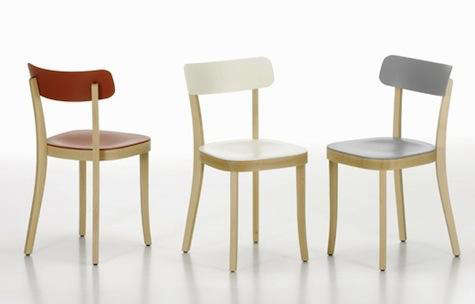
The answer was material contrast. The chair uses a solid beech wood frame, while the seat and backrest are made from molded plastic. This combination matters. Traditional all-wood chairs can be beautiful, but they often require thicker surfaces, flatter shaping, or more compromise in comfort. By using plastic for the seat and back, the Basel Chair gains a more organic shape, a slimmer profile, and a smoother relationship with the human body. In other words, your back gets a little more kindness, and your dining room gets a little more design credibility.
Key Design Details
The Basel Chair’s frame is typically made of beech, available in natural or lacquered finishes depending on the version. The seat and backrest are made from dyed-through plastic, often described in product literature as ASA plastic. The result is a chair that mixes warmth and practicality: wood brings visual softness, while plastic adds flexibility, durability, and easier cleaning.
Its proportions are also part of its success. Commonly listed dimensions are approximately 42 cm wide, 46 cm deep, 80 cm high, with a seat height around 46 cm. Translated into dining-room reality, that seat height is close to 18 inches, which fits comfortably with many standard dining tables. The chair looks slim, but it does not feel visually flimsy. It is light enough for everyday use, yet serious enough for a carefully designed kitchen, café, studio, or small apartment dining nook.
High: Why the Vitra Version Costs More
The “high” part of this high/low story is not only about the name on the label. Yes, Vitra carries design-world weight. Yes, Jasper Morrison is one of the most influential industrial designers of his generation. But the higher price also reflects a set of things that are easy to overlook when you are scrolling furniture online at midnight and whispering, “Do I need six chairs or emotional support?”
First, there is authorship. The Basel Chair is not a generic silhouette assembled from trend ingredients. It comes from a designer with a clear philosophy: useful objects should fit naturally into everyday life. Morrison’s work is often praised for restraint, proportion, and the refusal to add drama where a good line will do. The Basel Chair is a strong example of that approach because it improves a humble chair type without turning it into a design peacock.
Second, there is material intention. The Basel Chair is not simply wood plus plastic because someone ran out of wood. The combination is central to its function. The plastic seat and back allow more sculpting than a standard flat wooden chair, while the beech frame keeps the piece familiar, tactile, and warm. It is a smart hybrid: part bistro chair, part modern dining chair, part “I know what I’m doing, but I’m not going to be weird about it.”
Third, there is longevity. A quality designer chair often makes more sense over time than it does on the receipt. Vitra emphasizes durability, care, repair, and replacement parts across its product ecosystem. That does not mean every chair will live forever or survive being used as a ladder by your overconfident uncle, but it does mean the brand’s philosophy favors long-term use over disposable décor.
Low: The Affordable Lookalike Appeal
The “low” side of the Basel Chair story usually points toward affordable wooden dining chairs with a similar silhouette. One of the most famous comparisons was the IKEA Nordmyra Chair, which shared some visual ingredients: a light wooden frame, a simple backrest, a clean seat, and a practical everyday attitude. Historically, the Nordmyra was dramatically less expensive than the Vitra Basel Chair, making it a tempting option for people who liked the look but did not want their dining set to cost more than a used car with questionable brakes.
The Nordmyra and similar budget-friendly chairs can work very well in casual spaces. They often provide a clean Scandinavian-style look, stackability, and easy compatibility with basic dining tables. In a first apartment, rental kitchen, breakfast nook, kids’ homework zone, or small café project on a tight budget, the low version can be a practical win.
But the comparison should be fair. A lower-cost alternative may echo the shape, but it does not necessarily copy the design intelligence, material performance, finish quality, comfort, or long-term durability of the original. This is where the high/low decision becomes less about “Which one looks similar in a photo?” and more about “How will this chair behave after two years of actual human life?”
Basel Chair vs. Budget Alternative: What Really Changes?
Comfort
The Basel Chair’s molded seat and back are a major part of its comfort story. Plastic allows more contouring and a little more give than a typical flat wooden chair. Budget alternatives may look close from across the room, but the seat angle, back pitch, edge shaping, and material flexibility can feel different after a full meal. A chair can look perfect during breakfast and become a tiny courtroom bench by dessert.
Materials
The Vitra Basel Chair uses a deliberate combination of wood and plastic. Budget versions may use solid wood, veneer, plywood, lacquered surfaces, or other materials depending on the model. None of these are automatically bad. In fact, many affordable wooden chairs are perfectly useful. The question is whether the materials are chosen for comfort and longevity or simply to hit a price point.
Finish and Details
Designer chairs often reveal their value in small details: smoother edges, better joinery, more refined proportions, cleaner transitions between materials, and finishes that age more gracefully. These details are not always obvious in product photos. In person, however, they can be the difference between “nice chair” and “why does this room suddenly look edited by an architect?”
Resale Value
Original designer furniture often holds value better than anonymous budget pieces. A used Vitra chair may still appeal to collectors, design enthusiasts, and people furnishing offices, studios, restaurants, or homes with a taste for modern classics. A lower-cost chair may be cheaper upfront, but it usually has less resale strength. That matters if you move often, redesign frequently, or enjoy the sport of selling furniture online with overly dramatic descriptions like “beloved chair seeking new chapter.”
Where the Basel Chair Works Best
The Vitra Basel Chair is especially strong in spaces that need calm, practical beauty. It works beautifully around a small dining table because it does not visually crowd the room. In a compact apartment, four bulky upholstered chairs can make the dining area feel like a board meeting in a storage closet. Basel chairs keep things light and breathable.
It also suits modern kitchens, breakfast corners, cafés, creative studios, meeting rooms, and casual workspaces. The chair’s bistro DNA gives it a public-space friendliness, while the Vitra finish gives it enough refinement for design-conscious interiors. It pairs well with pale wood tables, white laminate, black dining tables, marble tops, and simple round café tables. It can also soften metal or glass furniture by adding a warmer wooden frame.
Color is another advantage. Two-tone versions can bring personality without turning the room into a crayon box. A white seat with a natural beech frame feels airy and classic. A darker seat can look sharper and more graphic. Black lacquered frames make the chair feel more urban and formal. The Basel Chair is not loud, but it knows how to change outfits.
How to Style the Vitra Basel Chair
For a Small Apartment
Use the Basel Chair with a round pedestal table or a slim rectangular table. Keep the palette simple: natural wood, white, soft gray, black, or muted green. Add one pendant light above the table and a small rug only if there is enough clearance. The goal is not to create a showroom; the goal is to make breakfast feel less like a negotiation with clutter.
For a Modern Farmhouse Kitchen
Pair the chair with a warm oak or ash table, ceramic dishes, linen napkins, and simple glassware. The plastic seat prevents the look from becoming too rustic, while the wood frame keeps it from feeling cold. It is a nice balance: farmhouse, but with a passport.
For a Café or Studio
Use repeated Basel Chairs around small tables for a clean, consistent layout. The chair is visually simple enough to multiply without creating noise. In commercial-style spaces, ease of cleaning and durability become especially important, which is where the plastic seat and backrest make practical sense.
How to Choose Between High and Low
Choose the Vitra Basel Chair if you care about original design, refined proportions, material innovation, and long-term value. It is the better choice for a forever dining space, a design-led interior, a boutique business, or anyone who enjoys furniture that gets better the more you understand it.
Choose a budget alternative if you need multiple chairs quickly, are furnishing a temporary home, expect rough daily use from kids or roommates, or simply prefer to spend the difference on lighting, art, or the very important “good coffee machine fund.” A lower-cost chair can be perfectly sensible as long as you are honest about what you are buying: a similar mood, not the same object.
A smart middle path is to buy secondhand. Original Vitra Basel Chairs sometimes appear through resale shops, design dealers, office furniture liquidators, and online marketplaces. Buying used can lower the price while preserving the benefits of the original design. Check the frame joints, seat surface, backrest condition, glides, wobble, cracks, and finish wear before purchasing. A few marks can add character; structural issues add headaches.
Care and Maintenance Tips
The Basel Chair is designed for real life, but real life is sticky. For the plastic seat and back, use a soft, damp, non-abrasive cloth. Avoid harsh powders, aggressive cleaners, and scrubbing tools that can dull or scratch the surface. For the wooden frame, wipe spills quickly, use mild detergent only when needed, and dry the surface immediately. Wood is wonderful, but it does not enjoy being treated like a kitchen sponge.
Felt glides are worth considering if the chair will sit on hardwood, tile, or polished concrete. They reduce noise, protect floors, and prevent the dreaded chair-screech soundtrack that makes every dinner feel like a haunted cafeteria. If the chair is used in a busy household, check glides occasionally and replace them when worn.
Experience: Living With the High/Low Vitra Basel Chair Idea
The most interesting thing about the Vitra Basel Chair is that it changes how you judge furniture. At first, you may think the whole high/low conversation is only about price. One chair costs more, one chair costs less, both have four legs, everyone sits, case closed. But after spending time with chairs in a real room, the differences become more personal and more practical.
Imagine furnishing a small dining area. You start with a table, perhaps a simple round one near a window. You need chairs that do not overpower the space. Big upholstered chairs look cozy online, but in person they make the room feel like it borrowed furniture from a hotel conference suite. Metal chairs look cool, but they can feel cold at breakfast. Heavy wooden chairs are sturdy, but they can make a small kitchen feel visually crowded.
This is where the Basel Chair idea begins to make sense. Its light frame, slim seat, and familiar shape make the room feel open. It does not demand attention, which is exactly why the space feels better. The chair allows the table, the light, the food, and the people to matter. That sounds poetic for a chair, but dining furniture has one job beyond supporting bodies: it sets the mood for daily rituals.
The high version rewards people who notice subtle things. The curve of the backrest feels more considered. The plastic seat is easier to clean after pasta sauce, coffee drips, or whatever mysterious substance children produce when left alone with toast. The proportions feel balanced from every angle. You may not point to one feature and say, “There! That is why it works.” Instead, the whole chair simply behaves well.
The low version has its own charm. An affordable Basel-style chair can be a smart choice when life is still in motion. Maybe you are renting. Maybe your dining room is also your office, craft zone, laundry-folding station, and occasional shipping department. Maybe you need six chairs and would prefer not to finance them with a small emotional ceremony. In that case, a good budget alternative gives you the clean look without the financial sting.
However, the experience over time can be different. A cheaper chair may wobble sooner, show finish wear faster, or feel less comfortable during long meals. This does not make it a bad purchase; it just means expectations should match reality. Budget furniture is often at its best when used honestly: practical, attractive, and replaceable. Designer furniture is at its best when treated as a long-term object that earns its place year after year.
The best lesson from the Basel Chair is not that everyone must buy the expensive version. The lesson is that good design often hides in restraint. A chair does not need dramatic arms, wild upholstery, or a name that sounds like a Scandinavian weather pattern. It needs proportion, comfort, durability, and the ability to fit into daily life without becoming visual clutter.
For many homes, the smartest approach is mixing investment and practicality. Buy the original if the chair is central to the room and you plan to keep it. Buy the affordable version if you need flexibility, quantity, or a temporary solution. Buy secondhand if you enjoy the thrill of the hunt and want design quality at a softer price. Whatever path you choose, the Vitra Basel Chair remains a useful reference point: quiet furniture can still be deeply intelligent.
Final Verdict
The Vitra Basel Chair is a masterclass in modest design. It takes the ordinary wooden dining chair and improves it through better materials, smarter shaping, and a calm visual presence. The affordable alternatives are appealing because the look is easy to love: pale wood, clean surfaces, simple lines, and everyday usefulness. But the original offers more than a look. It offers a carefully resolved object from a designer known for making the ordinary feel quietly exceptional.
In the end, the high/low choice depends on your space, budget, and expectations. If you want an original designer chair with long-term value, the Vitra Basel Chair is worth serious consideration. If you want a similar mood on a leaner budget, a well-chosen low alternative can still bring charm to your dining area. Either way, this chair reminds us that furniture does not need to shout to be memorable. Sometimes the best chair in the room is the one that simply gets everything right.