Airports are basically museums where the exhibits keep getting replaced mid-tour. One minute you’re admiring the “ancient artifact” known as a pay phone, the next minute it’s gonereplaced by a charging station and a QR code that leads to a QR code.
If you’ve been flying for more than a hot second, you’ve probably felt it: airports don’t just change they evolve. Security shifts. Technology takes over. Airlines discover new ways to charge you for the same experience your parents got with a smile and a tiny bag of peanuts.
In this nostalgia-forward (but reality-based) tour, we’ll cover 10 things we rarelyor practically neversee at airports anymore, why they disappeared, and what replaced them. Consider it an airport time capsule… minus the TSA note that says, “We opened this already.”
Why Airports Keep “Deleting Features”
Most airport disappearances fall into a few buckets:
- Security: Post-2001 rules reshaped who gets access, what you can carry, and how you’re screened.
- Digitization: Phones, tickets, boards, mapsapps and screens replaced physical stuff.
- Self-service: Kiosks, online check-in, and bag drops reduced the need for staffed counters.
- Revenue: Fees didn’t just change airline pricingthey changed how we behave inside airports.
With that in mind, let’s stroll down the concourse of memory.
1) The “Walk-to-the-Gate” Goodbye (for Everyone)
There was a timeespecially before the early 2000swhen the airport gate was basically a public living room. Families came to see you off. Friends waited at the gate with balloons. Rom-com reunions happened right where the jet bridge spit you out into civilization.
Today, that full-access vibe is mostly gone. In most U.S. airports, the post-security area is primarily for ticketed passengers. That’s the big shift.
What replaced it
A more controlled version is slowly returning in some places: guest pass programs that let non-ticketed visitors go through security after screening and approval. It’s not the old free-for-allthink “airport gate access, but with paperwork.”
Why it disappeared
Security policies changed, and airports had to prioritize controlled access. The modern twist is that some airports now see visitor passes as a way to support terminal shops and restaurants while still keeping screening rules intact.
2) Paper Airline Tickets (The Coupon-Book Era)
If you ever held a paper airline ticket, you know the vibe: a thick, official-looking packet with tear-out coupons, carbon copies, and the power to make you feel like a business travelereven if you were flying to Cleveland for a cousin’s wedding.
That era is essentially over. The airline industry moved hard toward electronic ticketing, and paper tickets became the exception instead of the norm.
What replaced it
E-tickets tied to your name (and often your phone). Your “ticket” is now a record in a system, not a booklet in a pocket. The upside: fewer lost tickets. The downside: when the system hiccups, you can’t lovingly wave your coupon book at anyone like it’s a legal document from the Supreme Court.
Why it disappeared
Cost, efficiency, and fraud prevention all played a role. Electronic ticketing also enabled smoother check-in across channelsdesk, kiosk, web, and mobile.
3) Clacking Split-Flap Departure Boards
The old mechanical departure boards were the airport’s heartbeat: click-click-click as destinations and gate numbers flipped into place. They were mesmerizing, slightly loud, and somehow made delays feel… cinematic.
Now, most airports use digital screensfaster to update, easier to maintain, and much less satisfying to watch.
What replaced it
LED and LCD display systems that can update instantly, show alerts, rotate ads, and generally do everything except spark joy through mechanical clatter.
Why it disappeared
Mechanical boards are maintenance-heavy and less flexible. Digital systems scale better and integrate with modern flight data feeds. Some places keep the split-flap look as art or a retro feature, but the functional originals are increasingly rare.
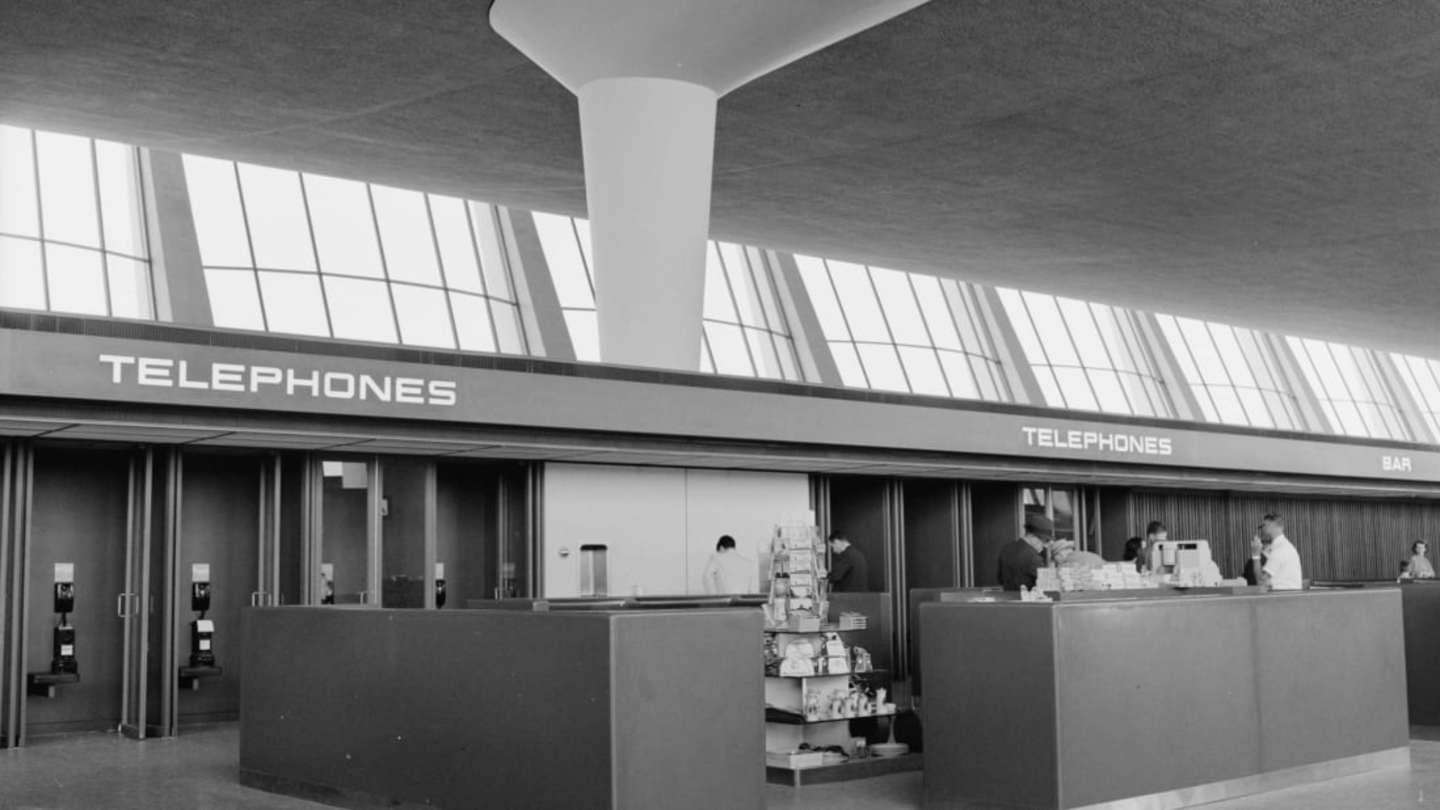
4) Walls of Pay Phones
Pay phones used to be airport furniture. You’d land, sprint to a phone bank, and announce your arrival like you were calling Mission Control. Sometimes you’d discover that your coin situation was… spiritually strong but financially weak.
Today, pay phones are nearly extinct in many airportsreduced to the occasional lonely handset that looks like it’s waiting for someone to remember it.
What replaced it
Smartphones, Wi-Fi, messaging apps, and the universal airport ritual of texting: “Landed. Taxiing. Where r u?”
Why it disappeared
Mobile phones made pay phones unnecessary, and maintaining them stopped making business sense. Airports didn’t mourn long they repurposed the real estate for charging stations, kiosks, and retail.
5) One Giant Check-In Line for Absolutely Everyone
Remember when “getting to the airport early” meant standing in a single line that moved at the pace of a glacier taking a nap? Everyone had to check in at the counter. Everyone needed paper printed. Everyone watched the clock with the intensity of a sports fan in overtime.
While staffed counters still exist, that one-size-fits-all line is far less commonbecause a lot of travelers now bypass it entirely.
What replaced it
- Online and mobile check-in (often 24 hours before departure).
- Self-service kiosks (including shared/common-use kiosks used by multiple airlines).
- Bag-drop stations for travelers who already checked in.
Why it disappeared
Airports and airlines pushed self-service to reduce staffing pressure and speed up processing. Common-use self-service standards also made it easier for multiple airlines to share the same kiosk infrastructure instead of each airline needing its own island of machines.
6) Free Checked Bags as the Default
Once upon a time, checking a bag was normal, expected, andon many airlinesfree. You handed off your suitcase, got your claim tag, and walked away feeling lightly smug.
Then baggage fees expanded across the industry, and airport behavior changed overnight. Suddenly, everyone became a carry-on maximalist. Overhead bins turned into competitive real estate. Gate agents started making announcements that sounded like gentle threats: “We will be checking bags.”
What replaced it
A fee-driven ecosystem: more carry-ons, more gate-checking, more luggage Tetris in security lines, and more travelers trying to convince a bulging bag that it is, in fact, a “personal item.”
Why it disappeared
Airlines discovered checked-bag fees as a major revenue stream. Over time, even airlines known for free checked bags have adjusted policies, making “free bags for everyone” much less common than it used to be.
7) Indoor Airport Smoking Everywhere
Airport smoking used to be so normal that ashtrays practically came with the architecture. There were smoking sections, smoking lounges, and the general sense that the entire building had a faint “bar at 1 a.m.” ambiance.
Now, many U.S. airports prohibit indoor smoking entirely, and where designated smoking rooms exist, they’re far less common and often controversial because of air-quality concerns.
What replaced it
Outdoor smoking areas (often outside terminal entrances) and stricter indoor restrictions. You’ll still see people stepping outside like it’s a quick side quest, but you’re less likely to find a dedicated indoor “smoking lounge” as a standard feature.
Why it disappeared
Health regulations and public pressure increased, and research raised concerns about secondhand smoke exposure even with separated smoking rooms. Many airports moved toward smoke-free indoor environments to protect passengers and staff.
8) Security That Felt Like a Polite Suggestion
Older travelers often describe a pre-modern-security era with a kind of disbelief: lighter screening, fewer restrictions, and a faster flow. You could show up with more spontaneity, carry more stuff, and sometimes feel like the airport was run by vibes and good intentions.
Today’s reality is very different. Security procedures are more standardized, and rules about liquids, identity, and screening have become an everyday part of flying.
What replaced it
- Structured screening checkpoints (and the universal choreography of bins).
- Liquids limits (hello, 3.4-ounce containers).
- Stronger ID requirements for adult travelers flying domestically in the U.S.
Why it disappeared
Security policy shifted dramatically in the 2000s, and further tightened around specific threats (including the introduction of liquids rules after a 2006 plot). In more recent years, identification rules have also been emphasizedsuch as REAL ID enforcement for domestic air travel.
9) Paper Maps, Brochures, and “Ask the Info Desk” Navigation
Airports used to feel like they were sponsored by printed paper. There were racks of brochures, fold-out terminal maps, hotel shuttle leaflets, and tourist guides that promised “fun in 24 hours” and delivered… a coupon for a T-shirt shop.
Information desks were also more central to the experience. If you were lost, you asked a human. A human answered. A miracle occurred.
What replaced it
Apps, mobile maps, QR codes, wayfinding screens, and push notifications. Now you can find Gate B12… assuming your phone battery isn’t at 3% and your screen isn’t dimmed like it’s trying to conserve energy for winter.
Why it disappeared
Digital info updates faster, costs less to maintain, and can be personalized. Printed materials go out of date the moment a terminal changes (which is basically always). Airports still offer help desks, but paper-first navigation isn’t the default anymore.
10) Gate Agents Tearing Stubs and “Manual Boarding” Vibes
There’s a specific memory some travelers have: a gate agent taking your boarding pass, ripping off a portion, and handing the rest back like it was a concert ticket. Boarding felt tactile. Official. Slightly dramatic.
Now, boarding is mostly a scanning operationbarcode readers, digital passes, and quick beeps that decide your fate in half a second.
What replaced it
Bar-coded boarding passes (paper or mobile) and automated gate readers. Many systems evolved from magnetic-stripe boarding passes to barcodes that work across paper and mobile formats.
Why it disappeared
Scanning is faster, more accurate, and integrates with passenger systems in real time. It also supports more check-in channelskiosk, web, and mobilewithout needing a special “official” ticket stock.
So… Are Airports Better Now?
Better is complicated. More efficient? Often, yes. More secure? By design, yes. More human? That depends on whether you count a kiosk that says “I’m sorry, I didn’t catch that” as a meaningful relationship.
But airports still have their magic. It just looks different now: the quiet satisfaction of breezing through with a mobile boarding pass, the relief of real-time updates, the tiny victory of finding an outlet that actually works.
Extra: of Airport Experiences (Nostalgia + Reality Check)
Picture an “old-school airport day” the way longtime travelers describe it. You arrive wearing something that suggests you might be negotiating an international treaty (or at least a seat upgrade). You’re early, but not because you’re worried about security linesmore because the airport is part of the outing. You can wander. You can watch planes. You can meet someone at the gate without feeling like you’re attempting a heist.
The terminal sounds different, too. In the background: the soft chaos of overhead announcements and, if you were lucky enough to catch the era, the click-and-flip rhythm of mechanical departure boards. You don’t just check your flight status; you look up and see it, shared with everyone else in the building. There’s a strange comfort in that communal momenthundreds of strangers scanning the same board, silently rooting for the same word: “ON TIME.”
Then there are the tiny rituals that used to feel normal. Calling home from a pay phonejuggling coins, dialing carefully, and hoping nobody behind you is dramatically sighing. Holding a paper ticket that feels like a passport to adulthood. Walking to a counter where a person prints something official-looking and hands it to you with the confidence of someone who has solved aviation itself.
Modern airports traded many of those tactile moments for speed and automation. And honestly? Sometimes that trade is a win. Checking in on your phone at breakfast is objectively convenient. Real-time updates mean you don’t have to sprint across the terminal only to discover your gate changed fifteen minutes ago. And scanning a barcode is faster than watching someone tear paper like they’re portioning lasagna.
But the new experience comes with new emotions. Instead of “Do I have enough quarters?” the question is “Do I have enough battery?” Instead of “Where’s the pay phone?” it’s “Where’s the outlet, and why is someone sleeping under it like a dragon guarding treasure?” Instead of carrying two checked bags without thinking, you’re doing mental math about fees, overhead bin space, and whether your “personal item” is technically a small duffel or a disguised piece of furniture.
The biggest shift might be how airports feel as places. They’re less like public squares and more like controlled ecosystems built to move people efficiently from curb to gate. Yet the human moments still happen: a soldier hugging family, a tearful goodbye, a kid seeing an airplane up close for the first time, a couple sharing pretzels at 6 a.m. like it’s a five-star breakfast.
Maybe that’s the takeaway: airports didn’t lose their heart. They just changed their outfitand now they charge extra for checked baggage.
Conclusion
The things we no longer see at airportspaper tickets, pay phones, split-flap boards, gate-side goodbyestell a bigger story about how travel has changed. Airports became more secure, more digital, and more self-service. Some changes made flying smoother. Others made it feel less personal. Most did a bit of both.
If you’re chasing that old airport feeling, you can still find echoes of it: a guest pass program here, a retro display installation there, a quiet moment watching planes taxi while the terminal hums around you. And if you ever spot a pay phone? Take a picture. It’s basically wildlife.